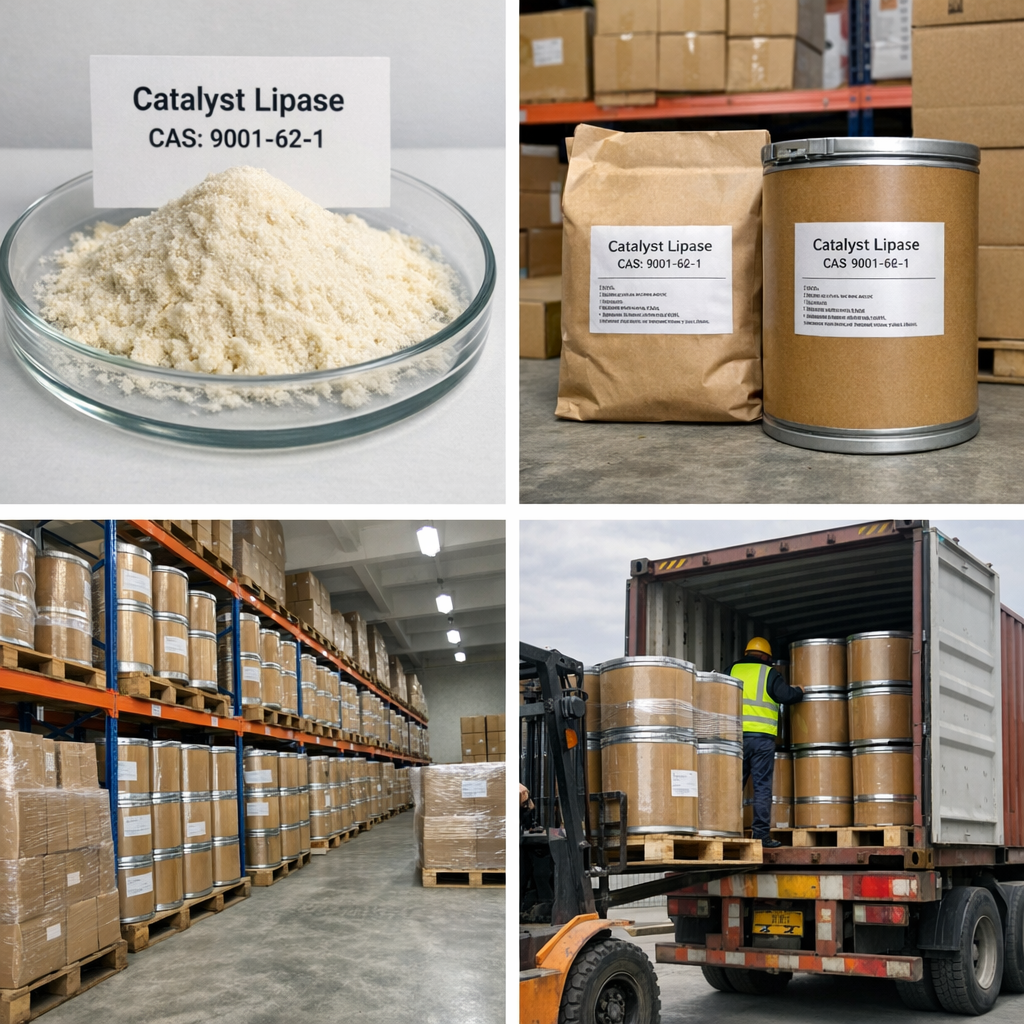










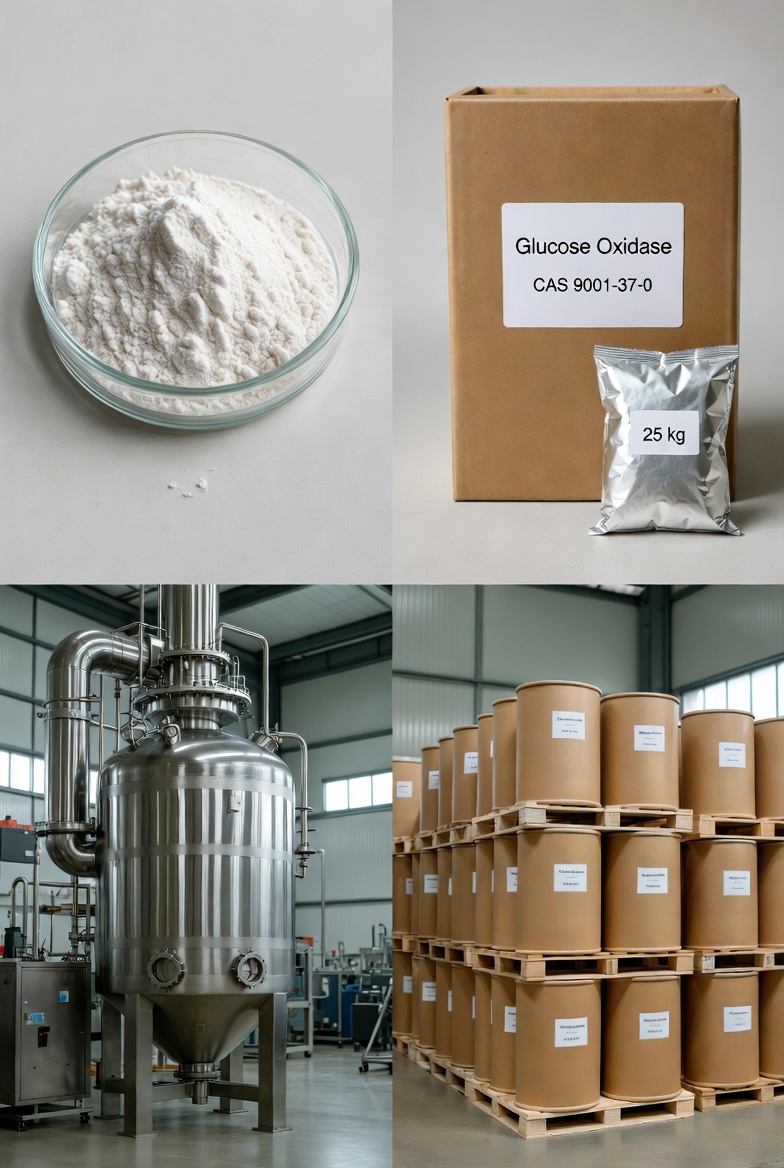
Glucose Oxidase (CAS 9001-37-0), also known professionally as GOD enzyme or fungal glucose oxidase, is a high-purity oxidoreductase derived through submerged fermentation of Aspergillus niger. This potent biocatalyst is indispensable in the textile industry for controlled peroxide removal and in food processing as an efficient oxygen scavenger to extend shelf life. Our enzyme preparation is engineered for high catalytic efficiency, ensuring the rapid conversion of beta-D-glucose into gluconic acid and hydrogen peroxide under mild industrial conditions. we provide bulk supply for global distribution, offering customized specifications ranging from 10,000 U/g to over 150,000 U/g. We guarantee competitive factory pricing and ensure every batch is fully documented with verified MSDS, TDS, COA to meet stringent quality control protocols.
Glucose Oxidase (GOD) Enzyme CAS 9001-37-0
- CAS: 9001-37-0
- Synonyms: GOD enzyme, Beta-D-glucose:oxygen 1-oxidoreductase, Glucose oxyhydrase, Notatin, Fungal glucose oxidase.
- Einecs: 9001-37-0
- Grade: Industrial Grade / Food Grade
- Package: 25kg/drum or customized
Product Description
Physicochemical Properties
| Property | Specification / Data |
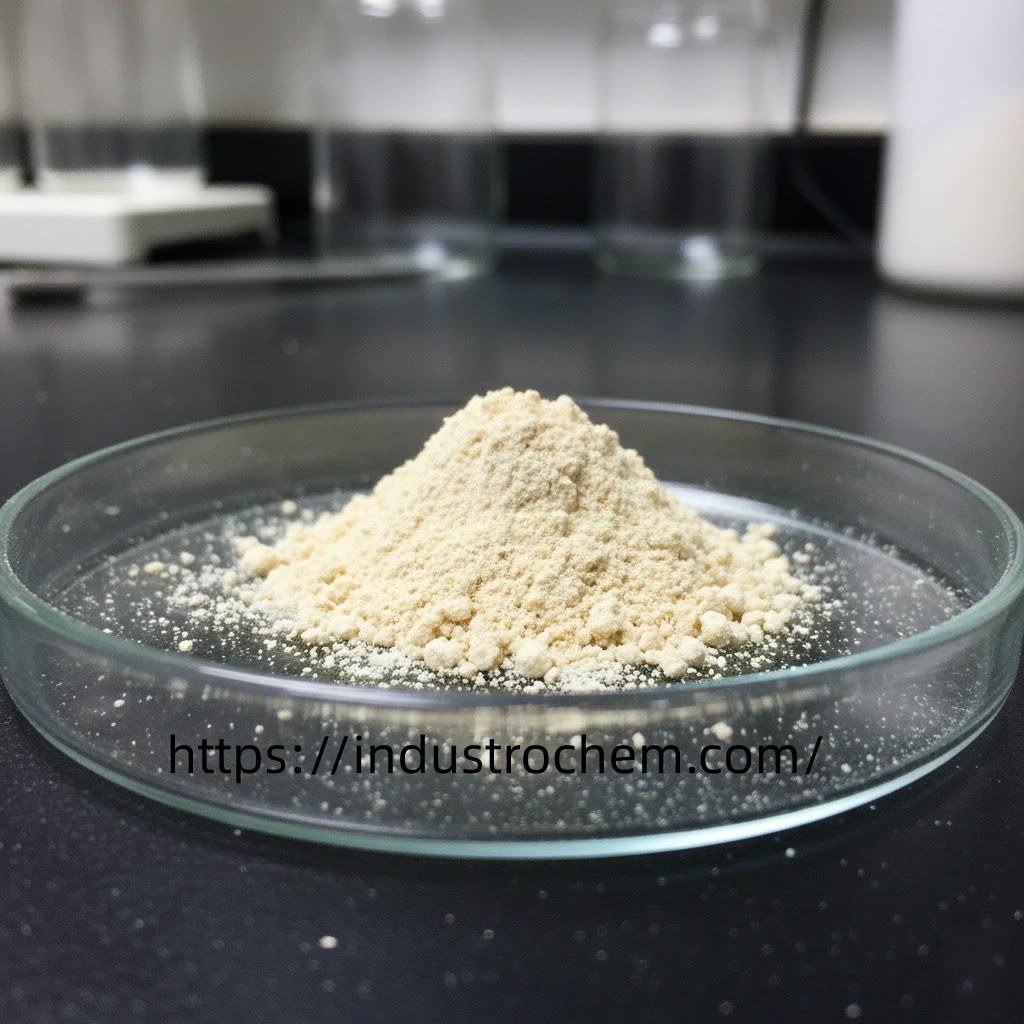
| Appearance | Yellow to light brown powder |
| Enzyme Activity | 10,000 U/g – 150,000 U/g (Customizable) |
| Solubility | Soluble in water (slightly turbid); Insoluble in ethanol |
| Optimum pH | 5.5 – 6.5 |
| Optimum Temperature | 30°C – 50°C |
| Loss on Drying | ≤ 8.0% |
| Lead (Pb) | ≤ 5 mg/kg |
| Microbial Limit | Compliant with industrial enzyme standards |
Applications
- Textile Industry: Used as a biocatalyst in the bio-bleaching process to remove residual hydrogen peroxide and protect fiber integrity.
- Industrial Fermentation: Applied as an oxygen scavenger to prevent oxidation and maintain anaerobic conditions in specific chemical synthesis environments.
- Diagnostic & Research: Utilized in the formulation of glucose biosensors and biochemical assays for precise glucose quantification.
- Food Processing: Acts as a preservative and stabilizer by inhibiting the growth of aerobic bacteria through oxygen depletion.
Storage & Safety
Glucose Oxidase should be stored in a cool, dry environment (ideally below 25°C) and kept away from direct sunlight and moisture to maintain enzymatic activity. As this is a biological enzyme, personnel should use Personal Protective Equipment (PPE), including dust masks and gloves, to avoid inhalation of powder or prolonged skin contact, which may cause sensitization in some individuals.
Quality Assurance
Our production facility utilizes advanced fermentation and purification technologies to ensure high catalytic efficiency. Quality control is maintained through rigorous Activity Assays (U/g) and microbial testing. Each batch is screened for heavy metal contaminants and enzymatic purity according to international industrial standards, ensuring consistent performance in diverse formulation environments.
FAQ - Technical & Supply Chain
-
Q:
How can I distinguish this CAS 9001-37-0 Glucose Oxidase from standard dextrose powder?
A: Unlike standard glucose (dextrose), which is a simple sugar, this material is a protein-based catalyst characterized by its enzymatic activity unit (U/g). Its function is to consume glucose through oxidation rather than acting as a carbohydrate source in a formulation. -
Q:
Is this Glucose Oxidase powder suitable for high-temperature textile bleaching cycles?
A: This enzyme is typically applied in the "bio-polishing" or peroxide removal phase at temperatures between 30°C and 55°C. For industrial processes exceeding 60°C, the enzymatic activity may diminish significantly, so it is intended for use within specific thermal boundaries to ensure effective biocatalysis. -
Q:
What are the purity levels regarding side activities like cellulase or protease?
A: For diagnostic or high-end food applications, we provide highly purified grades with minimal side activities. This ensures that the enzyme specifically targets glucose without degrading cellulose fibers in textiles or proteins in food formulations.
Documents and Product Support
For product review and sourcing evaluation, supporting documents can be coordinated according to the product type, inquiry stage, and order requirements.
- COA for batch-based quality reference
- TDS for key physical and chemical information
- SDS / MSDS for handling, storage, and safety reference
- Packing information for sample, trial, and bulk orders
- Technical communication based on application and specification requirements
Information to Confirm Before Quotation
Clear sourcing information helps reduce specification mismatch and allows a more accurate quotation before sample or bulk order discussion.
- Product name and CAS number
- Application or intended end use
- Required purity, grade, or specification
- Sample quantity, trial order, or bulk demand
- Preferred packing form or net weight
- Destination country or port
- Required documents or compliance expectations
Packaging, Storage, and Handling Notes
Packaging form, storage conditions, shelf life, and shipment arrangements should be confirmed according to the product characteristics, package size, and destination requirements.
Before order confirmation, buyers are advised to review the corresponding product documents and confirm whether any special storage, labeling, or handling requirements apply.
Sample, Bulk Order and Repeat Supply Support
Support can be arranged for sample discussion, bulk supply planning, packaging confirmation, and routine sourcing communication based on the actual product and order requirements.
For repeat-use formulations or long-term procurement plans, buyers may discuss specification consistency, packaging preferences, delivery expectations, and document coordination in advance.