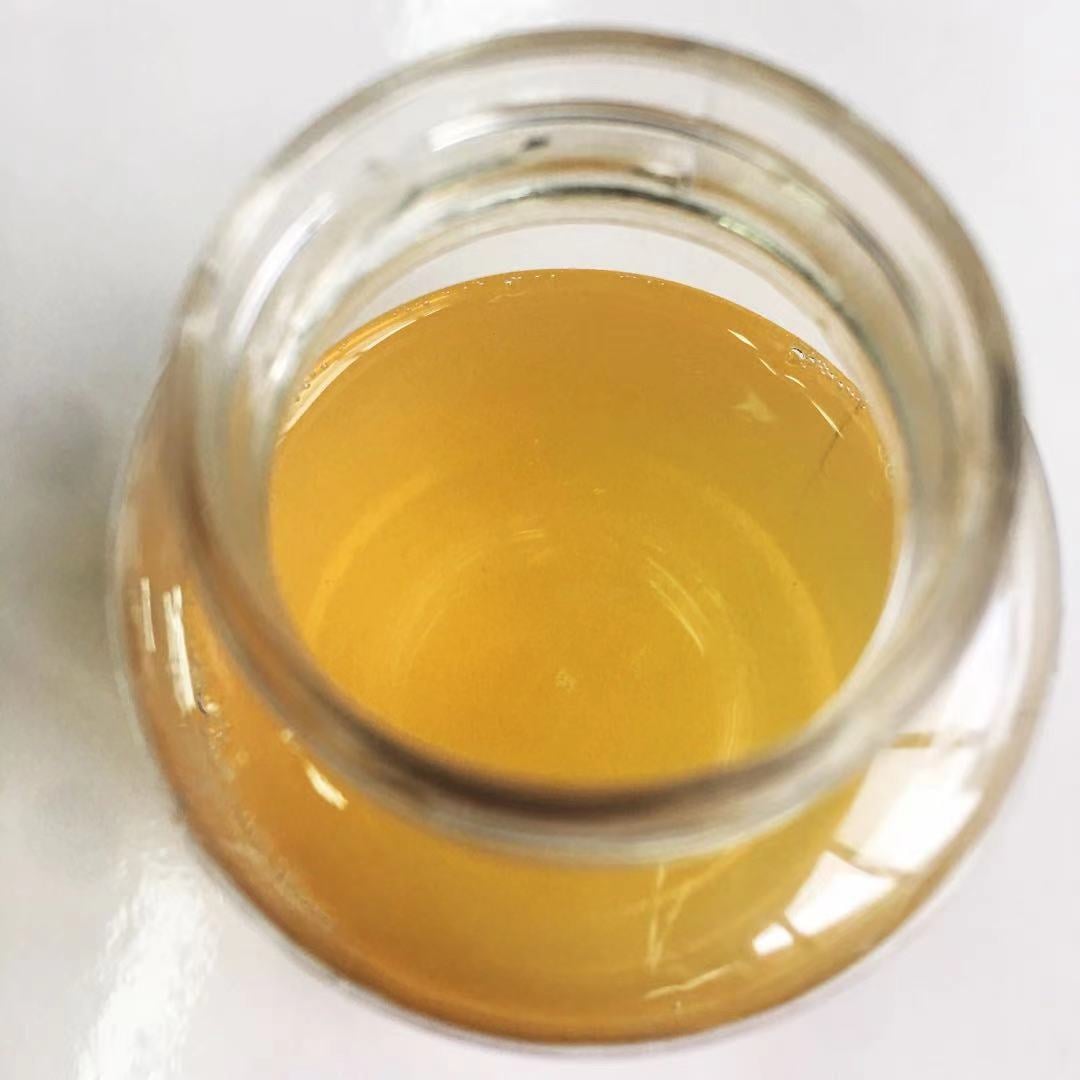










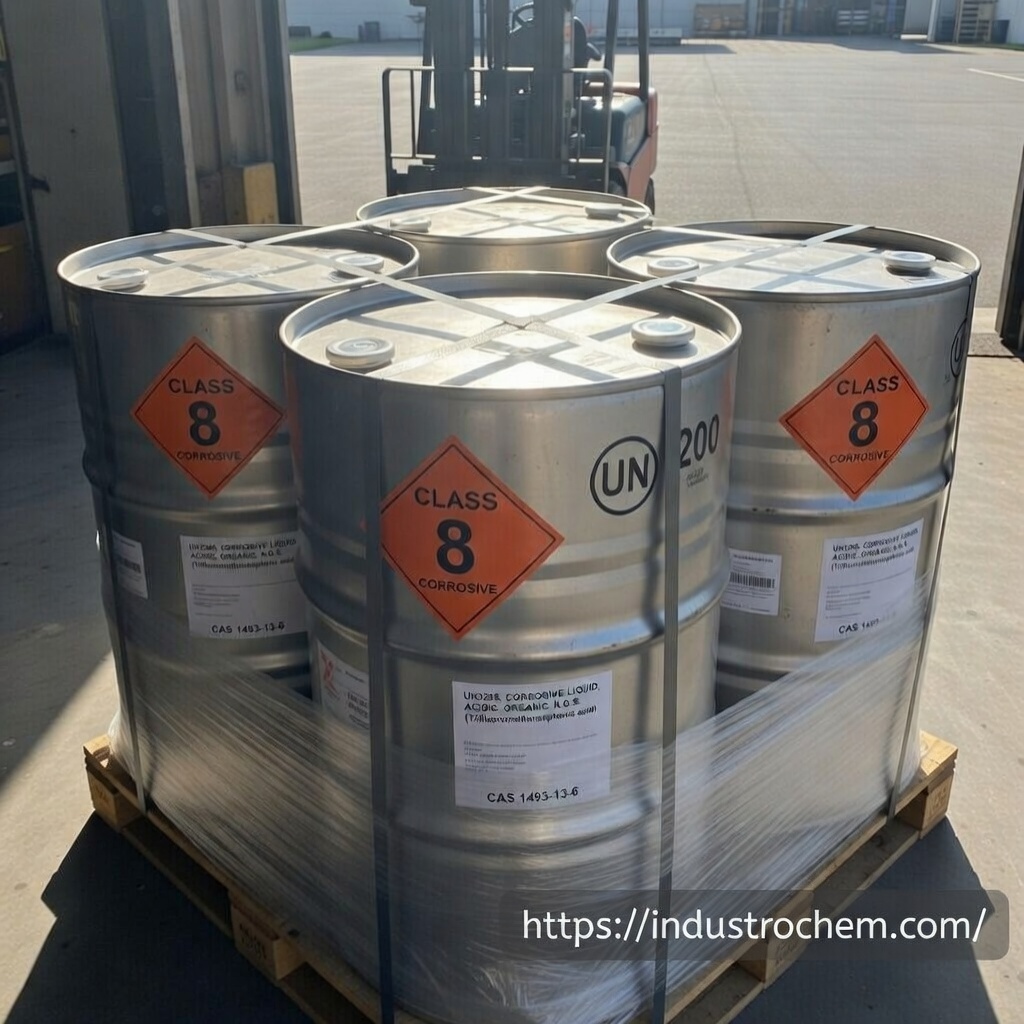
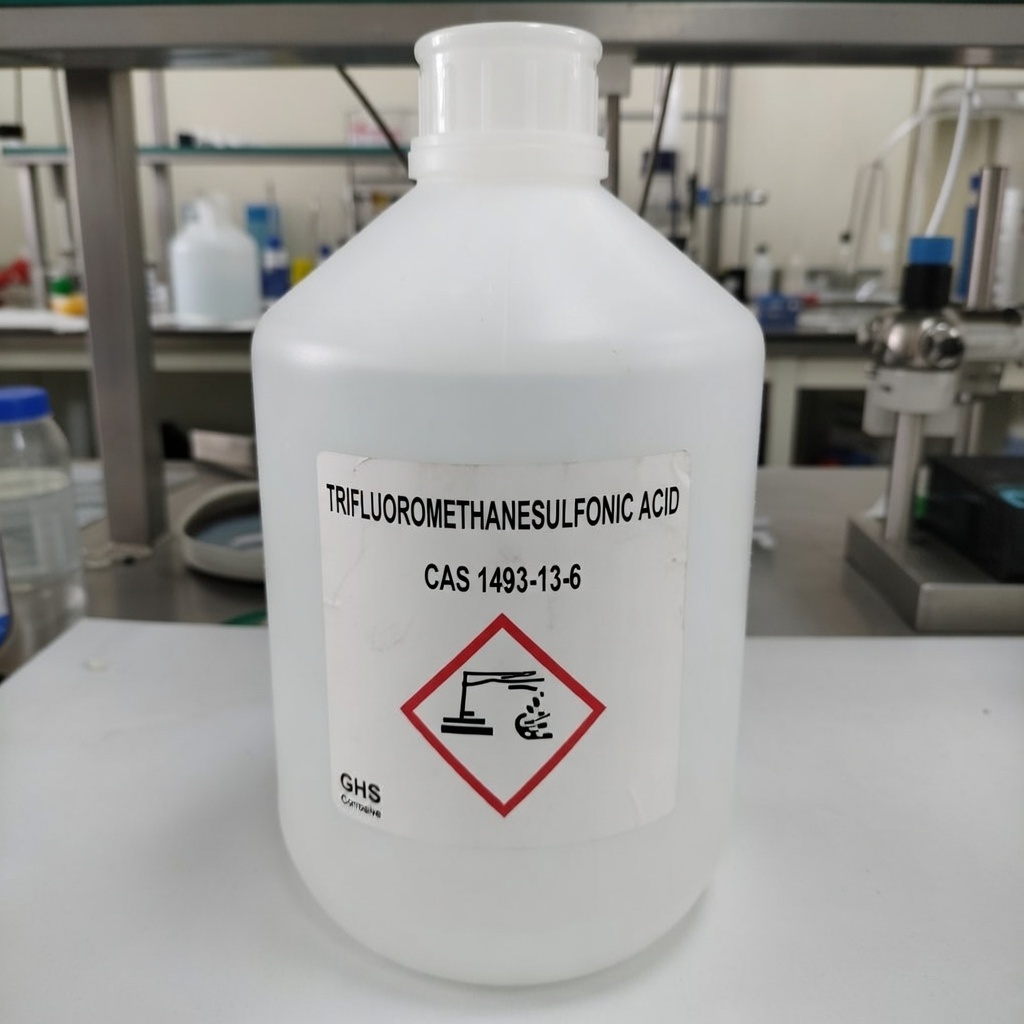
• Trifluoromethanesulfonic Acid CAS 1493-13-6
  • Trifluoromethanesulfonic Acid CAS 1493-13-6

Trifluoromethanesulfonic Acid CAS 1493-13-6

Trifluoromethanesulfonic acid, identified by CAS 1493-13-6, is a non-oxidizing liquid superacid characterized by its exceptional thermal stability and high dissociation constant, functioning as a critical Fine Chemical in modern industrial synthesis. This anhydrous sulfonic acid serves as a potent catalyst and reagent, facilitating electrophilic reactions, alkylations, and polymerizations through the generation of highly reactive triflate intermediates. It is widely utilized in the production of pharmaceutical precursors, specialized polymers, and electronic chemicals where standard protonic acids lack the necessary acidity to drive complex rearrangements. We provide this material with competitive factory pricing to support large-scale manufacturing requirements, ensuring that all batches meet customized specifications to suit sensitive catalytic processes. Our logistics infrastructure is optimized for bulk supply, and every shipment is accompanied by comprehensive technical documentation, including MSDS, TDS, COA, to ensure regulatory compliance and process safety.

  • CAS: 1493-13-6
  • Synonyms: Triflic acid, TFMS, Perfluoromethanesulfonic acid, Methanesulfonic acid trifluoro, Trifluoromethane sulfonic acid
  • Einecs: 216-087-5
  • Molecular Formula: CF3SO3H
  • Grade: Industrial / Reagent Grade
  • Package: 25kg/drum, 200kg/drum, or ISO Tank
Request a quote
Share:

Product Description

Technical Data (Physicochemical Properties)

PropertySpecification (Typical Export Standard)
AppearanceColorless to light yellow transparent liquid
Assay (Titration)≥ 99.5%
Water Content (KF)≤ 0.05%
Chloride (Cl-)≤ 0.002%
Sulfate (SO4 2-)≤ 0.005%
Boiling Point162 °C
Density (20°C)1.696 g/cm³
Color (APHA)≤ 30

Applications

  • Pharmaceutical Synthesis: Used as a catalyst for the preparation of nucleosides, steroids, and vitamins; also used to create triflate leaving groups in coupling reactions.
  • Polymer Industry: Acts as a cationic polymerization initiator for various monomers, including tetrahydrofuran and silicones.
  • Fuel Cells & Electrolytes: Utilized in the development of proton-exchange membranes and lithium-ion battery electrolytes due to its high ionic conductivity.
  • General Organic Chemistry: Employs as a catalyst for Friedel-Crafts alkylation and acylation where high efficiency and low byproduct formation are required.

Storage & Safety

  • Storage: Store in a cool, dry, well-ventilated warehouse. Keep away from heat, sparks, and open flames. Containers must be tightly sealed and stored upright in a corrosion-resistant area.
  • Handling: Highly corrosive and hygroscopic. Avoid contact with skin, eyes, and clothing.
  • PPE Recommendations: Use acid-resistant gloves (Nitrile or Butyl), chemical safety goggles, full face shield, and a corrosive-resistant laboratory coat or apron. Use only under a chemical fume hood with adequate local exhaust ventilation.

Quality Assurance

Our production facility adheres to rigorous quality management protocols to ensure high-purity output. Each batch undergoes stringent analytical testing, including HPLC for purity verification and Karl Fischer titration for moisture control. We implement standardized manufacturing processes to maintain consistency, providing the technical reliability required for critical industrial applications.

FAQ - Technical & Supply Chain

  • Q:

    Is Trifluoromethanesulfonic Acid intended for use as a direct solvent or as a catalytic additive in industrial acylation?

    A: This material is typically applied as a catalytic additive rather than a bulk solvent. Due to its status as a superacid, it is commonly used in catalytic quantities to lower the activation energy of acylation and alkylation reactions, often replacing more volatile or hazardous Lewis acids in closed-loop industrial reactors.
  • Q:

    How is the identity and purity of Trifluoromethanesulfonic Acid confirmed for high-sensitivity catalytic applications?

    A: The substance is verified through specific gravity testing and acid-base titration to ensure its molar concentration aligns with the CAS 1493-13-6 standard. For catalytic applications requiring low interference, the material is typically analyzed via Ion Chromatography (IC) to monitor trace halide and sulfate levels that could otherwise poison metallic catalysts.
Documents

Documents and Product Support

For product review and sourcing evaluation, supporting documents can be coordinated according to the product type, inquiry stage, and order requirements.

  • COA for batch-based quality reference
  • TDS for key physical and chemical information
  • SDS / MSDS for handling, storage, and safety reference
  • Packing information for sample, trial, and bulk orders
  • Technical communication based on application and specification requirements
Quotation

Information to Confirm Before Quotation

Clear sourcing information helps reduce specification mismatch and allows a more accurate quotation before sample or bulk order discussion.

  • Product name and CAS number
  • Application or intended end use
  • Required purity, grade, or specification
  • Sample quantity, trial order, or bulk demand
  • Preferred packing form or net weight
  • Destination country or port
  • Required documents or compliance expectations
Storage & Handling

Packaging, Storage, and Handling Notes

Packaging form, storage conditions, shelf life, and shipment arrangements should be confirmed according to the product characteristics, package size, and destination requirements.

Before order confirmation, buyers are advised to review the corresponding product documents and confirm whether any special storage, labeling, or handling requirements apply.

Supply Support

Sample, Bulk Order and Repeat Supply Support

Support can be arranged for sample discussion, bulk supply planning, packaging confirmation, and routine sourcing communication based on the actual product and order requirements.

For repeat-use formulations or long-term procurement plans, buyers may discuss specification consistency, packaging preferences, delivery expectations, and document coordination in advance.

Contact Form

Use our contact form to send us your questions, suggestions or comments. We will respond as soon as possible.