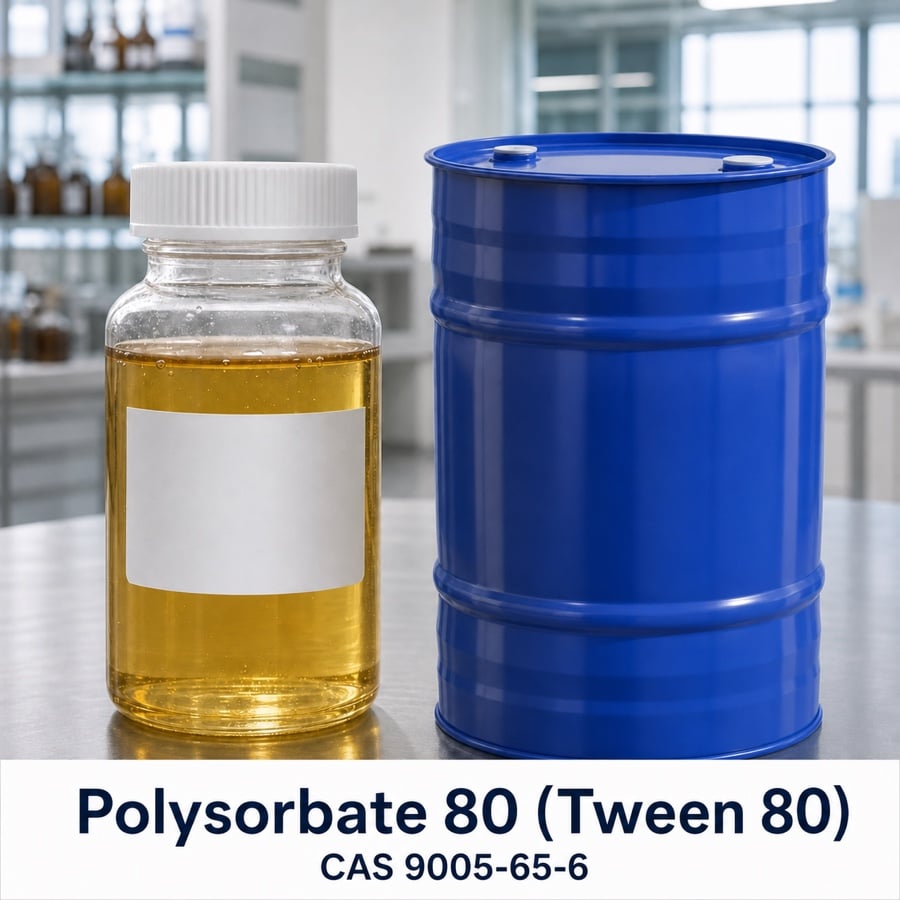










Tween 20 / Polysorbate 20 is a nonionic surfactant classified as an industrial ingredient used in nonionic surfactant formulations. It is a polyoxyethylene sorbitan fatty acid ester derived from sorbitan and lauric acid, forming a polymeric structure that provides surface activity through emulsification and interfacial stabilization mechanisms, with the CAS number 9005-64-5 identifying this substance group. This material is commonly applied in industrial formulation systems where controlled dispersion or solubilization is required during chemical processing or formulation stages. In terms of supply and documentation support, it is available with competitive factory pricing, customized specifications, complete files including MSDS, TDS, COA, and supports bulk supply for industrial use.
Tween 20 / Polysorbate 20 CAS 9005-64-5
- CAS: 9005-64-5
- Synonyms: Polysorbate 20, Polyoxyethylene sorbitan monolaurate, Sorbitan monolaurate ethoxylate, Polyoxyethylene (20) sorbitan monolaurate
- Einecs: 500-018-3
- Molecular Formula: C₅₈H₁₁₄O₂₆
- Grade: 99%
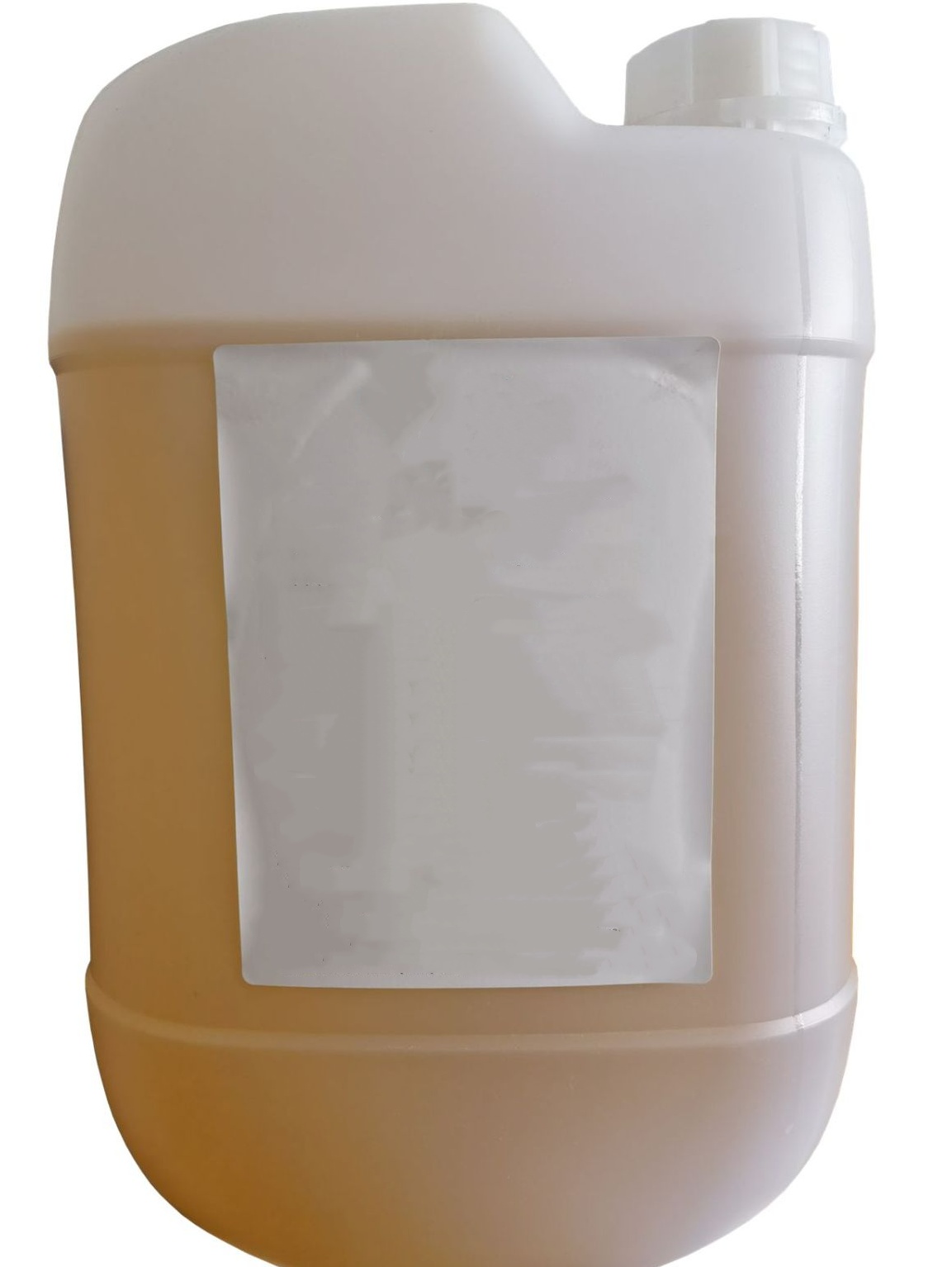
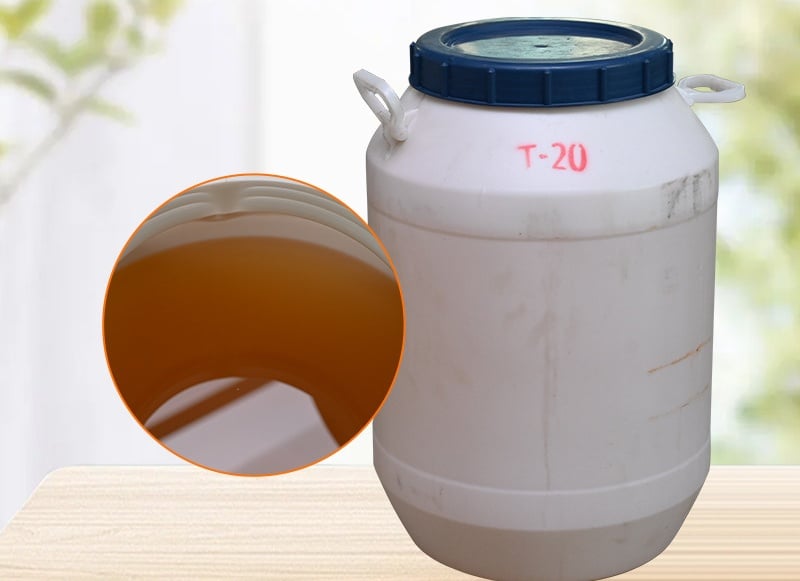
- Package: 200kg iron drum or 50kg plastic drum packaging
Product Description
Physicochemical properties
| Property | Description |
|---|---|
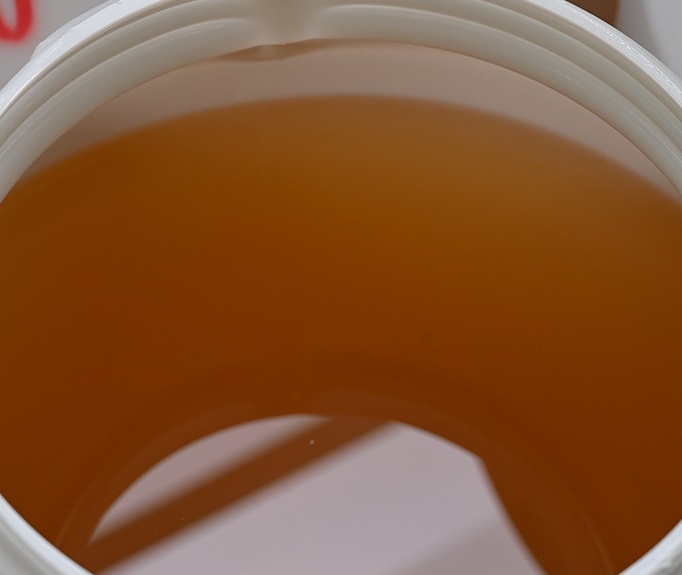
| Appearance | Transparent to amber viscous liquid, or slightly yellow waxy solid (depends on temperature and purity) |
| Odor | Mild characteristic odor, slightly bitter taste |
| Solubility | – Soluble in polar solvents: water, methanol, ethanol, isopropanol, ethyl acetate – Insoluble in non-polar solvents: mineral oil, liquid paraffin |
| Density | 1.01–1.13 g/cm³ (at 25 °C) |
| Viscosity | 0.25–0.40 Pa·s (at 25 °C) |
| HLB Value | 16.5–16.7 (high hydrophilicity, suitable for oil-in-water emulsions) |
| Stability | – Chemically stable, resistant to acids, bases, and inorganic salts – May degrade under autoclaving or prolonged high temperatures (especially in buffers containing metal ions) |
Application Areas
Emulsification and solubilization: It is widely used to prepare stable oil in water lotion (such as food, cosmetics, drugs).
Food industry: used as emulsifiers, dispersants, and stabilizers in cakes, ice cream, and shortening.
Textile industry: anti-static agents and fiber lubricants.
Petroleum extraction: Biochemical research on wax inhibitors:
Membrane protein extraction: 2% concentration is used to remove membrane peripheral proteins.
Immunological experiments: Use 0.05% concentration as a blocking agent (such as Western blot, ELISA, immunohistochemistry) to reduce non-specific binding.
Storage conditions
Store in a cool and dark place, keep the container sealed, and keep away from sources of fire and oxidants. High pressure sterilization is not recommended. It is recommended to use a 0.22 μ m filter membrane for sterilization (slightly heated to 40 ℃ before filtration to improve fluidity)
Safety precautions
Safety: harmless to human body, non irritating, in compliance with food additive standards
Personal protection: During operation, experimental clothing, disposable gloves, and goggles should be worn to avoid direct contact with skin or eyes. If in contact with the skin, immediately rinse with soapy water. If in contact with the eyes, rinse with clean water for at least 15 minutes and seek medical attention
Leakage treatment: Inert materials should be used to absorb leaks and avoid entering sewers or the environment. Ensure ventilation during processing to prevent inhalation of vapors
FAQ - Technical & Supply Chain
-
Q:
Are Polysorbate 20 and polyoxyethylene sorbitan monolaurate the same substance under one CAS number?
A: Yes. These names refer to the same polysorbate material category and correspond to a single CAS number, 9005-64-5. -
Q:
Is Polysorbate 20 used as an industrial formulation ingredient rather than for laboratory research?
A: Polysorbate 20 is typically applied as an industrial ingredient within formulated systems, where it functions as a nonionic surfactant during production or formulation processes.
Documents and Product Support
For product review and sourcing evaluation, supporting documents can be coordinated according to the product type, inquiry stage, and order requirements.
- COA for batch-based quality reference
- TDS for key physical and chemical information
- SDS / MSDS for handling, storage, and safety reference
- Packing information for sample, trial, and bulk orders
- Technical communication based on application and specification requirements
Information to Confirm Before Quotation
Clear sourcing information helps reduce specification mismatch and allows a more accurate quotation before sample or bulk order discussion.
- Product name and CAS number
- Application or intended end use
- Required purity, grade, or specification
- Sample quantity, trial order, or bulk demand
- Preferred packing form or net weight
- Destination country or port
- Required documents or compliance expectations
Packaging, Storage, and Handling Notes
Packaging form, storage conditions, shelf life, and shipment arrangements should be confirmed according to the product characteristics, package size, and destination requirements.
Before order confirmation, buyers are advised to review the corresponding product documents and confirm whether any special storage, labeling, or handling requirements apply.
Sample, Bulk Order and Repeat Supply Support
Support can be arranged for sample discussion, bulk supply planning, packaging confirmation, and routine sourcing communication based on the actual product and order requirements.
For repeat-use formulations or long-term procurement plans, buyers may discuss specification consistency, packaging preferences, delivery expectations, and document coordination in advance.