









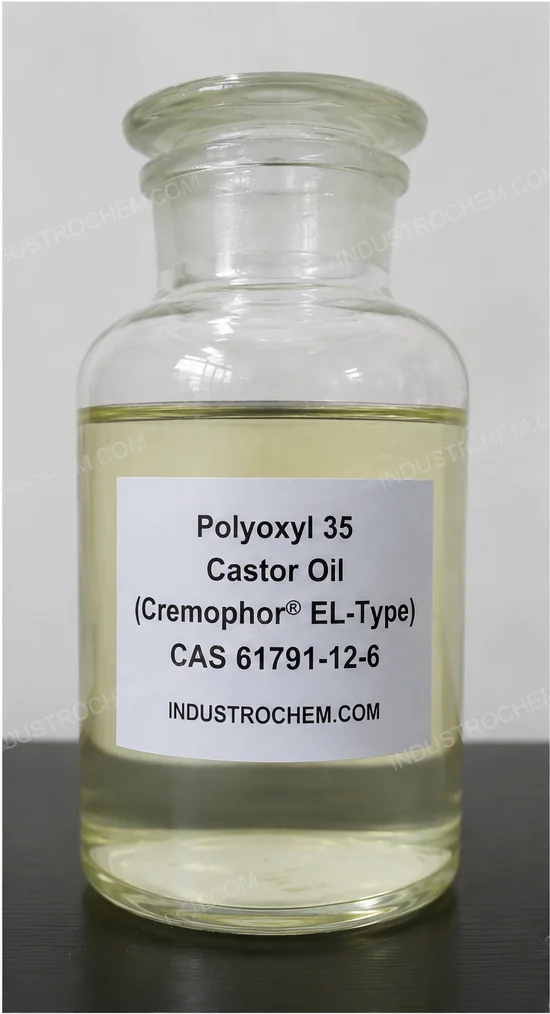
• Emulsifier BY-160 / Cremophor EL CAS 61791-12-6
  • Emulsifier BY-160 / Cremophor EL CAS 61791-12-6

Emulsifier BY-160 / Cremophor EL CAS 61791-12-6

Emulsifier BY-160 / Cremophor EL is a nonionic surfactant classified as an industrial ingredient used in nonionic surfactant formulations. It is a polyoxylated castor oil produced by the ethoxylation of castor oil triglycerides, forming a polymeric structure with hydrophilic ethylene oxide chains that enable emulsification and interfacial stabilization, with the CAS number 61791-12-6 identifying this substance group. This material is typically applied in industrial formulation systems where solubilization or dispersion of hydrophobic components is required during chemical processing or formulation stages. In the context of supply and technical documentation, it is available with competitive factory pricing, customized specifications, complete documentation including MSDS, TDS, COA, and supports bulk supply for industrial use.

  • CAS: 61791-12-6
  • Synonyms: Polyoxyl castor oil, Ethoxylated castor oil, Polyoxyethylene castor oil, PEG castor oil
  • Einecs: 500-147-5
  • Molecular Formula: C₅₇H₁₀₄O₉(CH₂CH₂O)ₙ
  • Grade: 99%
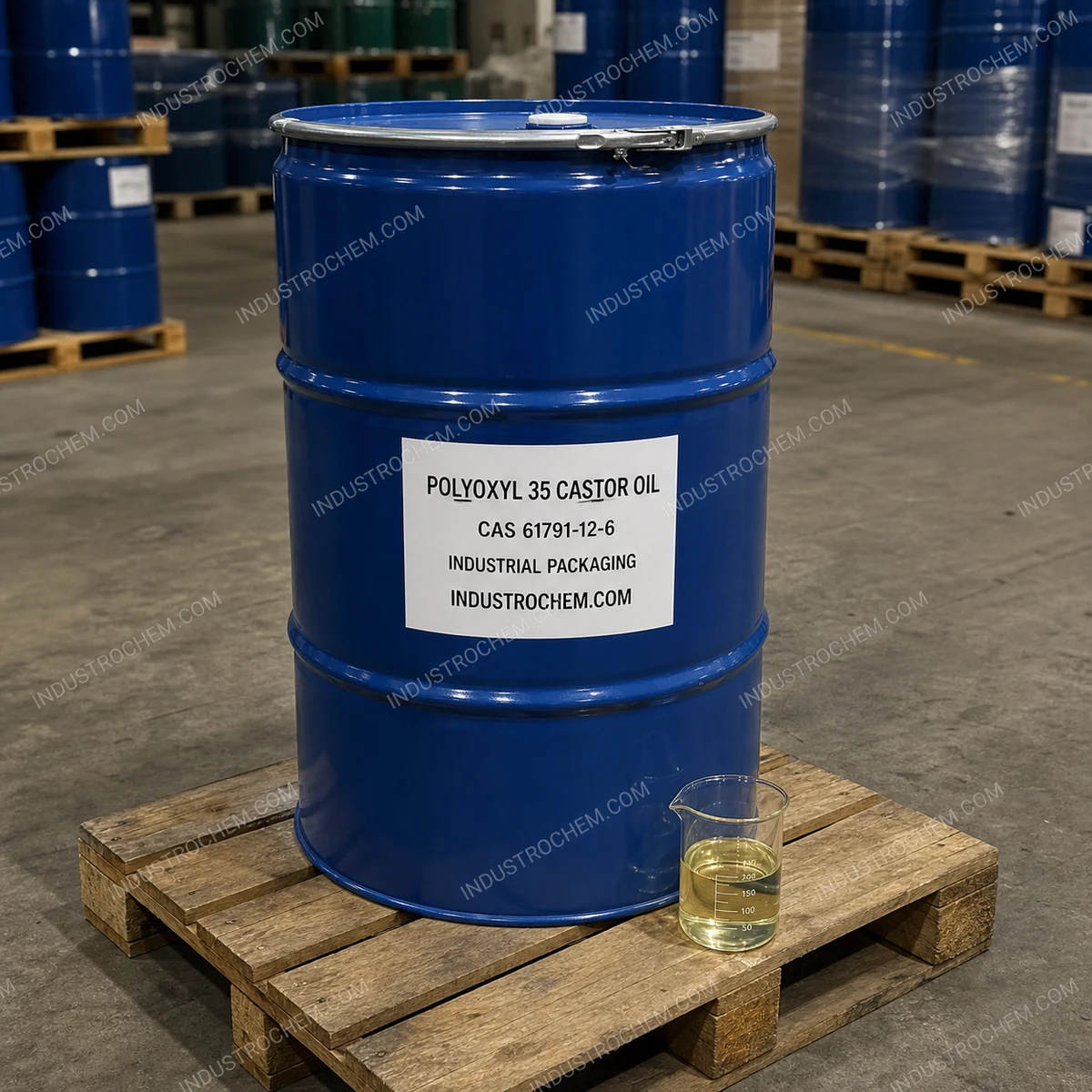
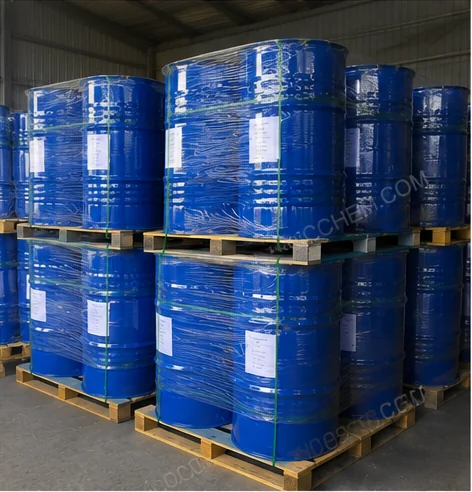
  • Package: 200kg iron drum or 50kg plastic drum packaging
Request a quote
Share:

Product Description

Physicochemical properties

PropertyValue
Molecular WeightNot precisely defined (varies with degree of ethoxylation)
AppearanceViscous liquid or waxy solid (depending on the degree of ethoxylation)
ColorClear yellow to light yellow
Density1.05 g/mL at 20 °C
Boiling Point232.6 °C (at 101325 Pa) or 305.7 ± 32.0 °C at 760 mmHg (values may vary depending on the source)
Flash Point257 °C
Melting Point4 °C (or not precisely defined, varies with the degree of ethoxylation)
pH5.0-7.0 (1g/10 mL in H₂O) or pH range 6.0-8.0 (values may vary depending on the source)
SolubilitySlightly soluble in chloroform, ethyl acetate, methanol; insoluble in water at room temperature (but solubility increases with temperature, though it decreases again at higher temperatures); soluble in many organic solvents
StabilityStable under normal conditions; incompatible with strong oxidizing agents
Viscosity600-750 mPa·s (25 °C) (value may vary depending on the source)
Water Solubility24.11 mg/L at 25 °C
LogP4.297 at 25 °C

Application Areas

In the field of pesticides, it is used as a monomer for pesticide emulsifiers to improve the dispersibility of drug solutions.
Textile industry: As a synthetic oil agent and wool oil, it enhances fiber processing performance.
Oilfield chemistry: used for crude oil dehydration treatment.
Other fields: emulsification of oil wax, oleic acid, and mineral oil, as well as antistatic spinning oil for vinylon.

Storage conditions

Environmental requirements: It should be stored in a cool, dry, well ventilated place, away from direct sunlight and high temperature environment. The recommended storage temperature should be controlled between 5 ℃ and 35 ℃. Extreme temperatures may cause a decrease in emulsification performance or a change in physical state (such as an increase in viscosity or crystallization)
Sealing: The container must be strictly sealed to prevent air, moisture, or impurities from entering, and to avoid product oxidation or moisture absorption and agglomeration
Avoid light and moisture: Keep away from damp environments. Some products are sensitive to light and long-term exposure may cause damage to their molecular structure

‌‌Safety precautions

Packaging specifications: commonly packaged in 200kg iron drums or 50kg plastic drums, ensuring that the container is corrosion-resistant and undamaged
Shelf life: usually 2 years, subject to the manufacturer’s labeling. Performance needs to be retested after the expiration date

FAQ - Technical & Supply Chain

  • Q:

    Do Emulsifier BY-160 and polyoxyl castor oil refer to the same substance under one CAS number?

    A: Yes. These names are used for the same polyoxylated castor oil substance category and correspond to a single CAS number, 61791-12-6.
  • Q:

    Is Emulsifier BY-160 intended for industrial formulation use rather than laboratory research?

    A: This material is commonly applied as an industrial ingredient within formulated systems, where it functions as a nonionic surfactant during production or processing operations.
Documents

Documents and Product Support

For product review and sourcing evaluation, supporting documents can be coordinated according to the product type, inquiry stage, and order requirements.

  • COA for batch-based quality reference
  • TDS for key physical and chemical information
  • SDS / MSDS for handling, storage, and safety reference
  • Packing information for sample, trial, and bulk orders
  • Technical communication based on application and specification requirements
Quotation

Information to Confirm Before Quotation

Clear sourcing information helps reduce specification mismatch and allows a more accurate quotation before sample or bulk order discussion.

  • Product name and CAS number
  • Application or intended end use
  • Required purity, grade, or specification
  • Sample quantity, trial order, or bulk demand
  • Preferred packing form or net weight
  • Destination country or port
  • Required documents or compliance expectations
Storage & Handling

Packaging, Storage, and Handling Notes

Packaging form, storage conditions, shelf life, and shipment arrangements should be confirmed according to the product characteristics, package size, and destination requirements.

Before order confirmation, buyers are advised to review the corresponding product documents and confirm whether any special storage, labeling, or handling requirements apply.

Supply Support

Sample, Bulk Order and Repeat Supply Support

Support can be arranged for sample discussion, bulk supply planning, packaging confirmation, and routine sourcing communication based on the actual product and order requirements.

For repeat-use formulations or long-term procurement plans, buyers may discuss specification consistency, packaging preferences, delivery expectations, and document coordination in advance.

Contact Form

Use our contact form to send us your questions, suggestions or comments. We will respond as soon as possible.