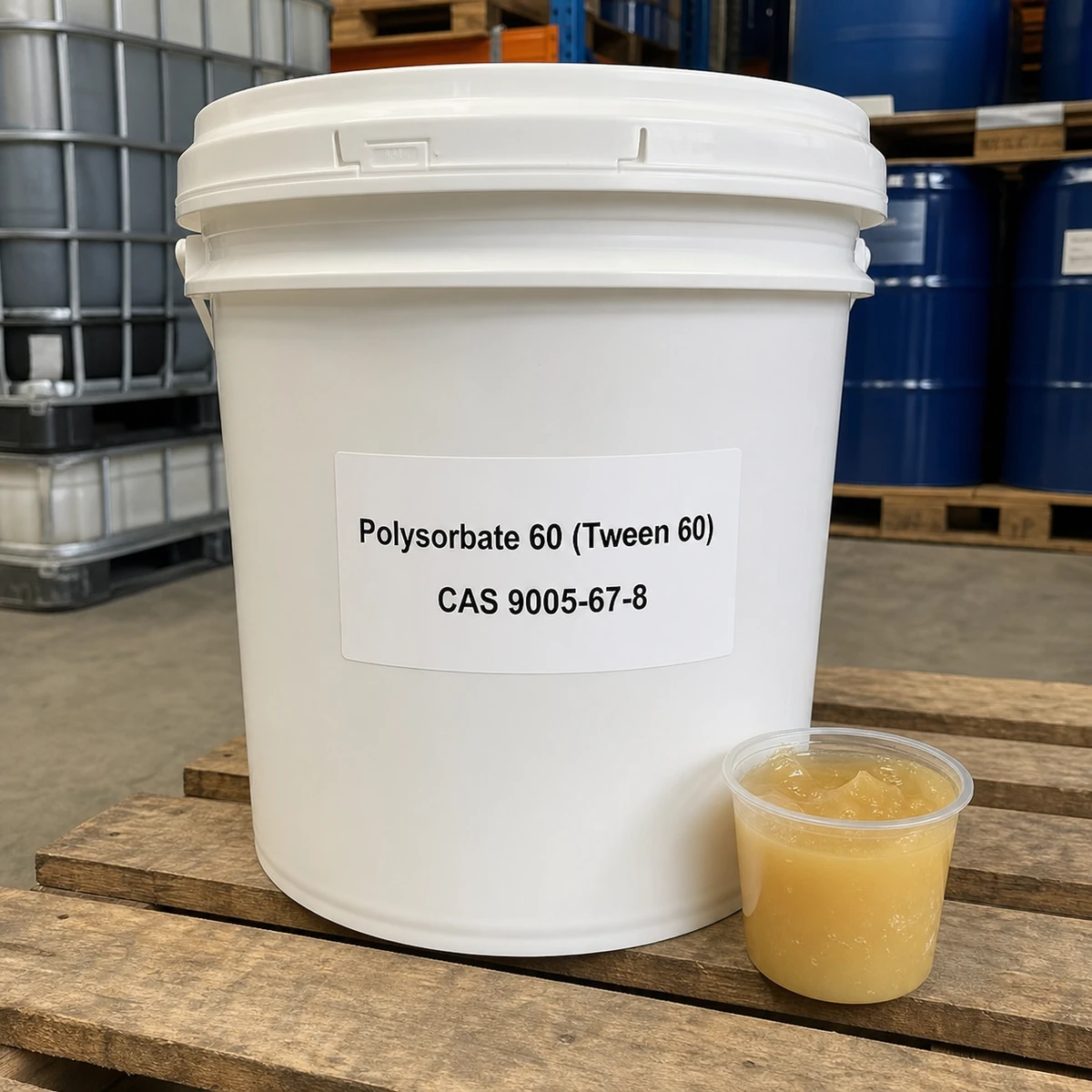










Sorbitan Monostearate, commonly called Span 60 or sorbitan stearate, is a nonionic sorbitan stearate ester composition identified by CAS No. 1338-41-6 and EC No. 215-664-9. Commercial material can contain multiple ester species and does not have one universal molecular formula. It is evaluated mainly as a lipophilic emulsifier or co-emulsifier. Polysorbate 60 (Tween 60) is the related ethoxylated option where a more hydrophilic emulsifier is required. Compare acid, saponification and hydroxyl values, water, physical form and formulation performance using the current COA and TDS.
Sorbitan Monostearate (Span 60) CAS 1338-41-6
- CAS: 1338-41-6
- Synonyms: Sorbitan Monostearate, Span 60, Sorbitan Stearate, Nonionic Emulsifier
- Einecs: 215-664-9
- Molecular Formula: Variable sorbitan stearate ester composition; no single formula represents every commercial grade
- Grade: Specify the required sector and documented grade, ester composition, acid, hydroxyl and saponification values, water, physical form and process conditions; compare the current TDS and batch COA.
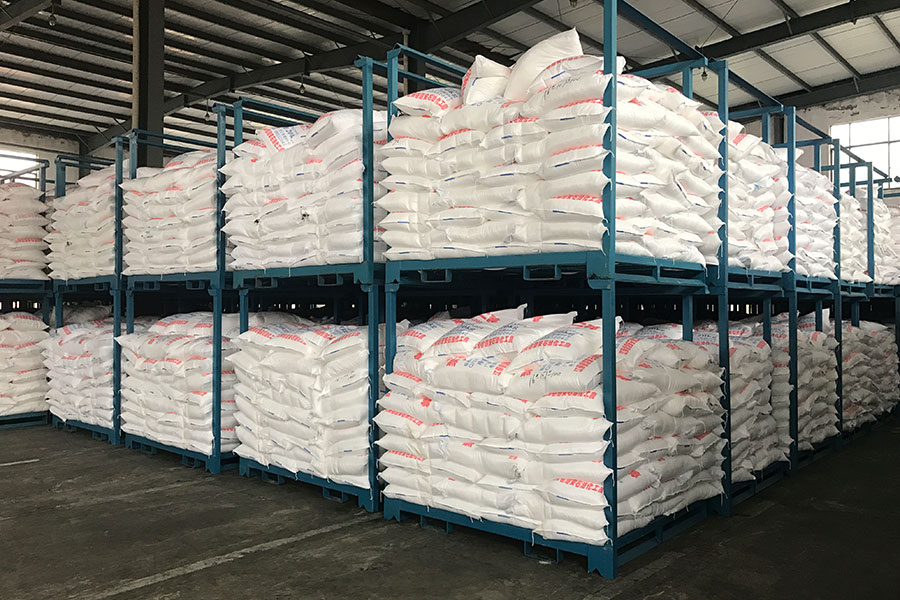
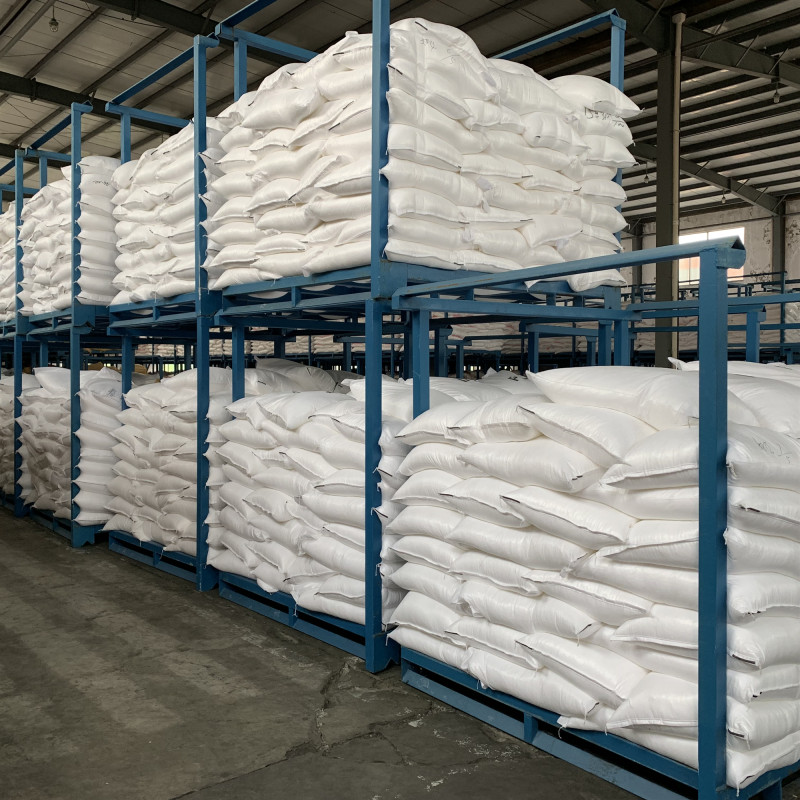
- Package: State required quantity, physical form and destination; confirm the current bag or container, liner, net weight, temperature handling and transport requirements before quotation.
Product Description
Identity and physicochemical profile
| Item | Technical guidance |
|---|---|
| Product identity | Sorbitan Monostearate (Span 60), also called sorbitan stearate |
| CAS / EC | 1338-41-6 / 215-664-9 |
| Nominal molecular formula | C₂₄H₄₆O₆ for sorbitan monostearate; commercial ester composition is controlled by specification |
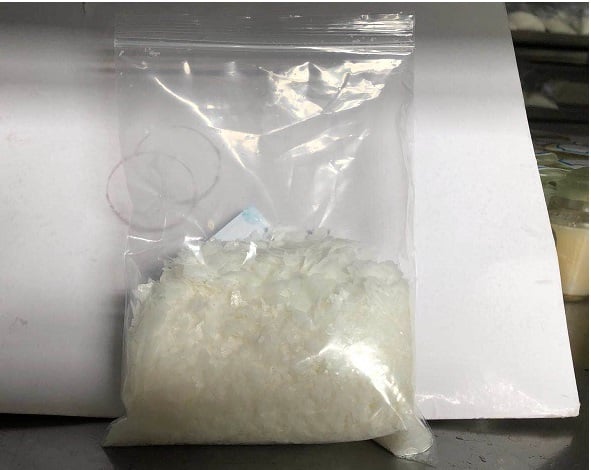
| Typical physical form | White to pale waxy solid, flakes, beads or supplier-defined form depending on grade and temperature |
| Key quality controls | Acid, saponification and hydroxyl values, water, color, appearance, melting behavior and application performance |
| Emulsifier character | Relatively lipophilic nonionic sorbitan ester, commonly evaluated for water-in-oil or co-emulsifier roles |
Applications and grade selection
Span 60 is used as an emulsifier, co-emulsifier, dispersing or structuring component in suitable personal-care, food, pharmaceutical and industrial formulations, but each sector requires the corresponding documented grade. Performance depends on oil phase, co-emulsifier system, dosage, process temperature and cooling.
- Do not confuse Span 60 with Polysorbate 60; Polysorbate 60 is ethoxylated, more hydrophilic and identified by CAS 9005-67-8.
- Match acid, saponification and hydroxyl values plus physical form before running emulsion and temperature-cycle trials.
- Food or pharmaceutical use requires the appropriate compendial, food-additive or market documentation; an industrial grade is not automatically interchangeable.
Storage and handling
Keep the product dry, sealed and protected from contamination and excessive heat. Follow the supplied TDS for melting, charging and mixing. Avoid localized overheating and ensure the material is homogeneous before representative sampling.
Safety, documentation and procurement
Use the current SDS for handling solid material or hot melt, PPE, spill response, transport and disposal. A purchase inquiry should state the intended sector, reference specification, analytical limits, physical form, process, quantity, package, destination and required compliance documents.
For related Span and Tween emulsifier pages, compare Sorbitan Monooleate (Span 80) and Polysorbate 20.
FAQ - Technical & Supply Chain
-
Q:
Can Span 60 be substituted directly for Polysorbate 60 because both contain a sorbitan stearate component?
A: No. Span 60 is sorbitan monostearate, a low-HLB, lipophilic emulsifier, whereas Polysorbate 60 is ethoxylated and more hydrophilic. They differ in physical form and emulsion role. Select by the required emulsion type, processing temperature, and formulation test results. -
Q:
What grade information should be confirmed before buying Span 60?
A: State the intended sector and require documentation for that grade. Compare ester composition, acid, hydroxyl and saponification values, water, physical form, processing temperature and formulation results. The CAS number does not by itself establish food, cosmetic or pharmaceutical suitability.
Ordering & Documentation
Key information for document requests, quotations, and supply planning.
Documents
COA, TDS, SDS/MSDS and packing details are available on request.
Quotation
Send the CAS number, grade, quantity, packing preference and destination.
Sample & Supply
Support is available for samples, trial orders, bulk and repeat supply.
Storage & Shipping
Product-specific conditions are confirmed before order.