








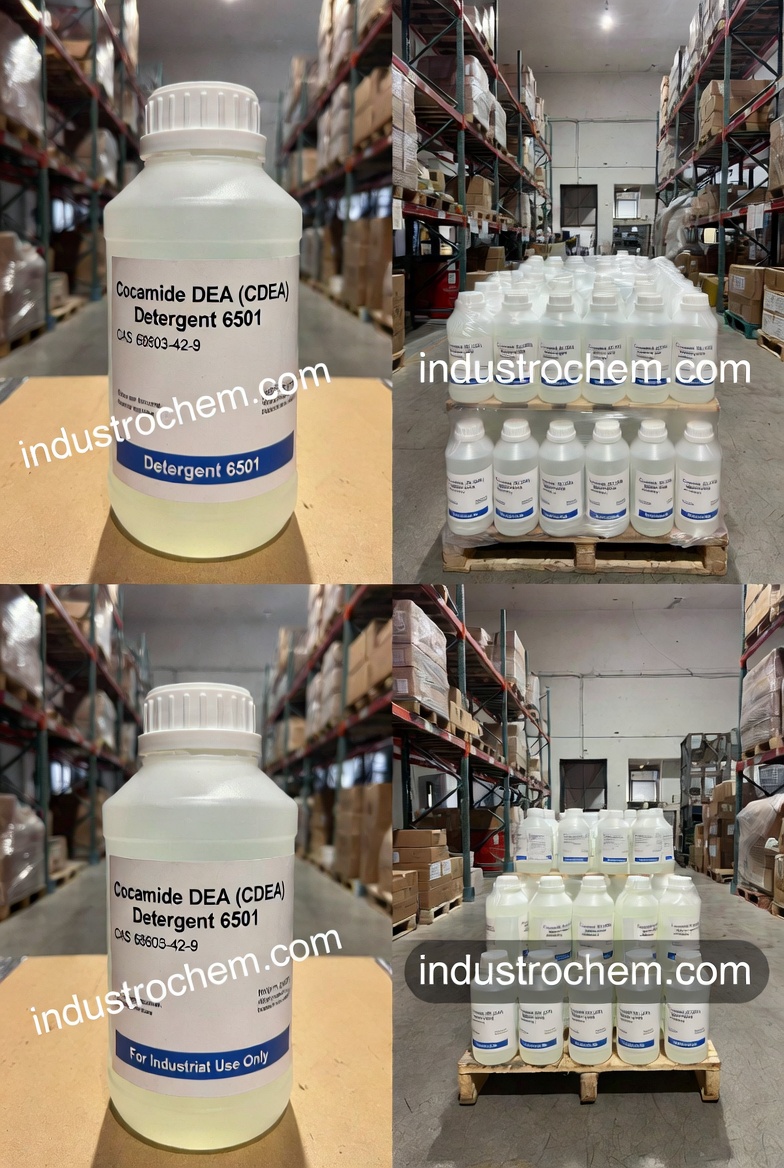
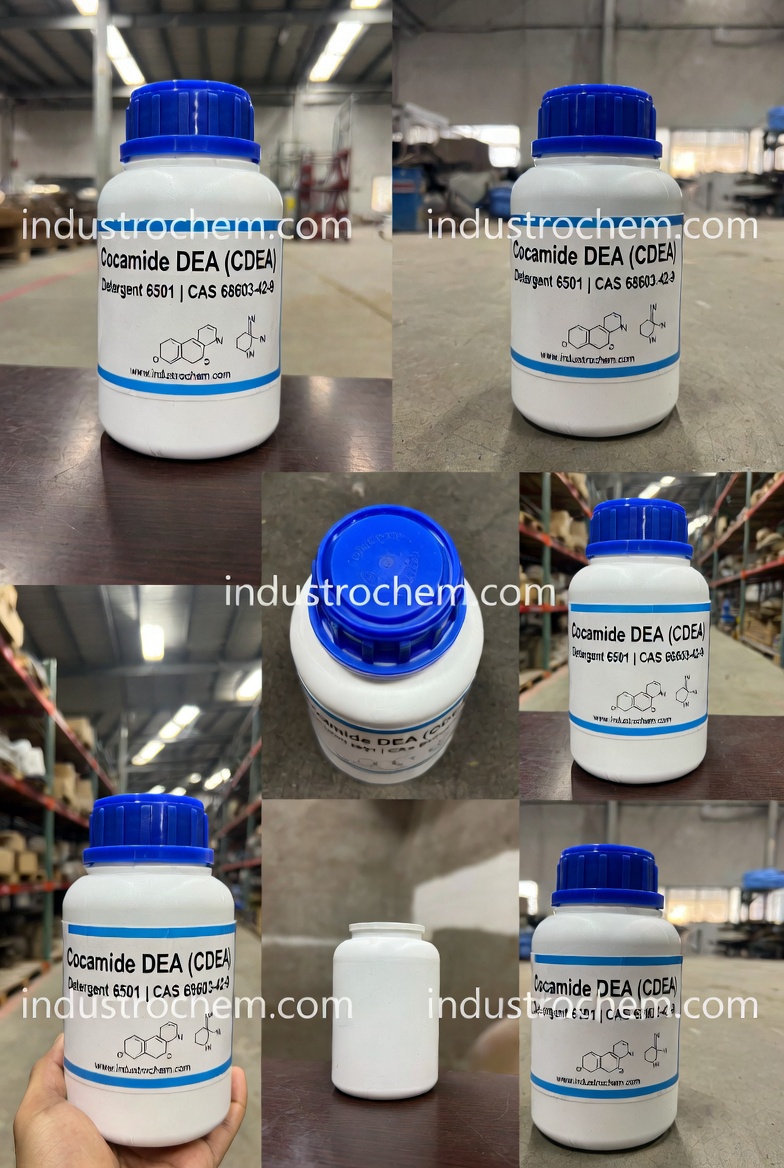
Cocamide DEA (CAS 68603-42-9), also known as CDEA or Detergent 6501, is a nonionic foam stabilizer and viscosity modifier for compatible detergent and cleaning formulations. Commercial grades differ in amide content, free DEA and physical form; compare the stated test basis rather than treating active matter as chemical purity. COA, TDS and SDS are available for specification review and safe handling.
Cocamide DEA (CDEA / Detergent 6501) CAS 68603-42-9
- CAS: 68603-42-9
- Synonyms: Cocamide DEA, CDEA, Coconut Diethanolamide, Coconut Fatty Acid Diethanolamide, Detergent 6501
- Einecs: 271-657-0
- Molecular Formula: Coco fatty-acid diethanolamide mixture (UVCB); no single fixed molecular formula
- Grade: Amide content or active matter on the stated analytical basis, free DEA, water, color, pH test concentration, and viscosity temperature
- Package: Packaging and net weight are specified in the quotation for the required quantity and destination.
Product Description
Product identity and formulation role
| Item | Product information |
|---|---|
| Product identity | Cocamide DEA (CDEA), also known as coconut fatty-acid diethanolamide or Detergent 6501 |
| CAS / EC | 68603-42-9 / 271-657-0 |
| Composition | Coco fatty-acid diethanolamide mixture (UVCB); a single molecular formula does not describe the commercial composition |
| Formulation role | Nonionic foam stabilization and viscosity modification in compatible detergent and cleaning systems |
Grade differences and quality controls
Commercial CDEA grades differ in amide content, free diethanolamine (DEA), residual glycerin or esters, water, color and physical form. Commercial ratio labels such as 1:1 or 2:1 follow the convention of the particular grade; the 6501 name alone does not define its composition or equivalence.
Active matter, solids and amide content are different measurements. An active-matter percentage is not automatically the chemical purity or amide percentage. Compare the stated analytical basis and method, with free DEA reported separately as a mass fraction. pH requires the aqueous test concentration; viscosity requires the temperature and method, and color requires the named scale.
Where a cosmetic-grade N-nitrosodiethanolamine (NDELA) limit applies, HPLC-MS/MS under ISO 15819:2014 can be specified with matrix-appropriate sample preparation and a reporting limit suited to the requirement. This method targets NDELA rather than every nitrosamine. Results should state the mass-based units and reporting limit.
For personal-care formulations, the selected grade and impurity limits must match the intended application and destination market. A standard industrial CDEA grade or matching CAS number does not establish suitability for every cosmetic formulation.
Formulation selection and related raw materials
In compatible cleansing systems, CDEA can be combined with Sodium Laureth Sulfate (SLES) and amphoteric surfactants such as Cocamidopropyl Betaine Powder. Compare the surfactant active content and, for powder grades, dissolution conditions. Foam, viscosity, clarity and low-temperature stability depend on salt, pH, dose, temperature and the complete formulation.
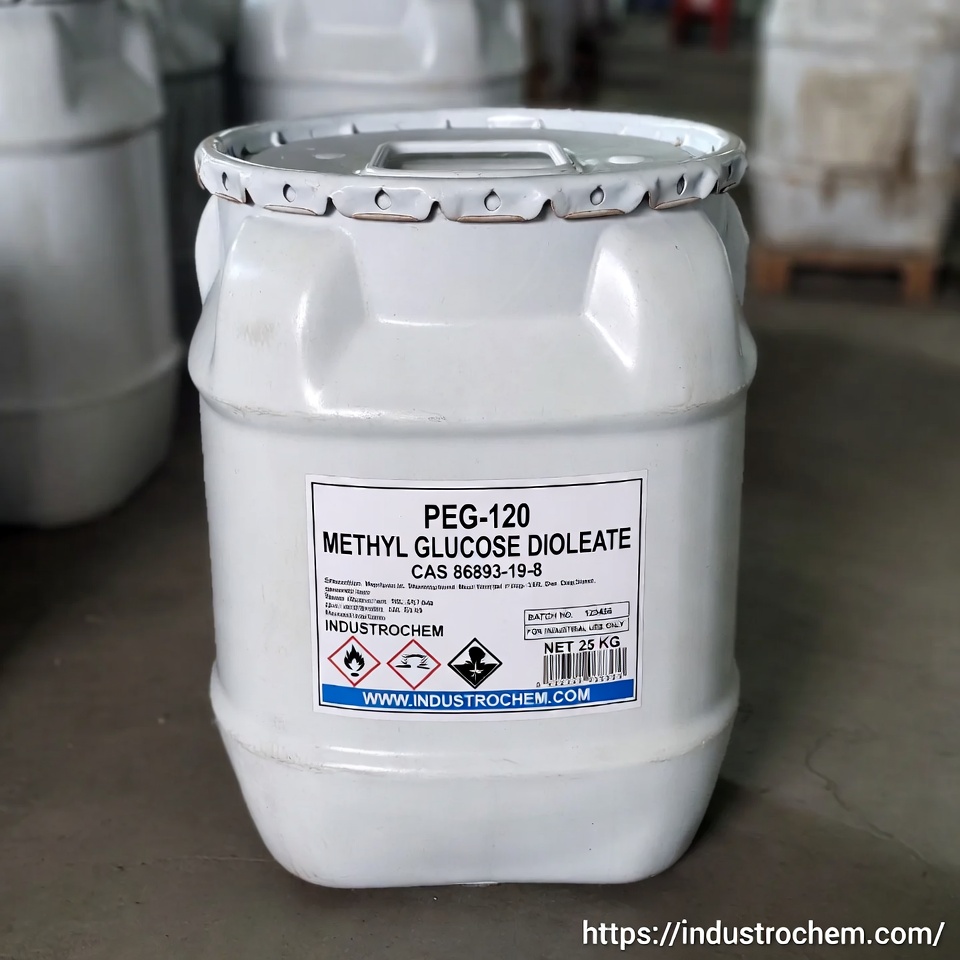
Cocamide MEA (CMEA) is a different alkanolamide option for foam and rheology comparison. PEG-120 Methyl Glucose Dioleate offers a non-amide thickening option for suitable anionic and amphoteric cleansing systems. These materials have different identities and processing requirements; comparable performance needs formulation trials rather than a one-to-one substitution.
Documents, handling and quotations
COA (Certificate of Analysis), TDS (Technical Data Sheet) and SDS (Safety Data Sheet) are available for the required grade. Applicable free-DEA and NDELA analytical reports, including the method and reporting limit, can also be provided. The COA describes batch-specific results, while the TDS explains the grade profile and handling conditions.
Keep containers tightly closed and prevent moisture ingress. The TDS gives the grade-specific storage, conditioning and mixing temperatures; the SDS covers exposure controls, spill response, transport and incompatible materials. Follow the stated conditioning instructions if viscosity or physical form changes during storage.
For a quotation, send the required quantity, destination and grade or intended application. A reference specification or any required free-DEA or NDELA limits helps match the grade.
FAQ - Technical & Supply Chain
-
Q:
Does the 6501 name define a single Cocamide DEA grade?
A: No. Cocamide DEA grades can differ in amide or active-matter content, free DEA, water, residual components and physical form. Commercial ratio labels are grade-specific. The 6501 name and CAS 68603-42-9 alone do not define a composition, a low-free-DEA grade or direct equivalence. -
Q:
Is active matter the same as amide purity in Cocamide DEA?
A: No. Active matter and amide content depend on different analytical definitions and methods. A high active-matter or solids value does not by itself establish amide purity or low free DEA. Compare the declared basis, the amide result where specified, and the separately reported free-DEA content.
Ordering & Documentation
Key information for document requests, quotations, and supply planning.
Documents
Tell us which documents your procurement team needs. Before an order, we will check whether the quoted source can provide them for the offered lot.
Quotation
Send the CAS number, grade, quantity, packing preference and destination.
Sample & Supply
Ask whether samples, trial quantities or repeat orders are possible. We will check each request against the sourced product and current offer.
Storage & Shipping
Product-specific conditions are confirmed before order.