







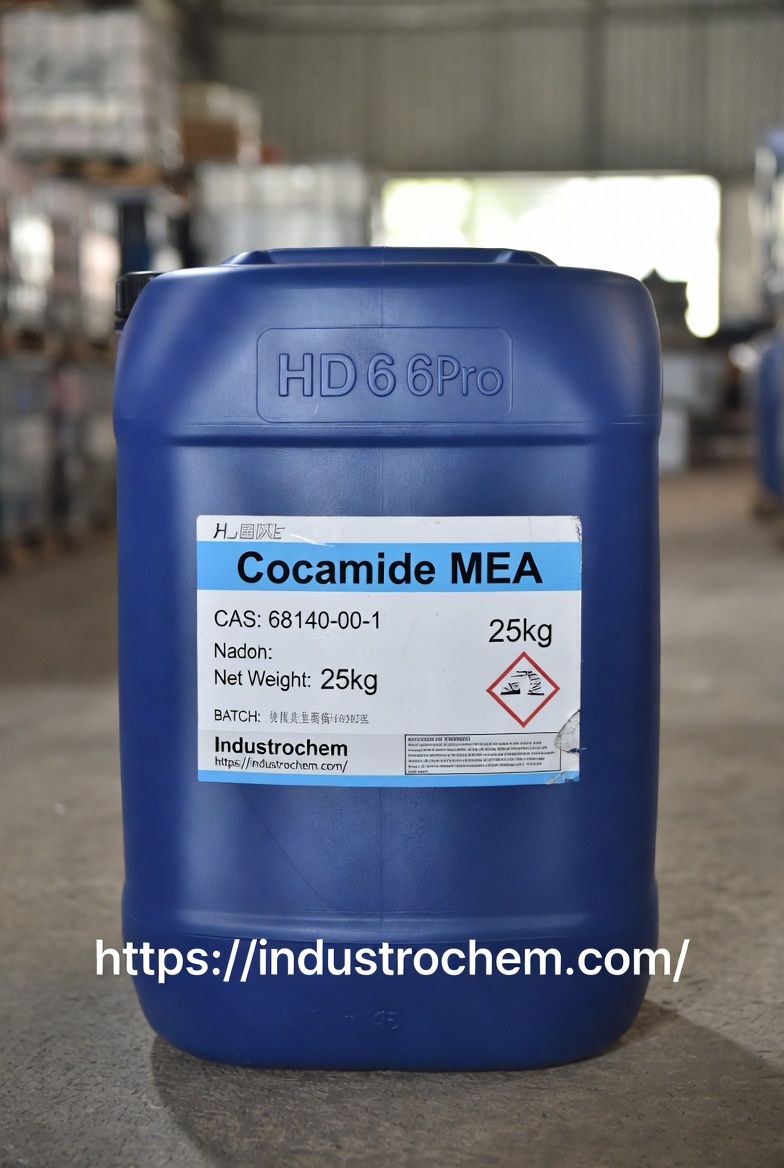
Cocamide MEA is a coconut fatty acid monoethanolamide commonly used in personal care and detergent formulations as a nonionic surfactant, foam stabilizer, and viscosity builder. In commercial supply, this product is generally handled as a formulation raw material rather than a single narrowly defined pure compound. It is widely selected for shampoo, shower gel, foam bath, hand wash, liquid soap, and related rinse-off systems where stable foam, improved body, and better formulation texture are required. Standard export supply can be arranged, with COA, TDS, and SDS available according to customer requirements.
Cocamide MEA CAS 68140-00-1
- CAS: 68140-00-1
- Synonyms: Cocamide MEA; Coconut Monoethanolamide; Coconut Oil Monoethanolamide; Coco Monoethanolamide; CMEA.
- Einecs: 268-770-2
- Grade: Industrial Grade / Personal Care Grade / Detergent Grade
- Package: Standard export packaging can be arranged according to supply form, order quantity, and logistics requirements.
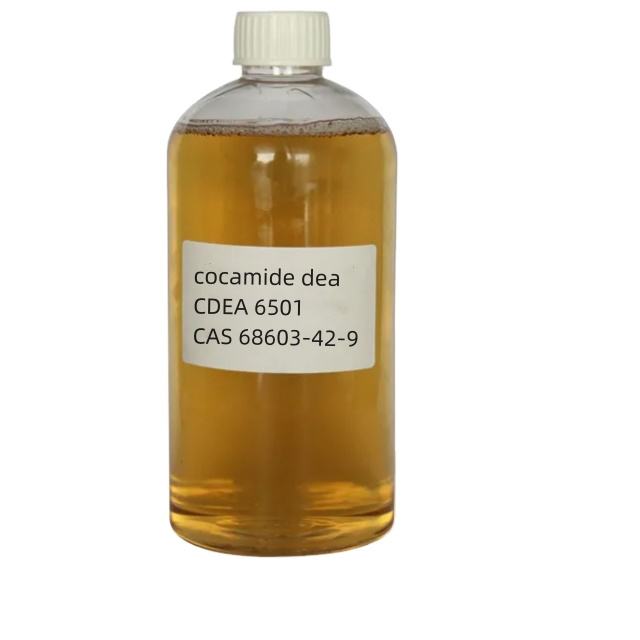
Product Description
Physicochemical Properties
| Item | Typical Description |
|---|---|
| Appearance | White to light yellow flakes, pellets, or solid form depending on grade and temperature |
| Product Type | Nonionic surfactant / alkanolamide |
| Main Source | Derived from coconut fatty acids and monoethanolamine |
| Functional Character | Foam boosting, foam stabilization, viscosity building, and wetting support in surfactant systems |
| Formulation Compatibility | Generally compatible with anionic surfactants, soaps, and many other surfactant systems depending on formulation design |
| Supply Form | Commercially supplied as flakes, pellets, or similar solid form depending on grade |
| Typical Use Direction | Commonly used in rinse-off cleansing systems such as shampoo, hand wash, shower gel, and liquid soap |
Typical Applications
- Shampoo formulations
- Body wash and shower gel
- Hand wash and liquid soap
- Foam bath products
- Selected cleansing and detergent systems requiring improved foam and viscosity response
Actual application suitability should be confirmed according to formulation design, target viscosity, surfactant balance, and local regulatory requirements.
Functional Role
Cocamide MEA is generally used as a nonionic surfactant and performance aid in cleansing formulations. In supplier practice, it is commonly positioned as a foam booster and viscosity builder that helps improve foam richness, foam stability, and product texture in rinse-off systems.
Typical Supply Form
This product is commonly supplied as solid flakes or pellet-like material for downstream formulation use. Product grade, appearance, and routine specification may vary according to the agreed supply standard.
For related foam-booster and viscosity-modifier surfactant pages, compare Cocamide DEA, PEG-120 Methyl Glucose Dioleate, and Cocamidopropylamine Oxide.
Packaging
Cocamide MEA can be supplied in sealed industrial packaging suitable for export and routine warehousing. Packaging arrangement can be made according to order volume, shipment method, and customer requirements.
Storage
Store in a cool, dry, and well-ventilated place in tightly closed original packaging. Protect from excessive heat, moisture, direct sunlight, and contamination. Proper storage helps maintain handling quality during transportation and warehousing.
FAQ - Technical & Supply Chain
-
Q:
What is Cocamide MEA CAS 68140-00-1?
A: Cocamide MEA, also called coconut monoethanolamide or CMEA, is a nonionic alkanolamide surfactant made from coconut fatty acids and monoethanolamine. It has CAS 68140-00-1 and EC 268-770-2, and is normally supplied as white to light yellow flakes, pellets, or solid material. -
Q:
What does Cocamide MEA do in cleansing products?
A: It is used mainly as a foam booster, foam stabilizer, viscosity builder, and wetting aid. In shampoo, body wash, shower gel, hand wash, and liquid soap, it helps improve foam richness, foam stability, and product texture without acting as the sole primary cleanser. -
Q:
How is Cocamide MEA different from Cocamide DEA?
A: Cocamide MEA is the monoethanolamide, while Cocamide DEA is the diethanolamide. They are related alkanolamides with similar formulation functions, but different raw-material chemistry and regulatory considerations, so they should not be treated as directly interchangeable without checking the target formulation and market requirements. -
Q:
What physical form and melting behavior should be expected?
A: It is commonly a solid or flake material with a melting point around 60-75 degrees C depending on the coconut fatty acid distribution and grade. Many formulations require warm mixing or dissolution in a surfactant/alcohol system, so the processing temperature and addition order should be confirmed. -
Q:
Which Cocamide MEA specifications should be checked?
A: Useful checks include appearance, melting range, active amide content, free amine or amine value, acid value, free fatty acid, moisture or volatiles, and color. These values vary by grade, so the supplier specification should be matched to the target cleansing formulation and viscosity requirement.
Ordering & Documentation
Key information for document requests, quotations, and supply planning.
Documents
COA, TDS, SDS/MSDS and packing details are available on request.
Quotation
Send the CAS number, grade, quantity, packing preference and destination.
Sample & Supply
Support is available for samples, trial orders, bulk and repeat supply.
Storage & Shipping
Product-specific conditions are confirmed before order.

