









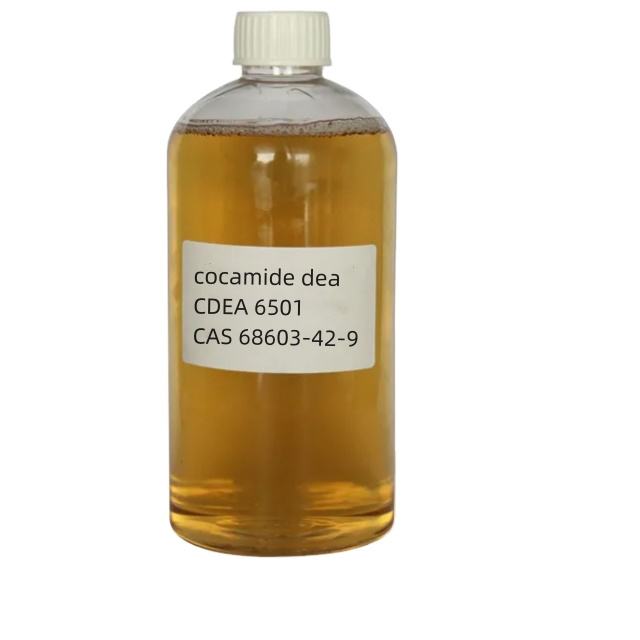
Cocamide DEA (CAS 68603-42-9), widely specified in the industry as 6501 or CDEA, is a non-ionic surfactant utilizing its unique alkanolamide structure to provide superior foam stabilizing and thickening properties in liquid detergent systems. Chemically identified as N,N-Bis(2-hydroxyethyl) cocoamide, this viscous, amber-colored liquid acts to modify the rheology of anionic surfactants (like SLES), significantly increasing the viscosity of the formulation while stabilizing the lather against hard water. As a versatile Fatty acid diethanolamide derived from coconut oil, it is extensively integrated into shampoos, dishwashing liquids, hand soaps, and shower gels to create a rich, creamy texture and improve the "foam feel" for the end user. We ensure bulk supply capabilities for this material, providing access to competitive factory pricing and customized specifications to meet specific Glycerol content and Amine value requirements (typically the 1:1 type). Full technical documentation, including MSDS, TDS, COA, is available to support compliance and safety protocols.
Cocamide DEA (CDEA) 6501 CAS 68603-42-9
- CAS: 68603-42-9
- Synonyms: CDEA, Coconut diethanolamide, N,N-Bis(2-hydroxyethyl)cocoamide, Coconut fatty acid diethanolamide, Coco diethanolamide
- Einecs: 271-657-0
- Grade: Cosmetic Grade / Detergent Grade
- Package: 200kg/Plastic Drum or 1000kg/IBC Tank.
Product Description
Cocamide DEA (CAS 68603-42-9) is a versatile non-ionic surfactant. While it produces moderate foam on its own, its primary strength lies in its synergy with other surfactants.
Key Features:
- Viscosity Builder: It is the most cost-effective thickener for liquid detergent systems (especially SLES/LABSA based).
- Foam Stabilizer: It prevents foam from collapsing quickly, providing a long-lasting lather even in the presence of grease.
- Emulsification: Helps solubilize oils and fragrances into water-based formulas.
- Corrosion Inhibition: Offers anti-rust protection for metal surfaces, making it useful in industrial cleaning.
- Refatting Agent: Reduces the harsh degreasing effect of primary surfactants, protecting the skin.
Physicochemical Properties
The specifications below refer to the standard Export Grade (1:1 Type), which has higher amide content and lower free amine compared to the 1:1.5 type.
| Parameter | Specification (Standard) |
|---|---|
| Appearance (25°C) | Yellow to light amber viscous liquid |
| Odor | Slight characteristic amine odor |
| Amide Content | ≥ 82.0% |
| Free Fatty Acid | ≤ 0.5% |
| Free Amine (Diethanolamine) | ≤ 5.0% |
| pH Value (1% Solution) | 9.0 – 11.0 |
| Moisture / Water | ≤ 1.0% |
| Glycerin | ≤ 10.0% |
| Color (Hazen/APHA) | ≤ 150 |
| Solubility | Soluble in water (clear to hazy depending on concentration) |
Applications
- Personal Care Products:
- Shampoos & Shower Gels: Used at 1% – 4% to thicken the formula and create a creamy, stable foam.
- Hand Soaps: Provides viscosity and a smooth skin feel.
- Household Detergents:
- Dishwashing Liquid: Enhances grease removal and maintains foam while washing oily dishes.
- Laundry Detergents: Improves cleaning power and stabilizes the formula.
- Industrial Applications:
- Textile Industry: Used as a scouring agent and wool cleanser.
- Metal Processing: Used in cutting fluids for its rust-inhibiting properties.
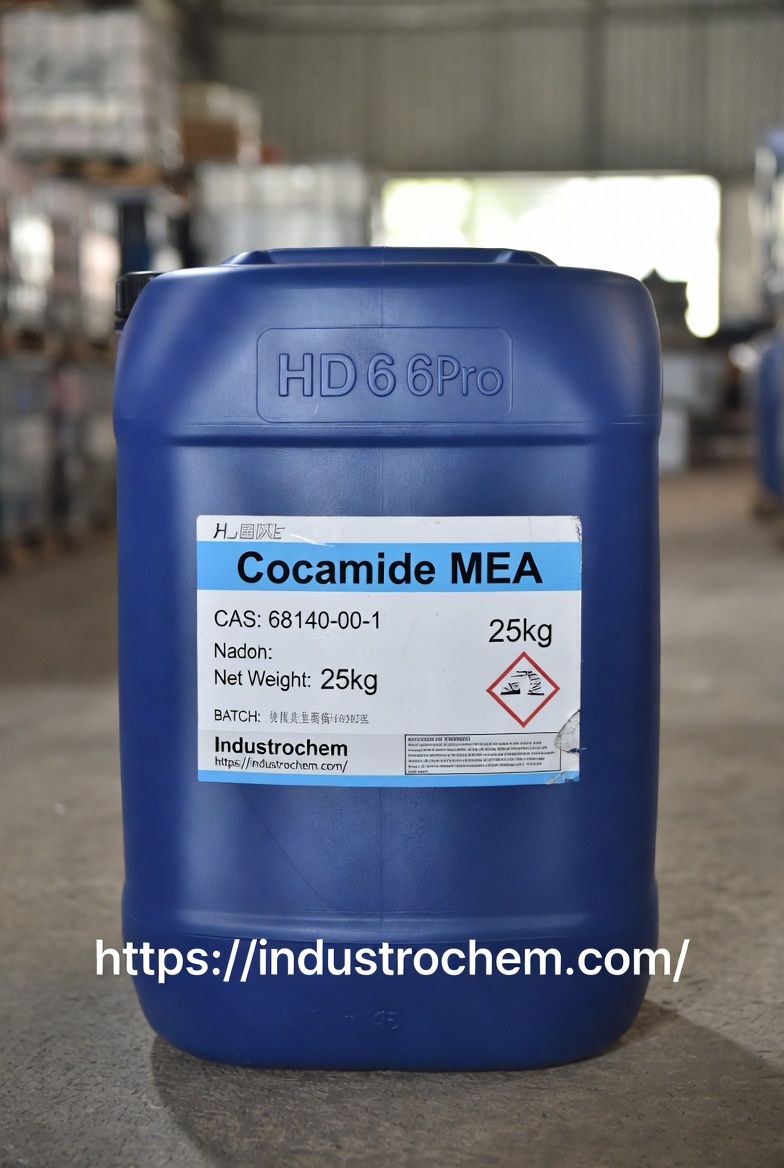
For related foam-boosting and viscosity-building surfactant options, see Cocamide MEA and Lauramine Oxide.
Storage Conditions
- Temperature: Store in a dry, cool, and well-ventilated place.
- Physical Change: At low temperatures (below 15°C), CDEA may become turbid, hazy, or semi-solid. This is a natural physical characteristic and does not affect quality. Warm gently to restore clarity before use.
- Packaging: Keep containers tightly sealed to avoid moisture absorption.
- Shelf Life: 24 months in original unopened packaging.
Safety Precautions
- Handling: Avoid contact with skin and eyes. CDEA is alkaline and can cause irritation in its concentrated form.
- PPE: Wear safety goggles and chemical-resistant gloves when handling drums.
- First Aid:
- Eye Contact: Rinse immediately with plenty of water for at least 15 minutes and seek medical advice.
- Skin Contact: Wash thoroughly with soap and water.
- Nitrosamines: Formulators should be aware to avoid using CDEA with nitrosating agents.
FAQ - Technical & Supply Chain
-
Q:
What is Cocamide DEA CDEA 6501 CAS 68603-42-9?
A: Cocamide DEA CDEA 6501 CAS 68603-42-9 is a coconut fatty acid diethanolamide used as a nonionic secondary surfactant. It is mainly added to shampoos, body washes, hand soaps, dish detergents, and liquid laundry products to stabilize foam, build viscosity, and improve the feel of surfactant systems. -
Q:
What does the 6501 1:1 type mean?
A: The 6501 trade name can refer to different diethanolamine ratios. A 1:1 type is made with a lower excess of diethanolamine, so it normally has higher amide content, lower free amine, and stronger thickening and foam-stabilizing performance. Higher-DEA types such as 1:1.5 are usually more water-soluble and lower cost, but they are weaker thickeners on an equivalent dosage basis. -
Q:
How does Cocamide DEA 6501 thicken SLES or LABSA shampoo systems?
A: Cocamide DEA works as a cosurfactant by inserting itself into the micelles formed by primary anionic surfactants such as SLES, SLS, or LABSA. This changes micelle structure and creates higher viscosity without relying only on salt, while also increasing foam density and extending lather life. -
Q:
Is Cocamide DEA 6501 only a foaming agent?
A: No, its functions are broader. Besides foam stabilization, it acts as a viscosity builder, emulsifier for oils and fragrances, refatting agent to reduce skin degreasing, and corrosion inhibitor in some industrial cleaning or metal-treatment systems. -
Q:
What are typical specifications for the standard 1:1 export grade?
A: The standard 1:1 export grade is usually a yellowish to light amber viscous liquid with amide content at least 82%, free fatty acid not more than 0.5%, free amine about 5.0% or less, pH 9.0-11.0 in a 1% solution, moisture not more than 1.0%, and glycerin not more than 10.0%. Premium no-glycerol grades may specify higher amide content.
Ordering & Documentation
Key information for document requests, quotations, and supply planning.
Documents
COA, TDS, SDS/MSDS and packing details are available on request.
Quotation
Send the CAS number, grade, quantity, packing preference and destination.
Sample & Supply
Support is available for samples, trial orders, bulk and repeat supply.
Storage & Shipping
Product-specific conditions are confirmed before order.

