










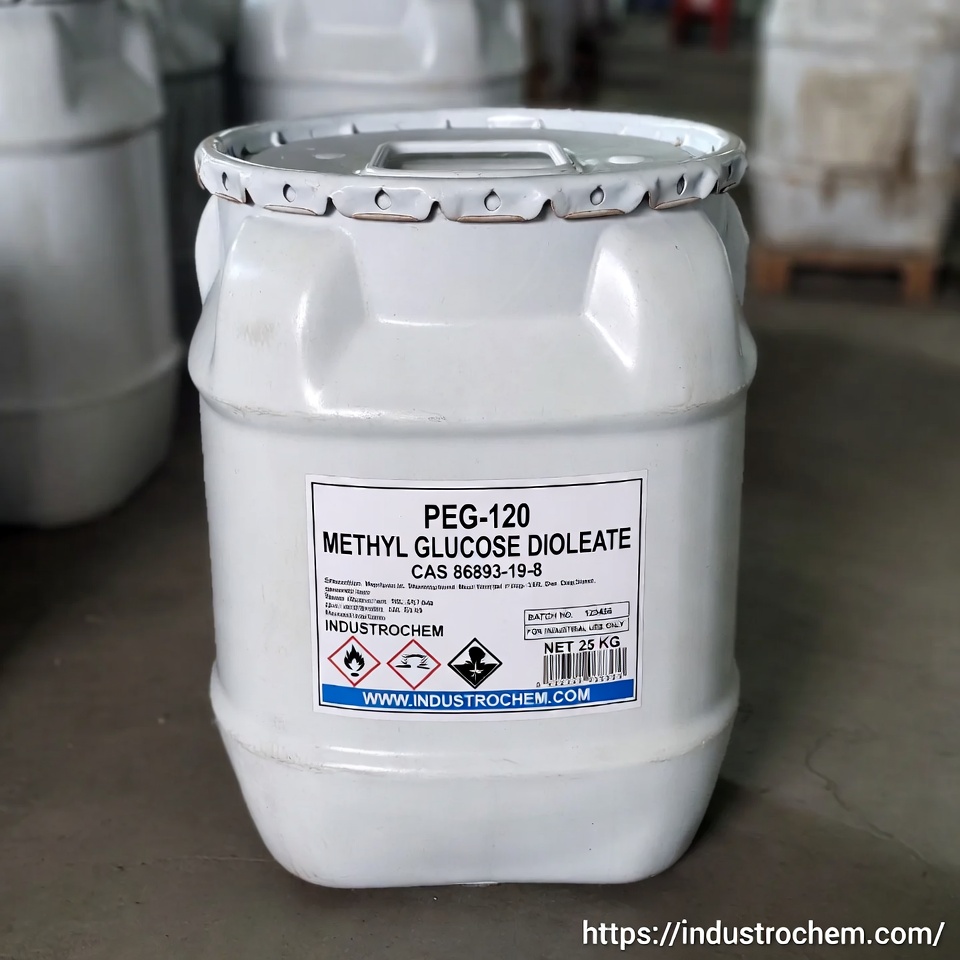
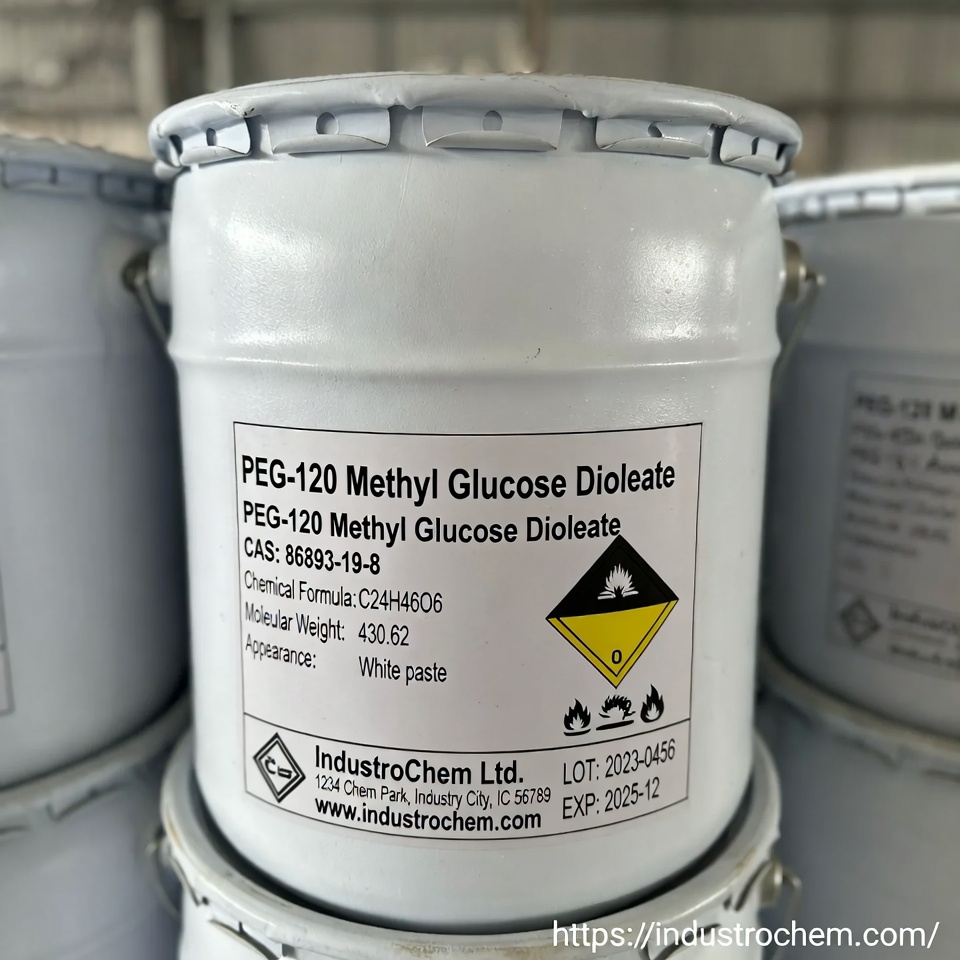
PEG-120 Methyl Glucose Dioleate is a nonionic glucose-derived surfactant and rheology modifier used in the Emulsifiers & Surfactants and Cosmetic Raw Materials supply chain, and this material, also described in industrial documentation as PEG 120 Methyl Glucose Dioleate, ethoxylated methyl glucoside dioleate, PEG-120 methyl glucose dioleate, and methyl glucose dioleate ethoxylate, corresponding to CAS 86893-19-8, functions through its ethoxylated sugar-lipid structure to improve viscosity building, surfactant system compatibility, and formulation stability in aqueous cleansing and liquid surfactant processing systems, making it commonly applied in cleansing base manufacturing, surfactant thickening adjustment, and mild liquid formulation development where controlled rheology and handling are required; for industrial procurement, this product is typically offered with competitive factory pricing, customized specifications, documentation including MSDS, TDS, COA, and reliable bulk supply.
PEG-120 Methyl Glucose Dioleate CAS 86893-19-8
- CAS: 86893-19-8
- Synonyms: PEG 120 Methyl Glucose Dioleate Ethoxylated Methyl Glucoside Dioleate PEG-120 methyl glucose dioleate
- Einecs: 617-932-4
- Grade: Cosmetic Grade / Industrial Surfactant Grade
- Package: 25 kg drum, 120 kg drum, 200 kg drum, or customized export
Product Description
Technical Data
| Item | Typical Specification / Reference Range |
|---|---|
| Appearance | Yellowish syrup, pale yellow paste, or pale yellow flake depending on manufacturing form |
| Odor | Mild characteristic odor |
| pH (10% aqueous solution) | 4.5–7.5 |
| Acid Value | ≤1.0 mg KOH/g or max 1 mg/g depending on grade |
| Saponification Value | 9–20 mg KOH/g or 14–26 mg/g depending on process grade |
| Hydroxyl Value | 14–26 mg/g for some commercial grades |
| Iodine Value | 3–11 g/100 g or 5–15 depending on grade |
| Water Content | 25–30% for syrup-form grades |
| Solubility / Dispersion | Typically used in aqueous surfactant systems; compatibility depends on formulation structure |
| Purity / Assay | Usually controlled by specification profile rather than a single simple assay value |
Applications
1. Surfactant System Thickening
PEG-120 Methyl Glucose Dioleate is commonly used as a rheology modifier in aqueous surfactant formulations where viscosity adjustment is needed without major restructuring of the primary surfactant base.
2. Cleansing Base Manufacturing
It is typically applied in liquid cleansing base processing to support handling properties, process consistency, and flow control during formulation and filling.
3. Mild Liquid Formulation Development
This material is often selected in systems that require surfactant compatibility and controlled texture development, especially where electrolyte-only thickening is not sufficient.
Storage & Safety
Store in a cool, dry, and well-ventilated area. Keep the container tightly closed when not in use. Protect the material from direct sunlight, excessive heat, and repeated temperature fluctuation. If supplied in syrup or paste form, warming for transfer should be controlled according to the current technical documentation. During handling, use standard PPE including chemical-resistant gloves, safety goggles, and protective clothing. Good ventilation is recommended during transfer, blending, and heating operations. Avoid direct eye contact and prolonged skin exposure. Refer to the current SDS for spill response, handling, and disposal procedures.
Quality Assurance
A factory quality program for PEG-120 Methyl Glucose Dioleate is usually based on process-oriented specification control rather than a single small-molecule assay method. Typical release items may include appearance, pH, acid value, saponification value, iodine value, water content, and batch consistency checks. Identity-supporting instrumental methods such as FTIR may also be used where required by internal plant procedures. HPLC, NMR, or GMP should not be claimed as standard release requirements unless the actual manufacturing site and product grade provide documented support for those controls.
FAQ - Technical & Supply Chain
-
Q:
Is PEG-120 Methyl Glucose Dioleate mainly used as a primary surfactant or as a viscosity modifier?
A: In commercial formulation practice, it is more commonly selected for viscosity building and surfactant-system support than for use as a primary cleansing surfactant alone. The exact role depends on the overall surfactant structure of the formulation. -
Q:
Why is PEG-120 Methyl Glucose Dioleate used when salt thickening is limited?
A: It is typically used when a formulation needs additional rheology adjustment or improved surfactant compatibility under conditions where simple electrolyte thickening does not provide the target processing window or texture profile.
Documents and Product Support
For product review and sourcing evaluation, supporting documents can be coordinated according to the product type, inquiry stage, and order requirements.
- COA for batch-based quality reference
- TDS for key physical and chemical information
- SDS / MSDS for handling, storage, and safety reference
- Packing information for sample, trial, and bulk orders
- Technical communication based on application and specification requirements
Information to Confirm Before Quotation
Clear sourcing information helps reduce specification mismatch and allows a more accurate quotation before sample or bulk order discussion.
- Product name and CAS number
- Application or intended end use
- Required purity, grade, or specification
- Sample quantity, trial order, or bulk demand
- Preferred packing form or net weight
- Destination country or port
- Required documents or compliance expectations
Packaging, Storage, and Handling Notes
Packaging form, storage conditions, shelf life, and shipment arrangements should be confirmed according to the product characteristics, package size, and destination requirements.
Before order confirmation, buyers are advised to review the corresponding product documents and confirm whether any special storage, labeling, or handling requirements apply.
Sample, Bulk Order and Repeat Supply Support
Support can be arranged for sample discussion, bulk supply planning, packaging confirmation, and routine sourcing communication based on the actual product and order requirements.
For repeat-use formulations or long-term procurement plans, buyers may discuss specification consistency, packaging preferences, delivery expectations, and document coordination in advance.


