










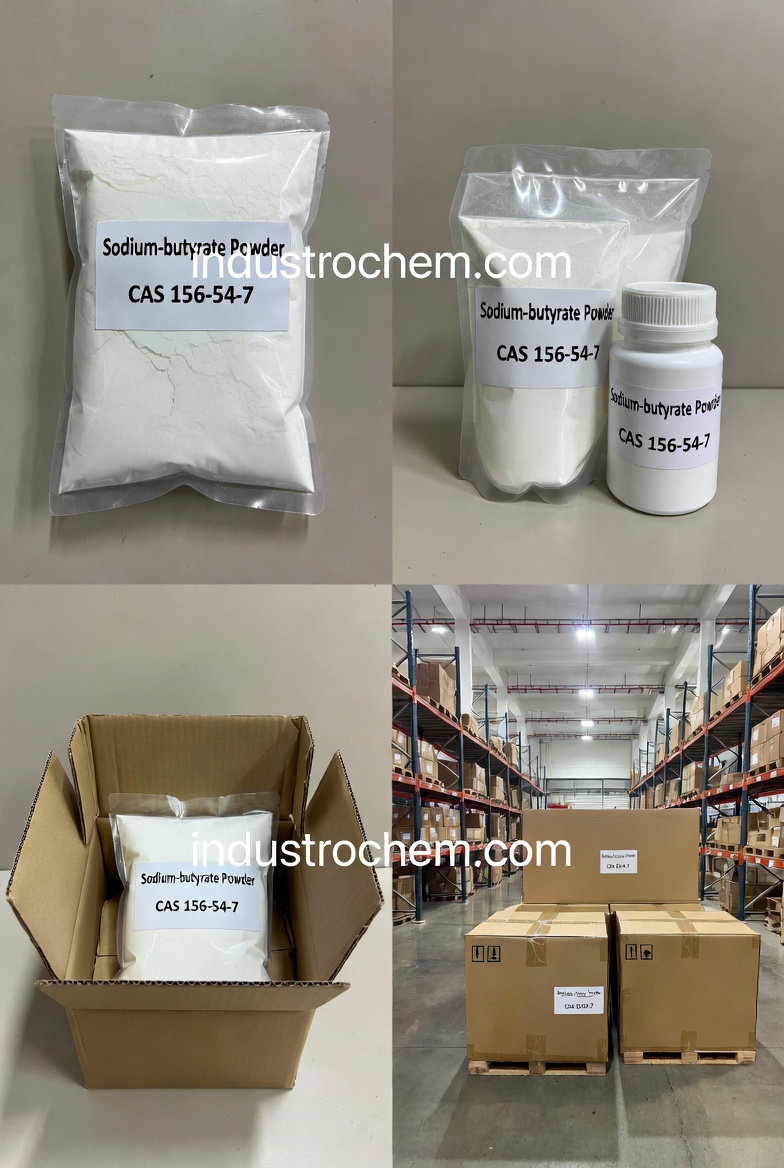
Sodium Butyrate CAS 156-54-7 is a short-chain fatty acid salt chemically defined as Sodium butanoate , functioning primarily as a mucosal conditioning agent in animal feed formulations and an esterification intermediate in chemical synthesis. Also known as Butanoic acid sodium salt or Sodium n-butyrate, this hygroscopic crystalline powder is utilized to promote intestinal epithelial integrity in livestock nutrition and serves as a specialized reagent for histone deacetylase inhibition in biochemical applications. We provide professional access to this material with competitive factory pricing and the ability to meet customized specifications for various manufacturing requirements. Our commitment to technical transparency ensures that every shipment is accompanied by comprehensive MSDS, TDS, COA documentation to support your quality assurance protocols, and we maintain capacity for consistent bulk supply to facilitate large-scale industrial operations.
Sodium Butyrate CAS 156-54-7
- CAS: 156-54-7
- Synonyms: Sodium butanoate, Butanoic acid sodium salt, Sodium n-butyrate, Butyric acid sodium salt, Na-butyrate
- Einecs: 205-857-6
- Molecular Formula: C4H7NaO2
- Grade: Food/Pharma Grade
- Package: 25kg/bag (Plastic woven bag with PE liner) or 500kg/1000kg Jumbo Bag.
Product Description
Physical & Chemical Properties
Sodium Butyrate is a short-chain fatty acid (SCFA) salt. Its physical characteristics depend heavily on whether it is raw or coated. The table below refers to the standard raw chemical substance.
| Property | Specification / Description |
|---|---|
| Product Name | Sodium Butyrate |
| CAS Number | 156-54-7 |
| Molecular Formula | C4H7NaO2 |
| Molecular Weight | 110.09 g/mol |
| Appearance | White or off-white powder / crystalline granules |
| Odor | Characteristic sour, rancid butter odor (Raw); Mild fatty odor (Coated) |
| Assay (Dry Basis) | ≥ 98.0% (for Raw powder) |
| Solubility | Easily soluble in water and ethanol |
| pH Value | Alkaline (typically 7.0 – 9.0 in solution) |
| Melting Point | 250°C – 253°C |
Key Application Fields
1. Animal Nutrition (The Primary Market)
This is the volume driver for CAS 156-54-7. It acts as a direct energy source for epithelial cells.
- Swine (Piglet Weaning): This is the “killer app.” It helps repair intestinal damage caused by weaning stress, reduces diarrhea, and improves feed intake.
- Poultry: Used to improve eggshell quality and strengthen the gut barrier against pathogens like Salmonella.
- Aquaculture: Increasingly used in shrimp and fish feed to improve the Feed Conversion Ratio (FCR) and immunity.
2. Human Dietary Supplements
While less common than in agriculture, Sodium Butyrate is gaining traction in the “Postbiotic” market. It is used in formulations targeting IBS (Irritable Bowel Syndrome) and general microbiome balance.
- Note: For human use, high-grade micro-encapsulation is non-negotiable to prevent the “burp” effect and bad taste.
Safety and Precautionary Measures
Sodium Butyrate is generally considered safe and non-toxic, but it presents a unique “social” hazard due to its smell.
- Odor Management: The raw powder smells strongly of vomit/rancid milk. If spilled on clothing, the smell is extremely difficult to remove. Workers must wear dedicated protective clothing that stays in the facility.
- Inhalation: The dust is irritating to the respiratory tract. N95 masks or respirators are mandatory.
- Eye/Skin Contact: It can cause irritation. Wash immediately with soap and water if contact occurs.
- Fire Safety: As a fine organic powder, standard precautions against dust explosions should be taken in the mixing area.
Storage and Handling Conditions
Proper storage is vital not just for product stability, but to keep your warehouse habitable.
- Airtight Sealing: This is the most important rule. If a bag of raw Sodium Butyrate is punctured, the odor will permeate the entire warehouse and can cross-contaminate other porous packaging (like cardboard).
- Hygroscopicity: The product readily absorbs moisture from the air. Once it absorbs water, it clumps and the smell intensifies.
- Temperature: Store in a cool, dry, and well-ventilated place.
- Packaging:
- Raw (98%): Usually 25kg bags with thick, double-layer PE liners.
- Coated: Often comes in 25kg Kraft bags. The coating provides some protection against moisture and smell leakage.
FAQ - Technical & Supply Chain
-
Q:
Does the raw powder form of Sodium Butyrate (CAS 156-54-7) require special handling regarding odor control?
A: Yes. While chemically stable as a salt, raw Sodium Butyrate retains a distinct, pungent odor characteristic of volatile fatty acids. Industrial users typically handle this material in closed dosing systems or opt for microencapsulated grades (which shield the core material) if the manufacturing environment cannot tolerate the strong olfactory profile of the raw powder. -
Q:
Is this material synonymous with Butyric Acid for formulation purposes?
A: No. Sodium Butyrate (CAS 156-54-7) is a solid salt, whereas Butyric Acid is a corrosive liquid. In feed and industrial formulations, the salt form is preferred for its ease of handling, reduced volatility, and buffering capacity, whereas the liquid acid requires specialized corrosion-resistant storage and metering equipment.
Documents and Product Support
For product review and sourcing evaluation, supporting documents can be coordinated according to the product type, inquiry stage, and order requirements.
- COA for batch-based quality reference
- TDS for key physical and chemical information
- SDS / MSDS for handling, storage, and safety reference
- Packing information for sample, trial, and bulk orders
- Technical communication based on application and specification requirements
Information to Confirm Before Quotation
Clear sourcing information helps reduce specification mismatch and allows a more accurate quotation before sample or bulk order discussion.
- Product name and CAS number
- Application or intended end use
- Required purity, grade, or specification
- Sample quantity, trial order, or bulk demand
- Preferred packing form or net weight
- Destination country or port
- Required documents or compliance expectations
Packaging, Storage, and Handling Notes
Packaging form, storage conditions, shelf life, and shipment arrangements should be confirmed according to the product characteristics, package size, and destination requirements.
Before order confirmation, buyers are advised to review the corresponding product documents and confirm whether any special storage, labeling, or handling requirements apply.
Sample, Bulk Order and Repeat Supply Support
Support can be arranged for sample discussion, bulk supply planning, packaging confirmation, and routine sourcing communication based on the actual product and order requirements.
For repeat-use formulations or long-term procurement plans, buyers may discuss specification consistency, packaging preferences, delivery expectations, and document coordination in advance.