









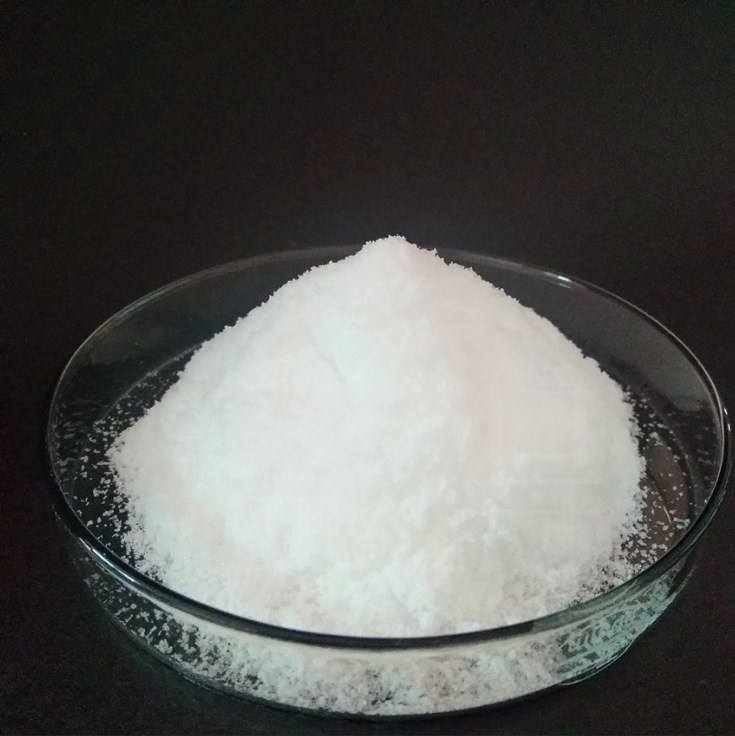
Potassium Sodium Tartrate (CAS 304-59-6), historically and commercially famous as Rochelle Salt or Seignette Salt, is a double salt of tartaric acid utilizing its strong complexing ability to regulate metal ion deposition in industrial applications. Chemically identified as Potassium sodium L-tartrate, this colorless to white crystalline powder functions as a pH regulator and a sequestering agent. Due to its large piezoelectric crystals, it has historical significance in acoustics, but in modern bulk trade, it is extensively integrated into the Food Industry as a leavening acid (E337) and stabilizer in cheese products, and into the Electroplating Industry as a complexing agent for copper plating baths to ensure smooth, uniform coatings. We ensure bulk supply capabilities for this material, providing access to competitive factory pricing and customized specifications to meet specific mesh sizes and purity standards (e.g., Food Grade / Tech Grade). Full technical documentation, including MSDS, TDS, COA, is available to support compliance and safety protocols.
Potassium Sodium Tartrate CAS 304-59-6
- CAS: 304-59-6
- Synonyms: Rochelle salt, Seignette salt, Potassium sodium L-tartrate, Sodium potassium tartrate
- Einecs: 206-156-8
- Molecular Formula: C4H4KNaO6·4H2O
- Grade: Food Grade (E337) / Tech Grade / Electroplating Grade / USP
- Package: 25kg/Kraft Paper Bag or Woven Bag with PE inner liner
Product Description
Potassium Sodium Tartrate, also widely known as Rochelle Salt, is a double salt of tartaric acid. It appears as colorless to white, translucent crystals or a white crystalline powder with a cool, saline taste. It acts as a chelating agent and buffer in various industrial and food applications.
Our product is produced through a high-precision neutralization process, ensuring high purity (≥99%) and excellent solubility. It is a critical raw material in the electroplating industry for copper plating, in the food industry as a stabilizer and leavening agent, and in the chemical industry for mirror silvering. We guarantee low heavy metal content and strict adherence to international quality standards suitable for export.
Physicochemical Properties
The following specifications are based on our standard export quality (Food/Tech Grade):
| Test Item | Specification (Standard) |
|---|---|
| Appearance | Colorless crystals or white crystalline powder |
| Assay (Purity) | 99.0% – 102.0% |
| Alkalinity | Passes Test |
| Loss on Drying (at 150°C) | 21.0% – 26.0% (Tetrahydrate) |
| pH Value (5% Solution) | 6.5 – 8.5 |
| Heavy Metals (as Pb) | ≤ 10 ppm |
| Arsenic (As) | ≤ 3 ppm |
| Chloride (Cl) | ≤ 350 ppm |
| Sulfate (SO4) | ≤ 500 ppm |
| Iron (Fe) | ≤ 10 ppm |
| Solubility | Soluble in water (1g/ml); Insoluble in alcohol |
| Specific Gravity | 1.79 g/cm³ |
Applications
Potassium Sodium Tartrate is a multifunctional ingredient used across several key industries:
- Electroplating Industry:
- Used as a complexing agent in alkaline copper plating systems. It helps regulate the pH and promotes the formation of smooth, dense, and uniform metal coatings.
- Food Industry:
- Leavening Agent: Often combined with sodium bicarbonate in baking powders.
- Stabilizer: Used in cheese processing, meat products, and jams to maintain texture and pH balance.
- E-Number: Listed as food additive E337.
- Chemical & Mirror Industry:
- Mirror Silvering: acts as a reducing agent in the silvering process for mirrors.
- Chemical Reagent: Essential component in the preparation of Fehling’s Solution (used to test for reducing sugars).
- Pharmaceutical & Personal Care:
- Used as a saline cathartic (laxative) in some medicinal formulations.
- Used in crystal microphones and piezoelectric devices (due to its piezoelectric properties).
For related tartaric-acid raw materials, see L-Tartrate and DL-Tartaric Acid.
Storage Conditions
- Environment: Store in a cool, dry, and well-ventilated warehouse.
- Temperature: Recommended storage temperature is below 25°C.
- Sensitivity: The product slightly effloresces in warm, dry air (loses water of crystallization). Keep the packaging tightly sealed.
- Separation: Store away from toxic and hazardous substances.
Safety Precautions
- Handling: Wear standard protective equipment (gloves, safety glasses) to avoid dust irritation.
- Toxicity: It is considered non-toxic and safe for general handling (GRAS for food use).
- Eye Contact: Flush with plenty of water if dust gets into the eyes.
- Skin Contact: Wash with soap and water.
- Transport: Non-hazardous goods for air, sea, and road transport.
FAQ - Technical & Supply Chain
-
Q:
What is Potassium Sodium Tartrate CAS 304-59-6?
A: Potassium Sodium Tartrate CAS 304-59-6 is the tetrahydrate double salt of tartaric acid, commonly called Rochelle salt. It has the formula C4H4KNaO6·4H2O and molecular weight 282.22 g/mol. -
Q:
Why is Rochelle salt used in electroplating?
A: In alkaline plating baths, it acts as a complexing or chelating agent to control free metal-ion concentration and prevent precipitation. This helps produce smoother copper deposits and more stable plating solutions. -
Q:
What are the main food and analytical uses?
A: It is listed as food additive E337 and can be used as a buffer or stabilizer in certain food applications. It is also used in Fehling's solution for reducing-sugar analysis and in some baking-powder systems to control carbon dioxide release. -
Q:
What physical and solubility properties should be expected?
A: The material is typically colorless to white crystals or crystalline powder with a cool saline taste. It is freely soluble in water but only slightly soluble or insoluble in alcohol, and the tetrahydrate form contains water of crystallization. -
Q:
What other industrial applications are relevant?
A: Rochelle salt is used in mirror silvering, electronics and piezoelectric devices, and as a component in certain pyrotechnic or combustion-related formulations. The appropriate grade depends on whether the final use is food, analytical, electroplating, or technical.
Ordering & Documentation
Key information for document requests, quotations, and supply planning.
Documents
COA, TDS, SDS/MSDS and packing details are available on request.
Quotation
Send the CAS number, grade, quantity, packing preference and destination.
Sample & Supply
Support is available for samples, trial orders, bulk and repeat supply.
Storage & Shipping
Product-specific conditions are confirmed before order.

