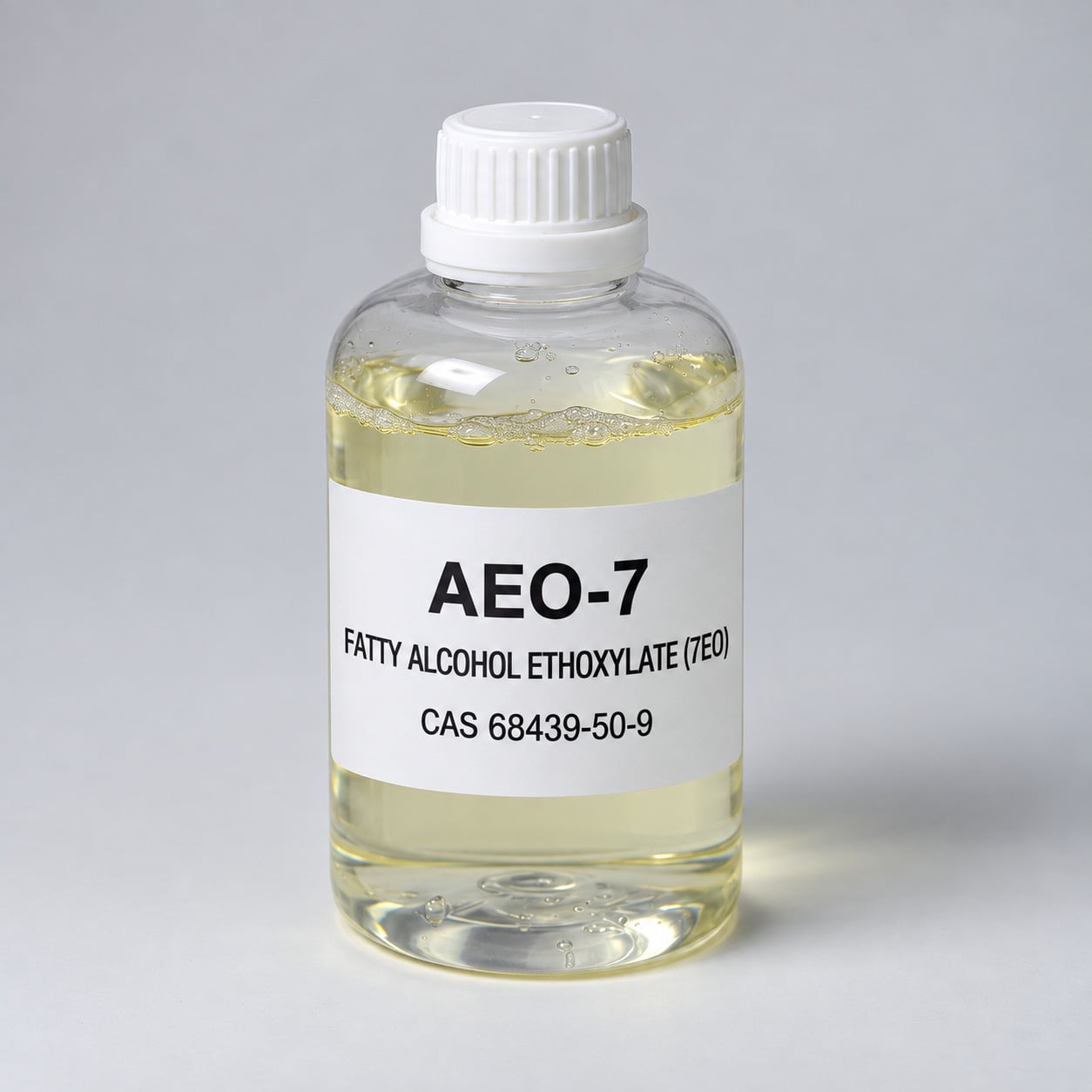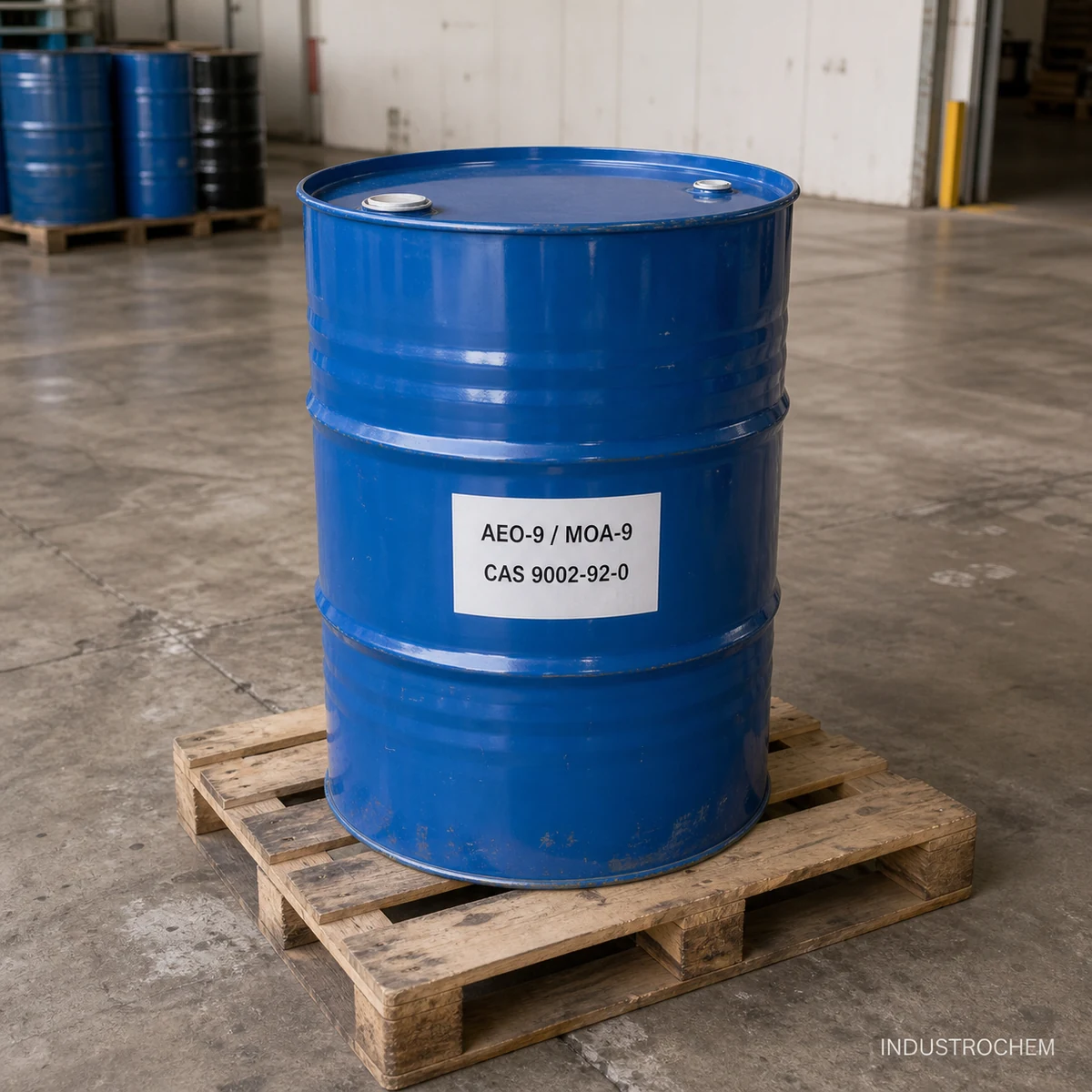
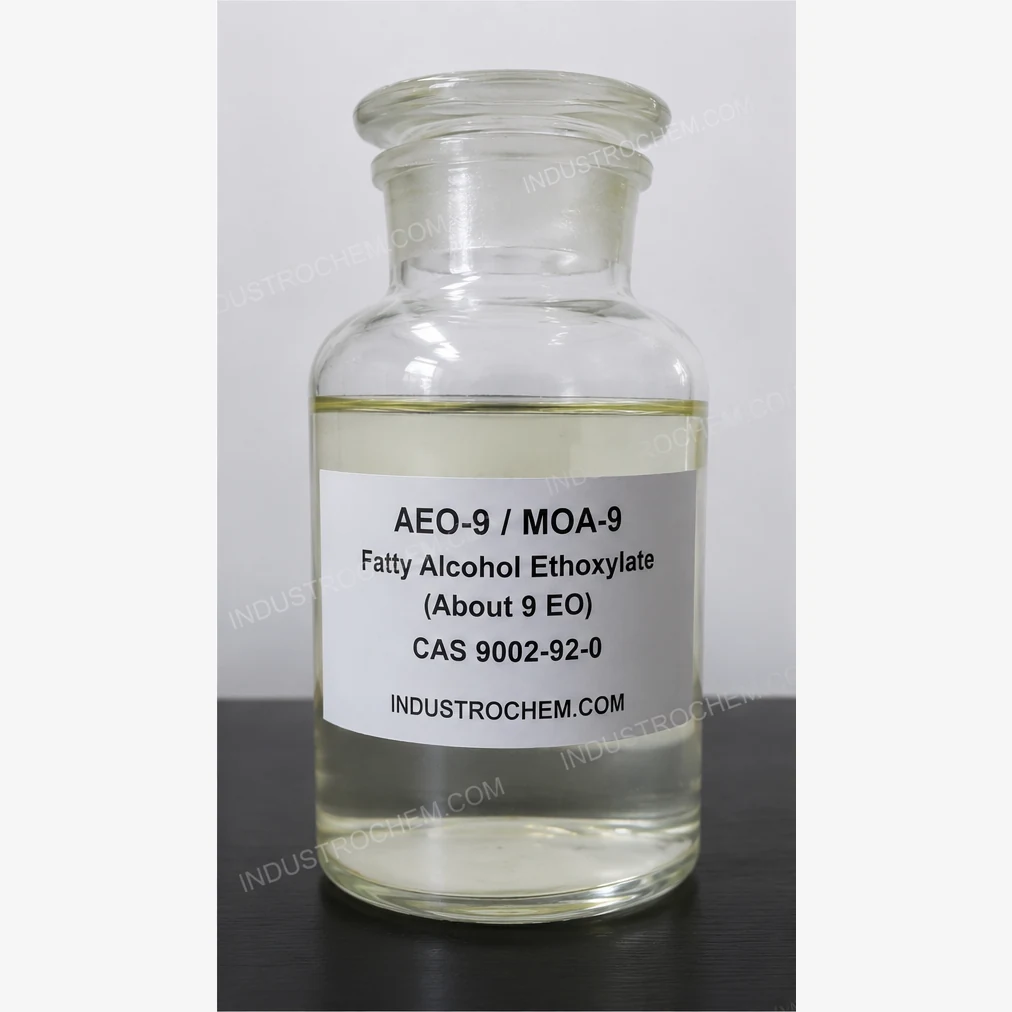
AEO‑9, also known as MOA‑9, is a nonionic surfactant produced by ethoxylation of fatty alcohols with approximately nine moles of ethylene oxide. Identified by the CAS No. 9002‑92‑0, it offers balanced detergency, emulsification, and wetting performance. AEO‑9 is widely used in detergents and industrial formulations where good solubility and cleaning efficiency are required. The product is supplied for industrial use with standard documentation including SDS, TDS, and COA.
AEO-9 / MOA-9 (Fatty Alcohol Ethoxylate 9EO) – CAS 9002‑92‑0
- CAS: 9002-92-0
- Synonyms: AEO-9, MOA-9, Alcohol Ethoxylate 9EO, Fatty Alcohol Ethoxylate
- Einecs: 500-002-6
- Grade: 99%
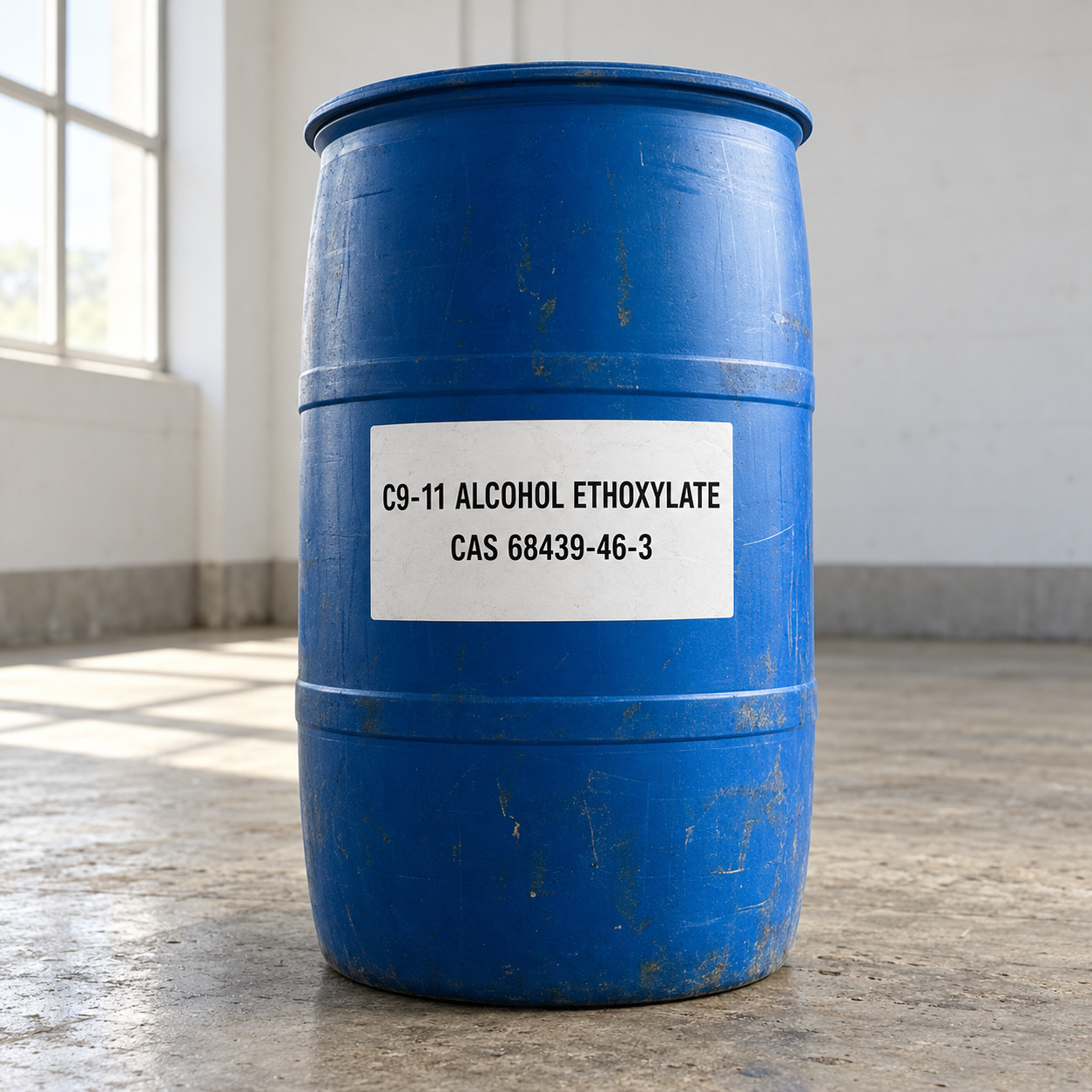
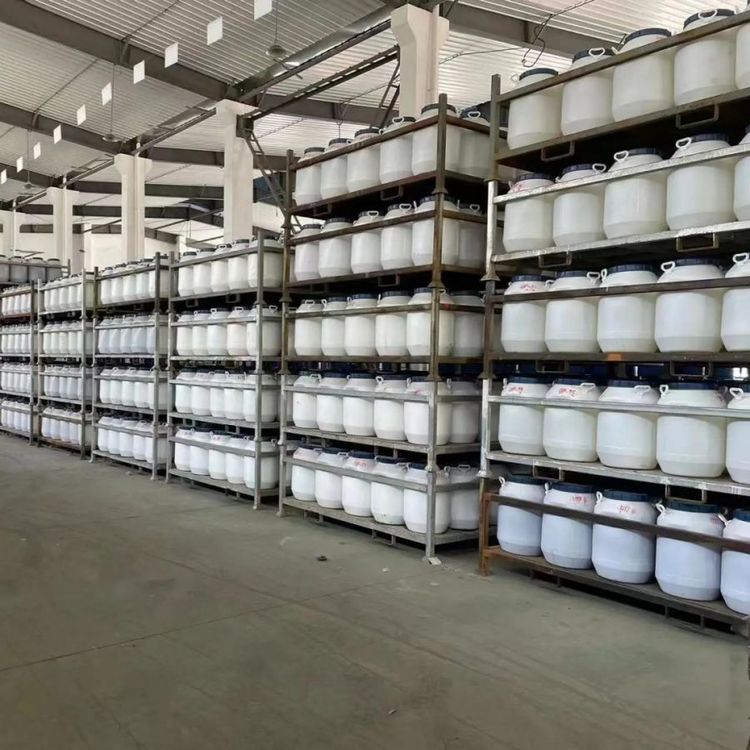
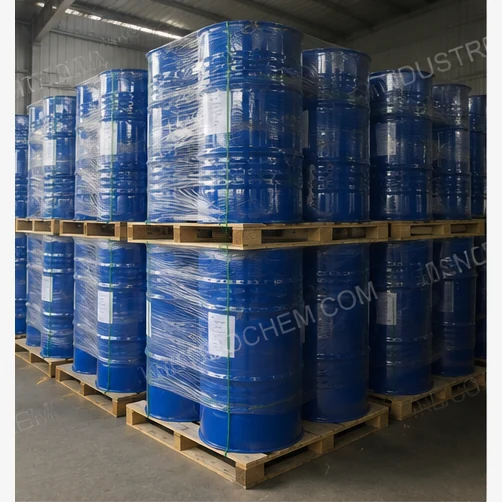
- Package: 200kg iron drum or 50kg plastic drum packaging
Product Description
Physicochemical properties
| Property | Description |
|---|---|
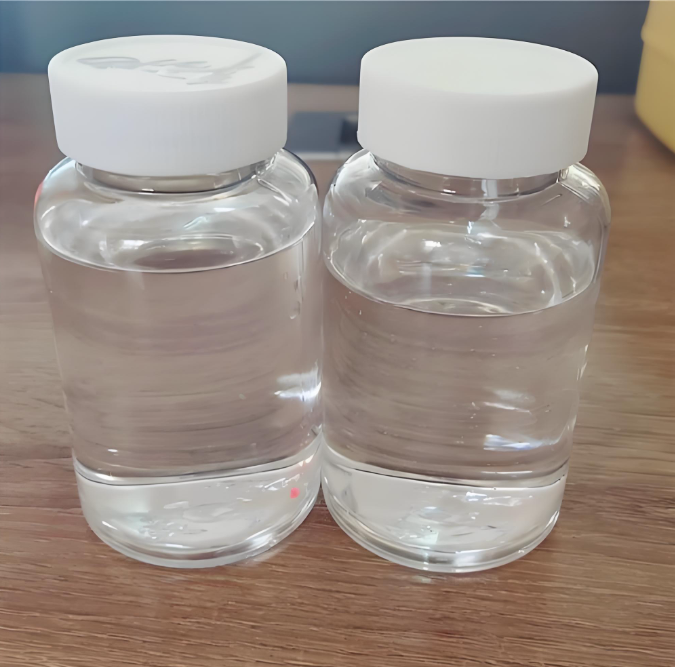
| Appearance | White liquid to light yellow paste (25℃) |
| Melting Point | 25-28℃ |
| Boiling Point | 290℃ |
| Density (25℃) | 0.965 |
| HLB Value | 12.5-14 |
| Cloud Point (1% solution) | 63-73℃ |
| pH Value (1% aqueous solution) | 6-7 |
| Solubility | Easily soluble in water, ethanol, ethylene glycol, and miscible with various organic solvents |
| Stability | Stable to acids, alkalis, and hard water, but sensitive to strong oxidants |
| Viscosity & Freezing Point | Low viscosity and freezing point, almost no gel phenomenon |
Application Areas
Detergent: As the main active ingredient in liquid detergents and laundry detergents, it provides stain removal and emulsification functions.
Textile industry: used as a wool degreaser, fabric cleaner, and leveler to improve dyeing uniformity.
Cosmetics: added to facial cleansers, shower gels, and shampoos to provide gentle cleansing and low irritation.
Industrial cleaning: used for cleaning metal processing fluids, electroplating fluids, and electronic components to remove oil stains and impurities.
Pesticides and Coatings: Used as emulsifiers and dispersants to enhance drug efficacy or coating stability.
Storage conditions
Storage environment requirements: It should be stored in a cool, dry, ventilated place, away from direct sunlight and high temperature environment.
Moisture prevention measures: After opening, it should be used up within a short period of time to prevent moisture absorption and clumping
Packaging specifications and materials: Common packaging includes 50kg polyethylene lined iron drums or 200kg plastic drums, with high sealing requirements to reduce contact with air
Transportation precautions: Handle according to general chemical transportation regulations, avoid rain and severe vibration
Safety precautions
Safety: Non toxic, low irritant, in compliance with food and cosmetic safety standards.
Personal equipment: Wear protective goggles, gloves, and dust masks to avoid direct contact with skin and eyes.
FAQ - Technical & Supply Chain
-
Q:
Why do different AEO grades share the same CAS number?
A: CAS 9002‑92‑0 represents a UVCB category covering fatty alcohol ethoxylates with different EO chain lengths. -
Q:
Is AEO‑9 biodegradable?
A: Yes. Fatty alcohol ethoxylates are generally readily biodegradable and are commonly used as APEO‑free alternatives. -
Q:
AEO-9 vs AEO-7 vs AEO-3: what's the difference?
A: The number indicates the average moles of ethylene oxide (EO). AEO-9 (9EO) has the longest hydrophilic chain, giving the highest water solubility and best detergency. AEO-3 is more oil-soluble and used as an emulsifier or co-surfactant. AEO-7 offers intermediate performance. -
Q:
What is the HLB value of AEO-9?
A: AEO-9 has an HLB (Hydrophilic-Lipophilic Balance) of approximately 12.5–14, making it suitable as an O/W emulsifier and detergent base. It is a water-soluble nonionic surfactant. -
Q:
Is AEO-9 compatible with anionic and cationic surfactants?
A: Yes. As a nonionic surfactant, AEO-9 is compatible with anionic (e.g., LAS, SLES) and cationic (e.g., quaternary ammonium) surfactants. It also tolerates hard water and a wide pH range, making it ideal for multi-component formulations. -
Q:
What is the recommended dosage of AEO-9 in formulations?
A: Typical dosage ranges: liquid detergents 5–15%, industrial cleaners 3–10%, textile auxiliaries 1–5%, and cosmetics 0.5–5%. Optimal concentration depends on the required detergency, emulsification, or wetting performance. -
Q:
How should AEO-9 be stored and handled?
A: Store in a cool, dry, ventilated area away from direct sunlight and high temperatures. Keep containers sealed to prevent moisture absorption. Recommended temperature: 25–35°C. If solidified, warm gently to 40–50°C and mix before use. Wear protective gloves and goggles when handling. -
Q:
What documentation is available for AEO-9?
A: We provide COA (Certificate of Analysis), TDS (Technical Data Sheet), and SDS (Safety Data Sheet) upon request. Batch-specific COA includes appearance, pH, cloud point, and residual EO content data.
Documents and Product Support
For product review and sourcing evaluation, supporting documents can be coordinated according to the product type, inquiry stage, and order requirements.
- COA for batch-based quality reference
- TDS for key physical and chemical information
- SDS / MSDS for handling, storage, and safety reference
- Packing information for sample, trial, and bulk orders
- Technical communication based on application and specification requirements
Information to Confirm Before Quotation
Clear sourcing information helps reduce specification mismatch and allows a more accurate quotation before sample or bulk order discussion.
- Product name and CAS number
- Application or intended end use
- Required purity, grade, or specification
- Sample quantity, trial order, or bulk demand
- Preferred packing form or net weight
- Destination country or port
- Required documents or compliance expectations
Packaging, Storage, and Handling Notes
Packaging form, storage conditions, shelf life, and shipment arrangements should be confirmed according to the product characteristics, package size, and destination requirements.
Before order confirmation, buyers are advised to review the corresponding product documents and confirm whether any special storage, labeling, or handling requirements apply.
Sample, Bulk Order and Repeat Supply Support
Support can be arranged for sample discussion, bulk supply planning, packaging confirmation, and routine sourcing communication based on the actual product and order requirements.
For repeat-use formulations or long-term procurement plans, buyers may discuss specification consistency, packaging preferences, delivery expectations, and document coordination in advance.