







Chemical products
  • E-1307 Isotridecyl Alcohol Ethoxylate 7EO CAS 9043-30-5
  • E-1307 Isotridecyl Alcohol Ethoxylate 7EO CAS 9043-30-5

E-1307 Isotridecyl Alcohol Ethoxylate 7EO CAS 9043-30-5

E-1307 isotridecyl alcohol ethoxylate (CAS 9043-30-5) is a nonionic surfactant based on branched C13 alcohol with an average of about 7 EO units. It is used for wetting, detergency and emulsification in industrial cleaning, textile processing and metal-cleaning formulations. Cloud point, hydroxyl value, active matter and water content help distinguish the grade needed for an application.

  • CAS: 9043-30-5
  • Synonyms: E-1307; isotridecyl alcohol ethoxylate 7EO; C13 oxo-alcohol ethoxylate 7EO; polyoxyethylene isotridecyl ether (7EO grade)
  • Molecular Formula: RO–(CH₂CH₂O)ₙ–H, R = branched C13 and average n ≈ 7; a distribution of alcohol isomers and ethoxylate homologues. C₂₇H₅₆O₈ represents the ideal 7EO homologue, not one exact formula for the commercial material.
  • Grade: Industrial surfactant grade, specified by nominal EO, active matter, water, appearance, cloud point and hydroxyl value, with the relevant test methods.
  • Package: Packaging and net weight are specified in the quotation for the order quantity, destination and handling requirements.
  • EC identification: Grade-specific EC identification is stated in the supplied SDS.
Request a quote
Share:

Product Description

E-1307 (CAS 9043-30-5) is a branched C13 alcohol ethoxylate with about 7 EO for industrial wetting and cleaning. Bulk quotations with COA, TDS and SDS.

Technical Specifications

Property Specification
CAS number 9043-30-5
Chemical identity Isotridecyl alcohol ethoxylate; branched C13 nonionic surfactant
Nominal EO An average of about 7 oxyethylene units; an ethoxylate-homologue distribution
EC identification Grade-specific EC identification is stated in the supplied SDS.
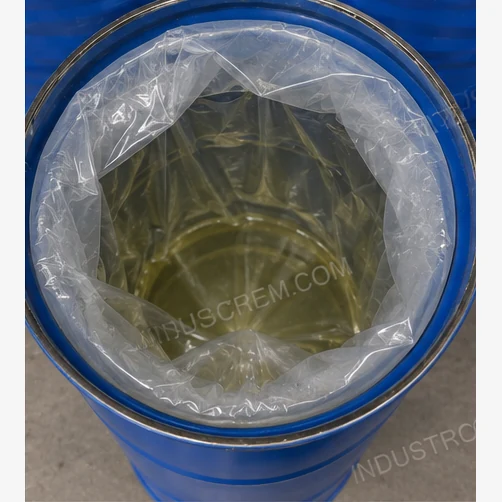
Appearance Typically a liquid; appearance and viscosity depend on temperature and water content.
Cloud point Reported in °C together with the test medium, concentration and method.
Hydroxyl value Reported in mg KOH/g with the stated titration method.
Water Reported as % w/w using a suitable Karl Fischer method.
Active matter Reported as % w/w on the basis of the agreed method; distinct from water content and the purity of a single chemical compound.

Cloud-point values are comparable when the test medium, surfactant concentration and method match. Water, salt solutions and butyldiglycol/water mixtures can give different results. A specified ISO 1065 method or another agreed method provides the context for the reported value.

When a composition profile is needed, a suitable LC/HPLC method can characterize the ethoxylate-homologue distribution. Normalized chromatographic peak area alone does not establish the mass fraction of a component or total active matter; quantitative results require suitable calibration and a stated reporting basis.

We can provide a Certificate of Analysis (COA), Technical Data Sheet (TDS), Safety Data Sheet (SDS) and relevant quality-test information for the quoted grade.

Applications

E-1307 helps wet surfaces, remove oily soils and emulsify oils in industrial formulations. In textile processing and metal cleaning, wetting, detergency and foam performance depend on temperature, electrolyte content and the complete formulation.

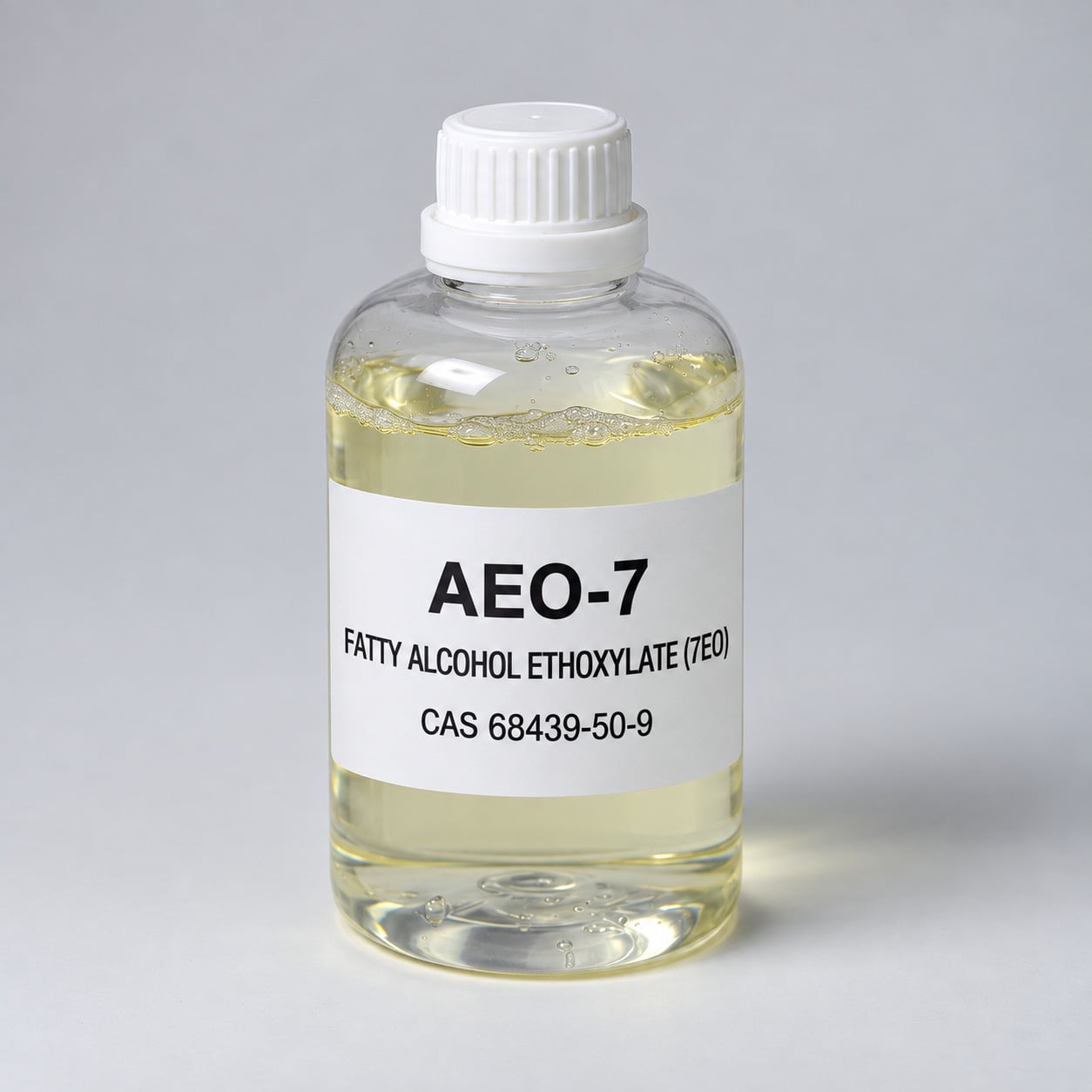
AEO-7 fatty alcohol ethoxylate offers a comparison at a similar nominal EO level with a different alcohol feedstock. AEO-9 / MOA-9 fatty alcohol ethoxylate is a comparison for a higher nominal EO level. Alcohol-chain distribution and branching still matter when assessing wetting, foam and phase behaviour.

AEO-20 / MOA-20 C12-14 alcohol ethoxylate and C9-11 alcohol ethoxylate provide further comparisons for a different ethoxylation level or alcohol-chain range. These are formulation-selection candidates, not automatic one-to-one replacements for E-1307.

Storage

Store sealed in a clean, dry area under the conditions in the supplied TDS and SDS. Protect the material from moisture, contamination and excessive heat; prolonged heated storage with exposure to air can change quality. Any low-temperature conditioning or mixing procedure is grade-specific.

Safety / Regulatory

Use the protective equipment and handling controls stated in the supplied SDS. E-1307 has no alkylphenol group in its alcohol-ethoxylate structure. An APEO declaration and an analytical limit address different requirements: any measured result needs defined target compounds, a suitable sample matrix, a method and a reporting limit.

Send the intended application or specification, quantity and destination for a quotation. Include any required active-matter basis, cloud-point test condition or APEO limit so that the quoted grade and supporting information match the procurement requirement.

FAQ - Technical & Supply Chain

  • Q:

    What does 7EO mean for E-1307?

    A: It means a nominal average of about seven oxyethylene units on the isotridecyl alcohol ethoxylate. E-1307 contains alcohol isomers and ethoxylate homologues, rather than one discrete molecule. CAS 9043-30-5 alone does not establish the EO distribution, active matter, cloud point or interchangeability of a grade.
  • Q:

    Can another alcohol ethoxylate replace E-1307 directly?

    A: A shared CAS number or similar nominal EO level does not establish a direct replacement. Alcohol-chain distribution, branching, EO distribution, active matter and water content can differ. A candidate grade needs comparison under the same cloud-point test conditions and evaluation of wetting, foam and compatibility in the intended formulation.
  • Q:

    Why can cloud-point values differ between data sheets?

    A: Cloud point depends on the solution used for the test, its concentration and the method. A value measured in water is not directly comparable with one measured in a salt solution or a butyldiglycol/water mixture. The grade data should state these conditions alongside the temperature in °C.
  • Q:

    Does the alcohol-ethoxylate structure prove an APEO-free test result?

    A: No. The E-1307 structure contains no alkylphenol group, but that is different from demonstrating the absence of trace alkylphenol ethoxylates in a supplied grade. Where an analytical limit is required, the relevant target compounds, test matrix, method and reporting limit must be stated with the result.

Ordering & Documentation

Key information for document requests, quotations, and supply planning.

Documents

Tell us which documents your procurement team needs. Before an order, we will check whether the quoted source can provide them for the offered lot.

Quotation

Send the CAS number, grade, quantity, packing preference and destination.

Sample & Supply

Ask whether samples, trial quantities or repeat orders are possible. We will check each request against the sourced product and current offer.

Storage & Shipping

Product-specific conditions are confirmed before order.

Contact Form

Use our contact form to send us your questions, suggestions or comments. We will respond as soon as possible.
For a quotation, please include the product name or CAS number, quantity, grade or application, and destination country or port. Tell us if you need a sample, COA, TDS or SDS.