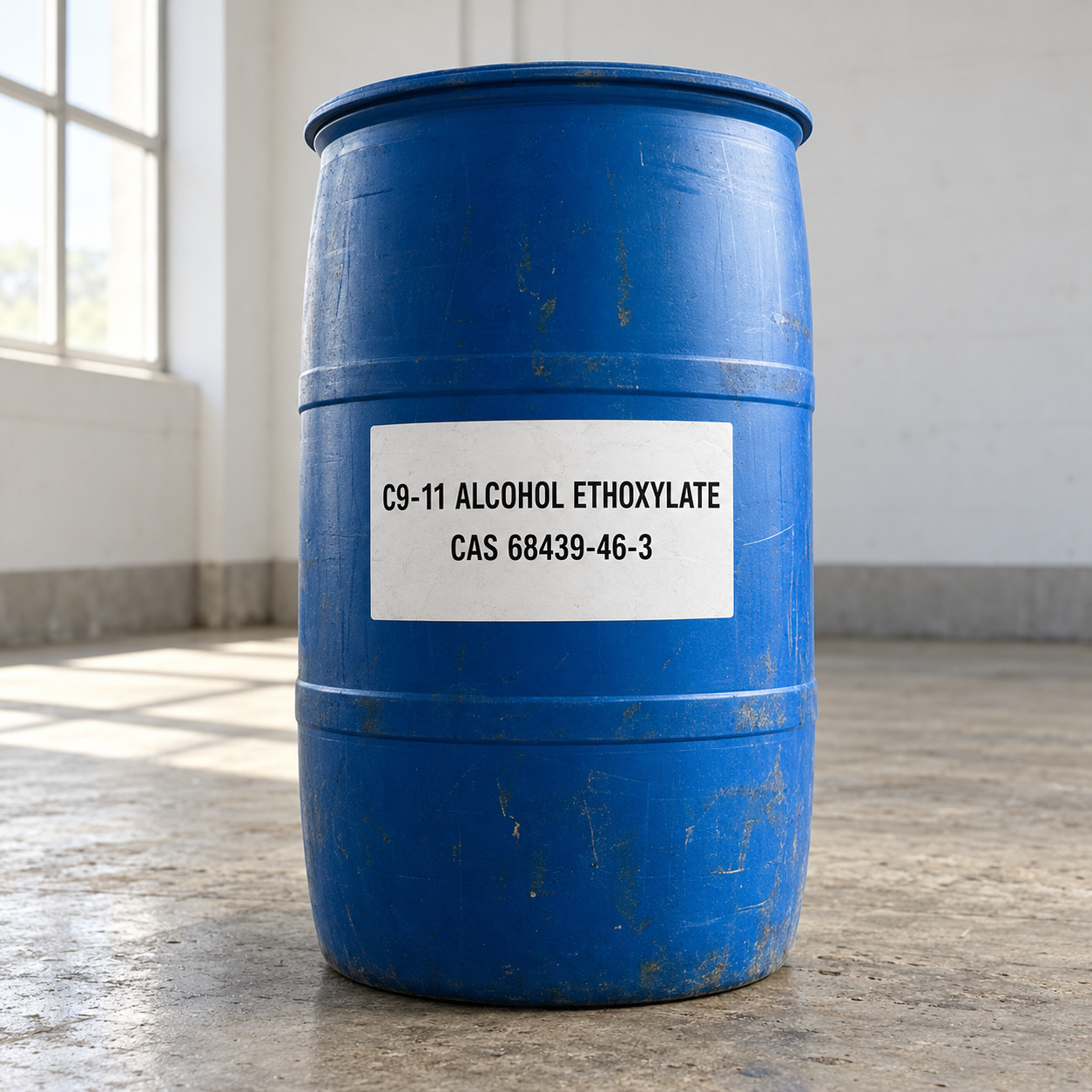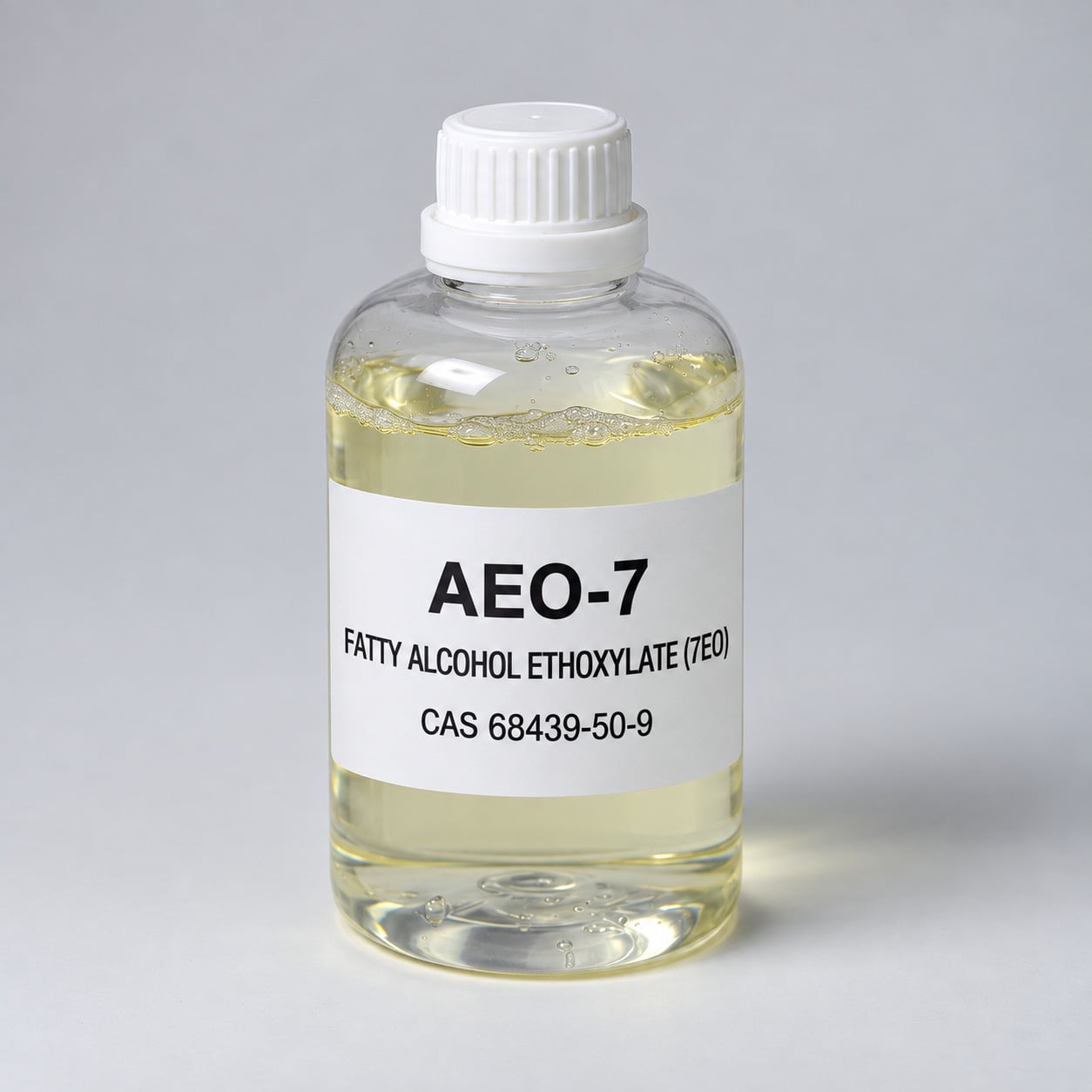
AEO-7 (Fatty Alcohol Ethoxylate 7EO), CAS 68439-50-9, also known as Alcohol Ethoxylate 7EO, is a nonionic surfactant based on C12–C14 fatty alcohols with a nominal average of about seven ethylene oxide units. It provides detergency, wetting and emulsification in cleaning and textile-processing formulations. COA, TDS and SDS are available to support specification review and safe handling.
AEO-7 (Fatty Alcohol Ethoxylate 7EO) CAS 68439-50-9
- CAS: 68439-50-9
- Synonyms: AEO-7, Fatty Alcohol Ethoxylate 7EO, Alcohol Ethoxylate 7EO
- Molecular Formula: RO-(CH₂CH₂O)ₙ-H (nominal n ≈ 7)
- Grade: Specified by C12–C14 alcohol cut, nominal EO, hydroxyl value (mg KOH/g), active matter, water, physical form and cloud point; see the current TDS and COA.
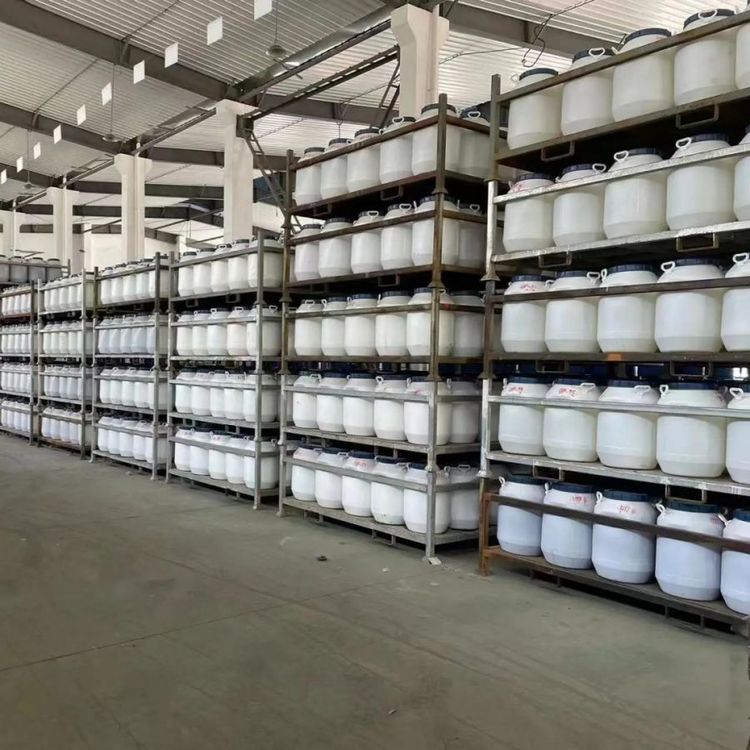
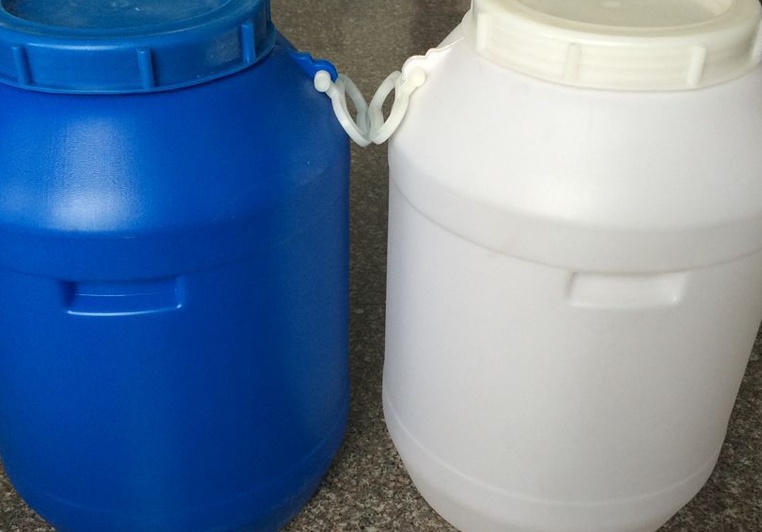
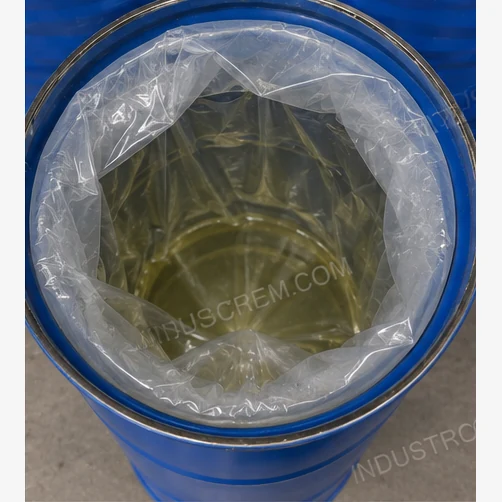
- Package: Drums or bulk; confirm container, liner, net weight and handling for your order and destination.
- :
Product Description
Physicochemical profile
| Item | Technical guidance |
|---|---|
| Product identity | AEO-7; C12-C14 fatty alcohol ethoxylate with a nominal average near 7 EO units |
| CAS number | 68439-50-9 |
| Composition | Nonionic homolog distribution rather than one pure molecular species |
| Nominal formula | RO-(CH₂CH₂O)ₙ-H, with nominal n near 7; the alcohol cut and EO distribution are grade-dependent |
| Typical physical form | Clear to pale liquid, paste or waxy material depending on composition and temperature |
| Key quality controls | Nominal EO, hydroxyl value (mg KOH/g), active matter, water, pH, appearance and cloud point, with the test medium, concentration and method stated for cloud-point results |
Hydroxyl value is expressed in mg KOH/g and is not a purity percentage. Nonionic active-matter content needs a stated analytical basis; total solids alone do not distinguish the ethoxylate adducts from residual polyethylene glycol (PEG).
Application and grade selection
AEO-7 is commonly screened for detergency, wetting and emulsification in household, institutional and industrial cleaning as well as textile-processing formulations.
- Compare cleaning, foam, wetting, rinsing and hard-water performance in the complete formulation.
- For textile use, test substrate wetting, detergency, leveling behavior and compatibility with the remaining auxiliaries.
- Check alcohol cut, EO distribution and application performance before substituting another fatty-alcohol ethoxylate.
For a different nominal EO level, compare AEO-9 / MOA-9 fatty alcohol ethoxylate; check the alcohol feedstock and use the same cloud-point test conditions. E-1307 isotridecyl alcohol ethoxylate also has about 7 EO but uses a branched C13 alcohol feedstock. Test wetting and foam in the finished formulation before substituting grades.
Storage and handling
Keep containers tightly closed in a dry, ventilated area away from excessive heat and strong oxidizing materials. Physical form can change with temperature; follow the TDS for warming, mixing and sampling instructions.
Safety and supply documentation
Use gloves, eye protection and ventilation as specified in the AEO-7 SDS. The SDS also provides fire-response, transport and environmental information for the supplied grade.
We can provide a Certificate of Analysis (COA), Technical Data Sheet (TDS) and Safety Data Sheet (SDS), including the applicable specification and quality-test information. For a quotation, send the intended application, quantity, destination and any target specification.
FAQ - Technical & Supply Chain
-
Q:
Can cloud-point values be compared directly between AEO-7 technical data sheets?
A: Only when the same test medium, concentration, and method are stated. Cloud point for an alcohol ethoxylate can change between water and salt-containing solutions and with active content. Compare the C12–C14 feedstock range, EO profile, hydroxyl value, and the complete test conditions. -
Q:
Does CAS 68439-50-9 make AEO-7 interchangeable with Laureth-4 or AEO-20?
A: No. The CAS covers a C12-C14 alcohol-ethoxylate family, while the nominal EO level changes hydrophilic balance, physical form, cloud point and formulation behavior. Compare alcohol cut, nominal EO, hydroxyl value, active matter and application tests before substitution.
Ordering & Documentation
Key information for document requests, quotations, and supply planning.
Documents
Tell us which documents your procurement team needs. Before an order, we will check whether the quoted source can provide them for the offered lot.
Quotation
Send the CAS number, grade, quantity, packing preference and destination.
Sample & Supply
Ask whether samples, trial quantities or repeat orders are possible. We will check each request against the sourced product and current offer.
Storage & Shipping
Product-specific conditions are confirmed before order.