
Chemical products
  • Polyoxyethylene Lauryl Ether-10 (Laureth-10) CAS 6540-99-4

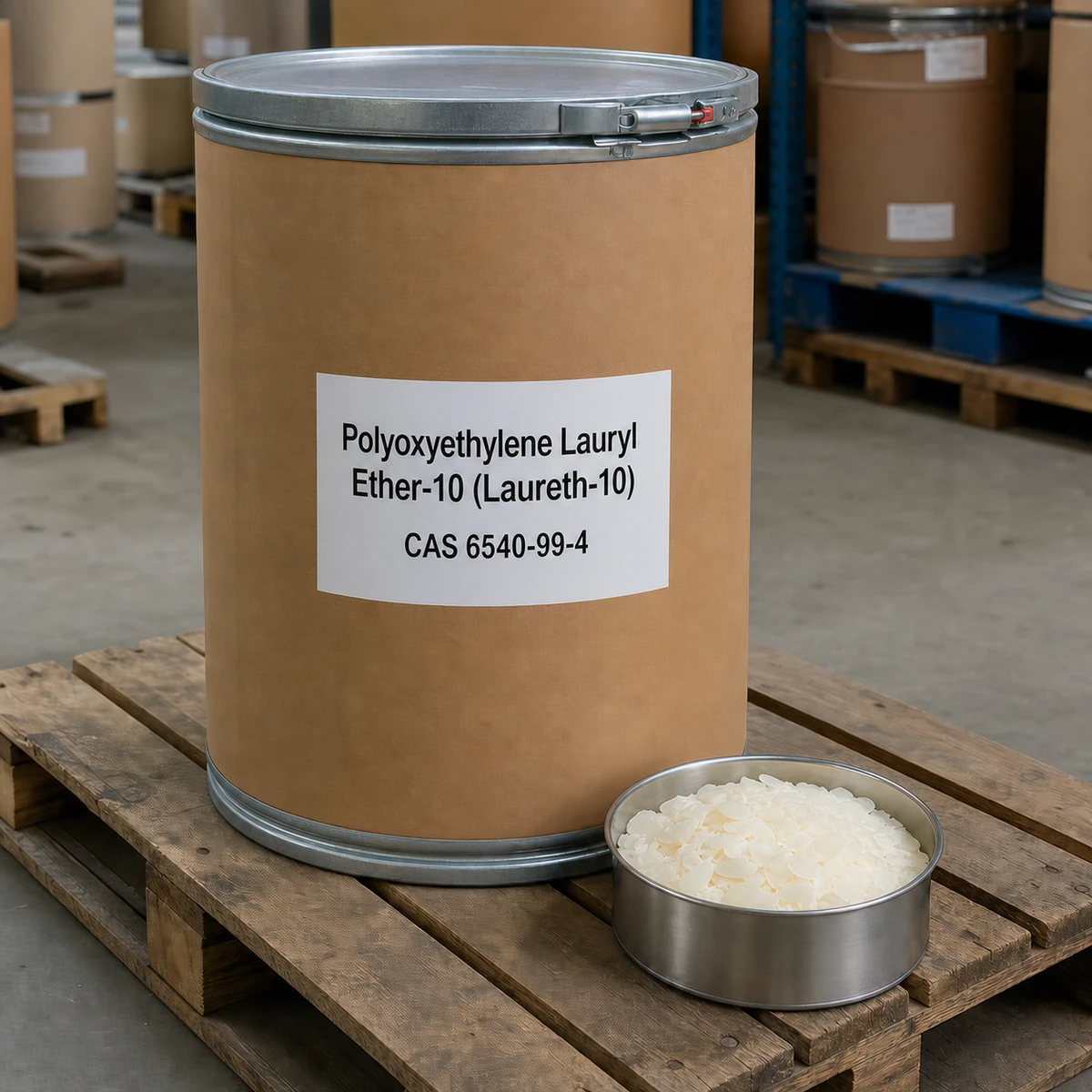
Polyoxyethylene Lauryl Ether-10 (Laureth-10) CAS 6540-99-4

Laureth-10 (CAS 6540-99-4), also called Polyoxyethylene (10) Lauryl Ether, is a nonionic surfactant used for emulsifying, wetting, dispersing and cleansing. C12E10 denotes the molecular species with ten EO units; commercial Laureth-10 grades may contain an EO distribution with a nominal average of about ten EO units. Nominal EO level, hydroxyl value, water content, color, physical form and cloud point are key selection parameters. COA, TDS and SDS are available to support specification review and safe handling.

  • CAS: 6540-99-4
  • Synonyms: Laureth-10, Polyoxyethylene (10) Lauryl Ether, Decaethylene Glycol Monododecyl Ether, C12E10, PEG-10 Lauryl Ether
  • Molecular Formula: C₃₂H₆₆O₁₁ for discrete C12E10; commercial Laureth-10 may have an EO homologue distribution
  • Grade: Nominal 10EO; carbon-chain profile, EO distribution, active content and quality parameters specified for the quoted grade.
  • Package: Packing and net weight specified in the quotation.
Request a quote
Share:

Product Description

Identity and physicochemical profile

ItemTechnical guidance
Product identityLaureth-10 / polyoxyethylene (10) lauryl ether; C12E10 is the discrete ten-EO reference identity
CAS number6540-99-4
Formula / molecular weightC₃₂H₆₆O₁₁ / 626.87 g/mol for discrete C12E10; not a universal composition for commercial grades
EO levelTen EO units in C12E10; a nominal average of about ten EO units in commercial Laureth-10 grades
Commercial grade scopeCarbon-chain profile, EO homologue distribution and active content stated for the quoted grade
Quality parametersHydroxyl value (mg KOH/g), water (% by mass), color and physical form; pH and cloud-point results require the test medium, concentration, temperature and method

CAS 6540-99-4 identifies the discrete lauryl ether C12E10. In INCI nomenclature, Laureth-10 describes ethoxylated lauryl alcohol with an average of about ten EO units. A commercial grade may contain an EO homologue distribution or a broader alcohol-chain profile; the name alone does not establish a single-component purity or active content.

Applications and grade selection

Laureth-10 functions as a nonionic emulsifier and cleansing surfactant. Emulsion stability, clarity and viscosity depend on the alcohol-chain profile, EO distribution, active content, oil phase, co-surfactants and processing conditions. Cosmetic suitability also depends on the specified grade, destination market and finished formulation.

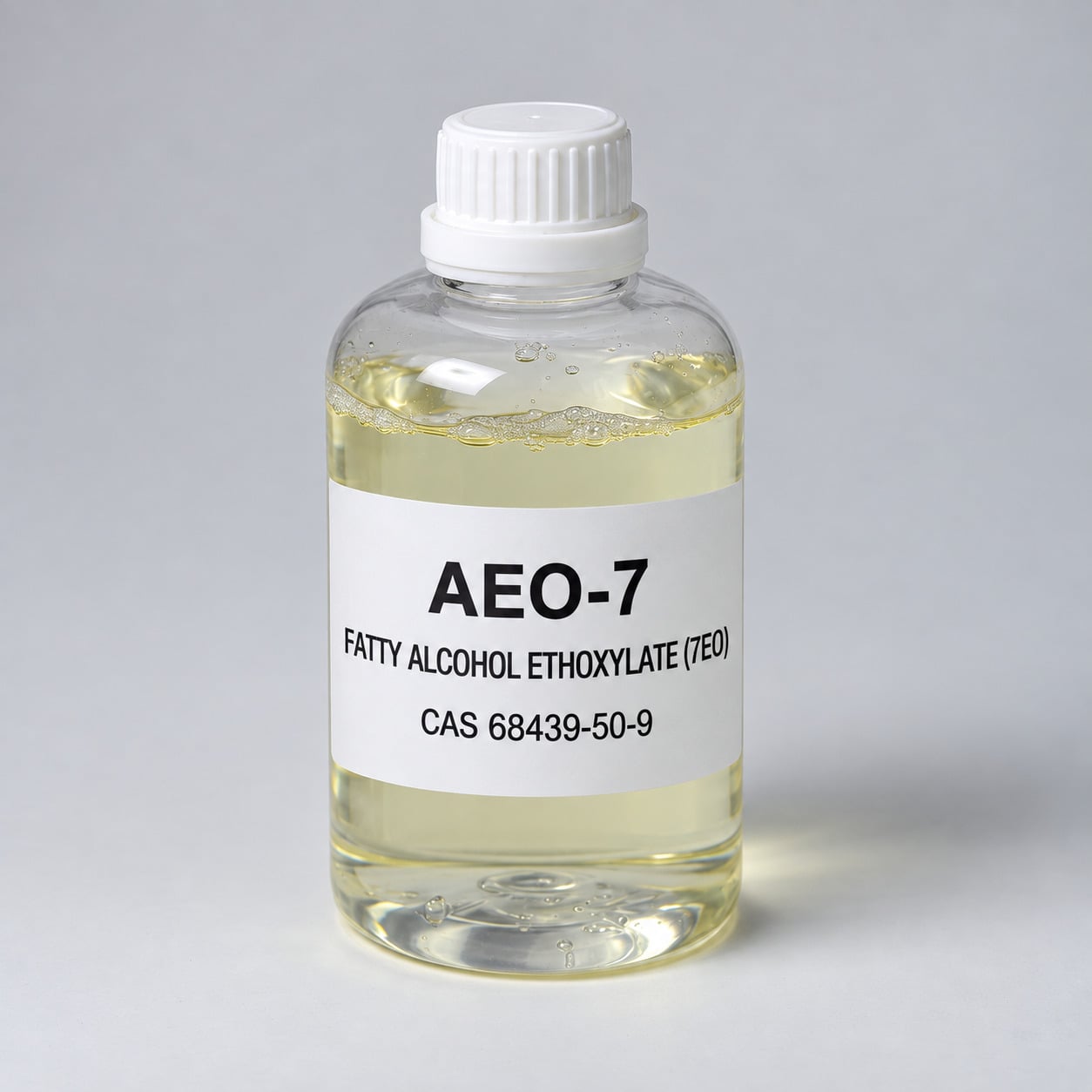
For lower and higher EO fatty-alcohol grades, compare Laureth-4, AEO-7 and AEO-20 / MOA-20. E-1307 and E-1309 provide branched isotridecyl-alcohol comparisons. These grades differ in alkyl-chain composition or EO level; they are not direct substitutes without formulation trials.

Quality controls and analytical data

Hydroxyl value and Karl Fischer water results help compare grades on a defined method and sample basis. EO homologue distributions can be examined by validated chromatography, such as HPLC-ELSD, suited to the grade. Chromatographic area percentages are not automatically mass purity, and neither water nor hydroxyl value alone establishes active content.

Residual ethylene oxide and 1,4-dioxane are separate from the chemically bound EO units. Headspace GC is applicable to residual ethylene oxide; a validated headspace GC-MS method can measure 1,4-dioxane in a suitable surfactant matrix. Reports identify the analyte, method, result in mg/kg (equivalent to µg/g) and limit of quantification (LOQ); these trace results do not describe the complete EO distribution.

Storage and handling

Keep containers closed, dry and protected from contamination. Storage temperature and any warming, mixing or sampling conditions follow the TDS for the supplied grade. Use the SDS for protective equipment, spill response and disposal.

Safety, documentation and procurement

We can provide a Certificate of Analysis (COA), Technical Data Sheet (TDS), Safety Data Sheet (SDS) and relevant analytical reports or chromatograms with their methods and reporting basis. For a quotation, send the required grade or reference specification, application, quantity and destination; packing preferences and special specification limits can be included.

FAQ - Technical & Supply Chain

  • Q:

    Is Laureth-10 the same as discrete C12E10?

    A: C12E10 denotes lauryl ether with exactly ten EO units and the reference formula C₃₂H₆₆O₁₁. Laureth-10 is also an INCI name based on an average EO level of about ten. Commercial grades can contain an EO homologue distribution or broader alcohol-chain profile, so CAS, nominal EO and the grade specification must be read together; the name alone is not a purity guarantee.
  • Q:

    Which data matter for cosmetic-use Laureth-10?

    A: Compare alcohol-chain composition, nominal EO and distribution, active content, hydroxyl value, water, color and physical form. pH and cloud-point values need their test conditions. Include agreed residual ethylene oxide and 1,4-dioxane controls where applicable. COA, TDS, SDS and relevant analytical reports or chromatograms can be provided; suitability for a cosmetic formulation depends on the specified grade and destination market.

Ordering & Documentation

Key information for document requests, quotations, and supply planning.

Documents

Tell us which documents your procurement team needs. Before an order, we will check whether the quoted source can provide them for the offered lot.

Quotation

Send the CAS number, grade, quantity, packing preference and destination.

Sample & Supply

Ask whether samples, trial quantities or repeat orders are possible. We will check each request against the sourced product and current offer.

Storage & Shipping

Product-specific conditions are confirmed before order.

Contact Form

Use our contact form to send us your questions, suggestions or comments. We will respond as soon as possible.
For a quotation, please include the product name or CAS number, quantity, grade or application, and destination country or port. Tell us if you need a sample, COA, TDS or SDS.