
Chemical products

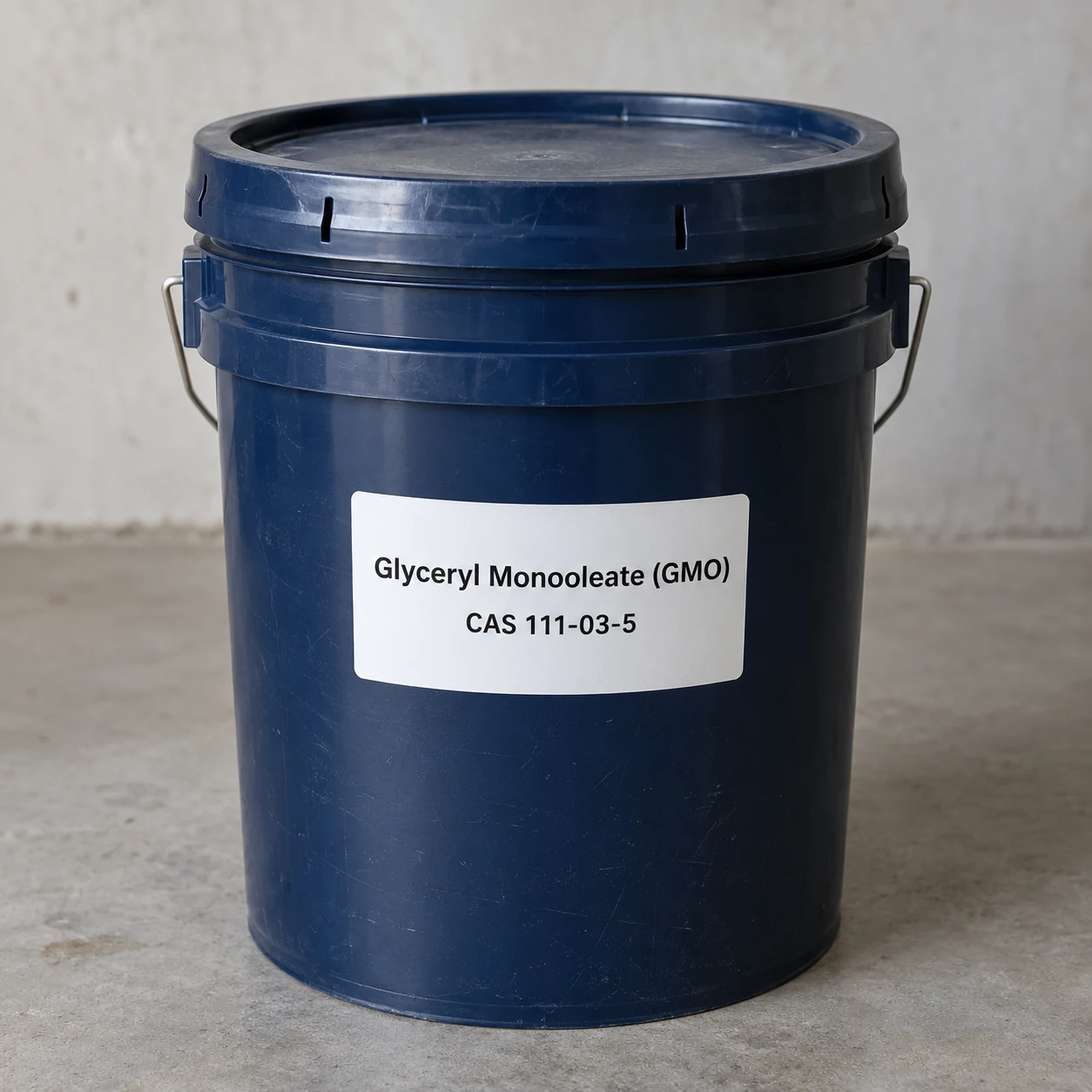
Glyceryl Monooleate (GMO) CAS 111-03-5

Glyceryl Monooleate (CAS 111-03-5), also known as GMO or Glycerol 1-Monooleate, is a lipophilic ester used as a co-emulsifier, emollient, dispersing aid and lubricity component. Commercial grades differ in their mono-, di- and triglyceride distribution. Monoester content, acid value, hydroxyl value, saponification value, water content, physical form and peroxide value are key selection parameters. COA, TDS and SDS are available to support specification review and safe handling.

  • CAS: 111-03-5
  • Synonyms: Glyceryl Monooleate, Glycerol 1-Monooleate, GMO, 1-Monoolein (alpha-Monoolein), 2,3-Dihydroxypropyl Oleate
  • Einecs: 203-827-7
  • Molecular Formula: C₂₁H₄₀O₄ for the individual monooleate molecule; commercial composition varies by grade
  • Grade: Grade-specific monoglyceride and monooleate content, glyceride distribution, acid, hydroxyl and saponification values, free glycerol, water, color and peroxide value where applicable; composition and test basis are stated in the TDS and COA.
  • Package: Drums or bulk packaging; container, liner, net weight and handling are specified for the order and destination.
Request a quote
Share:

Product Description

Identity and commercial composition

ItemTechnical guidance
Product identityGlyceryl monooleate; glycerol 1-monooleate (1-monoolein)
CAS / EC111-03-5 / 203-827-7 for the 1-monooleate entity
Formula / molecular weightC₂₁H₄₀O₄ / 356.54 g/mol for the individual monoester; commercial composition varies by grade
Commercial compositionMonoglycerides with grade-dependent di- and triglycerides, free glycerol and fatty acids; monooleate content and total monoglyceride content are separate specifications
Quality parametersGlyceride composition; acid, hydroxyl and saponification values in mg KOH/g; free glycerol, water, color and peroxide value where applicable
Physical formLiquid, semi-solid or waxy solid depending on composition and temperature; appearance and handling conditions are specified by grade

Applications and grade selection

Glyceryl monooleate is a lipophilic ester used for emulsification, emolliency, dispersion and lubricity. Glyceride distribution, oil phase, dosage and processing conditions affect performance. For personal-care formulations, evaluate sensory properties, odor, color and emulsion stability. For lubricant or metalworking formulations, evaluate friction, corrosion and compatibility with the additive package. Regulated uses require a grade documented for the required standard and destination market.

Composition testing and chromatographic data

Glyceride-profile data and relevant chromatograms can be provided for composition-sensitive orders. Validated GC or HPLC methods can distinguish mono-, di- and triglycerides; the report must identify the analytes, preparation, detector and quantitation basis. A 1-monoglyceride assay is different from total monoglyceride content. GC of fatty acid methyl esters describes the fatty acid profile, not intact monooleate content. Chromatographic area percentages should not be treated as mass percentages without an appropriate calibration basis.

Storage and handling

Keep containers tightly closed and protect the material from excessive heat, light, prolonged air exposure and strong oxidants. Use the grade-specific TDS for controlled warming, mixing and representative sampling. Follow the current SDS for handling and storage.

Formulation comparisons and bulk quotations

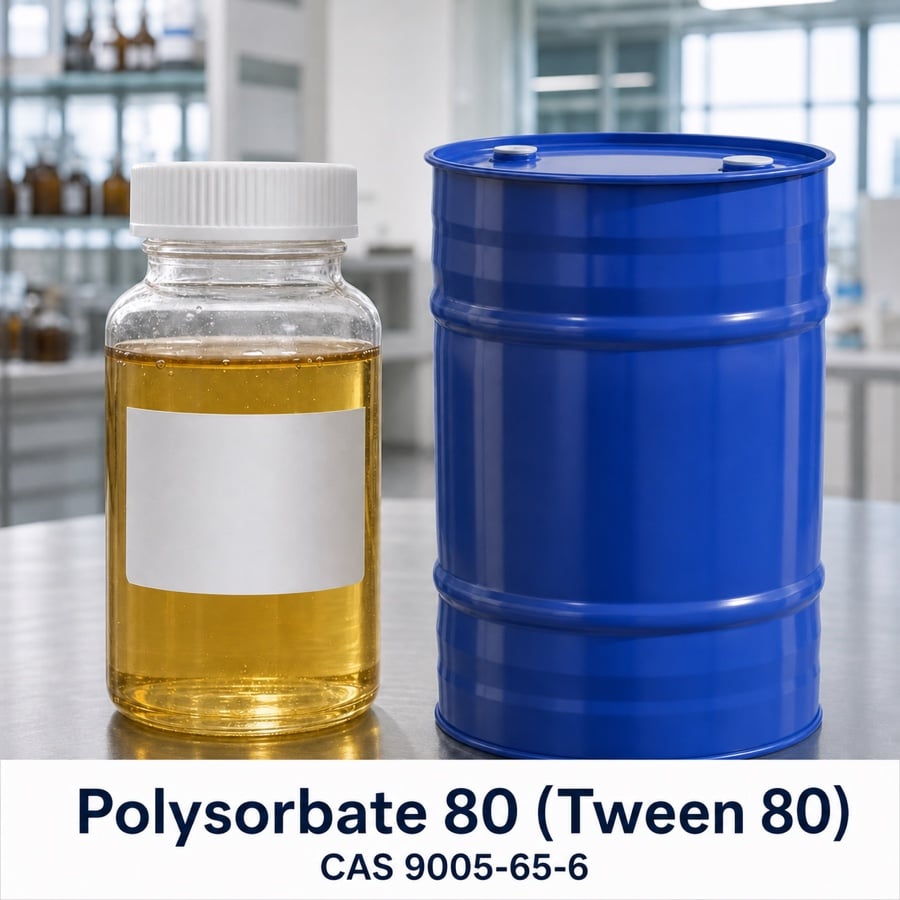
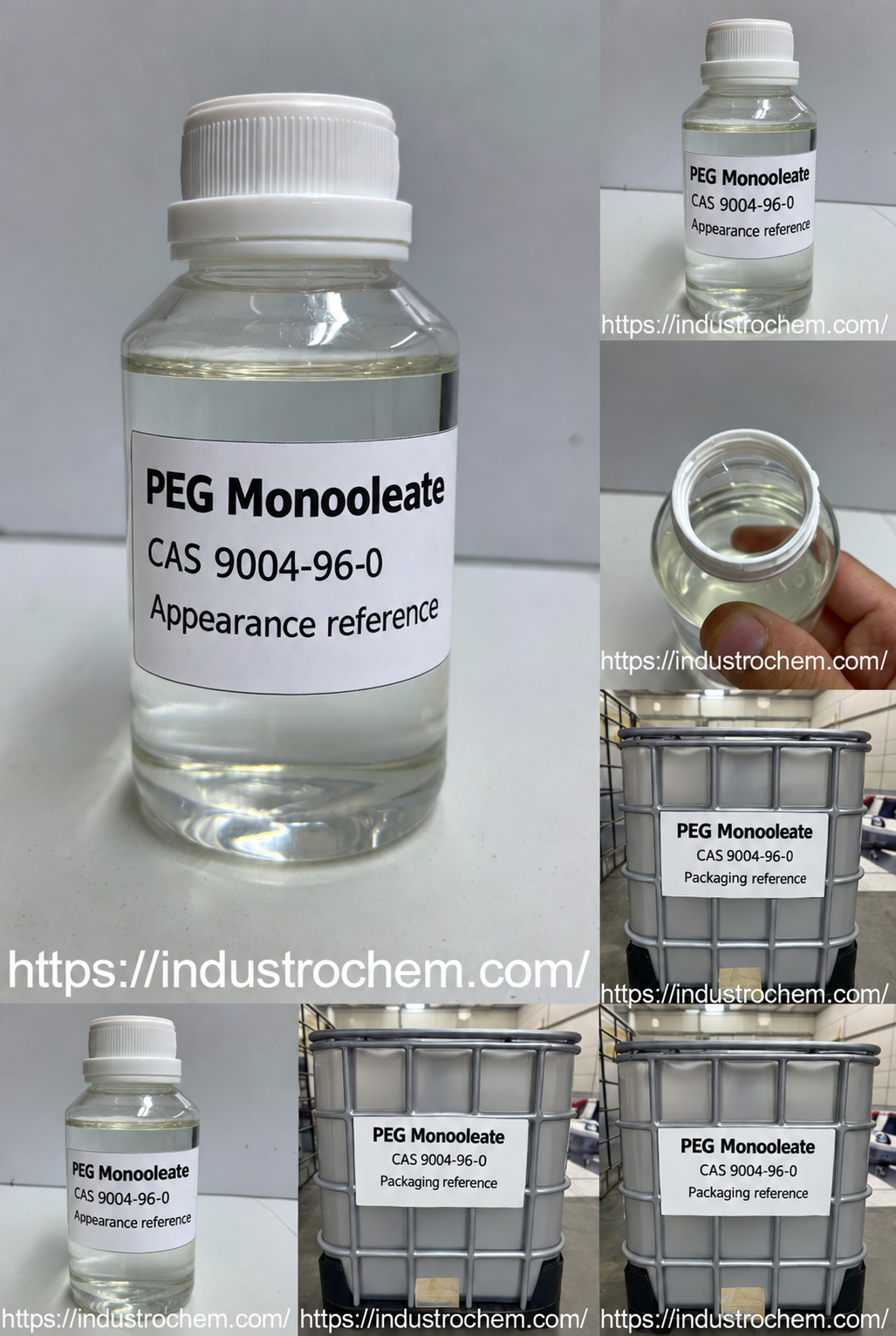
Compare PEG Monooleate and PEG 400 Dioleate by PEG size and ester distribution. Sorbitan Monooleate (Span 80) is another lipophilic oleate emulsifier with a different polyol backbone. The more hydrophilic Polysorbate 80 (Tween 80) provides a contrasting emulsifier option or blend component. Selection and blending depend on the oil phase, emulsion type, process and stability testing; these products are not direct equivalents.

Send the application, required composition or quality limits, order quantity and destination for grade options and a bulk quotation.

FAQ - Technical & Supply Chain

  • Q:

    Does CAS 111-03-5 establish the monooleate content of a commercial GMO grade?

    A: No. The CAS identifies the 1-monooleate entity, while commercial grades can differ in glyceride distribution. Total monoglyceride content, individual monooleate content and the fatty acid profile (including the proportion of oleic acid) are different specifications; the agreed method and reporting basis determine how to compare them.
  • Q:

    Which quality data can be provided for glyceryl monooleate?

    A: A Certificate of Analysis (COA), Technical Data Sheet (TDS) and Safety Data Sheet (SDS) can be provided, along with grade-specific composition data and relevant chromatograms. Reports specify the measured components, test method and result basis.
  • Q:

    Does the CAS number alone establish food, pharmaceutical or cosmetic grade?

    A: No. The intended use, required standard and destination market determine the grade specification and documentation needed. A CAS match alone does not establish food-use suitability, pharmacopeial conformity or cosmetic-grade qualification.
  • Q:

    Is glyceryl monooleate always liquid at room temperature?

    A: No. Commercial composition and temperature influence whether a grade is liquid, semi-solid or waxy. Use the TDS appearance and handling conditions for the selected grade, including controlled warming and mixing when needed for a representative sample.

Ordering & Documentation

Key information for document requests, quotations, and supply planning.

Documents

Tell us which documents your procurement team needs. Before an order, we will check whether the quoted source can provide them for the offered lot.

Quotation

Send the CAS number, grade, quantity, packing preference and destination.

Sample & Supply

Ask whether samples, trial quantities or repeat orders are possible. We will check each request against the sourced product and current offer.

Storage & Shipping

Product-specific conditions are confirmed before order.

Contact Form

Use our contact form to send us your questions, suggestions or comments. We will respond as soon as possible.
For a quotation, please include the product name or CAS number, quantity, grade or application, and destination country or port. Tell us if you need a sample, COA, TDS or SDS.