
Polyethylene Polyamine (PEPA), CAS 68131-73-7, is an industrial mixture of higher ethyleneamines used in epoxy curing and additive synthesis. Composition and reactive amine content vary by grade. Supply is matched to agreed amine-value, water, viscosity and composition requirements, with amine hydrogen equivalent weight (AHEW) specified where needed for epoxy formulation.
Polyethylene Polyamine CAS 68131-73-7
- CAS: 68131-73-7
- Synonyms: Polyethylene Polyamine; Polyethylene Polyamines; Polyethylenepolyamines; PEPA
- Einecs: 268-626-9
- Molecular Formula: Mixture of higher ethyleneamines; no single molecular formula
- Grade: Industrial higher-ethyleneamine mixture; amine value, water, viscosity and composition limits agreed for the quoted grade.
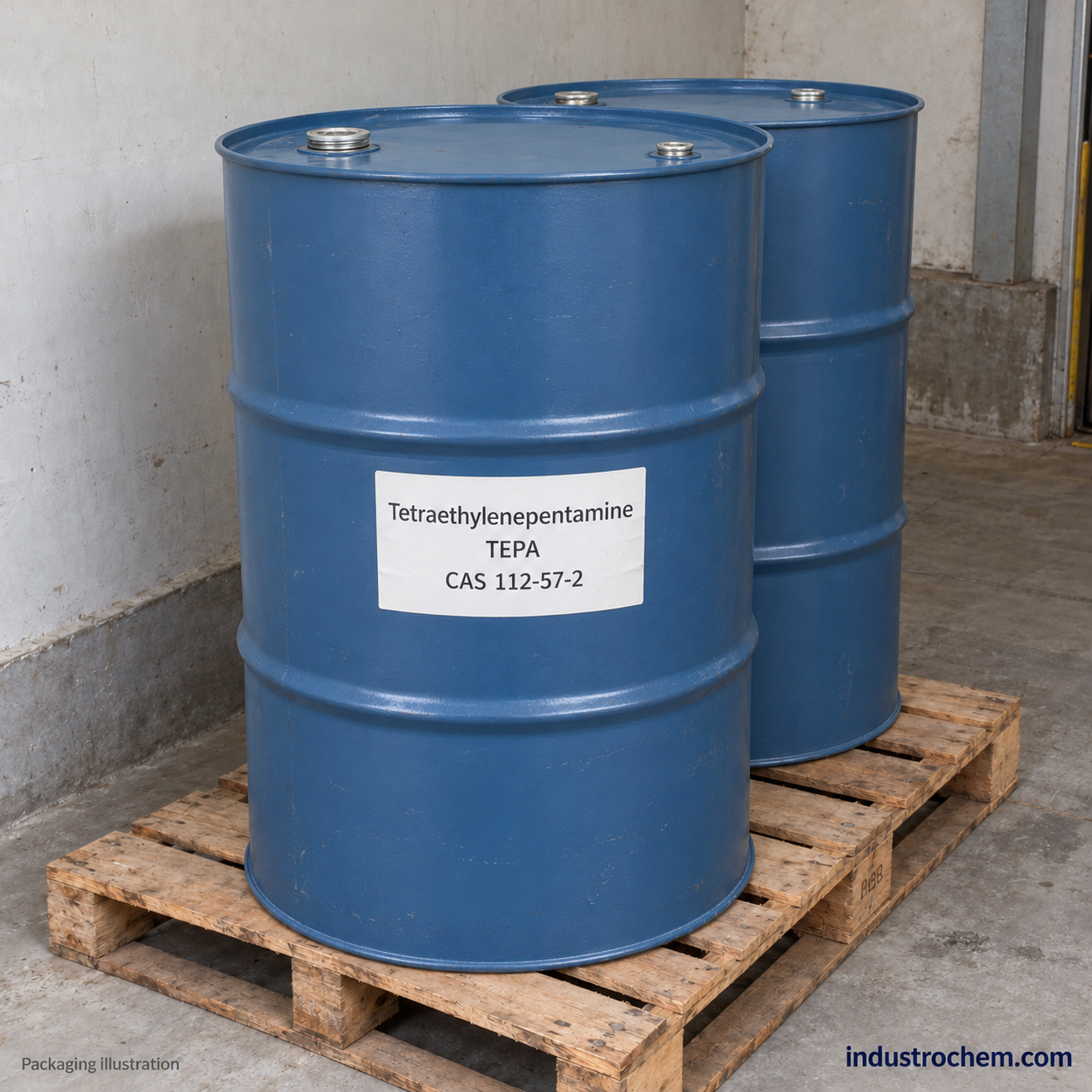
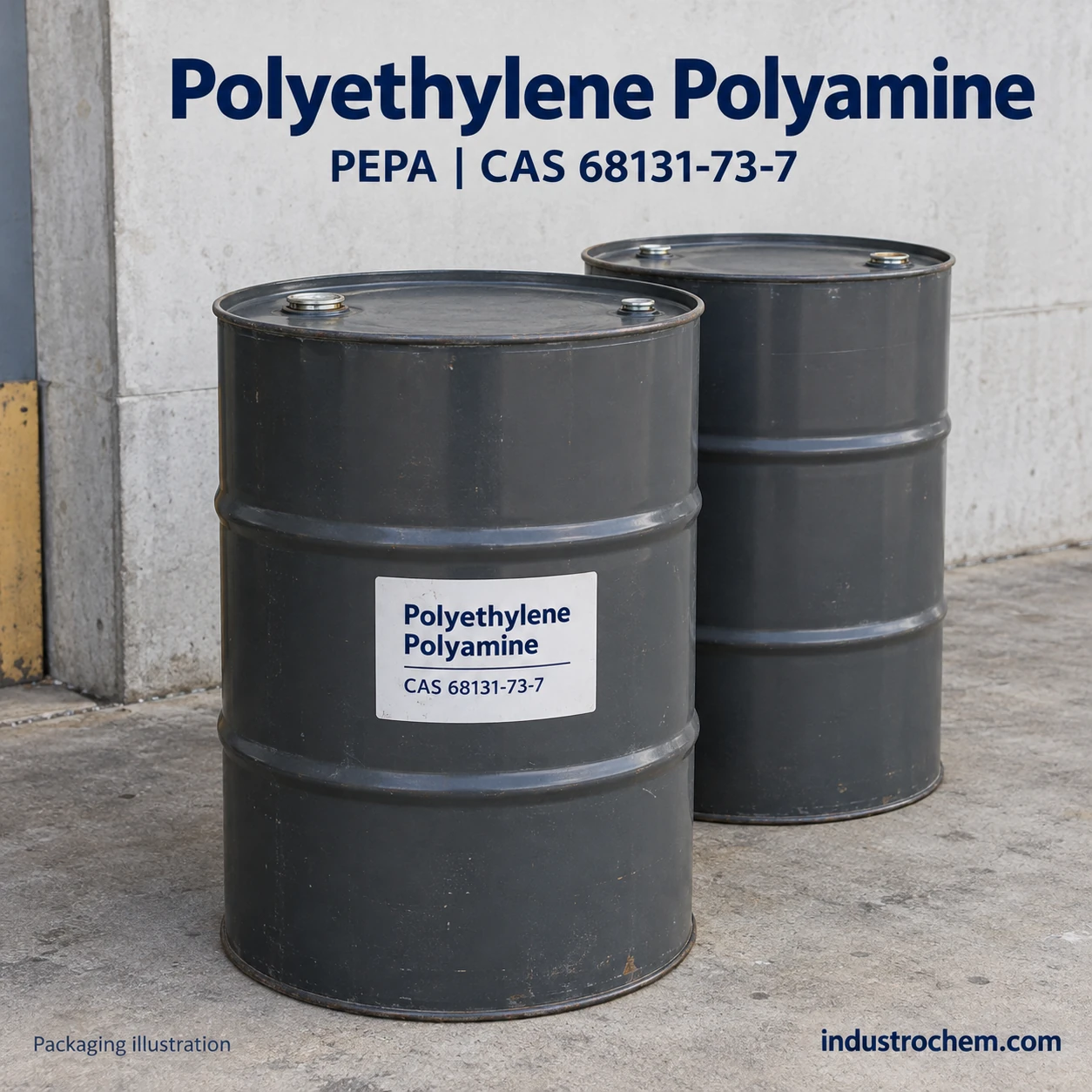
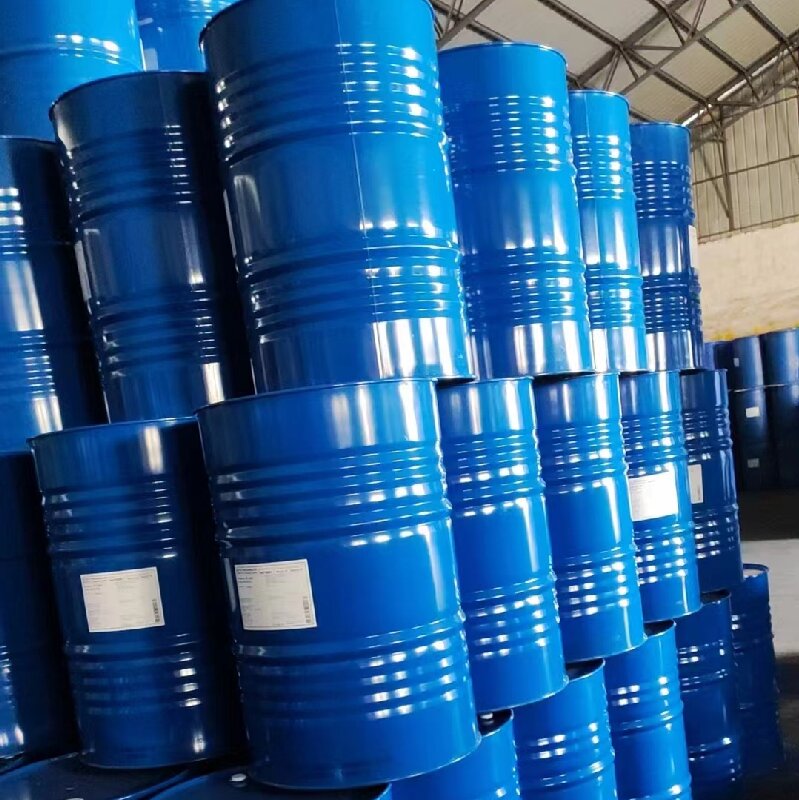
- Package: Compatible lined-steel or HDPE drums, or suitable bulk arrangements; packing and net quantity agreed for the grade and shipment.
Product Description
PEPA composition and grade selection
Polyethylene Polyamine (PEPA), CAS 68131-73-7, contains a distribution of higher ethyleneamines, including linear, branched and cyclic components. The distribution depends on the commercial grade. It has no single fixed molecular formula or molecular weight; a CAS number alone does not define its composition.
Amine value is reported in mg KOH/g and describes acid-neutralising capacity under the stated titration method. Amine hydrogen equivalent weight (AHEW), in g/eq, is a separate formulation quantity used for epoxy stoichiometry. AHEW should not be calculated from total amine value alone.
Grade selection is based on an agreed amine-value range, water limit, viscosity at a stated temperature, colour scale and any required composition limits. Density is reported at a stated temperature; pH also requires a stated dilution. These conditions form part of the quoted-grade specification.
Industrial uses and amine selection
Industrial PEPA grades are used in epoxy-hardener formulations and as intermediates for lubricant and fuel additives and corrosion inhibitors. Certain grades also serve asphalt-additive and mineral-processing applications. The amine distribution and required downstream performance guide the choice of grade.
For epoxy or additive formulation, compare PEPA with Diethylenetriamine (DETA) and Tetraethylene Pentamine (TEPA). These amine products differ in composition, reactive equivalents and formulation behaviour; equal mass does not imply an equivalent replacement.
For synthesis applications, Ethylenediamine (EDA) is a defined low-molecular-weight diamine, while Aminoethylethanolamine (AEEA) is a hydroxyl-functional amine. Their functionality and reaction behaviour differ from mixed higher ethyleneamines, so grade selection and substitution depend on the synthesis route.
PEPA quality documents and testing
We can provide a Certificate of Analysis (COA), Technical Data Sheet (TDS) and Safety Data Sheet (SDS) for the offered PEPA grade, together with relevant analytical information. Quality is guaranteed against the grade and specification agreed for the order. The batch identification and COA support receiving checks.
When composition limits are part of the order, we can provide appropriate gas chromatography with flame-ionisation detection (GC/FID) data or a chromatogram with its reporting basis. GC peak-area percentages are not automatically mass fractions. A single purity percentage does not adequately describe this mixed ethyleneamine product.
Amine-value titration, water testing such as an appropriate Karl Fischer method, and viscosity and colour measurements address different quality requirements. The COA limits and test methods are agreed for the quoted grade. Additional third-party inspection can be arranged as part of the order requirements.
Bulk packing and handling
Compatible lined-steel or HDPE drums and suitable bulk arrangements can be quoted for the selected PEPA grade and shipment. Container material, seals and receiving equipment must suit the product and colour or contamination requirements. Packing and net quantity are agreed in the quotation.
PEPA grades are alkaline, moisture-sensitive amine liquids and can be corrosive. Keep containers closed and protect the product from moisture, carbon dioxide and incompatible contamination. Use the applicable SDS to select storage conditions, ventilation, protective equipment and handling precautions for the supplied grade.
For a quotation, start with the intended application and approximate quantity. Add the target amine value or AHEW, water or viscosity limits, packing preference and destination where known. We can help align the offered grade and documentation with those requirements.
FAQ - Technical & Supply Chain
-
Q:
Is PEPA CAS 68131-73-7 the same as polyethyleneimine?
A: No. This PEPA product is a commercial mixture of higher ethyleneamines. It should not be identified as polyethyleneimine or assigned one fixed polymer formula. Specify the CAS number, industrial grade and composition or performance requirements when selecting the raw material. -
Q:
Can PEPA replace DETA or TEPA at the same dosage?
A: A direct equal-mass substitution is not justified. The products can differ in amine distribution, active-hydrogen equivalents, viscosity and curing behaviour. For epoxy systems, use the relevant AHEW and validate the formulation and cure conditions for the selected grade. -
Q:
Does amine value alone define the quality of a PEPA grade?
A: No. Amine value measures neutralising capacity by the specified titration; it does not uniquely establish composition or AHEW. Water, viscosity, colour and any agreed GC composition limits also matter. Test conditions and reporting basis belong with the specification. -
Q:
What information helps us quote industrial PEPA?
A: The application and approximate quantity are enough to start. If available, include the target amine value or AHEW, water and viscosity limits, packing preference and destination. We can provide COA/TDS/SDS and relevant composition data for the offered grade; packing and quality requirements are agreed in the quotation.
Ordering & Documentation
Key information for document requests, quotations, and supply planning.
Documents
Tell us which documents your procurement team needs. Before an order, we will check whether the quoted source can provide them for the offered lot.
Quotation
Send the CAS number, grade, quantity, packing preference and destination.
Sample & Supply
Ask whether samples, trial quantities or repeat orders are possible. We will check each request against the sourced product and current offer.
Storage & Shipping
Product-specific conditions are confirmed before order.