










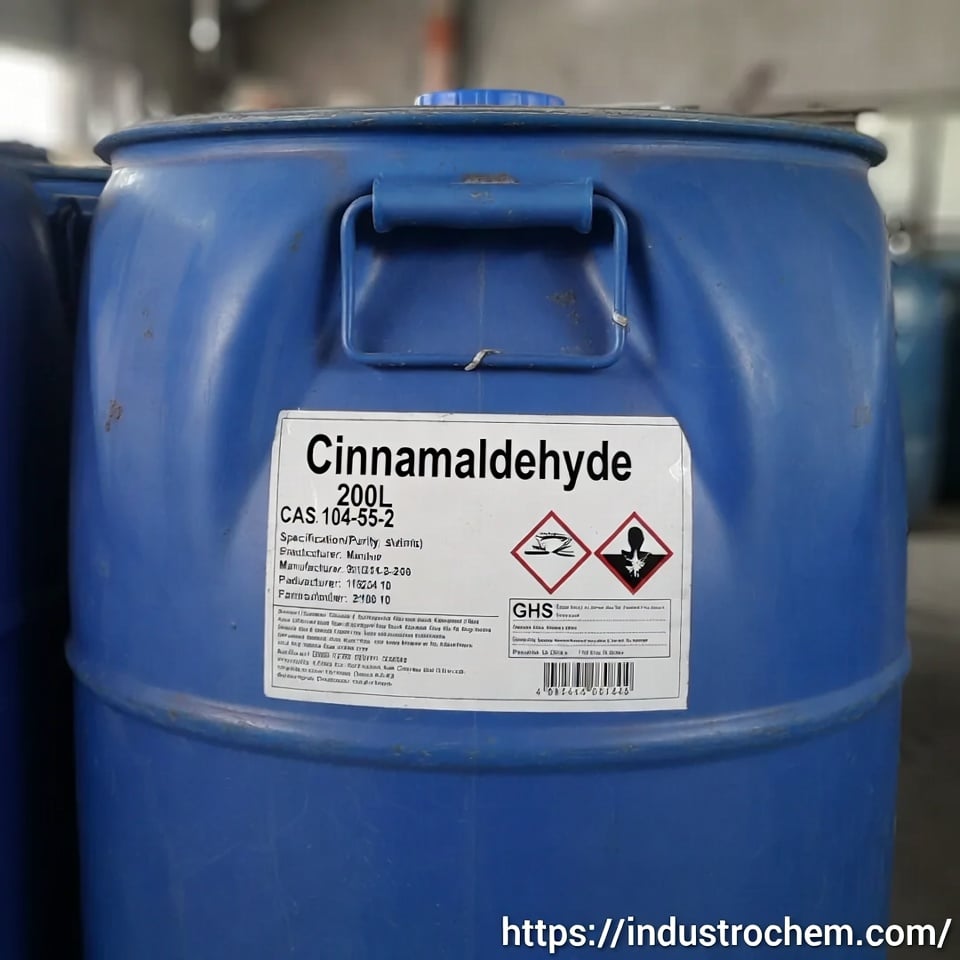
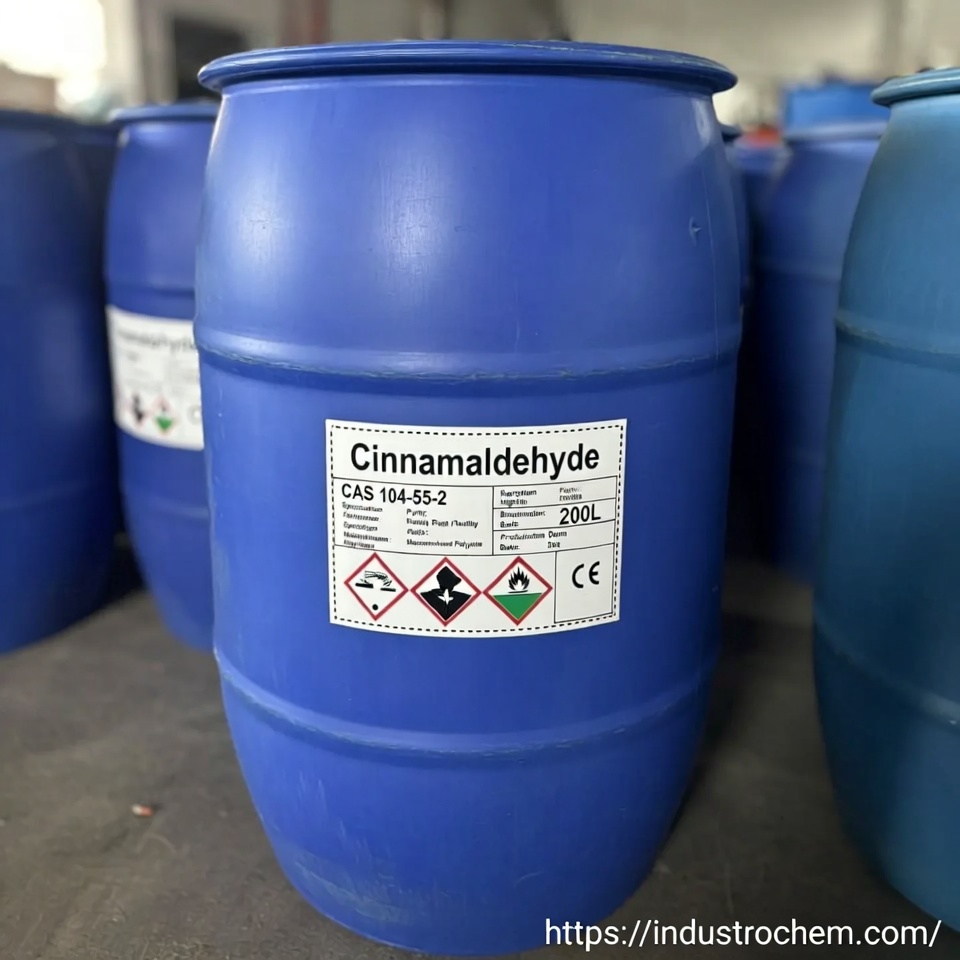
• Cinnamaldehyde CAS 104-55-2
  • Cinnamaldehyde CAS 104-55-2

Cinnamaldehyde CAS 104-55-2

Cinnamaldehyde is an aromatic aldehyde used in the Fine Chemical and Basic & Fine Chemicals supply chain as a reactive organic compound for formulation and process use, and this material, also known in technical trade language as cinnamic aldehyde, cinnamal, (E)-3-phenylprop-2-enal, and 3-phenyl-2-propenal, corresponding to CAS 104-55-2, is characterized by its conjugated aldehyde structure that contributes aldehydic reactivity and odor-active functionality, making it commonly applied in flavor and fragrance processing, aroma chemical blending, and selected chemical intermediate systems where controlled identity and composition are required; This product is typically offered with competitive factory pricing, customized specifications, document support including MSDS, TDS, COA, and stable bulk supply.

  • CAS: 104-55-2
  • Synonyms: Cinnamic aldehyde; Cinnamal; (E)-3-phenylprop-2-enal; 3-Phenyl-2-propenal; 3-Phenylprop-2-enal
  • Einecs: 203-213-9
  • Molecular Formula: C9H8O
  • Grade: Industrial Grade / Fine Chemical Grade
  • Package: Common export packing includes 25 kg drum and 200 kg drum; customized packing can be arranged

Request a quote
Share:

Product Description

Technical Data

ItemTypical Specification / Reference Value
AppearancePale yellow to yellow liquid
Assay≥98.0% (GC)
CAS No.104-55-2
EC / EINECS No.203-213-9
Molecular FormulaC9H8O
Molecular Weight132.16
OdorCharacteristic cinnamon-like odor
Melting Point / Freezing Pointabout -7.5 to -8 °C
Boiling Pointabout 248–252 °C
Densityabout 1.041–1.050 g/cm³ at 20 °C
Refractive Indexabout 1.622
Water SolubilitySlightly soluble in water
Solubility in Organic MediaSoluble in alcohol; compatible with many organic solvent systems
Vapor Densityabout 4.6 (air = 1)
Flash Pointmethod-dependent; commonly reported around 105–131 °C
Storage StabilityKeep tightly closed and protected from heat, light, and oxidizing conditions

Applications

1. Flavor and fragrance processing
Cinnamaldehyde is commonly used as an aroma chemical raw material in flavor and fragrance systems where a defined aldehydic cinnamon profile is required.

2. Chemical intermediate use
Its conjugated aldehyde structure allows it to serve as an intermediate or building block in selected fine chemical synthesis routes.

3. R&D and formulation screening
It is also used in laboratory and pilot-scale formulation work for identity-controlled aromatic aldehyde input.

Storage & Safety

Store in a cool, dry, and well-ventilated area. Keep the container tightly closed. Protect from direct sunlight, heat sources, and ignition sources. Avoid contact with strong oxidizing agents and strong bases. During handling, use suitable PPE including chemical-resistant gloves, protective goggles, and protective clothing. Local exhaust ventilation is recommended for bulk transfer or repeated handling. Avoid direct skin contact and inhalation of vapors. Follow the current SDS for industrial handling, spill response, and disposal procedures.

Quality Assurance

A credible factory quality program for cinnamaldehyde usually includes identity and purity control by GC, with additional confirmation methods such as GC-MS or NMR when needed for higher-traceability supply. Routine release items often include assay, appearance, color, density, refractive index, and selected impurity checks. If the material is intended for regulated downstream sectors, documentation control, batch traceability, and the applicable plant quality system should be confirmed case by case. GMP status should not be assumed unless the specific manufacturing site and grade are explicitly declared as such.

FAQ - Technical & Supply Chain

  • Q:

    How can buyers verify that Cinnamaldehyde CAS 104-55-2 matches cinnamic aldehyde in technical documents?

    A: Buyers usually confirm identity by checking the CAS number 104-55-2 together with the EC number 203-213-9, molecular formula C9H8O, and the accepted chemical names Cinnamaldehyde or cinnamic aldehyde on the SDS, TDS, and COA.
  • Q:

    Is Cinnamaldehyde typically used as a fragrance formulation raw material or as a chemical intermediate?

    A: It can be used in both contexts. In commercial practice, one supply line may be positioned for aroma or fragrance processing, while another may be purchased as a fine chemical input for synthesis or formulation work. The exact fit depends on grade, purity target, and documentation requirements.
Documents

Documents and Product Support

For product review and sourcing evaluation, supporting documents can be coordinated according to the product type, inquiry stage, and order requirements.

  • COA for batch-based quality reference
  • TDS for key physical and chemical information
  • SDS / MSDS for handling, storage, and safety reference
  • Packing information for sample, trial, and bulk orders
  • Technical communication based on application and specification requirements
Quotation

Information to Confirm Before Quotation

Clear sourcing information helps reduce specification mismatch and allows a more accurate quotation before sample or bulk order discussion.

  • Product name and CAS number
  • Application or intended end use
  • Required purity, grade, or specification
  • Sample quantity, trial order, or bulk demand
  • Preferred packing form or net weight
  • Destination country or port
  • Required documents or compliance expectations
Storage & Handling

Packaging, Storage, and Handling Notes

Packaging form, storage conditions, shelf life, and shipment arrangements should be confirmed according to the product characteristics, package size, and destination requirements.

Before order confirmation, buyers are advised to review the corresponding product documents and confirm whether any special storage, labeling, or handling requirements apply.

Supply Support

Sample, Bulk Order and Repeat Supply Support

Support can be arranged for sample discussion, bulk supply planning, packaging confirmation, and routine sourcing communication based on the actual product and order requirements.

For repeat-use formulations or long-term procurement plans, buyers may discuss specification consistency, packaging preferences, delivery expectations, and document coordination in advance.

Contact Form

Use our contact form to send us your questions, suggestions or comments. We will respond as soon as possible.