2,3-Dimethylbutanedinitrile is an aliphatic dinitrile compound used as a defined chemical intermediate in industrial synthesis processes. It is also referred to in technical literature as dimethylsuccinonitrile and 2,3-dimethylbutane-1,4-dinitrile, representing the same molecular structure under CAS 3333-52-6. The compound participates as a reactive intermediate in polymer intermediate synthesis, where the nitrile functional groups enable controlled downstream transformations under standard chemical processing conditions. this material is provided with competitive factory pricing, customized specifications, and full documentation including MSDS, TDS, COA, supporting bulk supply requirements for chemical manufacturing use.
2,3-Dimethylbutanedinitrile CAS 3333-52-6
- CAS: 3333-52-6
- Synonyms: 2,3-Dimethylbutane-1,4-dinitrile, Dimethylsuccinonitrile, 2,3-Dimethylsuccinonitrile, Dimethyl butanedinitrile
- Einecs: 201-193-6
- Molecular Formula: C₆H₈N₂
- Grade: Industrial grade 99%
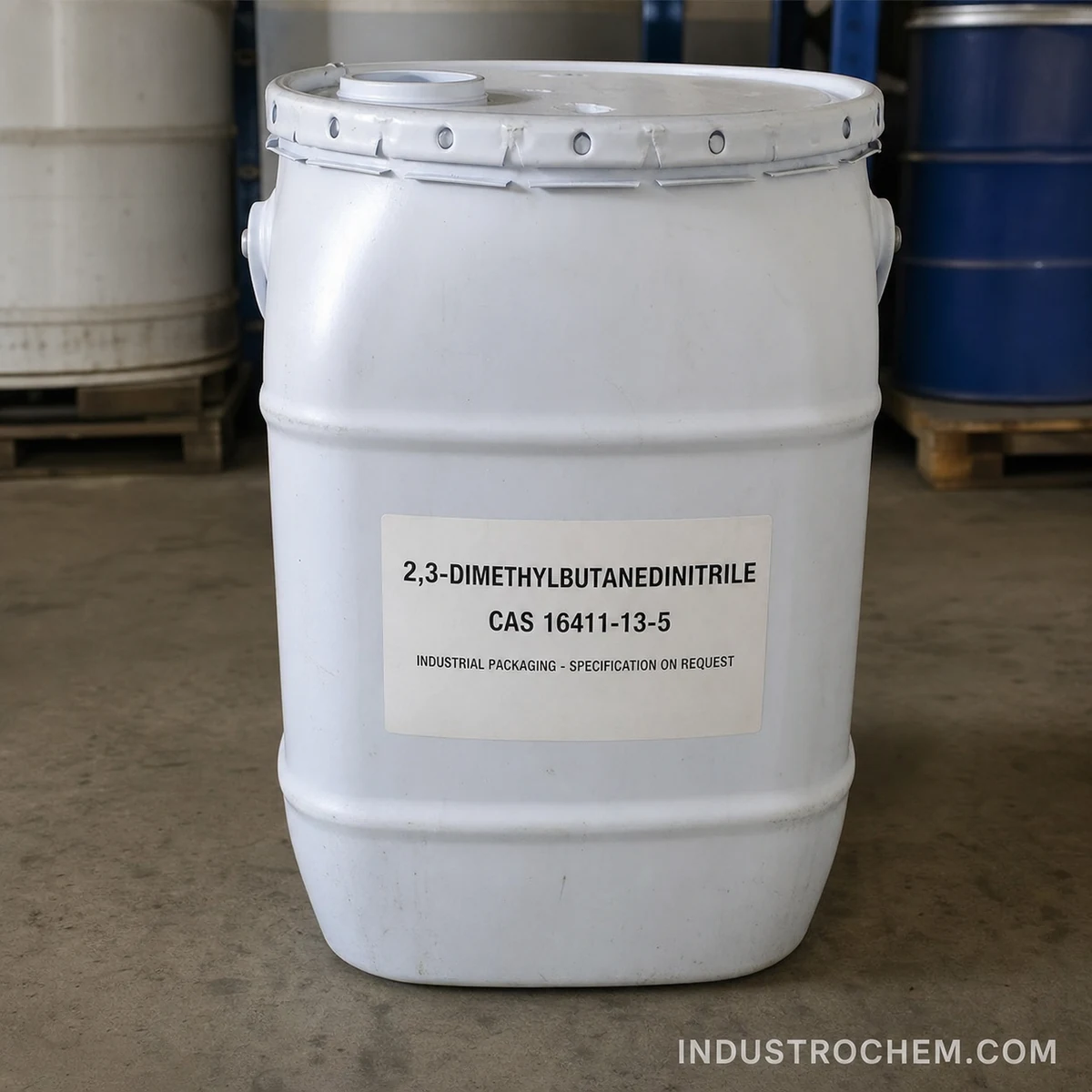
- Package: 200kg iron drum or 50kg plastic drum packaging
Product Description
Physicochemical properties
| Property | Description |
|---|---|
| Chemical Name | 2,3-Dimethylbutanedinitrile |
| Synonyms | 2,3-Dimethylsuccinonitrile; Butanedinitrile, 2,3-dimethyl-; 2,3-dicyanobutane |
| CAS Number | 3333-52-6 |
| Molecular Formula | C₆H₈N₂ |
| Molecular Weight | 108.144 g/mol |
| Appearance | (Data not explicitly stated, but typically a solid or liquid depending on temperature) |
| Melting Point | 51-52 °C |
| Boiling Point | 167 °C (at 100 Torr) |
| Density | 0.939 ± 0.06 g/cm³ (Predicted) |
| Solubility | (Data not available; solubility in common solvents like water, ethanol, or chloroform is not specified in available sources) |
| Chemical Structure | The compound consists of a butanedinitrile backbone with two methyl groups (-CH₃) attached to the 2 and 3 positions of the carbon chain. |
Application Areas
Organic synthesis intermediates: By utilizing the chemical activity of their nitrile group (- CN), they participate in addition, substitution, or cyclization reactions to construct more complex molecular structures.
Reaction mechanism research: As a model compound, 2,3-Dimethylbutanenitrile can be used to explore the reaction pathways of nitrile compounds under specific conditions (such as hydrolysis, reduction, or polymerization of nitrile groups), providing theoretical support for organic synthesis methodology.
Spectral analysis standard: Its unique UV visible absorption spectrum (due to the presence of conjugated systems) may be used for quantitative analysis or as a reference material for spectral calibration.
Storage conditions
Temperature: Room temperature (15-25 ° C) or lower, avoid high temperatures
Container: Sealed glass bottle or HDPE plastic bottle, stored away from light
Environment: Dry, well ventilated, away from acids, alkalis, and oxidants
Isolation: Separate from food, feed, and flammable materials
Stability: Avoid long-term storage and regularly check for clumping or discoloration (signs of decomposition)
Safety precautions
Health protection: Wear a gas mask, chemical protective gloves, and goggles during operation to avoid inhaling dust or skin contact.
Emergency response: Immediately isolate the contaminated area in case of leakage and use inert adsorbent materials for treatment; Use dry powder or carbon dioxide fire extinguishers during a fire
Toxicity risk: May be harmful if swallowed or inhaled, seek medical attention promptly upon contact
FAQ - Technical & Supply Chain
-
Q:
Are 2,3-dimethylbutanedinitrile and dimethylsuccinonitrile the same substance?
A: Yes. These names refer to the same chemical entity and correspond to a single defined molecular structure under one CAS registration. -
Q:
Is 2,3-dimethylbutanedinitrile intended for industrial intermediate use rather than laboratory research only?
A: The substance is commonly used as an intermediate in industrial chemical synthesis and formulation processes, rather than being limited to small-scale laboratory applications.
Documents and Product Support
For product review and sourcing evaluation, supporting documents can be coordinated according to the product type, inquiry stage, and order requirements.
- COA for batch-based quality reference
- TDS for key physical and chemical information
- SDS / MSDS for handling, storage, and safety reference
- Packing information for sample, trial, and bulk orders
- Technical communication based on application and specification requirements
Information to Confirm Before Quotation
Clear sourcing information helps reduce specification mismatch and allows a more accurate quotation before sample or bulk order discussion.
- Product name and CAS number
- Application or intended end use
- Required purity, grade, or specification
- Sample quantity, trial order, or bulk demand
- Preferred packing form or net weight
- Destination country or port
- Required documents or compliance expectations
Packaging, Storage, and Handling Notes
Packaging form, storage conditions, shelf life, and shipment arrangements should be confirmed according to the product characteristics, package size, and destination requirements.
Before order confirmation, buyers are advised to review the corresponding product documents and confirm whether any special storage, labeling, or handling requirements apply.
Sample, Bulk Order and Repeat Supply Support
Support can be arranged for sample discussion, bulk supply planning, packaging confirmation, and routine sourcing communication based on the actual product and order requirements.
For repeat-use formulations or long-term procurement plans, buyers may discuss specification consistency, packaging preferences, delivery expectations, and document coordination in advance.