








Ethylene Carbonate (EC), CAS 96-49-1, also known as 1,3-dioxolan-2-one, is a high-polarity cyclic carbonate used in lithium-ion battery electrolyte formulations and selected industrial polymer, resin and chemical processes. Dimethyl Carbonate is a common co-solvent component in lithium-ion electrolyte blends. It is crystalline near room temperature and is supplied according to the agreed form and purity. COA, TDS and SDS support review of grade, water and impurity requirements before use. For a liquid cyclic carbonate solvent option, Propylene Carbonate is a related material to compare separately by water, color and impurity profile.
Ethylene Carbonate (EC) CAS 96-49-1
- CAS: 96-49-1
- Synonyms: 1,3-Dioxolan-2-one, Ethylene glycol carbonate, Carbonic acid ethylene ester
- Einecs: 202-510-0
- Molecular Formula: C3H4O3
- Grade: Industrial Grade; battery grade on specification
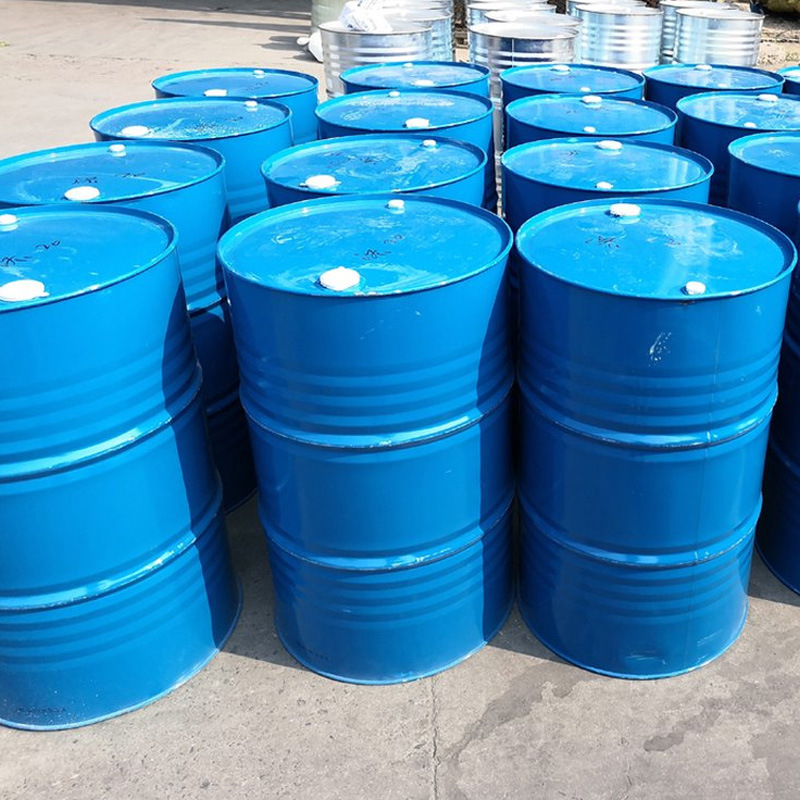
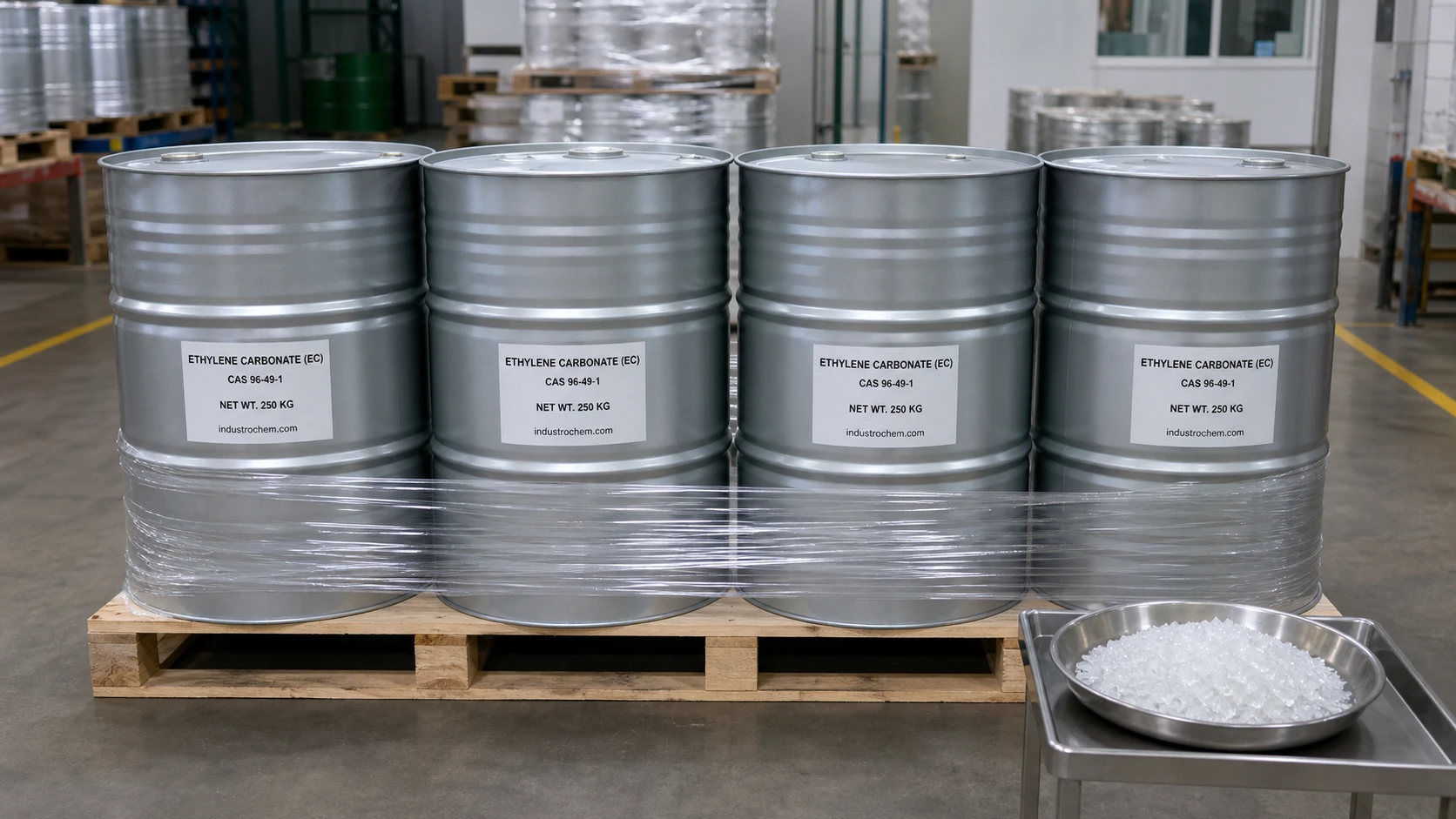
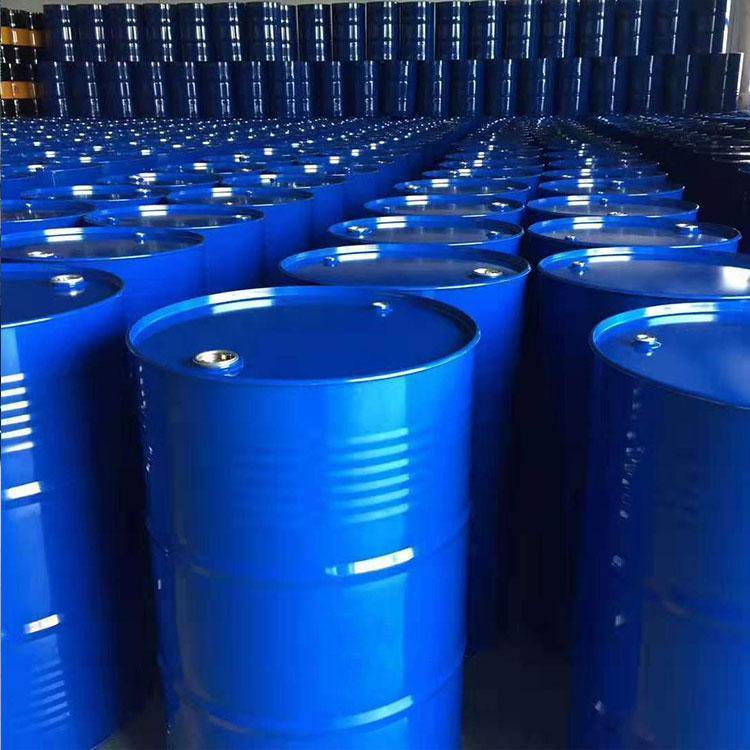
- Package: 250 kg steel drums / ISO tank
- Appearance: Colorless needle-shaped or flake crystals
- Purity: ≥99.0%
- Water: ≤0.1%
- Ethylene glycol: ≤0.5%
Product Description
Product Introduction
Ethylene Carbonate (EC) (CAS 96-49-1) is a cyclic-carbonate raw material specified principally for lithium-ion battery and capacitor electrolyte manufacture. The listed product is a crystalline industrial material for downstream formulation or synthesis; it is not a ready-mixed battery electrolyte and is not assumed interchangeable with propylene carbonate.
Applications
- Lithium-ion battery electrolyte formulations
- Capacitor-electrolyte and electronics-process solvent systems
- Photoresist-removal and specialty polar-solvent formulations
- Organic synthesis and polymer-processing routes using ethylene carbonate as a named feedstock
Grade Selection and Documentation
For electrolyte or electronics use, the quoted EC grade is matched to the required assay, water, colour, chloride or trace-impurity limits and melting behaviour. Industrial solvent or synthesis grades are confirmed against their own process specification. A batch COA, with the applicable TDS and SDS, is available for the material offered; packaging and quantity follow the agreed grade.
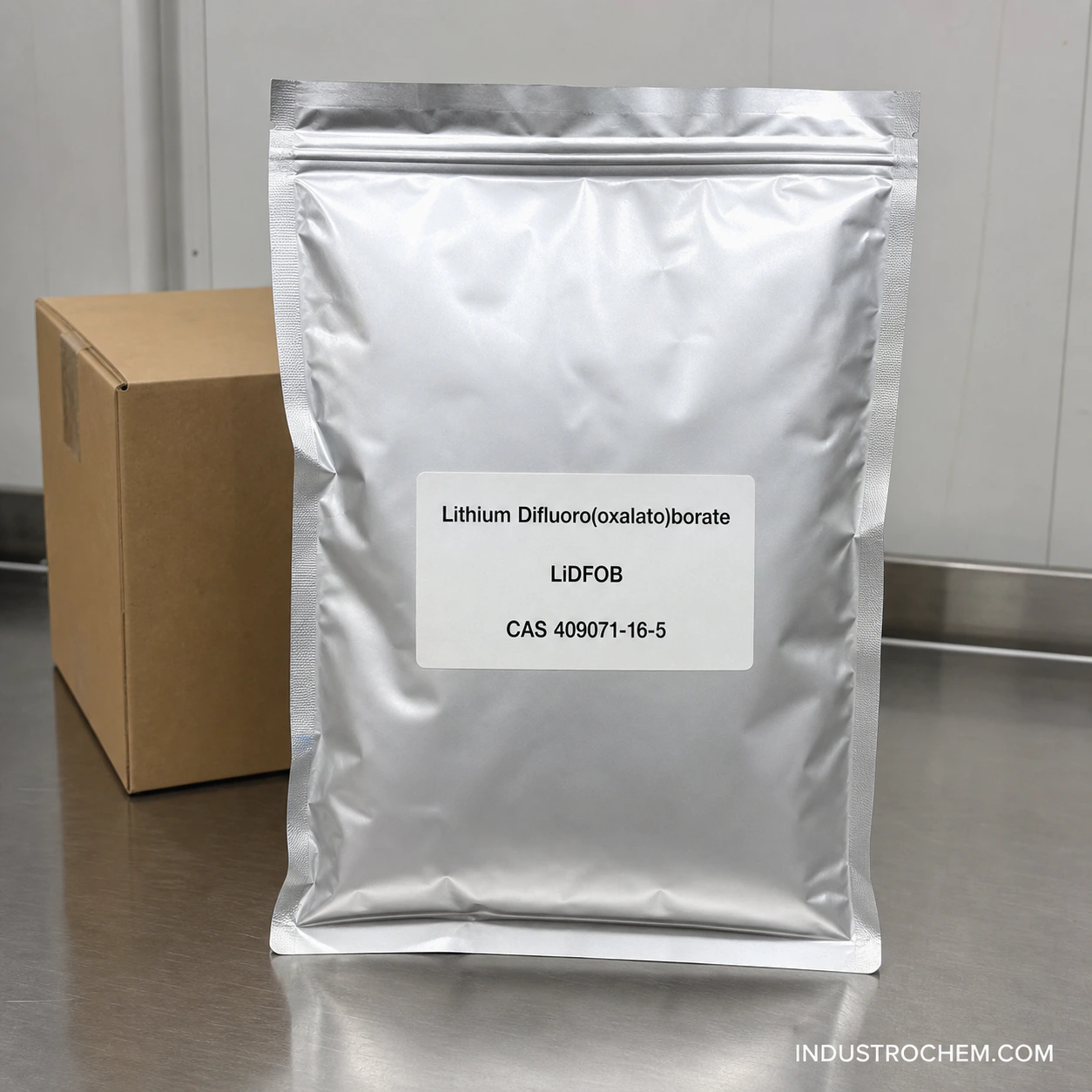
For related carbonate solvent and electrolyte-material pages, review Propylene Carbonate, Dimethyl Carbonate, and Lithium Difluoroxalate Borate.
FAQ - Technical & Supply Chain
-
Q:
Is industrial Ethylene Carbonate automatically suitable for lithium-battery electrolytes?
A: No. Battery electrolyte use requires a separately agreed battery-grade specification. In addition to identity and assay, water and relevant trace-impurity limits must match the receiving electrolyte formulation and its quality-control requirements. -
Q:
Must Ethylene Carbonate always be handled as a liquid?
A: No. EC is commonly crystalline near room temperature and becomes liquid when heated. The supply form, melt-handling condition and receiving-process temperature should be agreed before unloading or formulation. -
Q:
Which EC values should be confirmed before production use?
A: Confirm the intended grade, assay, water, ethylene-glycol content, colour, applicable trace-impurity limits, package and handling temperature. The batch COA, TDS and SDS should match the intended electrolyte or industrial process.
Ordering & Documentation
Key information for document requests, quotations, and supply planning.
Documents
COA, TDS, SDS/MSDS and packing details are available on request.
Quotation
Send the CAS number, grade, quantity, packing preference and destination.
Sample & Supply
Support is available for samples, trial orders, bulk and repeat supply.
Storage & Shipping
Product-specific conditions are confirmed before order.