






Chemical products
  • Trimethylolpropane Triacrylate (TMPTA) CAS 15625-89-5
  • Trimethylolpropane Triacrylate (TMPTA) CAS 15625-89-5

Trimethylolpropane Triacrylate (TMPTA) CAS 15625-89-5

Trimethylolpropane Triacrylate (TMPTA), CAS 15625-89-5, is a trifunctional acrylate monomer for UV/EB-curable coatings, inks, adhesives and overprint varnishes. Also called TMPTA, it is used as a reactive diluent and crosslinking component. Isobornyl Acrylate is a related monofunctional acrylate option, distinct from TMPTA’s trifunctionality, for UV/EB formulation selection. Suitability is determined by the complete oligomer, initiator and process combination. Commercial grades should be aligned by functionality, viscosity, inhibitor and water limits rather than name alone. Batch COA, TDS and SDS can be matched to the agreed material and packaging. Trimethylolpropane (TMP) is the corresponding triol building block used where resin or ester routes specify the non-acrylated polyol.

  • CAS: 15625-89-5
  • Synonyms: TMPTA, TMP triacrylate
  • Einecs: 239-701-3
  • Molecular Formula: C₁₅H₂₀O₆ (nominal)
  • Grade: Industrial UV/EB-curable grade
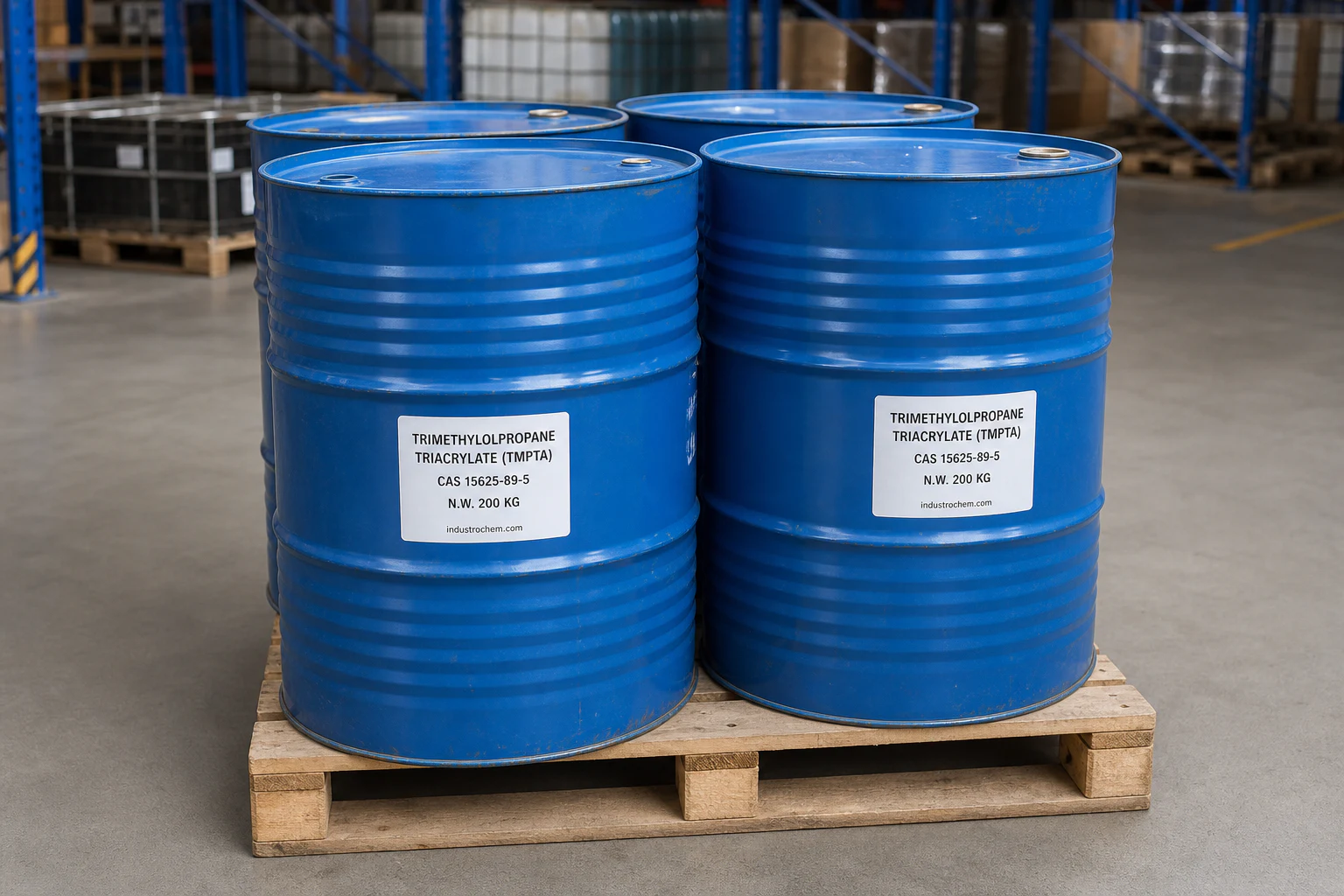
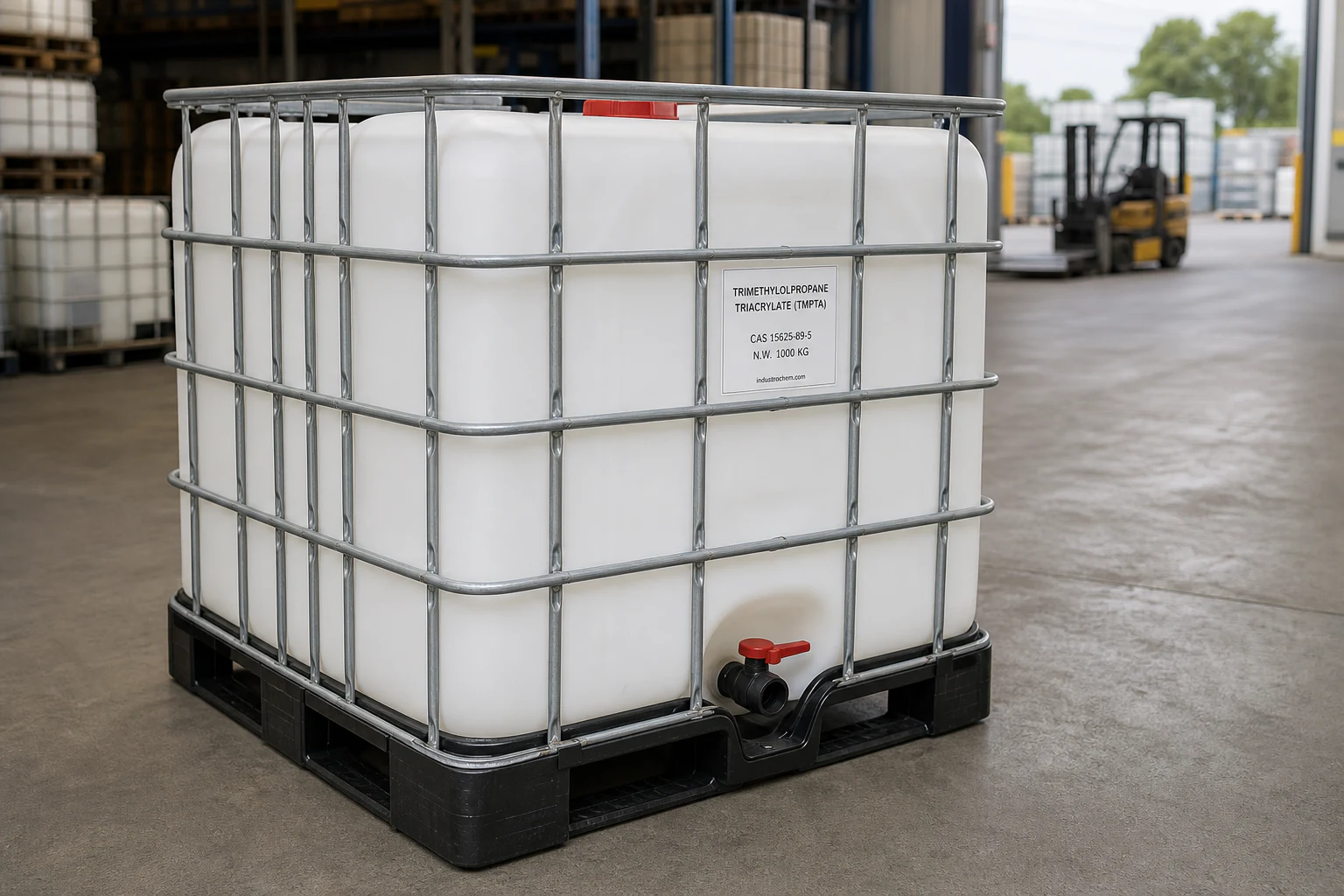
  • Package: 200 kg steel drums; 1,000 kg IBCs by agreement
  • Appearance: Clear, colorless to pale-yellow liquid
  • Acrylate functionality: 3
  • Viscosity (25 °C): 80–110 mPa·s
  • Water: ≤0.2%
  • Polymerization inhibitor: ≤300 ppm
Request a quote
Share:

Product Description

Product Introduction

Trimethylolpropane Triacrylate (TMPTA) (CAS 15625-89-5) is a trifunctional reactive acrylate monomer for UV/EB-curable coatings, inks and adhesive systems. The listed material is a crosslinking diluent or formulation raw material for energy-curing manufacture; it is not a finished UV coating, printing ink or trimethacrylate substitute.

Applications

  • UV/EB-curable industrial coatings and overprint varnishes
  • Radiation-curable printing-ink and graphic-arts formulations
  • Energy-curable adhesive and resin systems
  • Reactive-diluent blends requiring a named triacrylate monomer

Grade and Documentation

A TMPTA order is tied to the stated energy-curing route and the agreed monomer identity, colour, viscosity, inhibitor profile and relevant assay controls. A batch COA, along with the applicable TDS and SDS, is available for the quoted material. Packaging and quantity are selected for the agreed formulation and handling process.

For other acrylate monomer pages used in UV-curable, coating or adhesive systems, compare 2-Ethylhexyl Acrylate, n-Butyl Acrylate, and Ethyl Acrylate.

FAQ - Technical & Supply Chain

  • Q:

    Is Trimethylolpropane Triacrylate (TMPTA) the same as TPGDA, HDDA or ethoxylated TMPTA?

    A: No. These are different acrylate monomers with different functionality, viscosity and formulation behavior. CAS 15625-89-5 identifies TMPTA; it should be selected separately from TPGDA, HDDA and ethoxylated TMPTA for UV/EB-curable systems.
  • Q:

    Is TMPTA supplied as a finished UV coating or printing ink?

    A: No. TMPTA is a reactive monomer used within UV/EB-curable coating, ink, adhesive and varnish formulations. Oligomer selection, initiator package, pigment content and application method determine the finished material.
  • Q:

    Which TMPTA details should be confirmed before production use?

    A: Confirm functionality, viscosity, inhibitor and water limits, color, packaging and the relevant formulation requirements. The batch COA, product TDS and SDS should be reviewed against the intended UV/EB-curable system before release.

Ordering & Documentation

Key information for document requests, quotations, and supply planning.

Documents

COA, TDS, SDS/MSDS and packing details are available on request.

Quotation

Send the CAS number, grade, quantity, packing preference and destination.

Sample & Supply

Support is available for samples, trial orders, bulk and repeat supply.

Storage & Shipping

Product-specific conditions are confirmed before order.

Contact Form

Use our contact form to send us your questions, suggestions or comments. We will respond as soon as possible.