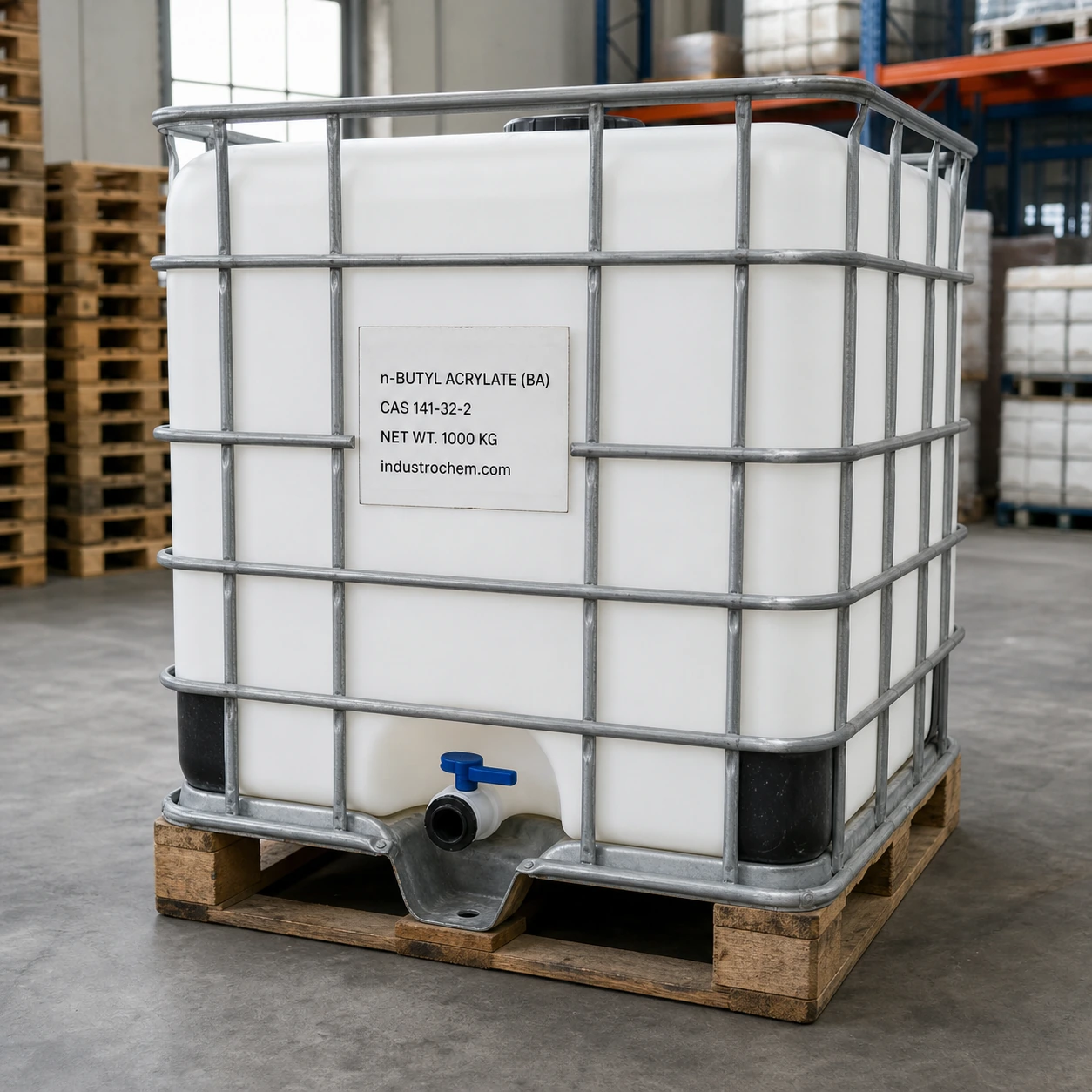









Ethyl Acrylate (EA), CAS 140-88-5, also known as ethyl 2-propenoate or acrylic acid ethyl ester, is a stabilized acrylate monomer for emulsion polymers and copolymer resins used in paper, textile, leather and wood coatings, adhesives and sealants. n-Butyl Acrylate is a related soft-monomer option in acrylic copolymer design. It is selected within a defined polymer recipe, not applied as a finished formulation. COA, TDS and SDS support confirmation of assay, water, inhibitor condition, packaging and storage fit for the intended process.
Ethyl Acrylate (EA) CAS 140-88-5
- CAS: 140-88-5
- Synonyms: Ethyl 2-propenoate, Acrylic acid ethyl ester, Ethyl propenoate
- Einecs: 205-438-8
- Molecular Formula: C5H8O2
- Grade: Industrial Grade
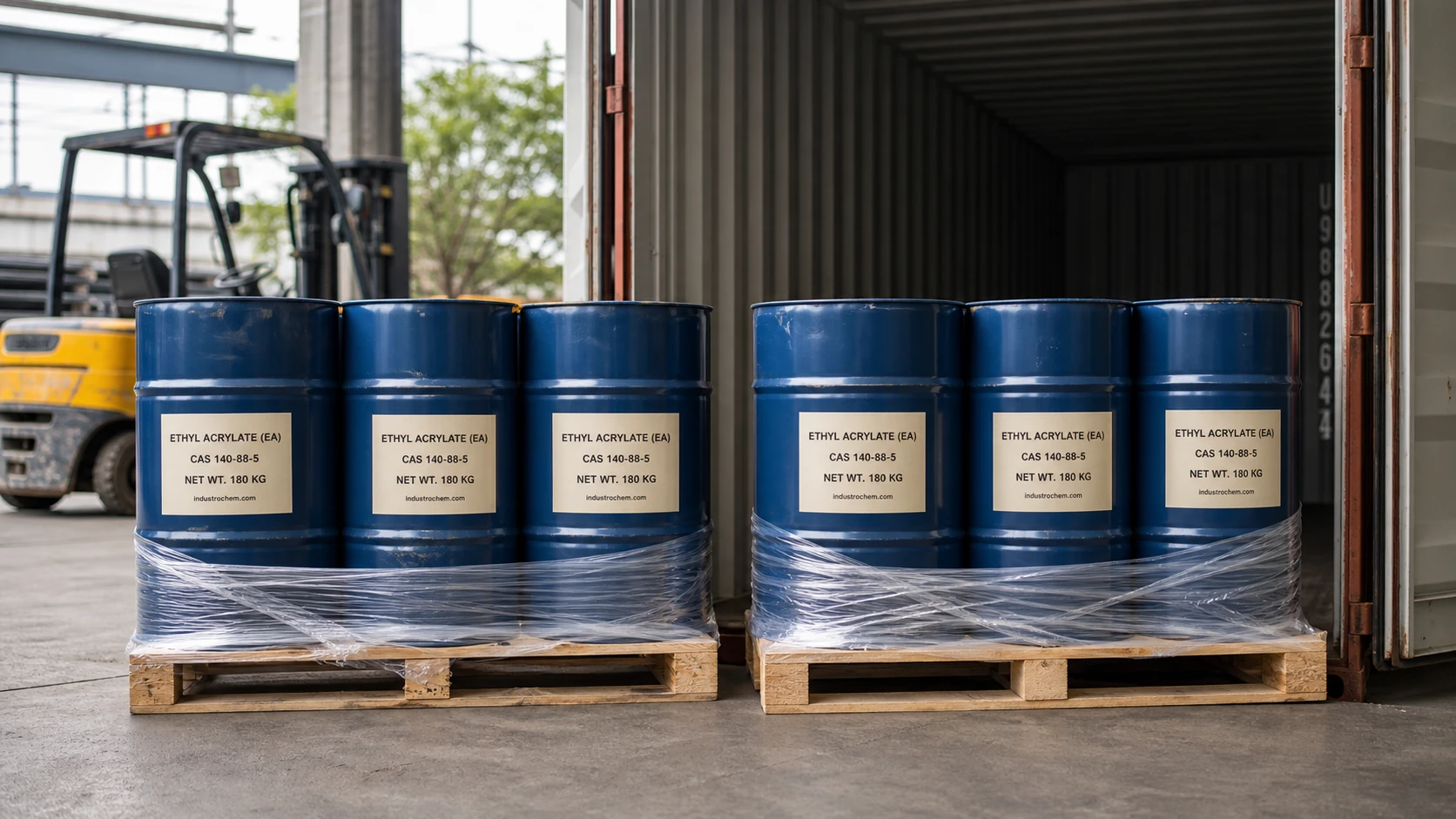
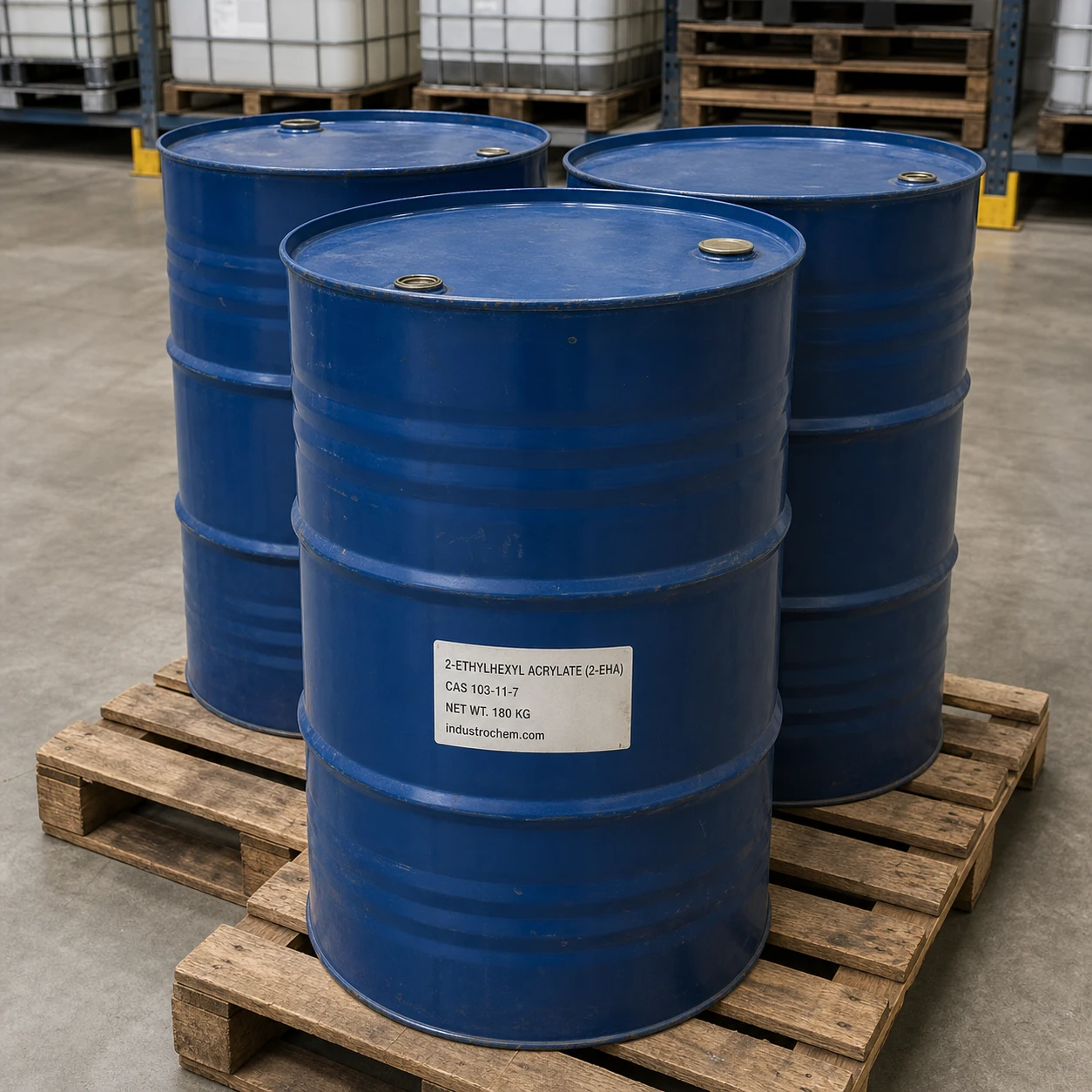
- Package: 180 kg steel drums / ISO tank
- Appearance: Clear liquid
- Assay: ≥99.5%
- Water: ≤400 ppm
- MEHQ inhibitor: 10–20 ppm
Product Description
Product Introduction
Ethyl Acrylate (EA) (CAS 140-88-5) is a stabilized acrylic ester monomer supplied for copolymer manufacture and synthesis routes. The listed material is used in industrial resin, coating and adhesive polymer production where ethyl acrylate is specified. It is a reactive monomer, not Ethyl Acetate or a finished polymer formulation.
Applications
- Acrylic copolymers for industrial coating and ink-binder resins
- Adhesive and sealant polymer systems using EA as a named comonomer
- Emulsion and solution polymer manufacture for resin-dispersion routes
- Chemical synthesis using ethyl acrylate as an acrylic ester feedstock
Material Confirmation
Before release, the order is checked against the required ethyl acrylate identity, monomer assay, inhibitor system, colour, water and acid-value limits. A batch COA, with the applicable TDS and SDS, is available for the quoted grade. Packaging and quantity are finalized for the stated polymerization or synthesis requirement.
For other acrylic ester monomer pages, compare 2-Ethylhexyl Acrylate, n-Butyl Acrylate, and 2-Hydroxyethyl Acrylate.
FAQ - Technical & Supply Chain
-
Q:
Can Ethyl Acrylate be substituted for another acrylate monomer?
A: No. Ethyl Acrylate is a distinct acrylic ester monomer. It should be used only where the intended copolymer formulation specifies EA; substitution with methyl, butyl or other acrylates can change the designed polymer system. -
Q:
Is Ethyl Acrylate a finished coating or adhesive?
A: No. EA is normally used during acrylic-polymer manufacture. The resulting resin or dispersion is then formulated into coating, paper-treatment, textile, leather, adhesive, sealant or elastomer systems. -
Q:
What Ethyl Acrylate requirements should be agreed before production use?
A: Confirm assay, water, acidity, MEHQ inhibitor condition, packing and storage period against the polymerisation procedure. The batch COA, TDS and SDS should match the agreed grade before the monomer is introduced into process.
Ordering & Documentation
Key information for document requests, quotations, and supply planning.
Documents
COA, TDS, SDS/MSDS and packing details are available on request.
Quotation
Send the CAS number, grade, quantity, packing preference and destination.
Sample & Supply
Support is available for samples, trial orders, bulk and repeat supply.
Storage & Shipping
Product-specific conditions are confirmed before order.