








Methyl Acrylate, commonly abbreviated MA, CAS 96-33-3, is a stabilised acrylic monomer supplied for polymer manufacture and chemical synthesis. Confirm the required grade, then request a quotation with COA/TDS/SDS for bulk supply.
Methyl Acrylate (MA) CAS 96-33-3
- CAS: 96-33-3
- Synonyms: Methyl 2-propenoate, Acrylic acid methyl ester, Methyl propenoate
- Einecs: 202-500-6
- Molecular Formula: C4H6O2
- Grade: Industrial Grade
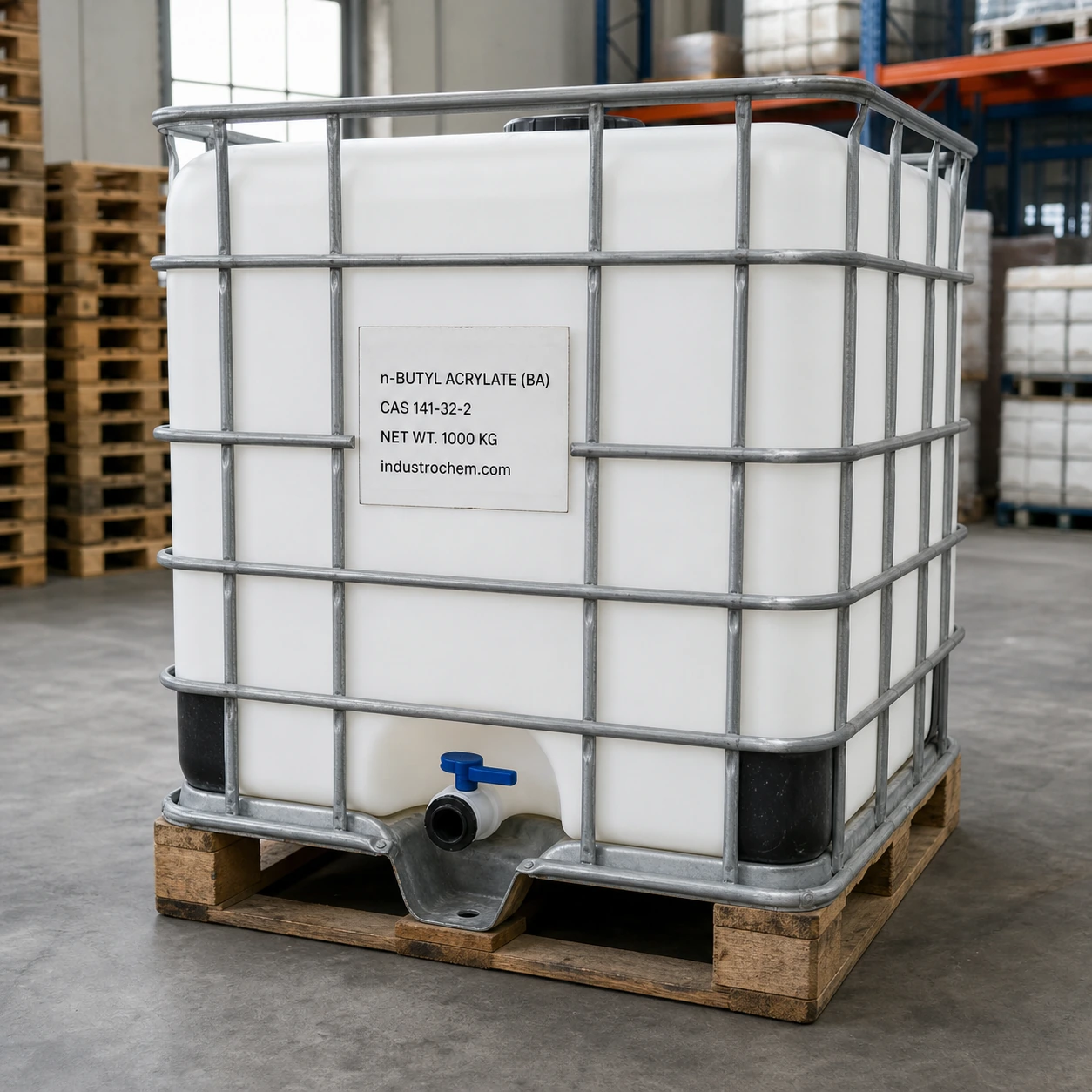
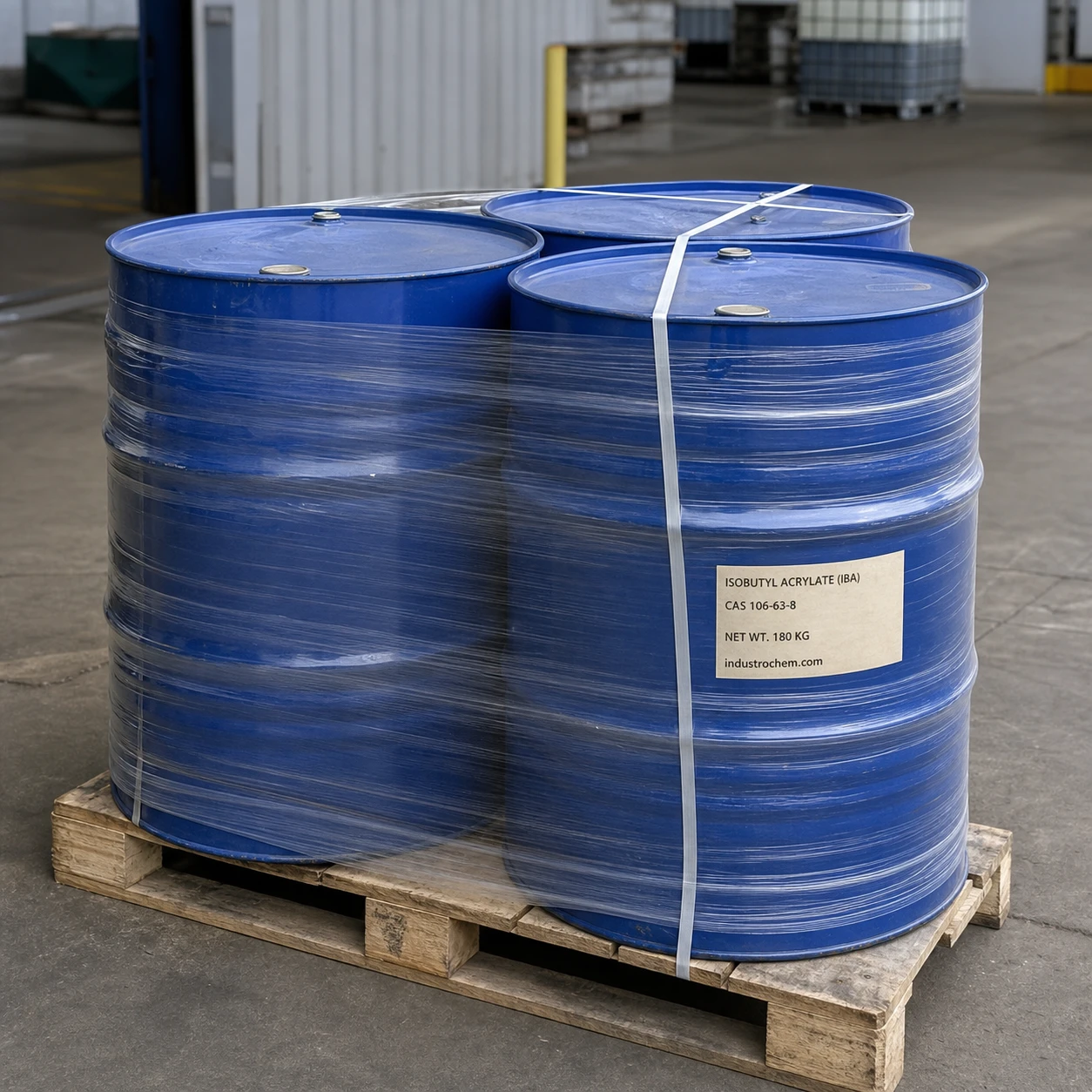
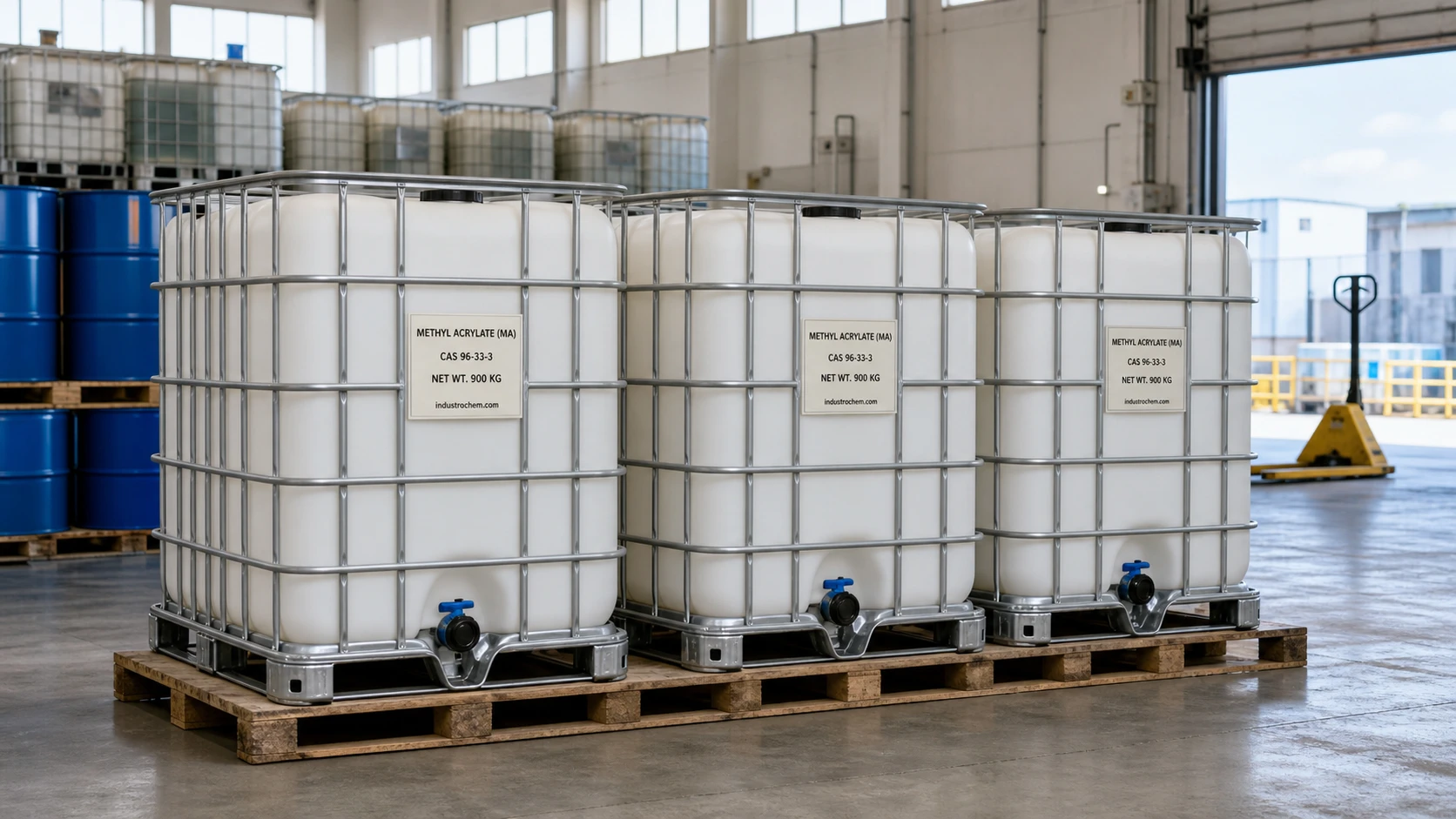
- Package: 180 kg drums; 900 kg IBCs / ISO tank
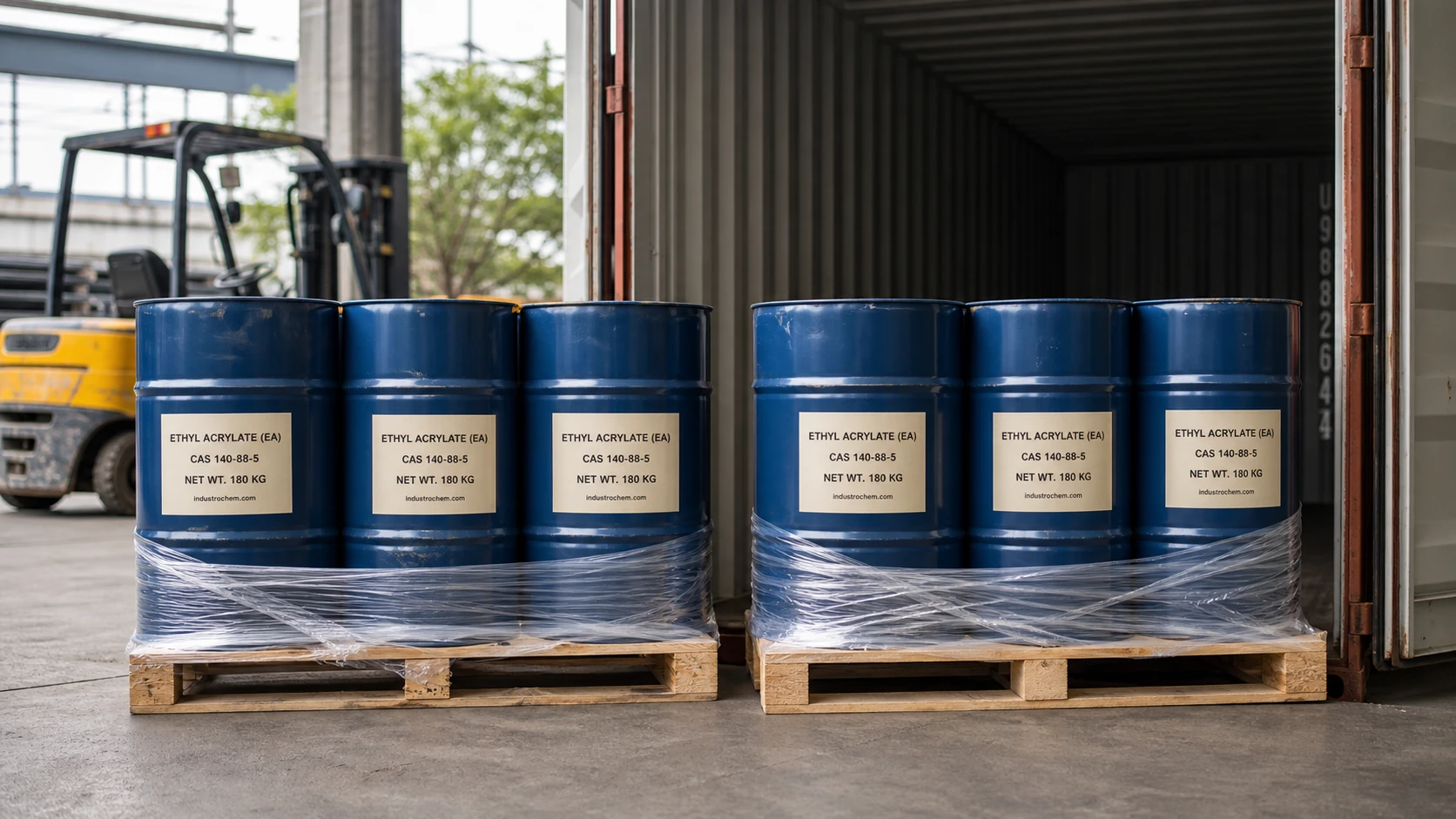
Product Description
Methyl Acrylate (MA) CAS 96-33-3 is methyl 2-propenoate, with EC 202-500-6 and molecular formula C4H6O2.
Synonyms: Methyl 2-propenoate; Acrylic acid methyl ester; Methyl propenoate.
CAS: 96-33-3.
Molecular formula: C4H6O2.
It is supplied as a clear, colourless liquid.
It is positioned as a stabilised acrylic monomer for polymer manufacture and chemical synthesis.
It is used as a reactive feedstock and is not Methyl Methacrylate or a finished coating, adhesive or polymer dispersion.
It is used in acrylic copolymer manufacture for industrial coating and binder resins.
It is used in polymer intermediates for adhesive, ink and dispersion systems.
It is used in emulsion, solution or suspension polymerisation as a specified comonomer.
It is used in chemical synthesis routes requiring methyl acrylate as an acrylic ester feedstock.
Poly(methyl acrylate) homopolymer has a Tg around 9-14 C, much lower than poly(methyl methacrylate) at about 100-109 C.
This makes MA useful for adding flexibility and adhesion to acrylic copolymers.
MEHQ inhibitor is added to stabilise it, commonly at about 15 ppm, agreed for the polymerisation or synthesis route and storage conditions.
Confirm purity, water, acidity, colour and MEHQ inhibitor level.
Typical bulk data include purity 99.0% min, boiling point about 79-81 C, density about 0.956-0.96 g/cm3, flash point about -1 C and water solubility about 52-60 g/L.
Store in tightly closed containers in a cool, dry, well-ventilated area, use suitable PPE when handling, and follow the current SDS.
The page is an RFQ entry point and does not state stock, price, MOQ, or fixed lead time.
For an RFQ, state the intended application, required grade, quantity, packaging, destination, and document needs.
FAQ - Technical & Supply Chain
-
Q:
What is Methyl Acrylate MA CAS 96-33-3?
A: Methyl Acrylate, commonly abbreviated MA, is an acrylic ester monomer with molecular formula C4H6O2. It is a reactive feedstock for polymer manufacture and chemical synthesis, not a finished coating, adhesive or polymer dispersion. -
Q:
Is Methyl Acrylate the same as Methyl Methacrylate?
A: No. Methyl Acrylate is an acrylate monomer, while Methyl Methacrylate is a methacrylate monomer with an additional methyl group on the alpha carbon. This changes reactivity, hardness and glass transition temperature, so the two are not interchangeable. -
Q:
What glass transition temperature does poly(methyl acrylate) have?
A: Poly(methyl acrylate) homopolymer has a Tg around 9-14 deg C, much lower than poly(methyl methacrylate) at about 100-109 deg C. This makes MA useful for adding flexibility and adhesion to acrylic copolymers. -
Q:
What are the main applications of Methyl Acrylate?
A: MA is used in acrylic copolymer manufacture for industrial coating and binder resins, polymer intermediates for adhesives, inks and dispersions, and chemical synthesis routes. It can be processed by emulsion, solution or suspension polymerisation. -
Q:
Why is inhibitor control important for Methyl Acrylate?
A: Methyl Acrylate can polymerise unintentionally, so MEHQ inhibitor is added to stabilise it. A standard commercial level is about 15 ppm MEHQ, but the exact inhibitor level should be agreed for the polymerisation or synthesis route and storage conditions. -
Q:
Which Methyl Acrylate properties should be confirmed before use?
A: Confirm purity, water, acidity, colour and MEHQ inhibitor level. Typical bulk data include purity 99.0% min, boiling point about 79-81 deg C, density about 0.956-0.96 g/cm3, flash point about -1 deg C and water solubility about 52-60 g/L.
Ordering & Documentation
Key information for document requests, quotations, and supply planning.
Documents
COA, TDS, SDS/MSDS and packing details are available on request.
Quotation
Send the CAS number, grade, quantity, packing preference and destination.
Sample & Supply
Support is available for samples, trial orders, bulk and repeat supply.
Storage & Shipping
Product-specific conditions are confirmed before order.