









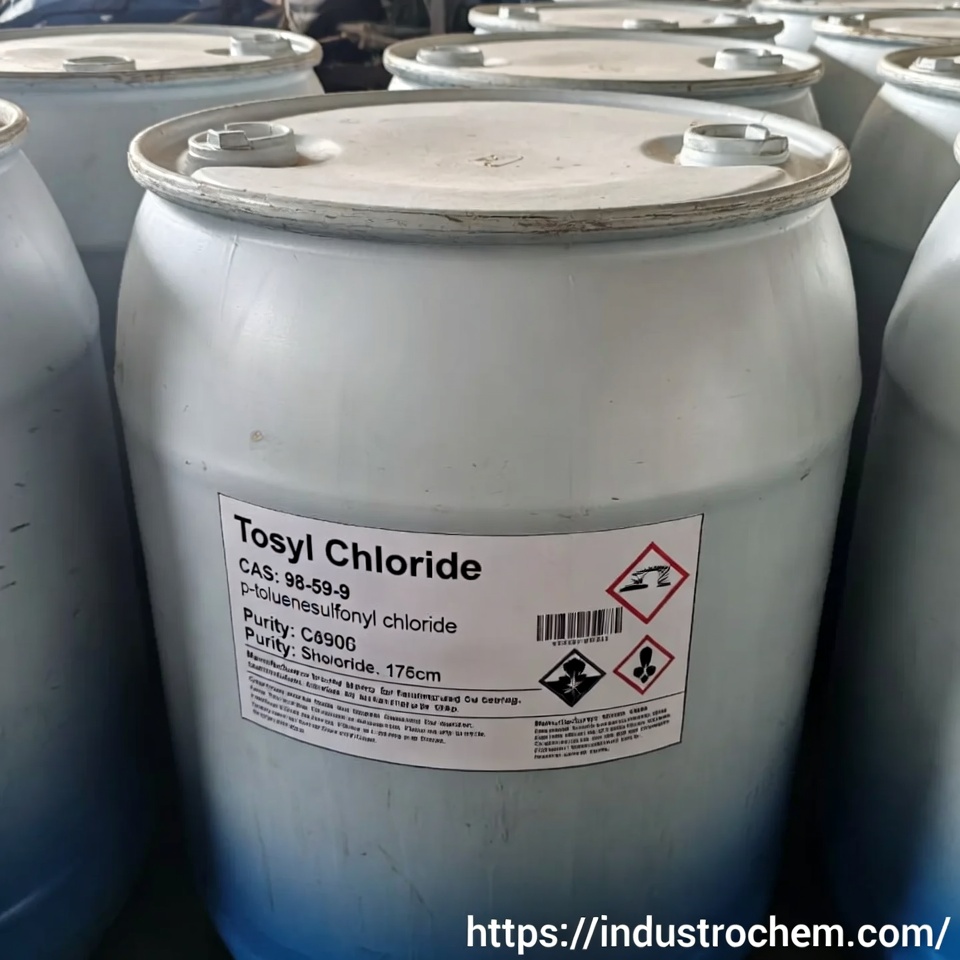
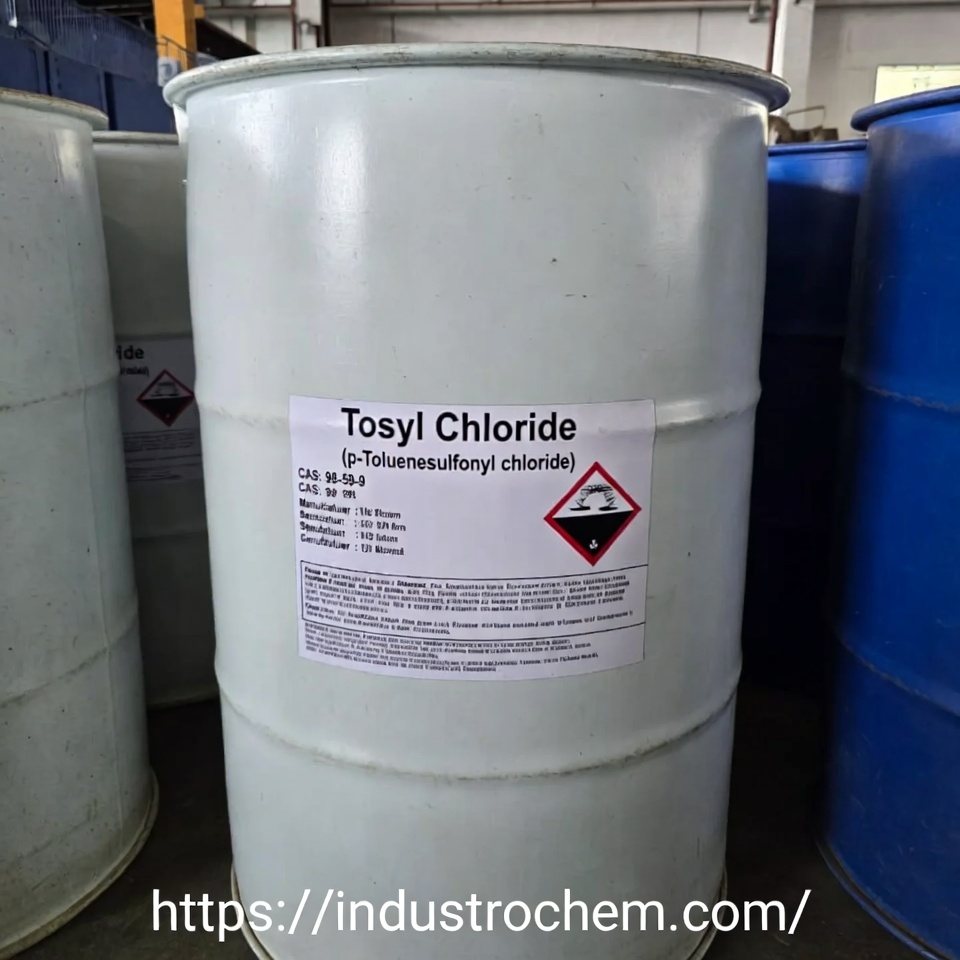
Tosyl chloride, also known as p‑toluenesulfonyl chloride, is an aromatic sulfonyl chloride characterized by a para‑methyl‑substituted benzene ring bearing a sulfonyl chloride functional group. This defined molecular structure classifies it as a specialty aromatic sulfonyl compound within professional chemical supply chains. Tosyl chloride (CAS 98‑59‑9) is handled as a discrete molecular substance in regulated industrial and research environments, where accurate identification, documentation, and compliance are essential.
The material is supplied with standardized specifications and complete technical documentation, including MSDS, TDS, and COA, supporting traceability and regulatory conformity.
Tosyl Chloride CAS 98‑59‑9
- CAS: 98-59-9
- Synonyms: Tosyl chloride, p-Toluenesulfonyl chloride, 4-Methylbenzenesulfonyl chloride, TsCl
- Einecs: 202-684-8
- Molecular Formula: C7H7ClO2S
- Grade: Industrial grade 99%
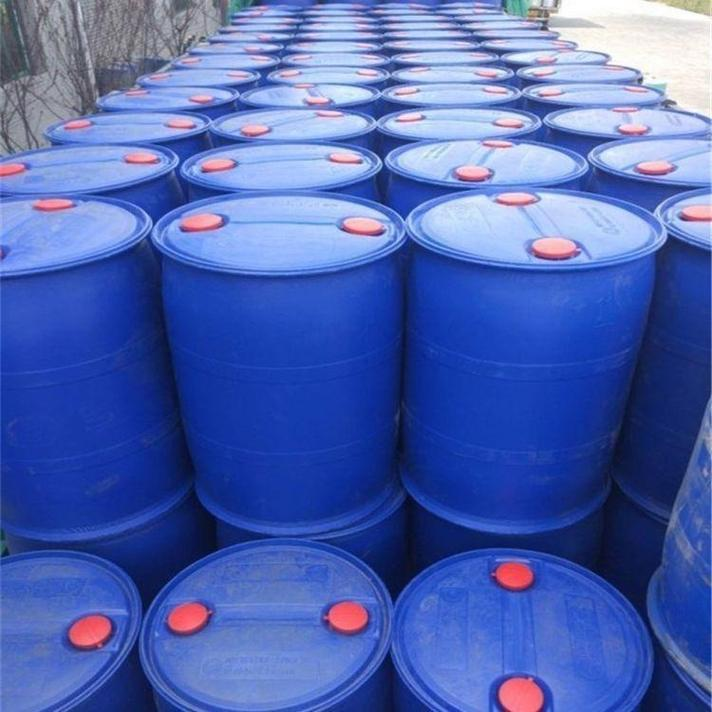
- Package: 200kg iron drum or 50kg plastic drum packaging
Product Description
Physicochemical properties
| Property | Value |
|---|---|
| Chemical Name | Tosyl chloride (p-Toluenesulfonyl chloride) |
| Molecular Formula | C7H7ClO2S |
| Molecular Weight | 190.65 g/mol |
| CAS Number | 98-59-9 |
| EINECS Number | 202-684-8 |
| Appearance | White to yellow crystalline solid or powder |
| Odor | Stimulating odor |
| Density | 1.3 ± 0.1 g/cm³ |
| Melting Point | 65-69 °C (lit.) |
| Boiling Point | 265.3 ± 19.0 °C at 760 mmHg |
| Flash Point | 114.3 ± 21.5 °C |
| Solubility | Insoluble in water; easily soluble in organic solvents such as benzene, chloroform, and ether |
| LogP (Octanol-Water Partition Coefficient) | 2.45 |
| Vapor Pressure | 0.0 ± 0.5 mmHg at 25 °C |
| Stability | Stable under normal conditions; may decompose upon heating or prolonged exposure to light |
| Hazard Class | Corrosive (UN 3261, Class 8) |
Application Areas
Protection of hydroxyl/amino groups: used for sulfonylation of alcohols, phenols, or amines (to generate sulfonic acid esters or sulfonamides).
Drug intermediates: synthetic antibiotics, antiviral drugs, etc. (such as sulfonamide drugs).
Pesticide synthesis: used for the preparation of certain insecticides or herbicides.
Polymer modification: used as a crosslinking agent or functionalizing reagent.
Protein modification: used to study protein sulfonylation reactions
Storage conditions
Packaging and Sealing: Double layer moisture-proof packaging (inner PE bag+outer iron drum), sealed and stored in the dark, temperature ≤ 25 ℃.
Environmental requirements: Store in a cool, dry, ventilated place, away from oxidants, strong alkalis, and humid environments (prone to hydrolysis).
Storage period: It is recommended to use within 6 months and regularly check the sealing
Safety precautions
Personal protection: Wear a gas mask during operation
operation safety
Ventilation conditions: It must be operated in a fume hood to avoid inhaling vapors or dust.
Moisture prevention measures: Use as soon as possible after opening, and strictly seal any remaining reagents.
No open flames: Although not flammable, decomposition may produce toxic gases (such as SO ₂ HCl)。
Fire protection measures
Fire extinguishing agent: Use dry powder, carbon dioxide or sand, and do not use water (it reacts violently with water).
Hazardous products: Toxic gases such as hydrogen chloride (HCl) and sulfur dioxide (SO ₂) are released during a fire.
FAQ - Technical & Supply Chain
-
Q:
Does CAS 98‑59‑9 specifically correspond to tosyl chloride?
A: Yes. CAS 98‑59‑9 is assigned specifically to tosyl chloride (p‑toluenesulfonyl chloride). -
Q:
Is this CAS number associated with a mixture or a single compound?
A: It refers to a single, well‑defined aromatic sulfonyl chloride with a fixed molecular structure.
Documents and Product Support
For product review and sourcing evaluation, supporting documents can be coordinated according to the product type, inquiry stage, and order requirements.
- COA for batch-based quality reference
- TDS for key physical and chemical information
- SDS / MSDS for handling, storage, and safety reference
- Packing information for sample, trial, and bulk orders
- Technical communication based on application and specification requirements
Information to Confirm Before Quotation
Clear sourcing information helps reduce specification mismatch and allows a more accurate quotation before sample or bulk order discussion.
- Product name and CAS number
- Application or intended end use
- Required purity, grade, or specification
- Sample quantity, trial order, or bulk demand
- Preferred packing form or net weight
- Destination country or port
- Required documents or compliance expectations
Packaging, Storage, and Handling Notes
Packaging form, storage conditions, shelf life, and shipment arrangements should be confirmed according to the product characteristics, package size, and destination requirements.
Before order confirmation, buyers are advised to review the corresponding product documents and confirm whether any special storage, labeling, or handling requirements apply.
Sample, Bulk Order and Repeat Supply Support
Support can be arranged for sample discussion, bulk supply planning, packaging confirmation, and routine sourcing communication based on the actual product and order requirements.
For repeat-use formulations or long-term procurement plans, buyers may discuss specification consistency, packaging preferences, delivery expectations, and document coordination in advance.
Contact Form
Use our contact form to send us your questions, suggestions or comments. We will respond as soon as possible.
Product Categories
Related Products
-
Sodium Methoxide CAS 124-41-4 -
Sodium Fluoride CAS 7681-49-4 -
GPE 3000 CAS 9082-00-2 -
Polypropylene Glycol 1000 CAS 25322-69-4 -
Polypropylene Glycol 2000 CAS 25322-69-4 -
AEO-9 / MOA-9 (Fatty Alcohol Ethoxylate 9EO) – CAS 9002‑92‑0 -
Polypropylene Glycol 200 (PPG-200) CAS 25322-69-4 -
PPG 2000 (Polyether Polyol 220) CAS 25322-69-4