


Acetyl Chloride, CAS 75-36-5, is a reactive liquid used to introduce acetyl groups in organic synthesis. Also known as ethanoyl chloride or acetic chloride, it is used in esterification and other acetylation processes. Protection from moisture is essential because contact with water causes rapid hydrolysis.
Acetyl Chloride CAS 75-36-5
- CAS: 75-36-5
- Synonyms: Acetyl chloride; Ethanoyl chloride; Acetic chloride
- Einecs: 200-865-6
- Molecular Formula: C₂H₃ClO
- Grade: Liquid acetylating reagent; assay and impurity limits agreed for the order
- Package: Dry, moisture-protected compatible sealed containers; pack size by quotation
Product Description
Acetyl chloride (ethanoyl chloride) has the formula C₂H₃ClO and a molar mass of 78.50 g/mol. A literature density of 1.104 g/mL at 25 °C is a reference for neat material, rather than a guaranteed delivery specification.
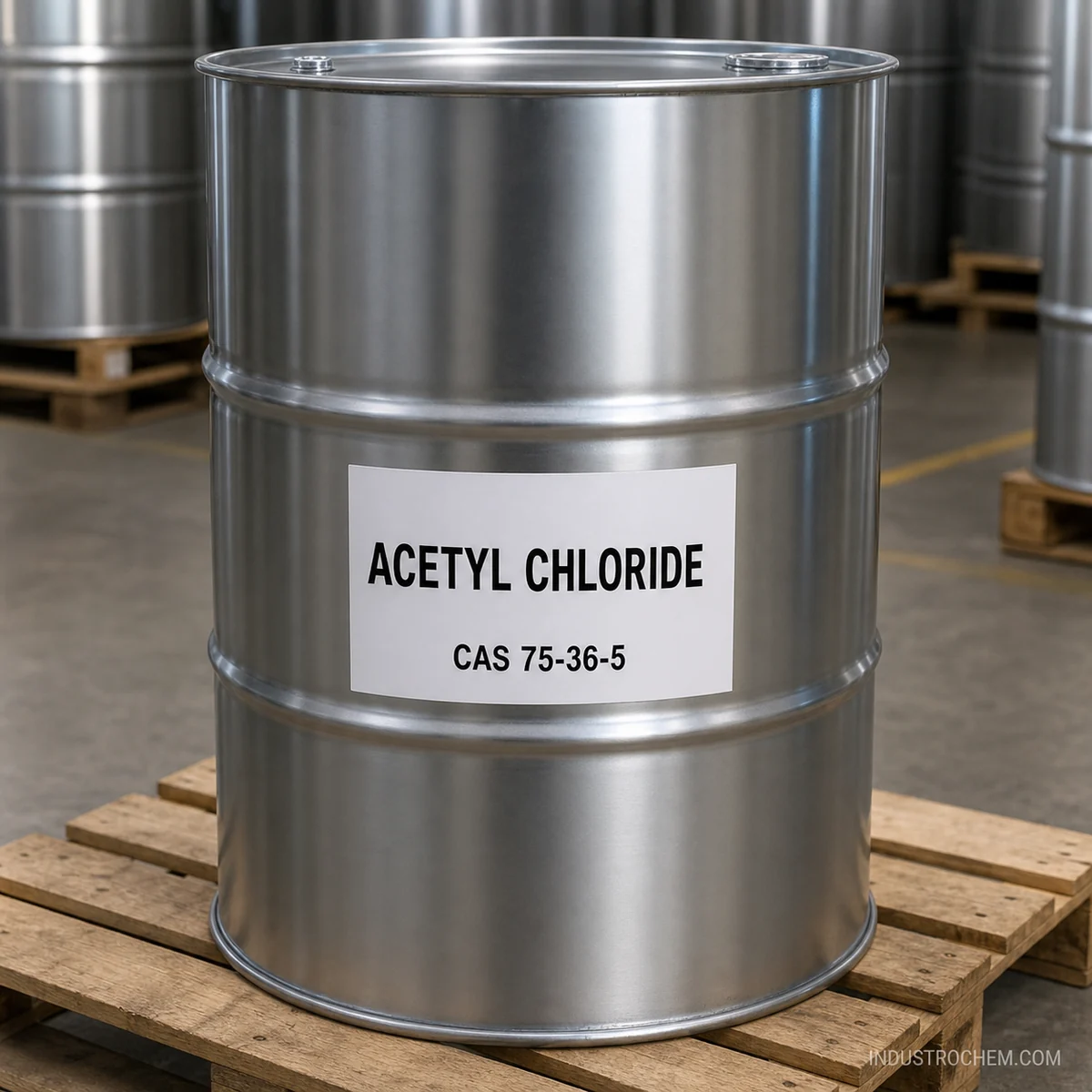
We can provide COA (Certificate of Analysis), TDS (Technical Data Sheet), SDS (Safety Data Sheet) and GC analytical documentation, including chromatograms, for specification review. Send the required purity, quantity and destination for a quotation.
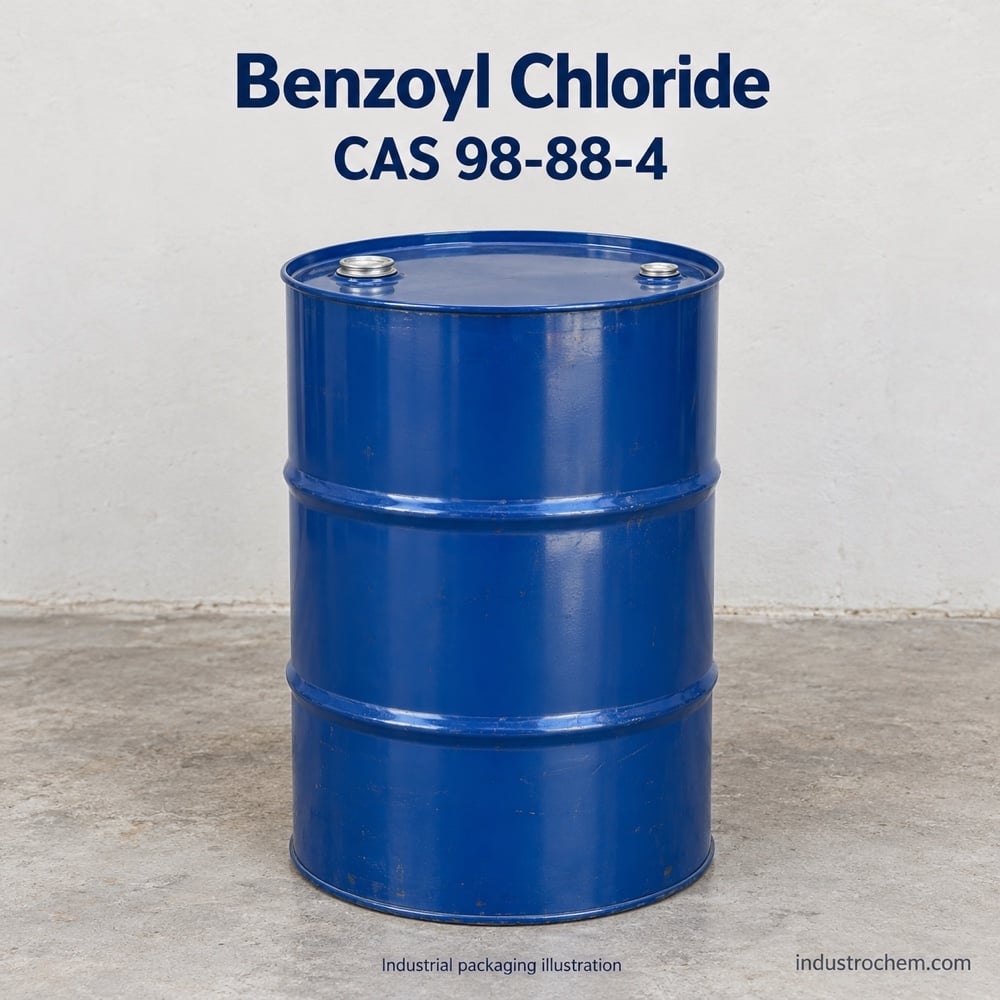
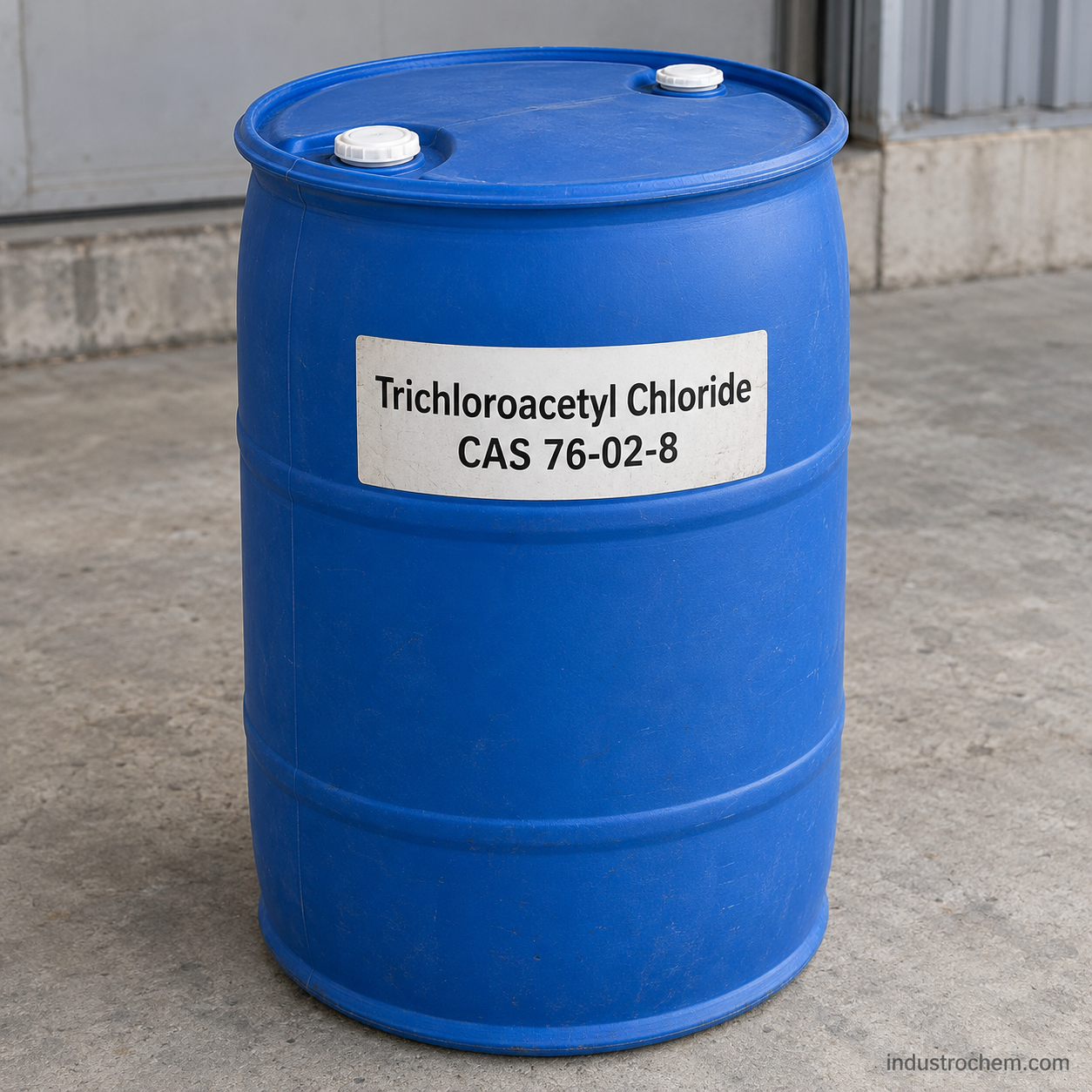
Benzoyl chloride and trichloroacetyl chloride introduce different acyl groups from acetyl chloride. They are separate reagents for different synthesis requirements, not direct replacements in an acetylation specification.
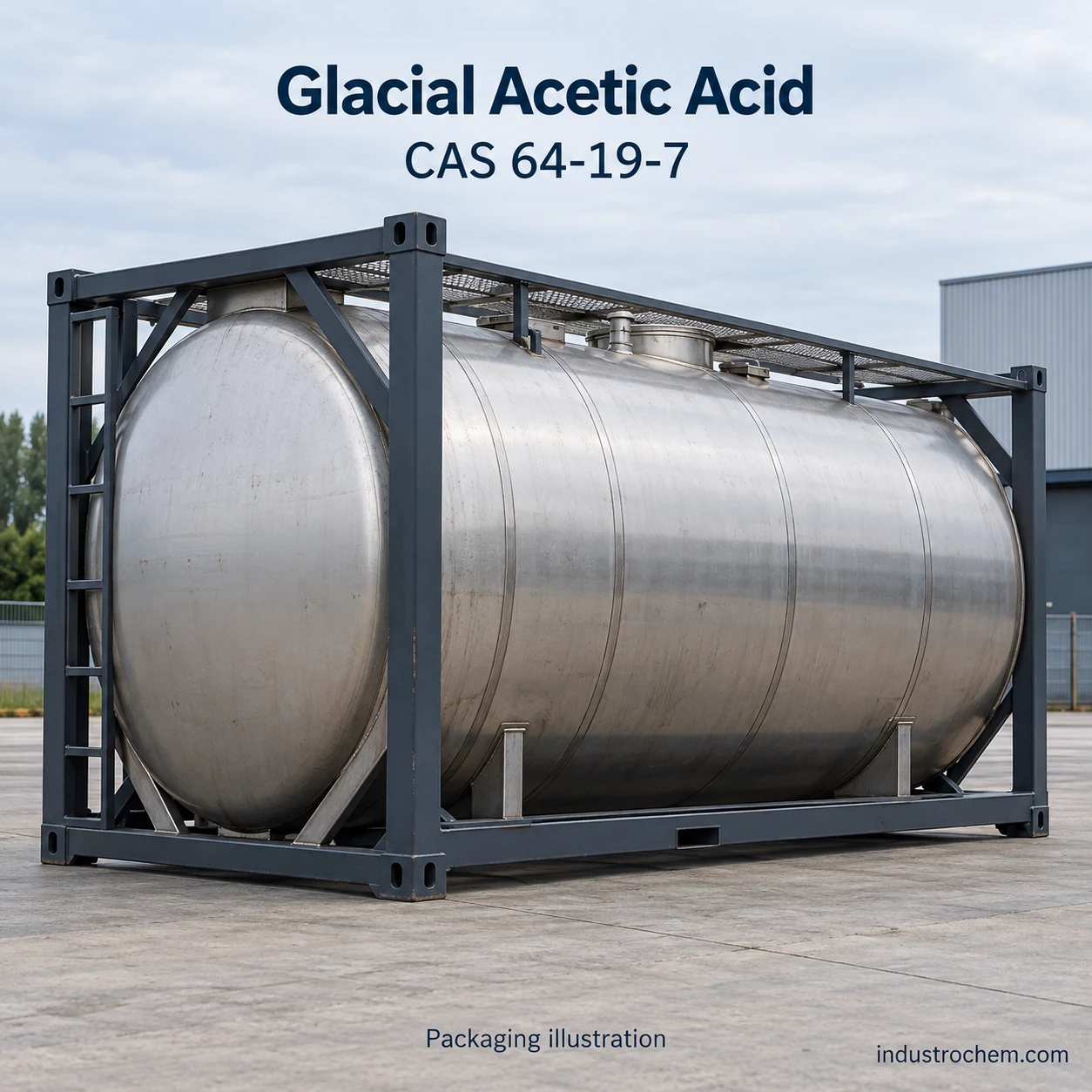
Glacial acetic acid and phosphorus trichloride are related upstream materials in documented acetyl chloride production routes. Their roles and specifications differ from those of the finished acetylating reagent.
FAQ - Technical & Supply Chain
-
Q:
Are acetyl chloride, ethanoyl chloride and acetic chloride the same substance?
A: Yes. These names refer to CAS 75-36-5, formula C₂H₃ClO. Chloroacetyl chloride is a different chemical, CAS 79-04-9, formula C₂H₂Cl₂O; it introduces a chloroacetyl group rather than an acetyl group. Use the full product name and CAS number in purchase documents. -
Q:
Which quality tests matter for acetyl chloride?
A: Specifications may report GC purity and acyl-chloride assay by titration separately. If GC purity is expressed as peak area %, it is not automatically a mass-percent assay. Appearance and application-specific impurity limits can also be agreed. Acetic acid is relevant to hydrolytic degradation; any moisture limit needs a test method validated for reactive acetyl chloride. -
Q:
What matters when ordering bulk acetyl chloride?
A: The required assay and impurity limits, quantity and destination help define the offer. This flammable, corrosive liquid needs dry, compatible, tightly sealed packaging. We agree the pack size and shipment format in the quotation. Handling and transport requirements follow the current SDS and applicable shipment rules.
Ordering & Documentation
Key information for document requests, quotations, and supply planning.
Documents
Tell us which documents your procurement team needs. Before an order, we will check whether the quoted source can provide them for the offered lot.
Quotation
Send the CAS number, grade, quantity, packing preference and destination.
Sample & Supply
Ask whether samples, trial quantities or repeat orders are possible. We will check each request against the sourced product and current offer.
Storage & Shipping
Product-specific conditions are confirmed before order.