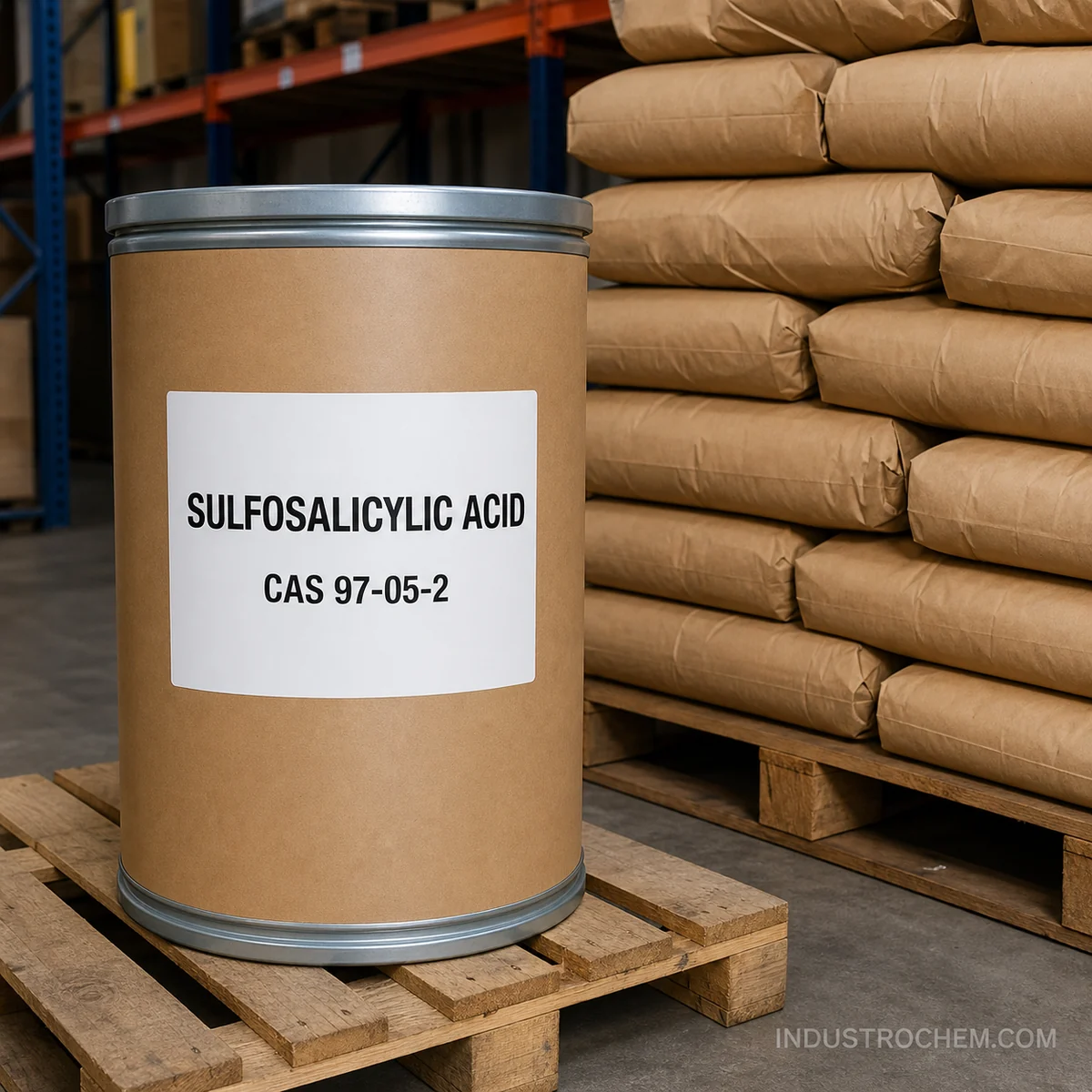
Sulfosalicylic Acid (CAS 97-05-2), also called 5-sulfosalicylic acid or 2-hydroxy-5-sulfobenzoic acid, is a water-soluble crystalline acid used in industrial complexing, selected aluminum anodizing electrolytes and analytical reagent manufacture. Hydration form, acid assay basis and impurity limits determine the grade suitable for each process.
Sulfosalicylic Acid CAS 97-05-2
- CAS: 97-05-2
- Synonyms: Sulfosalicylic acid; 5-Sulfosalicylic acid; 2-Hydroxy-5-sulfobenzoic acid
- Einecs: 202-555-6
- Molecular Formula: C₇H₆O₆S
- Grade: Industrial or analytical-process grade; hydration, assay basis and impurity limits specified for the application.
- Package: Moisture-protective lined bags or drums; net weight and pack type agreed with the quotation.
Product Description
Process uses and related materials
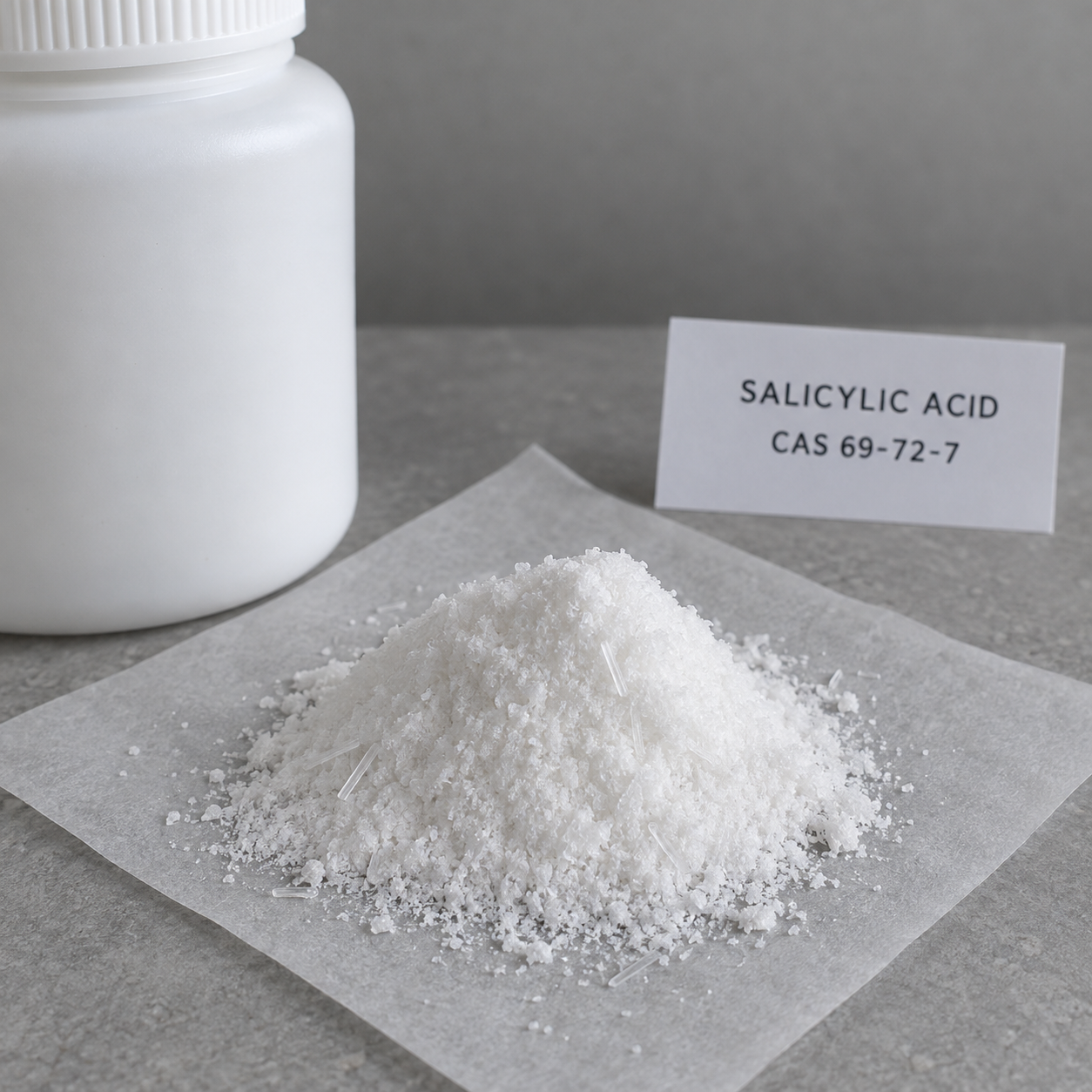
Salicylic acid is an upstream raw material for producing 5-sulfosalicylic acid (2-hydroxy-5-sulfobenzoic acid) by sulfonation. In aluminum anodizing, electrolyte systems combining sulfosalicylic acid with oxalic acid have been studied; suitability depends on the alloy, bath composition and operating conditions. Citric acid is another organic acid used in selected anodizing electrolytes, but changing the acid system requires process validation.
Sulfosalicylic acid forms colored complexes with iron(III) and serves as an indicator in selected analytical methods using ferric chloride solutions. The reagent grade, iron concentration and pH must match the selected method; an industrial water-treatment grade is not automatically suitable as an analytical standard.
Assay, water and impurity control
Specify the neutralization titration method and the basis used to report acid assay. HPLC can assess organic purity and related substances, but chromatographic area% is not automatically the acid mass fraction. Agree the water test, such as a validated Karl Fischer method, separately from any loss-on-drying test and its conditions. Residual salicylic acid, free sulfate, chloride, iron and insoluble matter limits should suit the intended process.
Product documents
We can provide a Certificate of Analysis (COA), Technical Data Sheet (TDS) and Safety Data Sheet (SDS), together with relevant assay, water and impurity reports. HPLC chromatograms can be provided for grades assessed by that method.
FAQ - Technical & Supply Chain
-
Q:
How does CAS 97-05-2 differ from the dihydrate CAS 5965-83-3?
A: CAS 97-05-2 identifies the parent acid, C₇H₆O₆S, with a molecular weight of 218.18 g/mol. The dihydrate, CAS 5965-83-3, is C₇H₆O₆S·2H₂O, 254.21 g/mol. The CAS alone does not establish the water content of a commercial lot. Specify hydration form, measured water and the basis used for acid assay. -
Q:
Are acid assay and HPLC purity the same result?
A: No. Neutralization titration measures acidity under the stated method and reporting basis; residual inorganic acids can affect the result. HPLC area% describes detected chromatographic components. The two results should be reported separately, together with water content where relevant. -
Q:
Why is iron content important when selecting Sulfosalicylic Acid?
A: Sulfosalicylic acid complexes iron(III), which can affect color and analytical response. Iron limits therefore matter in color-sensitive processes and analytical reagent manufacture. The required limit and test method depend on the application. -
Q:
How is Sulfosalicylic Acid packed, and what is needed for a quotation?
A: Moisture-protective lined bags or drums help keep the crystalline material dry. Packaging and net weight are agreed with the quotation. Send the required grade or specification, quantity and destination; include the hydration form and assay basis if your process specifies them. -
Q:
Is loss on drying the same as water content for Sulfosalicylic Acid?
A: Not necessarily. Loss on drying can include water and other volatile matter and depends on the specified test conditions. Water determined by a suitable Karl Fischer method is a separate measurement. Agree the water limit and test method; where loss on drying is specified, state the drying temperature, duration and pressure.
Ordering & Documentation
Key information for document requests, quotations, and supply planning.
Documents
Tell us which documents your procurement team needs. Before an order, we will check whether the quoted source can provide them for the offered lot.
Quotation
Send the CAS number, grade, quantity, packing preference and destination.
Sample & Supply
Ask whether samples, trial quantities or repeat orders are possible. We will check each request against the sourced product and current offer.
Storage & Shipping
Product-specific conditions are confirmed before order.