









Solid Oxalic Acid (CAS 144-62-7) is a crystalline organic compound serving as a fundamental reducing and chelating agent within the broader category of Basic & Fine Chemicals. Operating as a highly efficient hydrogen oxalate donor, this solid ethanedioic acid exhibits strong coordination capabilities with transition metals, making the dicarboxylic acid matrix integral to industrial rare earth metal extraction and the purification of inorganic chemical intermediates. Its concentrated crystalline formulation provides excellent precipitation control and targeted oxide removal when deployed as a base oxalic acid crystalline reagent in demanding metallurgical, surface treatment, and textile bleaching processing environments. To support large-scale continuous manufacturing schedules, our facility maintains extensive bulk supply capabilities, ensuring consistent assay purity with customized specifications to meet precise metallurgical and synthesis requirements, all backed by competitive factory pricing and comprehensive technical documentation including MSDS, TDS, COA.
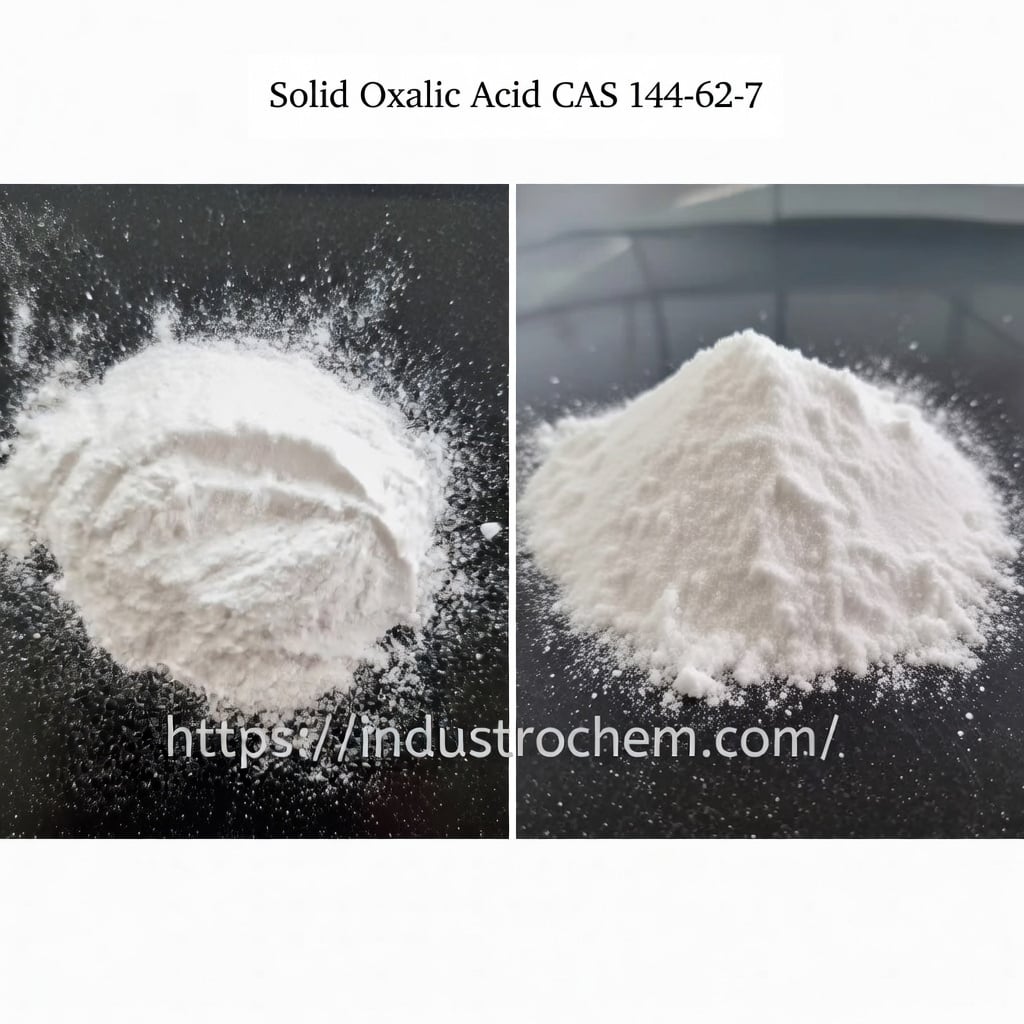
Solid Oxalic Acid CAS 144-62-7
- CAS: 144-62-7
- Synonyms: Ethanedioic acid, Dicarboxylic acid, Hydrogen oxalate, Oxalic acid crystalline
- Einecs: 205-634-3
- Molecular Formula: C2H2O4
- Grade: Industrial Grade
- Package: 25kg/plastic woven bag

Product Description
Technical Data
| Physicochemical Properties | Standard Specification (Industrial Dihydrate Grade) |
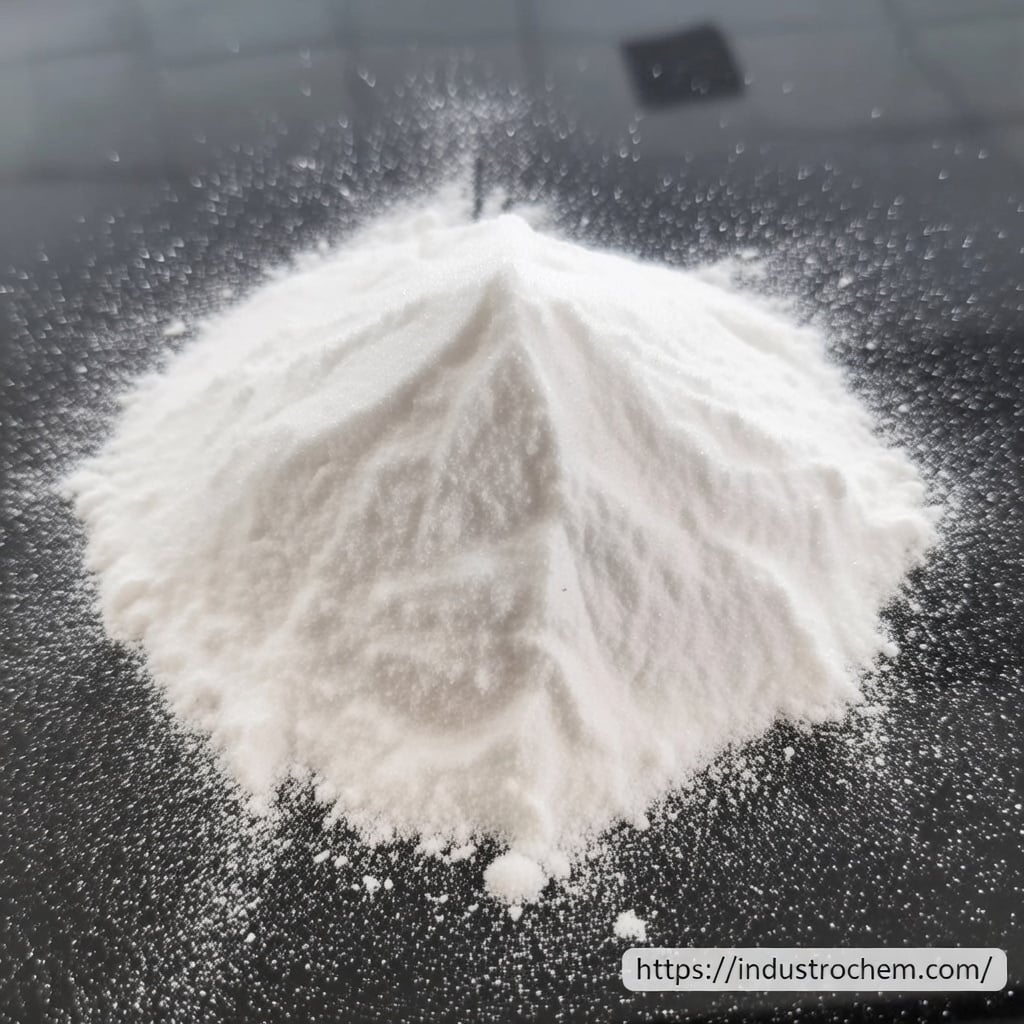
| Appearance | White transparent crystals |
| Assay (H2C2O4·2H2O) | ≥ 99.6% |
| Sulfate (SO4) | ≤ 0.08% |
| Heavy Metals (as Pb) | ≤ 0.001% |
| Iron (Fe) | ≤ 0.0015% |
| Chloride (Cl) | ≤ 0.003% |
| Ash Content | ≤ 0.08% |
| Melting Point | 101.5°C (Dihydrate) |
| Solubility | Soluble in water and ethanol; slightly soluble in ether |
Applications
- Rare Earth Extraction: Functions as a primary precipitating agent in the hydrometallurgical processing of rare earth elements, forming highly insoluble oxalate salts intended for subsequent high-temperature calcination.
- Industrial Metal Treatment: Utilized as a rust-removal and metal surface descaling agent, acting to chemically complex iron oxides into highly soluble ferrioxalate ions prior to industrial metal passivation.
- Textile & Dyeing: Applied as a reducing agent and color-stabilizing mordant in industrial textile dyeing processes to neutralize residual alkalinity and improve dye fixation.
Storage & Safety
- Storage Conditions: Store in a cool, dry, and well-ventilated warehouse environment. The material must be kept tightly sealed to prevent efflorescence in dry air or moisture absorption in humid conditions. It must be strictly segregated from strong oxidizers, alkalis, and silver compounds.
- Safety & Handling: This solid acid is highly corrosive and toxic upon ingestion or extensive dermal contact. Industrial handling requires standard local exhaust ventilation. Operators must utilize chemical-resistant nitrile gloves, tight-fitting splash goggles, and NIOSH-approved particulate respirators to prevent dermal burns and respiratory tract irritation from airborne crystal dust.
Quality Assurance
Our chemical production lines operate under rigorous ISO 9001 quality management systems. Every batch undergoes precise analytical verification utilizing automated potassium permanganate redox titration to quantify the exact dicarboxylic acid assay. We strictly monitor trace iron and sulfate impurities via Inductively Coupled Plasma Optical Emission Spectroscopy (ICP-OES) to guarantee the reagent’s purity complies fully with stringent international metallurgical and fine chemical processing standards.
FAQ - Technical & Supply Chain
-
Q:
How does the hydration state identify the specific physical structure of this Solid Oxalic Acid?
A: The crystalline structure is primarily traded and utilized in its dihydrate form, which definitively identifies a stable, water-soluble solid containing two water molecules per unit of ethanedioic acid, distinguishing it from the highly hygroscopic anhydrous variant intended for strict non-aqueous synthesis environments. -
Q:
Is this dicarboxylic acid typically applied as an oxidative bleaching agent or a reducing agent in metal treatment processes?
A: It is intended strictly as a reducing agent and chelator in metallurgical treatments, functioning to chemically reduce and bind oxidized metal species, specifically converting insoluble ferric oxides into highly soluble complex ions for efficient industrial surface descaling.
Documents and Product Support
For product review and sourcing evaluation, supporting documents can be coordinated according to the product type, inquiry stage, and order requirements.
- COA for batch-based quality reference
- TDS for key physical and chemical information
- SDS / MSDS for handling, storage, and safety reference
- Packing information for sample, trial, and bulk orders
- Technical communication based on application and specification requirements
Information to Confirm Before Quotation
Clear sourcing information helps reduce specification mismatch and allows a more accurate quotation before sample or bulk order discussion.
- Product name and CAS number
- Application or intended end use
- Required purity, grade, or specification
- Sample quantity, trial order, or bulk demand
- Preferred packing form or net weight
- Destination country or port
- Required documents or compliance expectations
Packaging, Storage, and Handling Notes
Packaging form, storage conditions, shelf life, and shipment arrangements should be confirmed according to the product characteristics, package size, and destination requirements.
Before order confirmation, buyers are advised to review the corresponding product documents and confirm whether any special storage, labeling, or handling requirements apply.
Sample, Bulk Order and Repeat Supply Support
Support can be arranged for sample discussion, bulk supply planning, packaging confirmation, and routine sourcing communication based on the actual product and order requirements.
For repeat-use formulations or long-term procurement plans, buyers may discuss specification consistency, packaging preferences, delivery expectations, and document coordination in advance.