










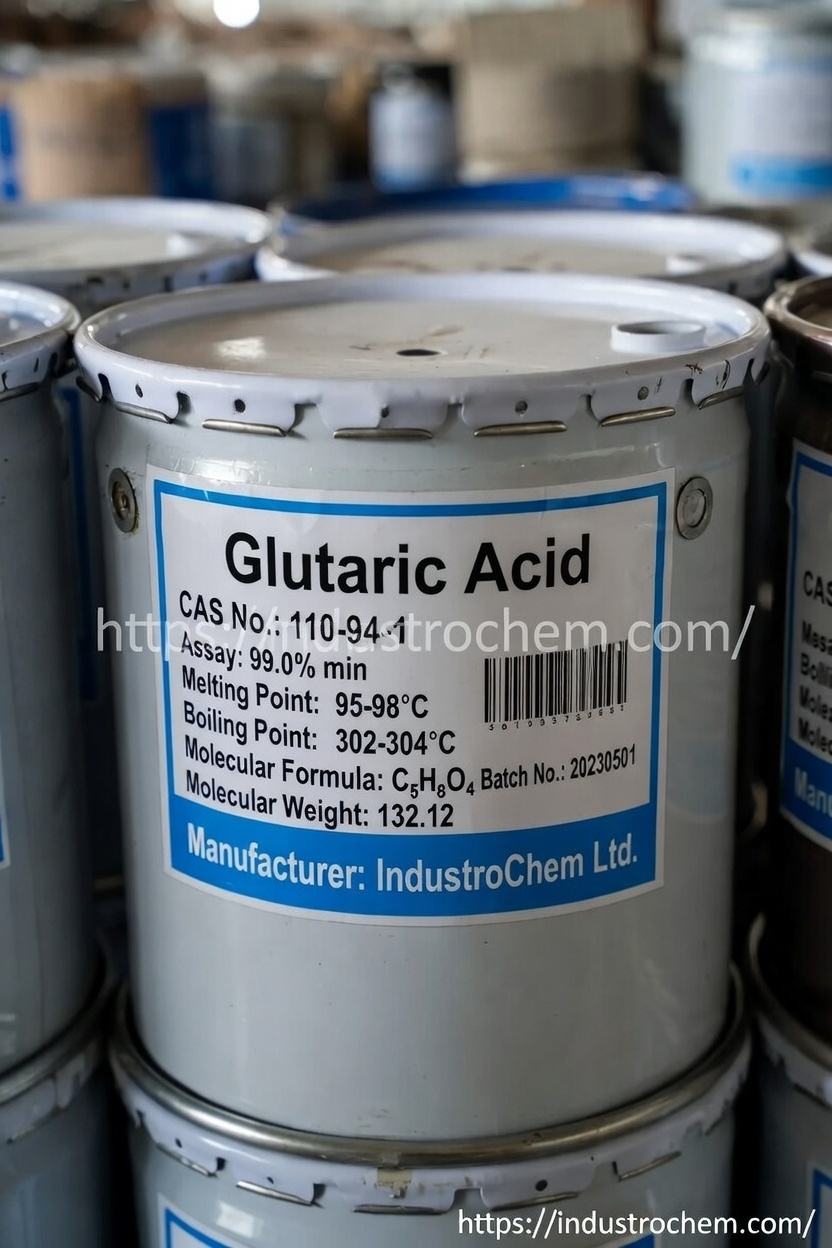
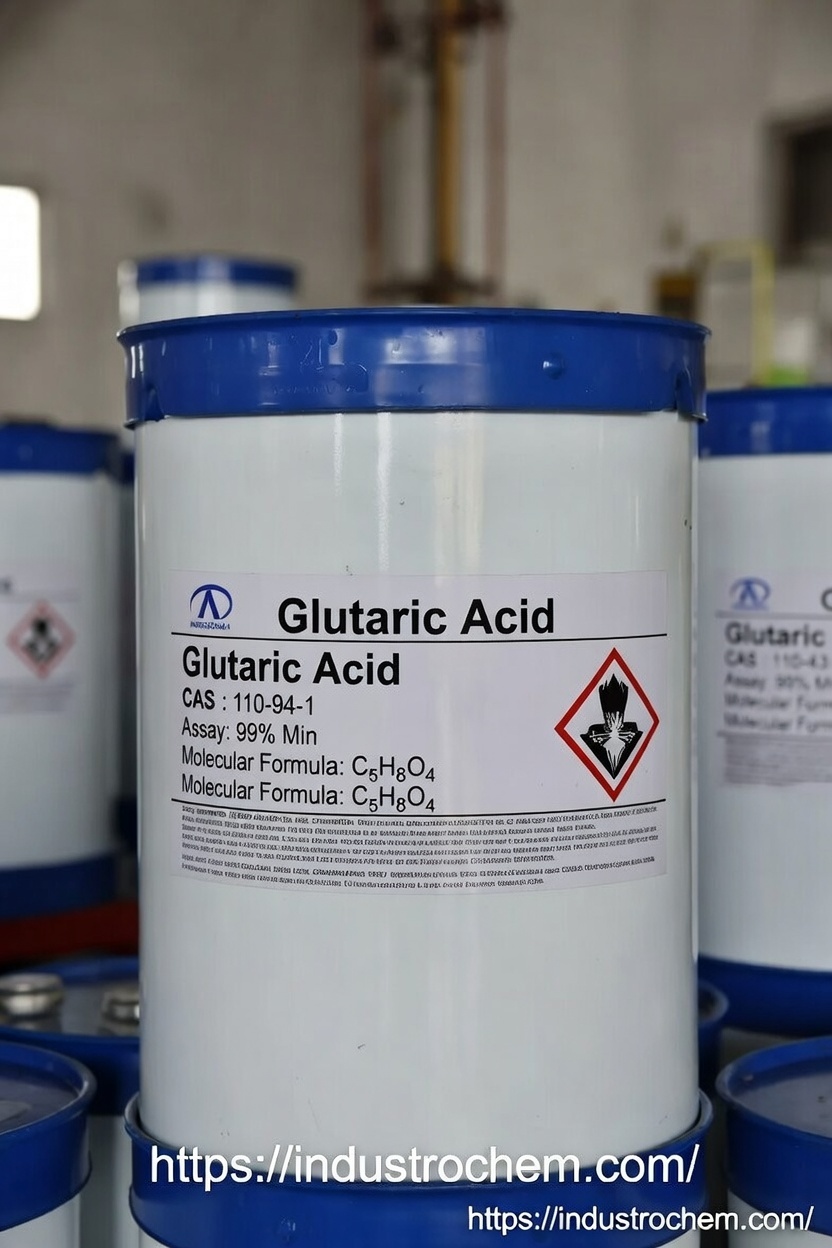
• Glutaric Acid CAS  110-94-1
  • Glutaric Acid CAS  110-94-1

Glutaric Acid CAS 110-94-1

Glutaric Acid CAS 110-94-1 is supplied as a dibasic organic acid for industrial processing and intermediate use. It is suitable for polyester and polyamide synthesis, laboratory-to-industrial chemical preparation, and related formulation or reaction systems where pentanedioic acid is required. Packaging format and technical documentation may vary according to grade and application.

  • CAS: 110-94-1
  • Einecs: 203-817-2
  • Molecular Formula: C5H8O4
  • Grade: Industrial grade
  • Package: 25 kg drum, 50 kg drum, 200 kg plastic drum, or IBC, depending on grade and supply format.
Request a quote
Share:

Product Description

Product Information / Specifications

Product Name Glutaric Acid
CAS Number 110-94-1
Product Identity Chemical raw material / industrial intermediate / specialty chemical
Common Synonym Pentanedioic Acid
Molecular Formula C5H8O4
Molecular Weight 132.11
Linear Formula HOOC(CH2)3COOH
EC Number 203-817-2

Physical & Chemical Properties

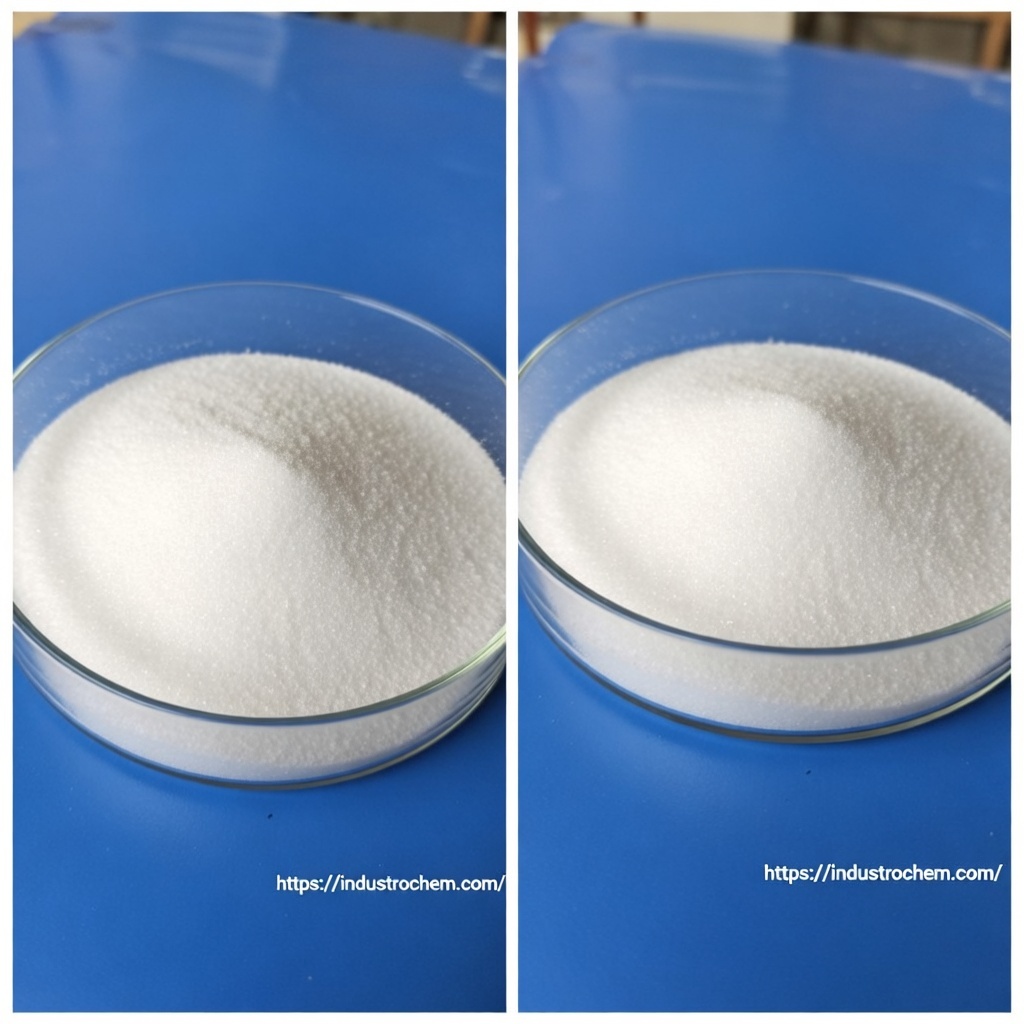
Appearance White to almost white powder or crystalline solid
Melting Point Approximately 96–100°C
Physical State Solid at room temperature
Water Solubility Soluble in water

Exact assay, impurity profile, and batch-specific values should be confirmed against the current supply specification and quality documentation.

Applications

  • Industrial intermediate use in organic synthesis and related chemical processing.
  • Suitable as a building block in polyester synthesis.
  • Applicable in polyamide preparation and specialty material development.
  • Used in laboratory, pilot, and industrial-scale processes subject to customer validation.

Packaging

Packaging may vary according to grade, order quantity, and transport requirements.
Standard industrial packaging can be arranged according to the confirmed supply specification.

Technical documents such as COA, TDS, and SDS may be provided according to the supplied grade and batch arrangement.

Storage Conditions

Store in a cool, dry, and well-ventilated place in tightly closed containers.
Keep protected from moisture contamination and maintain standard chemical storage practice during handling and transfer.

Storage practice should follow the current SDS and site-level chemical management procedures.

Safety Precautions

  • Handle with suitable personal protective equipment and standard industrial hygiene controls.
  • Avoid direct contact with skin and eyes, and avoid inhalation of dust.
  • Use with adequate ventilation and follow standard chemical handling procedures.
  • Review the latest SDS before storage, transfer, sampling, or process use.

FAQ

1. What is Glutaric Acid used for?

It is supplied mainly as a dibasic organic acid for industrial intermediate use, polyester synthesis, polyamide preparation, and related chemical processing.

2. Does CAS 110-94-1 correspond to Glutaric Acid?

Yes. CAS 110-94-1 corresponds to Glutaric Acid, which is also commonly listed as Pentanedioic Acid.

3. Is this product a raw material or a finished-use additive?

It is better positioned as a chemical raw material and industrial intermediate rather than a finished-use additive or consumer-facing ingredient.

4. Can Glutaric Acid be used in polyester or polyamide synthesis?

Yes. Public supplier references describe it as a building block used in the synthesis of polyesters and polyamides.

5. What technical documents may be available?

COA, TDS, and SDS may be provided according to the supplied grade, batch, and documentation arrangement.

6. How should Glutaric Acid be stored?

It should be stored in tightly closed containers under cool, dry, and well-ventilated conditions, following the current SDS and site procedures.

7. Is this product suitable for laboratory and industrial use?

Yes. It may be used in laboratory, pilot, and industrial-scale work where a dibasic aliphatic acid is required, subject to customer validation and specification review.

FAQ - Technical & Supply Chain

Documents

Documents and Product Support

For product review and sourcing evaluation, supporting documents can be coordinated according to the product type, inquiry stage, and order requirements.

  • COA for batch-based quality reference
  • TDS for key physical and chemical information
  • SDS / MSDS for handling, storage, and safety reference
  • Packing information for sample, trial, and bulk orders
  • Technical communication based on application and specification requirements
Quotation

Information to Confirm Before Quotation

Clear sourcing information helps reduce specification mismatch and allows a more accurate quotation before sample or bulk order discussion.

  • Product name and CAS number
  • Application or intended end use
  • Required purity, grade, or specification
  • Sample quantity, trial order, or bulk demand
  • Preferred packing form or net weight
  • Destination country or port
  • Required documents or compliance expectations
Storage & Handling

Packaging, Storage, and Handling Notes

Packaging form, storage conditions, shelf life, and shipment arrangements should be confirmed according to the product characteristics, package size, and destination requirements.

Before order confirmation, buyers are advised to review the corresponding product documents and confirm whether any special storage, labeling, or handling requirements apply.

Supply Support

Sample, Bulk Order and Repeat Supply Support

Support can be arranged for sample discussion, bulk supply planning, packaging confirmation, and routine sourcing communication based on the actual product and order requirements.

For repeat-use formulations or long-term procurement plans, buyers may discuss specification consistency, packaging preferences, delivery expectations, and document coordination in advance.

Contact Form

Use our contact form to send us your questions, suggestions or comments. We will respond as soon as possible.