Styrene Butadiene Latex, also called SBR emulsion or carboxylated SBR latex, CAS 9003-55-8, is a water-based anionic dispersion supplied for paper coating, carpet, textile and construction. Confirm the required solid content, Tg and grade, then request a quotation with COA/TDS/SDS for bulk supply.
Styrene Butadiene Latex (SBR Emulsion) CAS 9003-55-8
- CAS: 9003-55-8
- Synonyms: SBR Latex, Carboxylated Styrene Butadiene Latex, Styrene-butadiene copolymer latex, XSBR, SB Latex
- Molecular Formula: (C₈H₈·C₄H₆)ₙ
- Grade: Paper Coating Grade, Carpet/Textile Grade, Construction Grade.
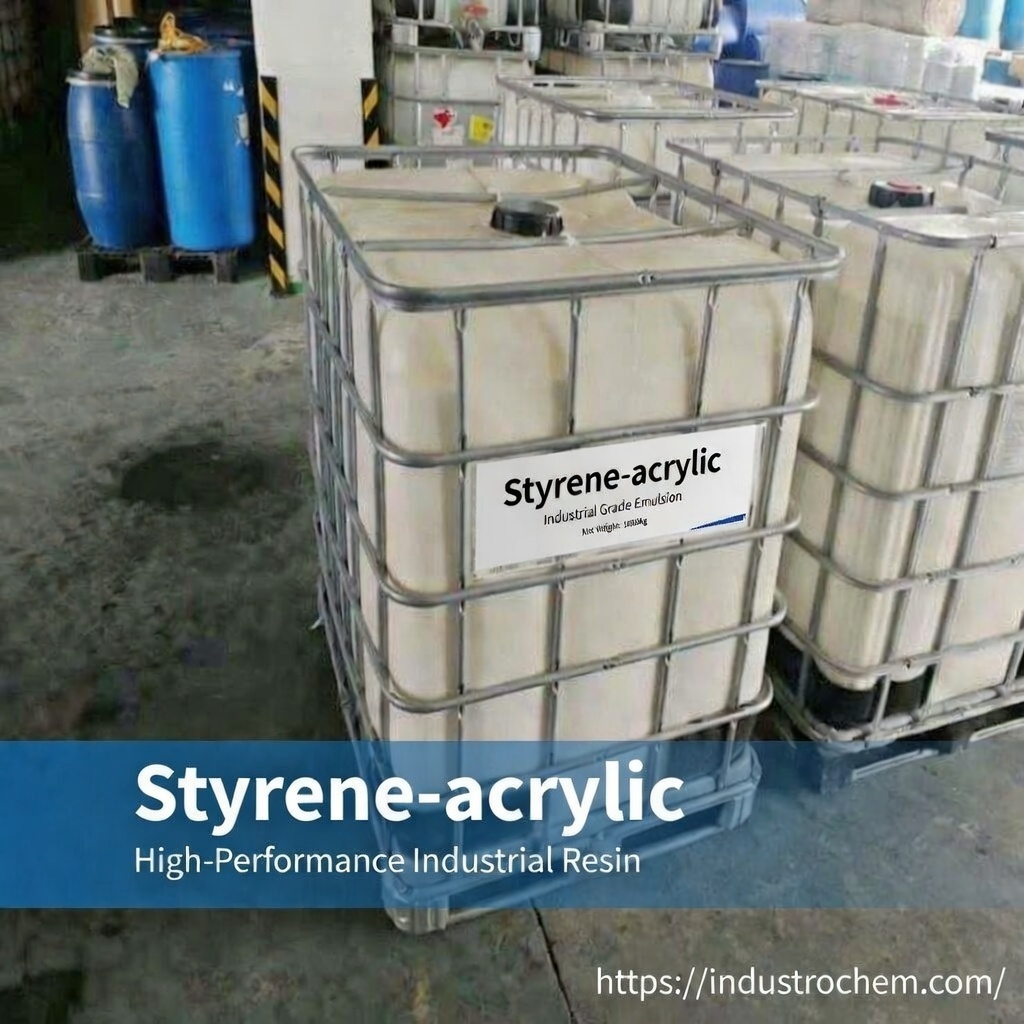
- Package: 200kg Plastic Drum, 1000kg IBC Tank, or 23MT Flexitank.
Product Description
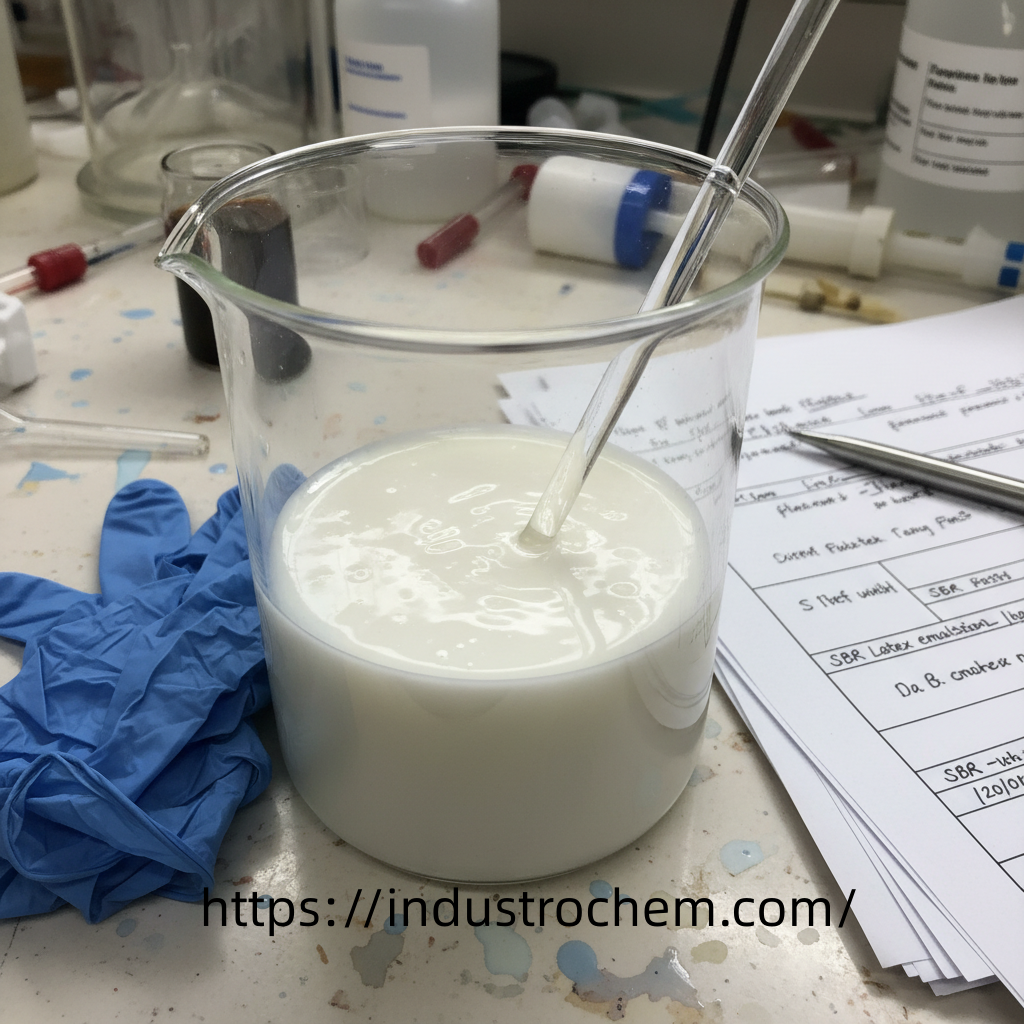
Styrene Butadiene Latex CAS 9003-55-8 is a milky white, anionic, water-based dispersion of a styrene-butadiene copolymer, also known as SBR emulsion or XSBR, with repeat-unit formula (C8H8·C4H6)n.
Synonyms: SBR Latex; Carboxylated Styrene Butadiene Latex; Styrene-butadiene copolymer latex; XSBR; SB Latex.
CAS: 9003-55-8.
As a polymer dispersion, it is described by its repeat-unit formula, solid content and glass transition temperature (Tg) rather than a fixed molecular weight.
It appears as a milky white liquid dispersion.
Carboxylation adds carboxylic acid groups that improve mechanical stability, polar adhesion and compatibility with fillers such as calcium carbonate and clay.
Carboxylated SBR reduces coagulation under high-speed shear and strengthens adhesion to paper fillers, textile fibers and cementitious aggregates.
Paper coating grades optimize gloss, smoothness, ink holdout and printability.
Carpet and textile grades focus on tuft lock, flexibility and dimensional stability.
Construction grades improve cement mortar bond strength, water resistance and crack resistance.
Solid content, typically around 50%, affects binder loading, drying demand and film thickness.
A lower Tg gives a softer, more flexible film, while a higher Tg improves hardness and block resistance.
Store in a cool, dry, well-ventilated area in tightly closed containers away from frost and direct sunlight.
Protect from frost and keep containers closed when not in use.
Confirm appearance, solid content, pH, viscosity, Tg, residual styrene and grade as required.
Use suitable eye and skin protection during handling, and wash skin contact with soap and water.
Confirm packaging with the requested quantity and destination requirements.
The page is an RFQ entry point and does not state stock, price, MOQ or fixed lead time.
For an RFQ, state the intended application, required grade, solid content, Tg, quantity, packaging, destination and document needs.
FAQ - Technical & Supply Chain
-
Q:
What is Styrene Butadiene Latex CAS 9003-55-8?
A: It is a milky white, anionic, water-based dispersion of a styrene-butadiene copolymer, commonly supplied as carboxylated SBR latex or XSBR. The carboxylation improves mechanical stability, polar adhesion, and compatibility with fillers such as calcium carbonate and clay. -
Q:
What is the difference between carboxylated SBR Latex and standard SBR Latex?
A: Carboxylated SBR contains carboxylic acid groups on the polymer backbone. These groups reduce coagulation under high-speed shear and strengthen adhesion to paper fillers, textile fibers, and cementitious aggregates, making XSBR preferred for demanding paper coating and construction applications. -
Q:
Which industries use SBR Emulsion and which grade should I choose?
A: Paper coating grades optimize gloss, smoothness, ink holdout, and printability. Carpet and textile grades focus on tuft lock, flexibility, and dimensional stability. Construction grades improve cement mortar bond strength, water resistance, and crack resistance, while specially purified grades can be used as anode binders. -
Q:
How do solid content and glass transition temperature affect SBR Latex selection?
A: Solid content, typically around 50%, affects binder loading, drying demand, and film thickness. The Tg controls film stiffness and flexibility; a lower Tg gives a softer, more flexible film, while a higher Tg improves hardness and block resistance, so the ratio is selected for the substrate and end use. -
Q:
Why is low residual styrene important in SBR Latex?
A: Residual styrene can contribute odor and limit use in indoor paper, carpet, and construction products. Advanced steam stripping and headspace GC testing keep residual styrene low, producing a lower-odor latex that better meets environmental and indoor-air requirements.
Ordering & Documentation
Key information for document requests, quotations, and supply planning.
Documents
Tell us which documents your procurement team needs. Before an order, we will check whether the quoted source can provide them for the offered lot.
Quotation
Send the CAS number, grade, quantity, packing preference and destination.
Sample & Supply
Ask whether samples, trial quantities or repeat orders are possible. We will check each request against the sourced product and current offer.
Storage & Shipping
Product-specific conditions are confirmed before order.