










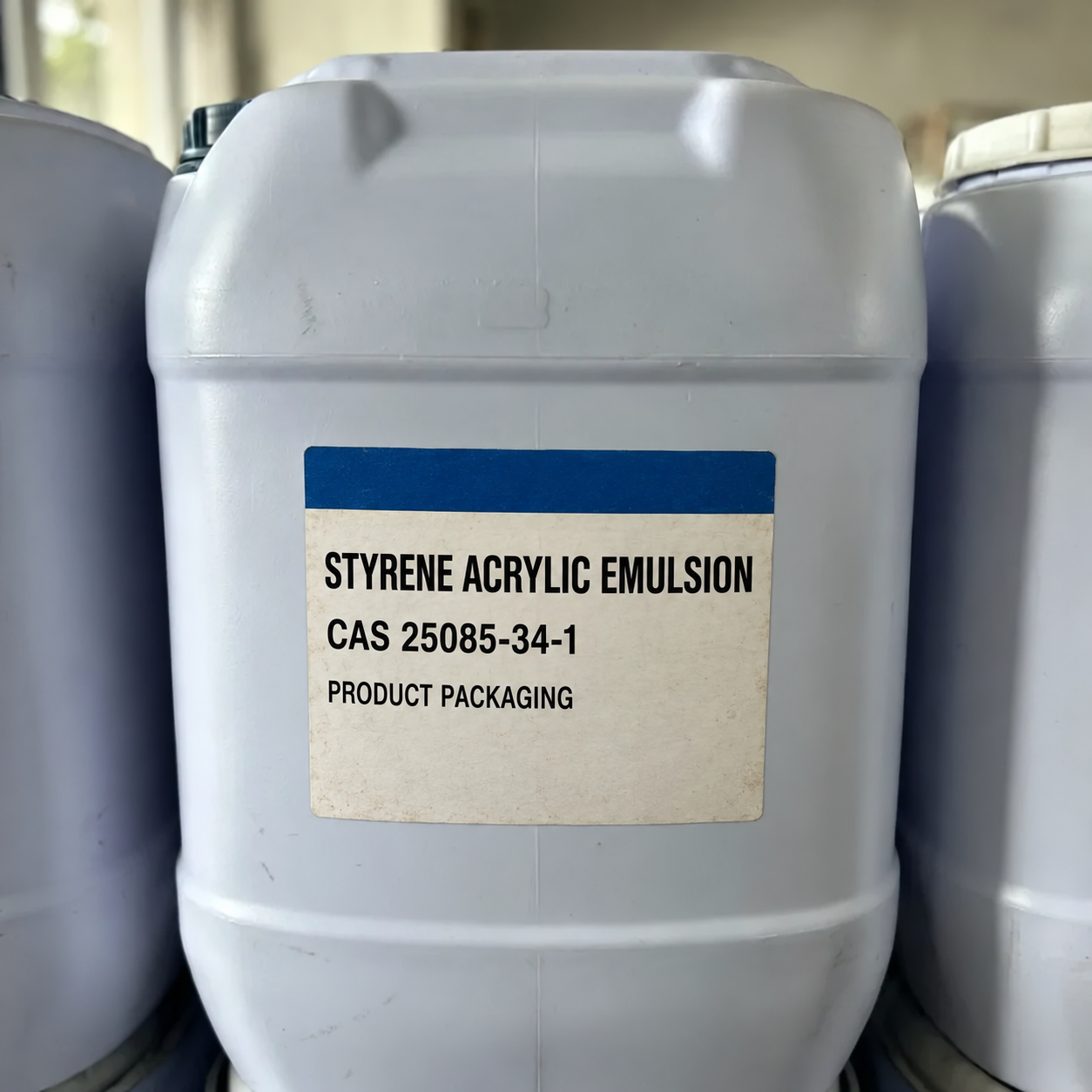
Styrene Acrylic Emulsion is a water-based copolymer dispersion used in the Construction and coating chemicals sector as a film-forming binder for coating, adhesive, and cement-modified formulation systems. In industrial documentation, this material is also referred to as styrene-acrylic emulsion, styrene acrylic copolymer emulsion, acrylic acid-styrene copolymer, and styrene-acrylate latex. Identified by CAS 25085-34-1, it functions through polymer particle coalescence and film formation to improve adhesion, water resistance, alkali resistance, and formulation stability in water-based industrial systems. This product is generally supplied with competitive factory pricing, customized specifications, supporting documents including MSDS, TDS, COA, and bulk supply options.
Styrene Acrylic Emulsion CAS 25085-34-1
- CAS: 25085-34-1
- Synonyms: Acrylic acid-styrene copolymer / 2-Propenoic acid, polymer with ethenylbenzene
- Molecular Formula: (C8H8·C3H4O2)x
- Grade: Industrial grade
- Package: 25 kg drum, 50 kg drum, 200 kg plastic drum, or IBC, depending on grade and supply format.
Product Description
Physicochemical Properties
Representative commercial specification range for water-based styrene-acrylic emulsion grades; adjust to your actual TDS before publishing.
| Item | Typical Commercial Range / Description |
|---|---|
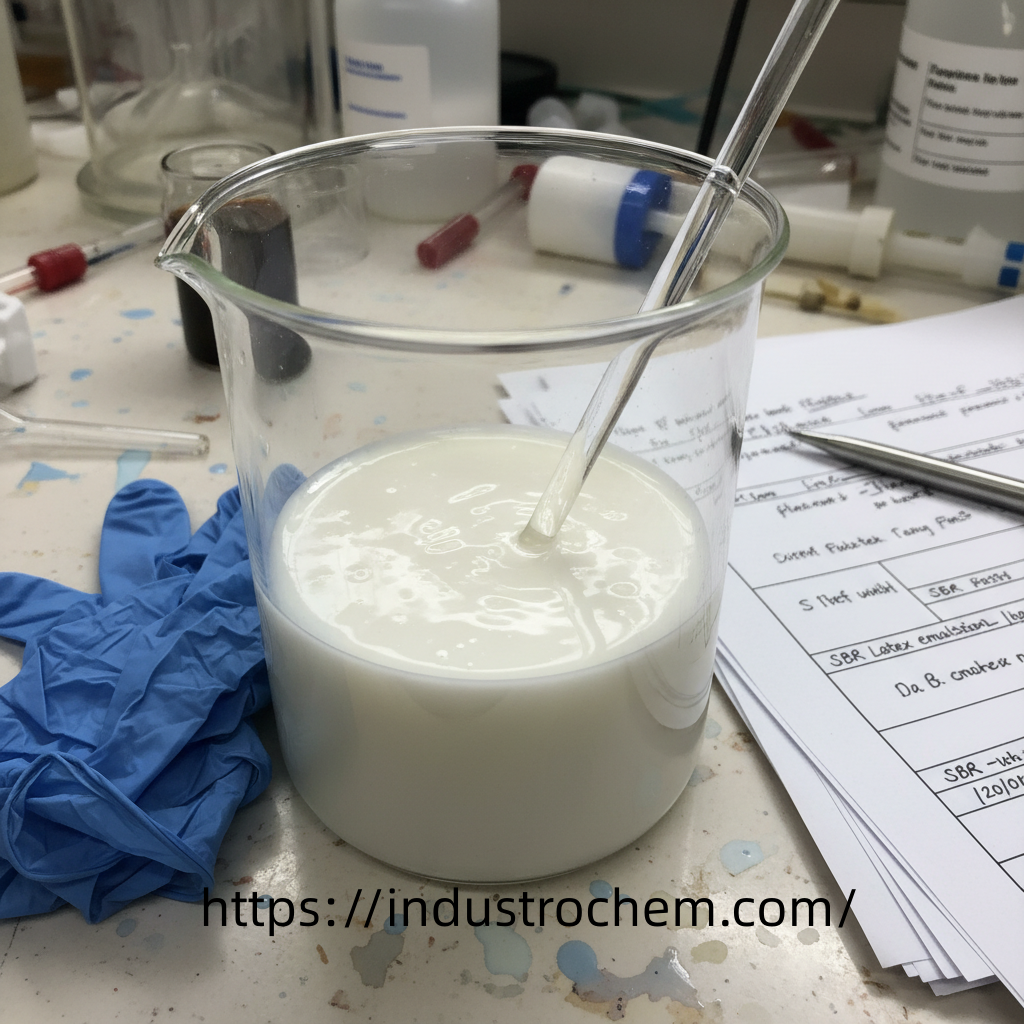
| Appearance | Milky white to translucent liquid |
| Polymer Type | Water-based styrene-acrylic copolymer emulsion |
| Solid Content | Typically about 49–50% |
| pH (25 °C) | Typically 7.0–9.0 |
| Viscosity (25 °C) | Typically 3000–6000 mPa·s or cps, depending on grade |
| Minimum Film Forming Temperature | Typically 26–30 °C for certain coating grades |
| Solubility / Dispersion | Dispersible in water as supplied; designed for water-based formulation systems |
| Residual Monomer | Controlled according to internal release standard; confirm with supplier COA |
Applications
1. Architectural Coatings
Used as a water-based binder in interior and exterior coating systems where film formation, adhesion, and resistance balance are important. Public supplier descriptions specifically cite architectural binder coatings as a common application.
2. Waterproofing and Cement Modification
Applied in polymer-modified cement mortar, waterproof slurry, and related construction mixtures to improve binding performance and water resistance within mineral systems.
3. Adhesives and Sealants
Used in selected water-based adhesive and sealing mixtures as a binder phase to support cohesion, substrate bonding, and film integrity.
4. Paper and Surface Treatment Systems
Can be used in coating or treatment formulations where a water-based polymer binder is required for surface strength and film continuity. This should still be matched to the exact grade and end-use regulatory need.
Storage & Safety
Store Styrene Acrylic Emulsion in tightly closed original containers in a cool, dry, and well-ventilated area. Protect the product from freezing, prolonged high heat, and direct sunlight, because emulsion stability can be affected by temperature extremes. Use clean transfer equipment to avoid microbial contamination or coagulation caused by incompatible additives. During handling, operators should wear standard industrial PPE such as chemical-resistant gloves, protective clothing, and safety goggles. If the material is processed by spraying or under conditions that may generate mist, local ventilation and respiratory protection should be evaluated according to workplace risk assessment. Avoid mixing with strong acids, strong oxidants, or incompatible metal salts unless formulation testing has confirmed stability. These precautions are consistent with the product’s use as a water-based industrial polymer dispersion and should be finalized against the supplier SDS for the exact grade.
Quality Assurance
For this product category, a credible quality assurance section should focus on batch-to-batch emulsion control rather than on pharmaceutical-style claims. A typical factory release program for styrene-acrylic emulsion may include appearance, solid content, pH, viscosity, mechanical stability, dilution stability, and film-forming performance. For more demanding coating or construction grades, routine QC may also monitor residual monomer, particle-size distribution, freeze-thaw stability, calcium-ion stability, and dry-film performance after application testing. Instrumental methods can include solids determination, Brookfield or equivalent viscosity testing, pH measurement, particle-size analysis, and residual monomer checks by chromatographic methods where applicable. GMP should not be claimed unless the actual plant is certified to that standard for the relevant product line.
FAQ - Technical & Supply Chain
-
Q:
Is this product typically selected as a binder for water-based coating systems rather than as a solvent or simple additive?
A: Yes. This material is generally chosen for its role as a polymeric binder and film-forming phase in water-based coatings, waterproofing systems, adhesives, and related construction formulations. It is not typically specified as a general-purpose solvent. -
Q:
Can one CAS number cover different commercial grades of Styrene Acrylic Emulsion?
A: Yes. CAS 25085-34-1 identifies the polymer family, but commercial grades can still differ in solid content, viscosity, minimum film-forming temperature, particle size, hardness, flexibility, and formulation compatibility. Buyers usually need the exact TDS and COA for the selected grade rather than relying on CAS alone.
Documents and Product Support
For product review and sourcing evaluation, supporting documents can be coordinated according to the product type, inquiry stage, and order requirements.
- COA for batch-based quality reference
- TDS for key physical and chemical information
- SDS / MSDS for handling, storage, and safety reference
- Packing information for sample, trial, and bulk orders
- Technical communication based on application and specification requirements
Information to Confirm Before Quotation
Clear sourcing information helps reduce specification mismatch and allows a more accurate quotation before sample or bulk order discussion.
- Product name and CAS number
- Application or intended end use
- Required purity, grade, or specification
- Sample quantity, trial order, or bulk demand
- Preferred packing form or net weight
- Destination country or port
- Required documents or compliance expectations
Packaging, Storage, and Handling Notes
Packaging form, storage conditions, shelf life, and shipment arrangements should be confirmed according to the product characteristics, package size, and destination requirements.
Before order confirmation, buyers are advised to review the corresponding product documents and confirm whether any special storage, labeling, or handling requirements apply.
Sample, Bulk Order and Repeat Supply Support
Support can be arranged for sample discussion, bulk supply planning, packaging confirmation, and routine sourcing communication based on the actual product and order requirements.
For repeat-use formulations or long-term procurement plans, buyers may discuss specification consistency, packaging preferences, delivery expectations, and document coordination in advance.


Emulsifier-MPEG-350-CAS-9004-74-4-1.jpg)
