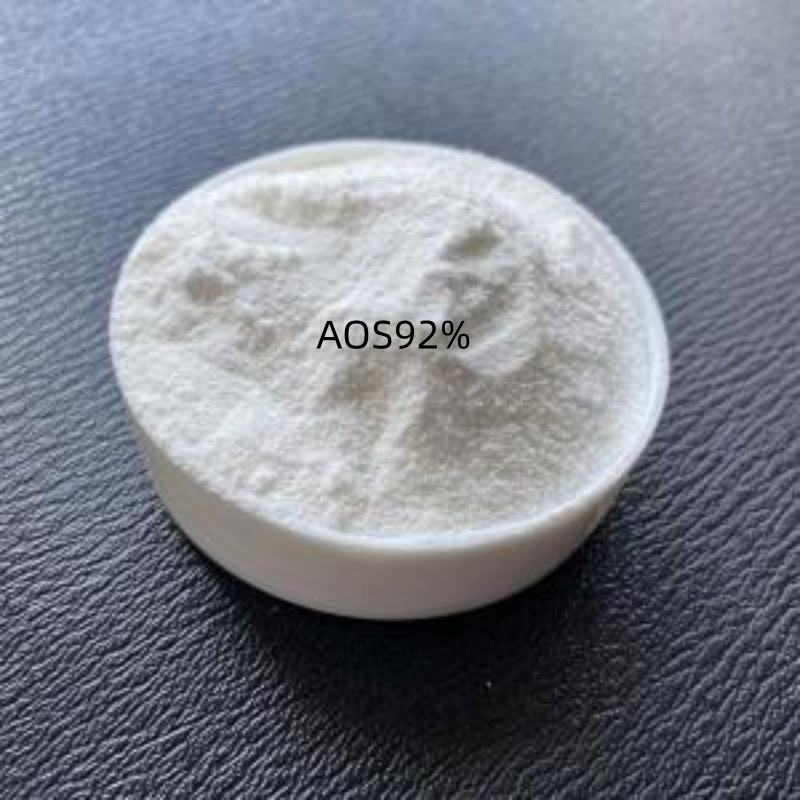










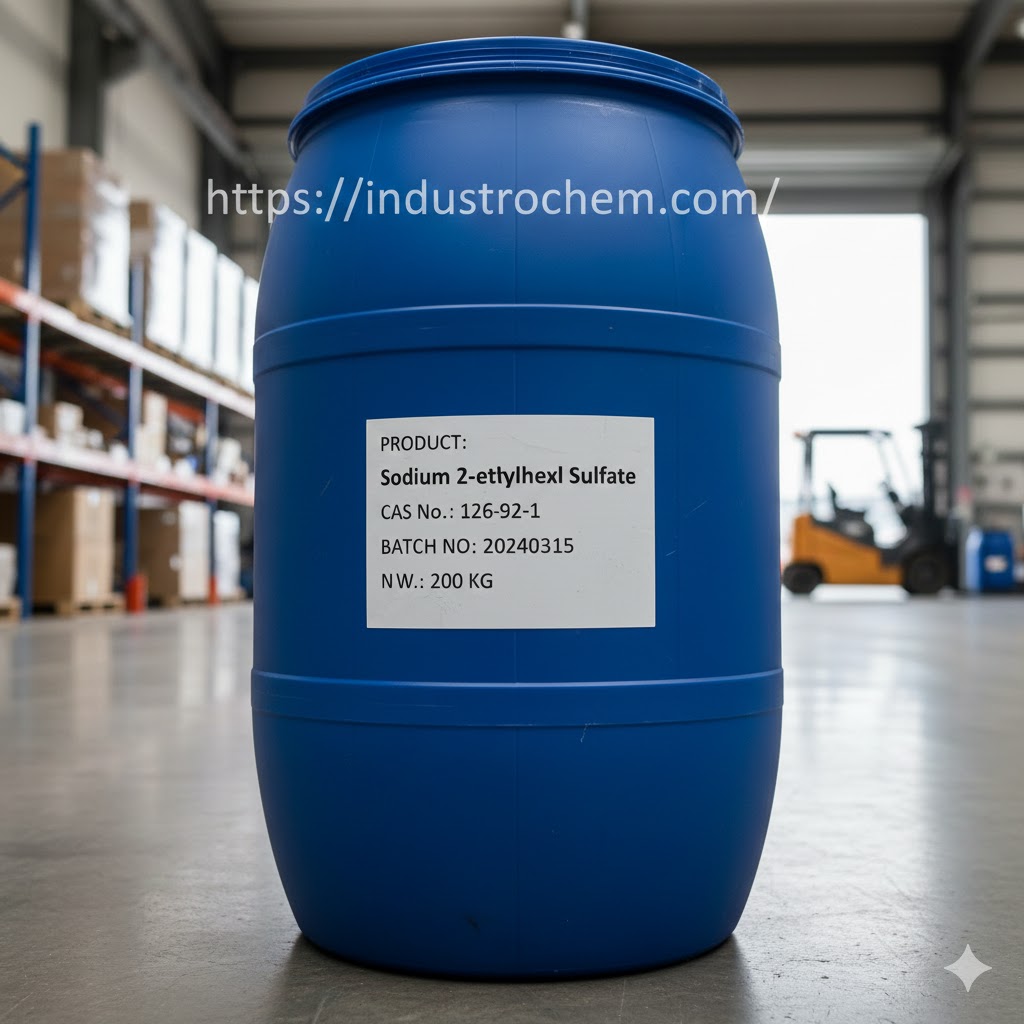
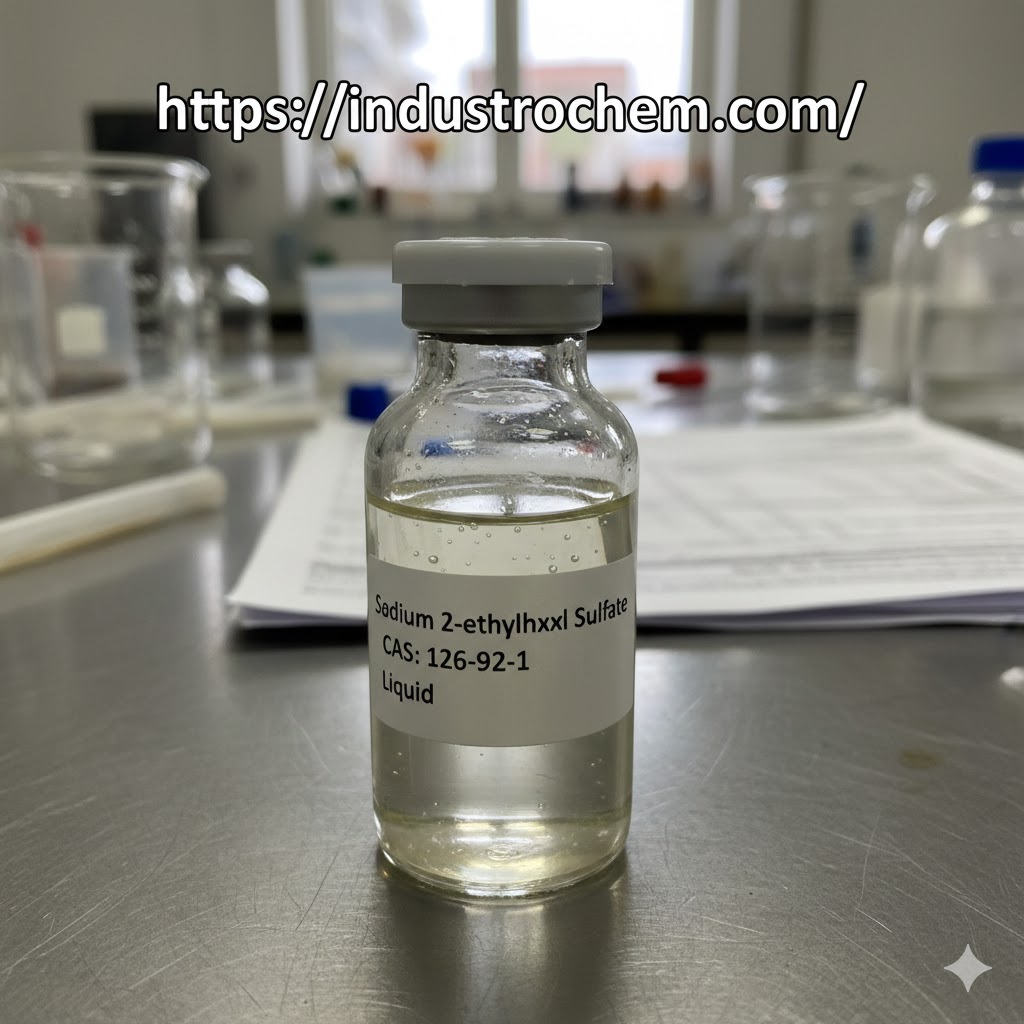
Sodium 2-ethylhexyl Sulfate CAS 126-92-1 is a branched anionic surfactant chemically defined as the sodium salt of 2-ethylhexyl hydrogen sulfate , functioning primarily as a low-foaming wetting agent in alkaline industrial cleaners and electroplating baths. Also known as Sodium etasulfate or Sodium isooctyl sulfate, this compound is utilized to reduce surface tension in high-electrolyte solutions and serves as a hydrotrope in the formulation of fruit washing solutions and textile mercerizing agents. We provide professional access to this material with competitive factory pricing and the ability to meet customized specifications for various manufacturing requirements. Our commitment to technical transparency ensures that every shipment is accompanied by comprehensive MSDS, TDS, COA documentation to support your quality assurance protocols, and we maintain capacity for consistent bulk supply to facilitate large-scale industrial operations.
Sodium 2-ethylhexyl Sulfate CAS 126-92-1
- CAS: 126-92-1
- Synonyms: Sodium etasulfate, Sodium isooctyl sulfate, Sulfuric acid mono(2-ethylhexyl) ester sodium salt, Sodium 2-ethylhexyl sulphate, Mono(2-ethylhexyl) sulfate sodium salt
- Einecs: 204-812-8
- Molecular Formula: C8H17NaO4S
- Grade: Industrial-grade
- Package: 200 kg drum / 1000 kg IBC (customizable)
Product Description
Physicochemical Properties
The secret to its performance lies in its branched structure. Unlike linear chains, the 2-ethylhexyl branch prevents tight molecular packing, which grants it exceptional solubility even when the water is saturated with salts or alkalis.
| Property | Specification / Typical Value |
|---|---|
| Chemical Name | Sodium 2-ethylhexyl sulfate |
| CAS Number | 126-92-1 |
| Molecular Formula | |
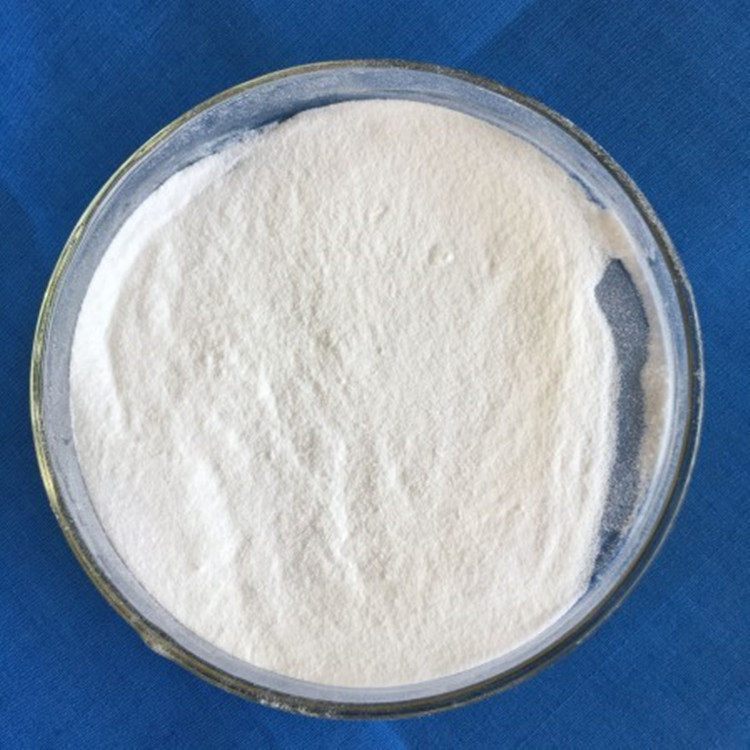
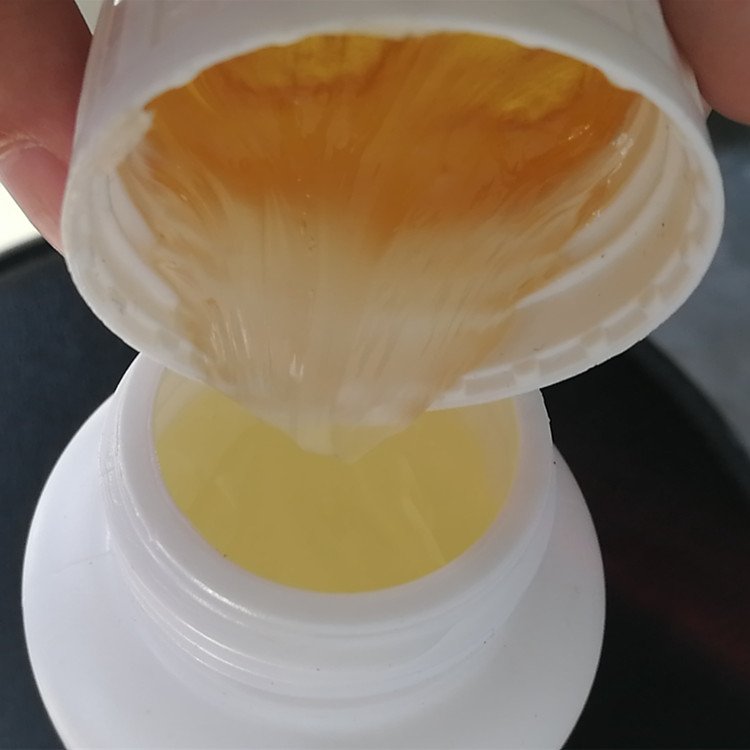
| Appearance | Colorless to light yellowish transparent liquid |
| Active Content | Approximately 40% (aqueous solution) |
| pH (10% solution) | 7.0 – 9.5 |
| Ionic Nature | Anionic |
| Stability | Excellent in high-alkali and high-electrolyte media |
Application Fields: Where It Excels
This surfactant isn’t just a “detergent”; it is a functional additive used where others cannot survive.
- Industrial & Institutional (I&I) Cleaning: It is the “gold standard” for heavy-duty degreasers. If your cleaner contains high levels of Sodium Hydroxide (caustic soda) or phosphates, CAS 126-92-1 ensures the formula remains stable and the surface is properly wetted.
- Textile Industry (Mercerizing): During the mercerization of cotton, fabric is treated with highly concentrated caustic baths. This surfactant acts as a powerful penetrant, ensuring the caustic soda reaches the fiber core instantly and evenly.
- Metal Finishing & Electroplating: In acid or alkaline pickling, it acts as a low-foaming wetting agent. It helps clean metal surfaces of oils and scales more efficiently before the plating process begins.
- Agrochemicals: It serves as a wetting agent in pesticide and herbicide concentrates, especially those with high salt loads, ensuring even coverage on leaf surfaces.
Safety Precautions
While widely used, Sodium 2-ethylhexyl Sulfate is a concentrated industrial chemical and requires standard professional handling:
- Eye Protection: It is a significant eye irritant. Always wear chemical safety goggles when handling the 40% concentrate.
- Skin Care: Prolonged contact can cause irritation or dryness due to its powerful de-fatting properties. Use chemical-resistant gloves (Nitrile or PVC).
- Ingestion/Inhalation: Avoid breathing mists if the product is sprayed. If swallowed, rinse the mouth and seek medical attention immediately.
- Documentation: Always refer to the latest Safety Data Sheet (SDS) provided with your shipment for specific local regulatory compliance.
For anionic surfactant options used in industrial cleaning formulations, see Sodium Alpha-Olefin Sulfonate.
Storage Conditions & Shelf Life
To ensure the product maintains its clarity and performance, follow these storage protocols:
- Temperature: Store in a cool, dry place between 5°C and 35°C.
- Note: Exposure to temperatures below 0°C may cause the product to become cloudy or solidify. This is usually reversible by gentle warming and stirring without affecting the chemical properties.
- Container Compatibility: Use plastic (HDPE), fiberglass, or stainless steel containers. Avoid prolonged storage in untreated carbon steel to prevent discoloration and iron contamination.
- Seal Integrity: Keep the container tightly sealed. Evaporation of water from the 40% solution can lead to pH shifts or crystallization at the liquid line.
- Shelf Life: Under ideal conditions in original unopened packaging, the product typically remains stable for 12 months.
Why Source From Us?
We bridge the gap between China’s premier surfactant manufacturers and your production line. We understand that in your industry, a “slight odor” or a “slight tint” can ruin a final product. That’s why we focus on:
- Low-Odor Grades: We prioritize batches with minimal residual 2-ethylhexanol.
- Environmental Compliance: Our partner factories are fully licensed and compliant with the latest “Green” manufacturing standards.
- Logistical Precision: From 200kg drums to ISO tanks, we manage the complexities of chemical shipping so you don’t have to.
Need to stabilize your high-alkali formula? Contact our technical team today for a sample of Sodium 2-ethylhexyl Sulfate and experience the difference in wetting performance.
FAQ - Technical & Supply Chain
-
Q:
What is Sodium 2-ethylhexyl Sulfate CAS 126-92-1?
A: Sodium 2-ethylhexyl Sulfate CAS 126-92-1 is a branched C8 anionic surfactant with molecular formula C8H17NaO4S, molecular weight about 232.27, and EINECS 204-812-8. It is also known as sodium isooctyl sulfate or sodium etasulfate. -
Q:
How does Sodium 2-ethylhexyl Sulfate differ from Sodium Lauryl Sulfate?
A: Sodium 2-ethylhexyl Sulfate has a short branched 2-ethylhexyl chain, while Sodium Lauryl Sulfate has a linear C12 chain. The branched structure gives lower foaming and better stability in concentrated alkali or electrolyte systems, where ordinary lauryl sulfate surfactants may salt out or lose wetting performance. -
Q:
Why is Sodium 2-ethylhexyl Sulfate stable in high-alkali and high-electrolyte media?
A: Its branched hydrophobic chain resists tight molecular packing, so it remains soluble and surface-active in highly caustic or salt-loaded baths. This makes it suitable for formulations containing high levels of sodium hydroxide, phosphates, or other electrolytes. -
Q:
How is Sodium 2-ethylhexyl Sulfate used in textile mercerizing and industrial cleaning?
A: In cotton mercerizing, it improves penetration of concentrated caustic soda into the fiber, supporting uniform treatment. In industrial and institutional cleaning, it acts as a low-foaming wetting and hydrotropic agent in heavy-duty alkaline degreasers and hard-surface cleaners. -
Q:
What is its function in metal finishing and electroplating?
A: In acid or alkaline pickling, electroplating, and surface treatment, it provides rapid wetting and helps remove oils, scales, and residues before plating. Its low foam and high electrolyte tolerance help maintain uniform coverage in processing baths.
Ordering & Documentation
Key information for document requests, quotations, and supply planning.
Documents
COA, TDS, SDS/MSDS and packing details are available on request.
Quotation
Send the CAS number, grade, quantity, packing preference and destination.
Sample & Supply
Support is available for samples, trial orders, bulk and repeat supply.
Storage & Shipping
Product-specific conditions are confirmed before order.