








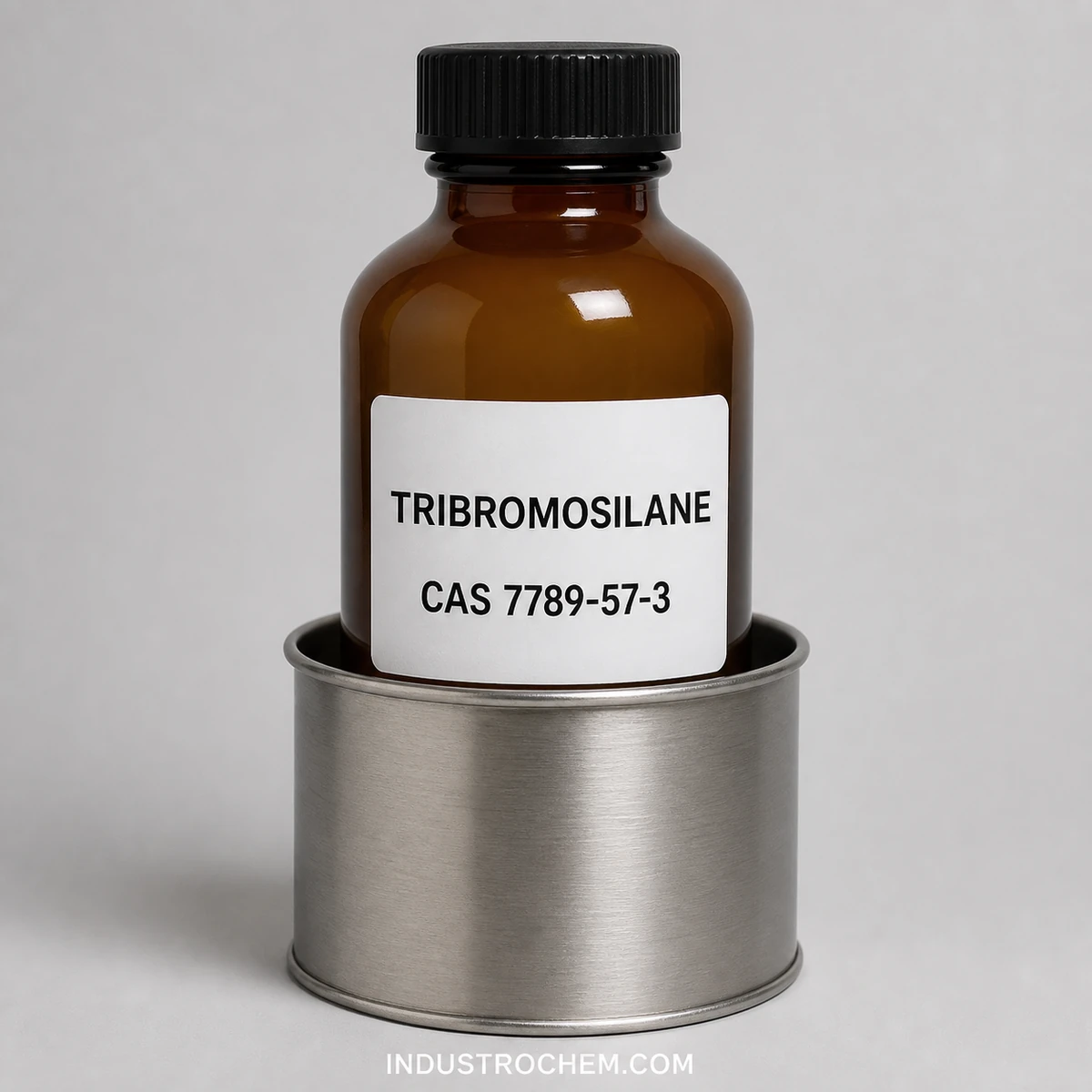
Silicon Tribromide CAS 7789-68-6
Release time: 2025-07-25
Physicochemical properties
| Property | Description |
|---|---|
| Chemical Name | Silicon Tribromide |
| Synonyms | Tetrabromosilane; Silicon Bromide; Tetrabromo-silan; Silane, Tetrabromo- |
| CAS Number | 7789-66-4 |
| Molecular Formula | HSiBr3 |
| Molecular Weight | 347.7 g/mol |
| Appearance | Colorless to pale yellow liquid (turns yellow in air) |
| Odor | Unpleasant odor |
| Density | 2.8 g/mL at 25 °C (lit.) |
| Melting Point | 5 °C (lit.) |
| Boiling Point | 153 °C (lit.) |
| Refractive Index | 1.5627 |
| Solubility | Reacts with water to decompose into HBr and silicic acid, with evolution of heat |
| Stability | Stable under normal conditions, but reacts rapidly with moisture, water, and protic solvents |
| Hazard Class | Corrosive (C) |
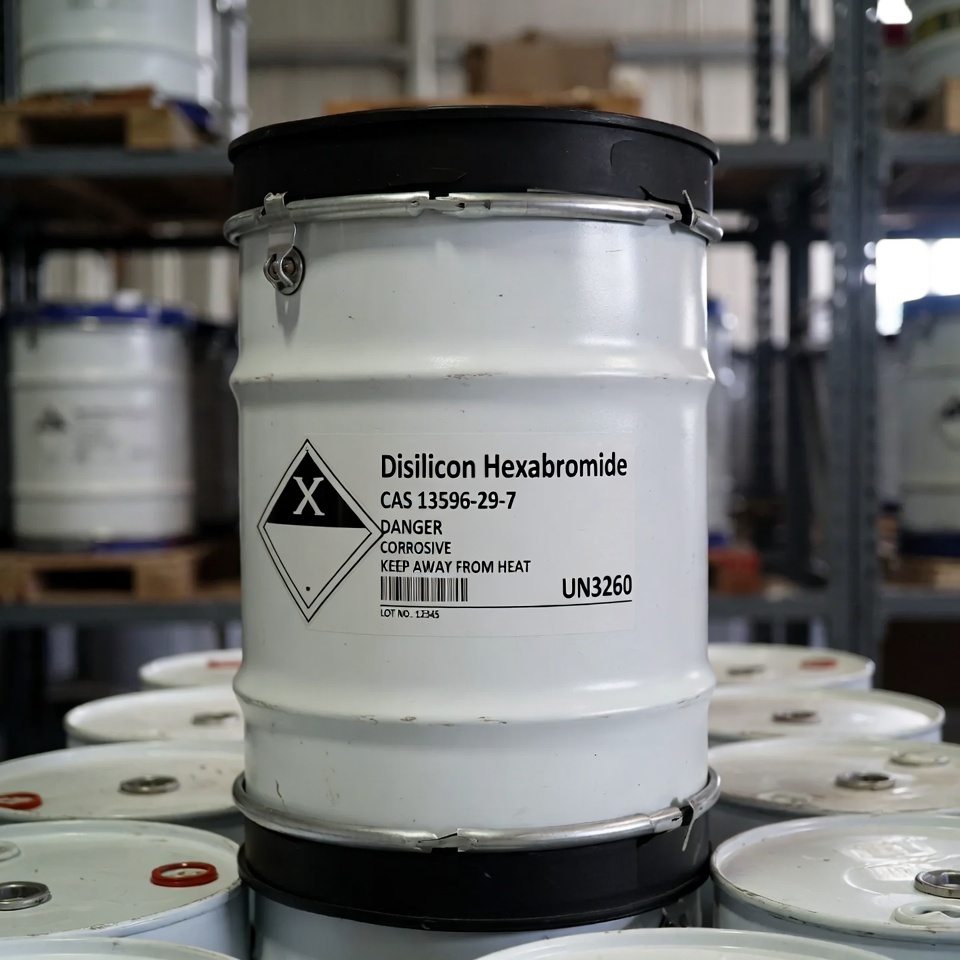
| UN Number | UN 3264 8/PG 2 |
| Safety Precautions | Keep away from heat, sparks, and open flames. Store in a cool, dry, and well-ventilated area. Use appropriate personal protective equipment (PPE) such as gloves, goggles, and protective clothing when handling. |
Application Areas
Organic synthesis: used as a brominating agent for the preparation of organic bromides or as a catalyst.
Semiconductor industry: used for surface treatment of silicon wafers or chemical vapor deposition (CVD).
Photolithography technology: used for etching or doping in microelectronic manufacturing
Storage conditions
Environmental requirements: Store in a cool, dry, well ventilated warehouse, away from sources of fire and heat.
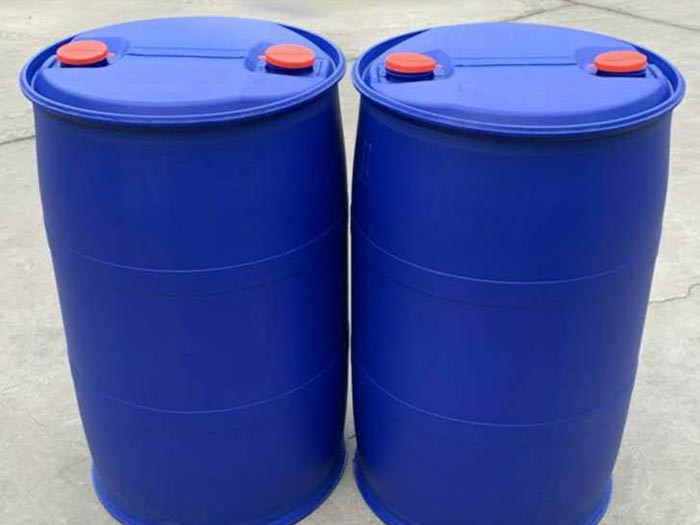
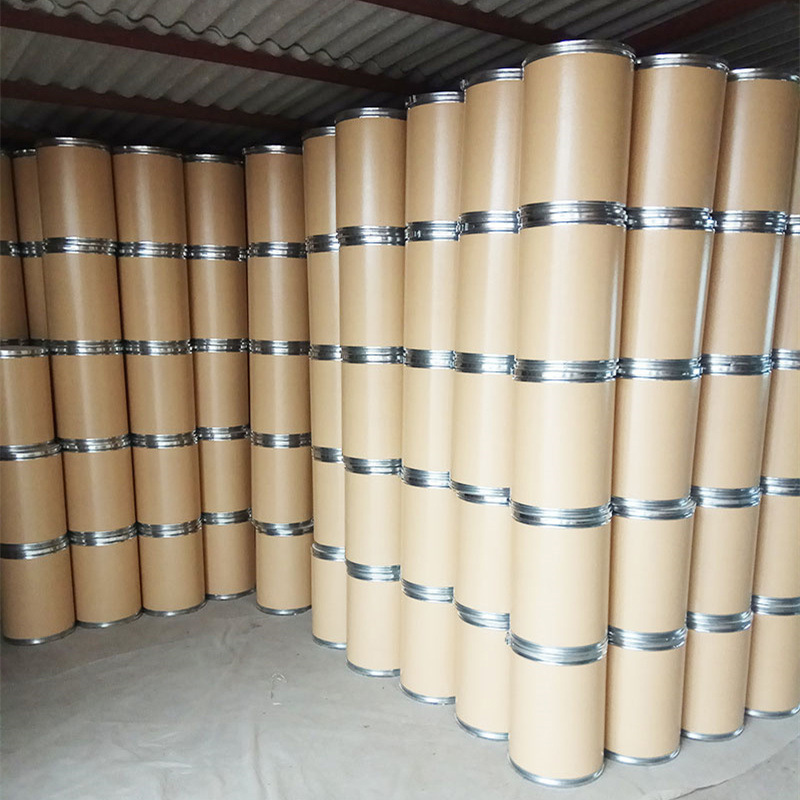
Packaging requirements: Use glass or metal containers with good sealing to avoid contact with moisture.
Temperature control: It is recommended that the warehouse temperature be ≤ 30 ℃ and the relative humidity be ≤ 75%.
Isolation storage: Store separately from oxidants, acids, and bases to prevent reactions.
Safety precautions
Personal protection: Wear a gas mask, chemical protective gloves, goggles, and corrosion-resistant protective clothing during operation.
Operating environment: Conduct experiments in a fume hood to avoid inhaling vapors.
Fire and explosion prevention: Keep away from open flames and high temperatures, smoking is prohibited.
Leakage treatment: Minor leakage: Collect and treat with sand and dry lime after adsorption. Large amount of leakage: build a dike, cover it with foam, and transfer it with explosion-proof pump.