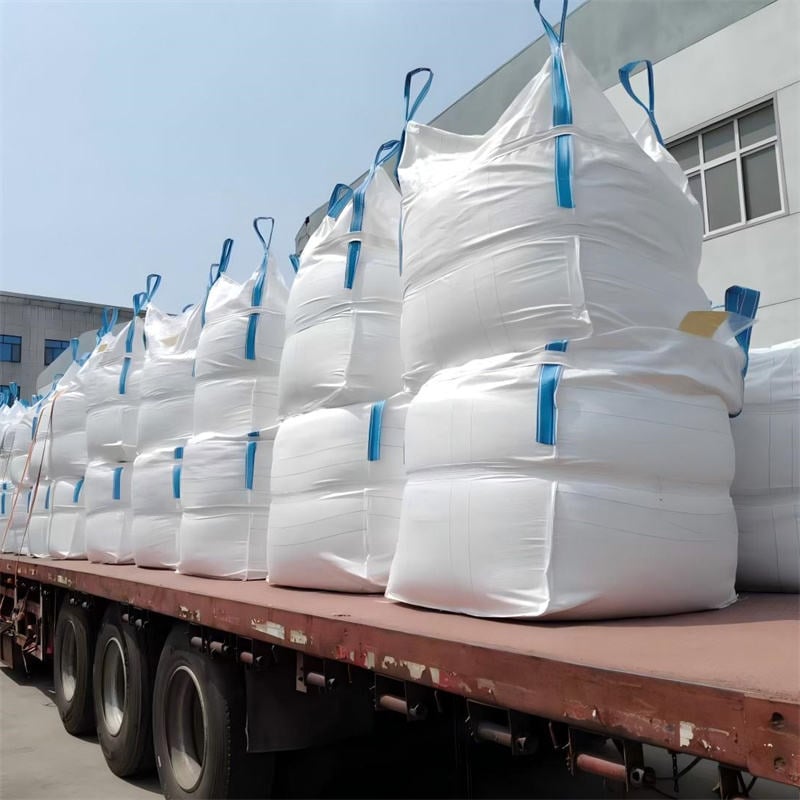










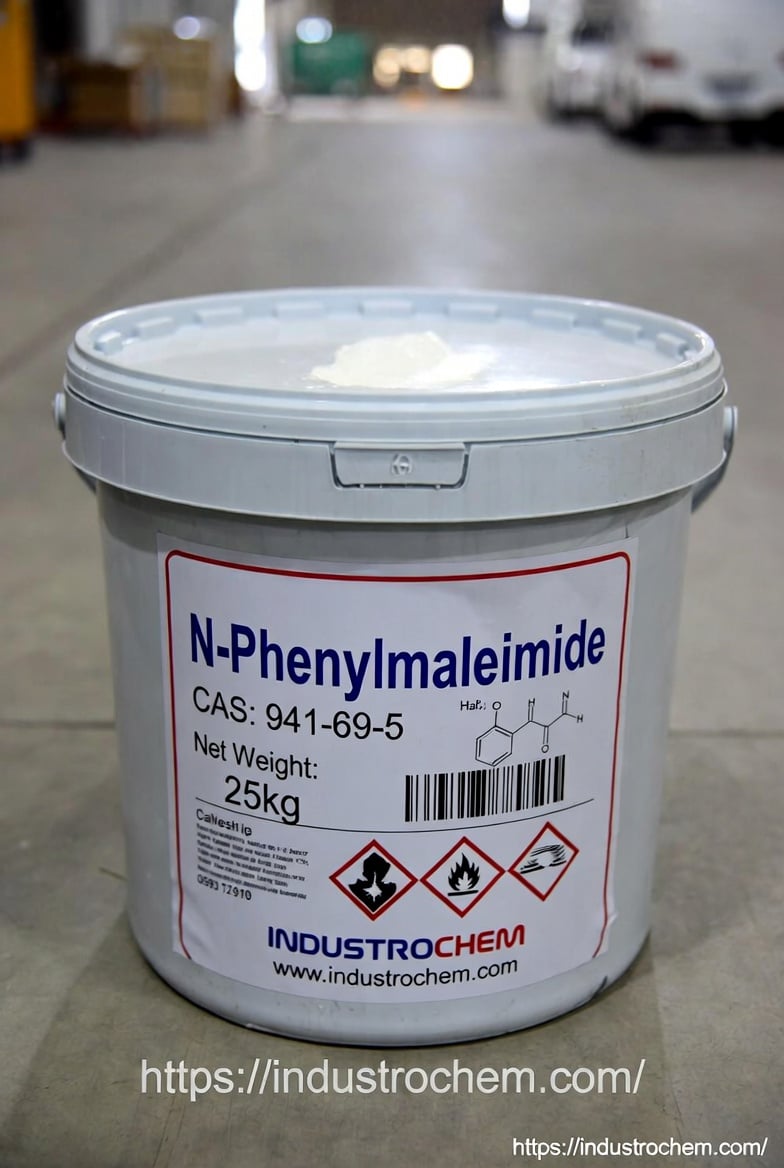
N-Phenylmaleimide, also called PMI, NPMI or 1-phenyl-1H-pyrrole-2,5-dione, CAS 941-69-5, is a maleimide monomer supplied as a crystalline solid and positioned to improve thermal stability, rigidity and chemical resistance in polymer systems. Confirm the required grade, then request a quotation with COA/TDS/SDS for bulk supply.
N-Phenylmaleimide (PMI) CAS 941-69-5
- CAS: 941-69-5
- Synonyms: N-Phenylmaleimide; PMI; 1-Phenyl-1H-pyrrole-2,5-dione
- Einecs: 213-382-0
- Molecular Formula: C10H7NO2
- Grade: Industrial / polymer-grade intermediate
- Package: Standard moisture-protected packaging
Product Description
N-Phenylmaleimide (PMI) CAS 941-69-5 is a maleimide monomer with EC 213-382-0 and molecular formula C10H7NO2.
Synonyms: PMI; NPMI; 1-Phenyl-1H-pyrrole-2,5-dione.
CAS: 941-69-5.
Molecular formula: C10H7NO2.
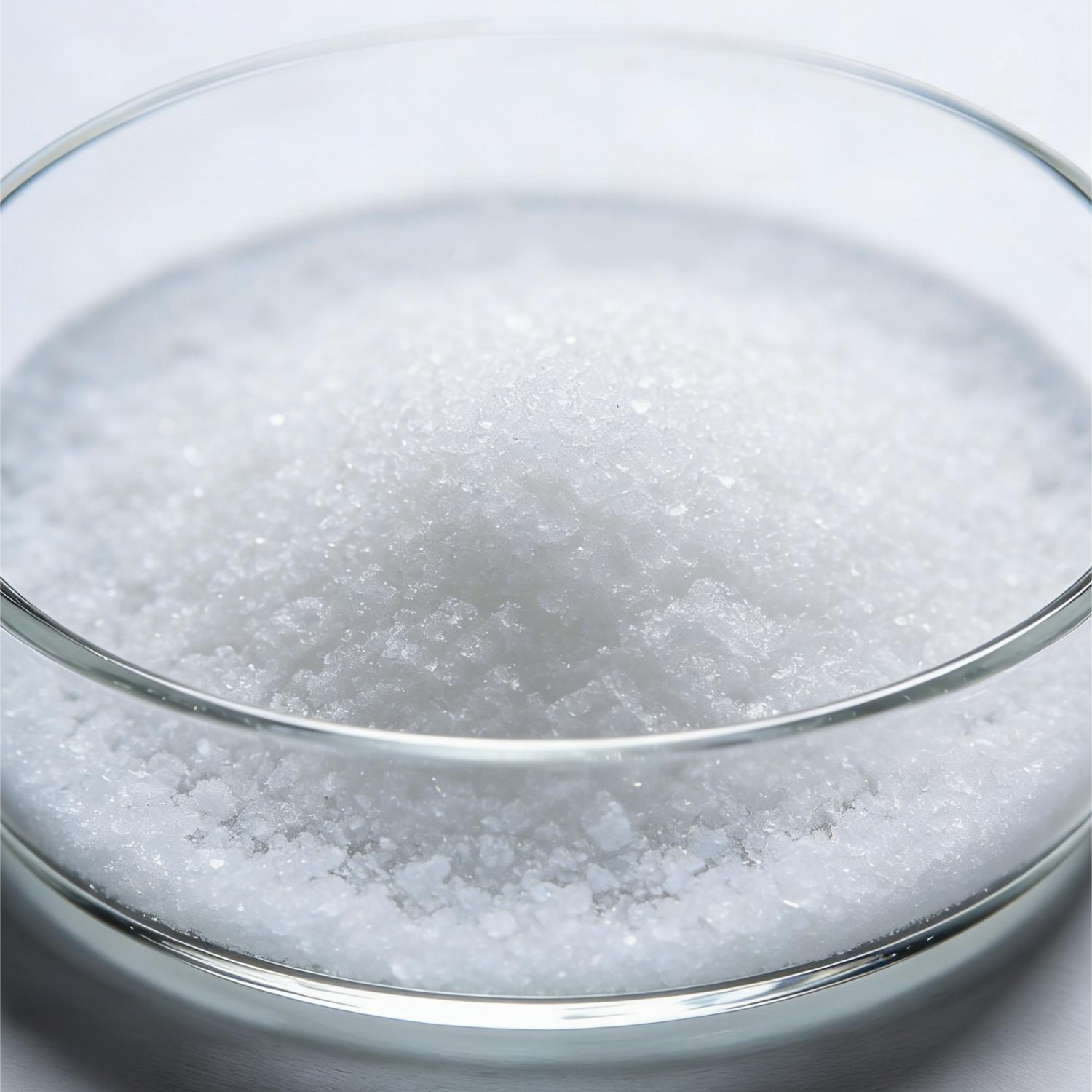
It is supplied as a white to light yellow crystalline solid.
It has a molecular weight of about 173.17 g/mol.
It is positioned as a functional maleimide-based intermediate for polymer chemistry.
It is used as a heat-resistant modifier for ABS, PVC, PMMA, and other thermoplastics.
It is used as a reactive maleimide monomer in copolymers and as a crosslinking or vulcanization modifier in rubber systems.
It introduces rigid imide and phenyl groups into the polymer backbone, increasing chain stiffness and heat resistance.
A common synthesis route is the reaction of maleic anhydride with aniline, forming an amic acid and then closing the imide ring through dehydration/imidization.
Confirm the required industrial or polymer-grade, assay, appearance, and related specifications for the chosen grade.
Check compatibility with the target resin, copolymerization system, or polymer processing conditions.
Store in a cool, dry, well-ventilated area with containers tightly sealed to prevent moisture pickup and contamination.
Avoid contact with strong oxidizing agents and sources of ignition, and follow standard handling practices for reactive polymer intermediates.
Confirm packaging suitable for the solid form and order quantity, and follow the current SDS.
Confirm grade, packaging, and specification as required.
The page is an RFQ entry point and does not state stock, price, MOQ, or fixed lead time.
For an RFQ, state the intended application, required grade, quantity, packaging, destination, and document needs.
FAQ - Technical & Supply Chain
-
Q:
What is N-Phenylmaleimide CAS 941-69-5?
A: N-Phenylmaleimide, also called PMI, NPMI, or 1-phenyl-1H-pyrrole-2,5-dione, is a maleimide monomer with the molecular formula C10H7NO2 and molecular weight 173.17 g/mol. Its EC number is 213-382-0, and it is commonly supplied as a yellow crystalline solid for polymer modification and specialty synthesis. -
Q:
What is N-Phenylmaleimide used for in polymer materials?
A: It is mainly used as a heat-resistant modifier for ABS, PVC, PMMA, and other thermoplastics. It can also act as a reactive maleimide monomer in copolymers and as a crosslinking or vulcanization modifier in rubber systems, improving rigidity, heat distortion temperature, thermal stability, and chemical resistance. -
Q:
How does N-Phenylmaleimide improve heat-resistant ABS?
A: N-Phenylmaleimide introduces rigid imide and phenyl groups into the polymer backbone, increasing chain stiffness and heat resistance. It can be copolymerized with styrene, acrylonitrile, maleic anhydride, or blended as an N-PMI-modified copolymer, allowing formulators to raise HDT while retaining processability. -
Q:
How is N-Phenylmaleimide synthesized?
A: A common route is the reaction of maleic anhydride with aniline, first forming the intermediate amic acid and then closing the imide ring through dehydration/imidization. The resulting maleimide monomer can then be copolymerized with other vinyl monomers in solution, emulsion, or bulk polymerization systems. -
Q:
How should N-Phenylmaleimide be stored and handled?
A: Store it in a cool, dry, well-ventilated area with containers tightly sealed to prevent moisture pickup and contamination. Avoid contact with strong oxidizing agents and sources of ignition, and follow standard handling practices for reactive polymer intermediates.
Ordering & Documentation
Key information for document requests, quotations, and supply planning.
Documents
Tell us which documents your procurement team needs. Before an order, we will check whether the quoted source can provide them for the offered lot.
Quotation
Send the CAS number, grade, quantity, packing preference and destination.
Sample & Supply
Ask whether samples, trial quantities or repeat orders are possible. We will check each request against the sourced product and current offer.
Storage & Shipping
Product-specific conditions are confirmed before order.