









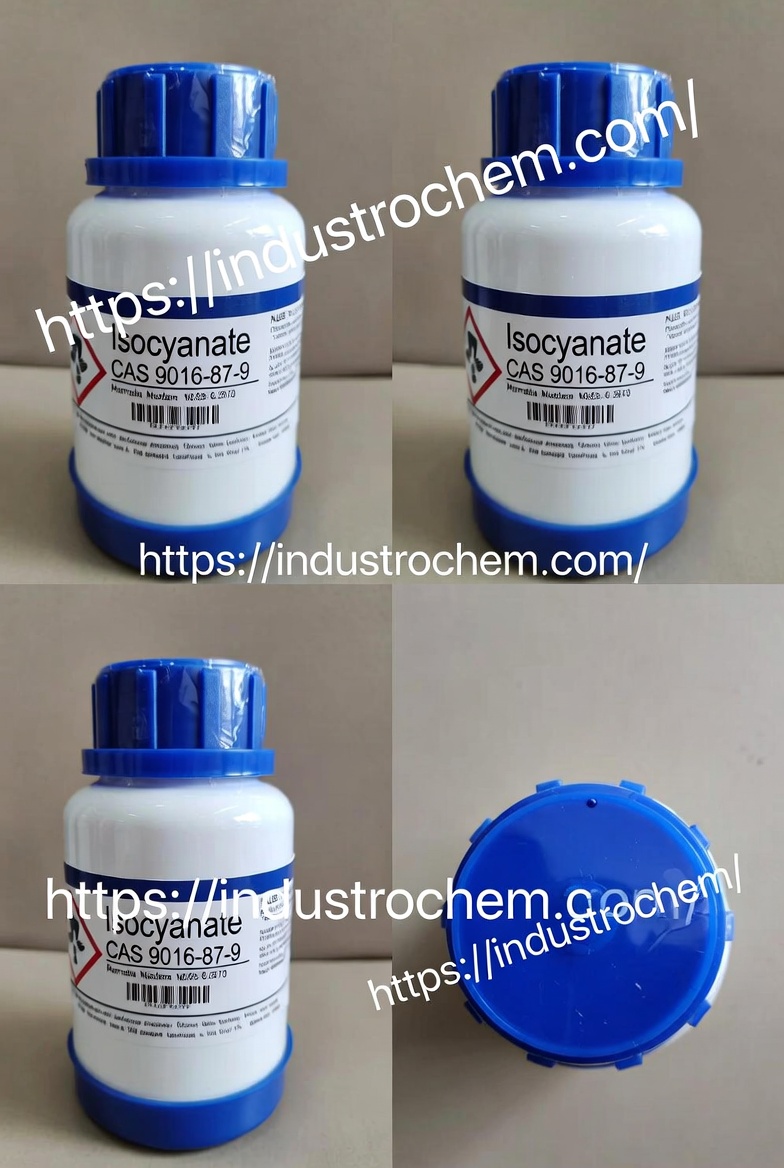
Isocyanate, also called polymeric MDI or PMDI, CAS 9016-87-9, is an aromatic polymeric isocyanate supplied as a dark brown liquid for rigid polyurethane foam, adhesives and coatings. Confirm the required grade and specification, then request a quotation with COA/TDS/SDS for bulk supply.
Isocyanate (PMDI) CAS 9016-87-9
- CAS: 9016-87-9
- Synonyms: Polymeric MDI, PMDI, Polymethylene polyphenyl isocyanate, Polyurethane hardener
- Molecular Formula: [C₆H₃(NCO)CH₂]ₙ
- Grade: Industrial Grade
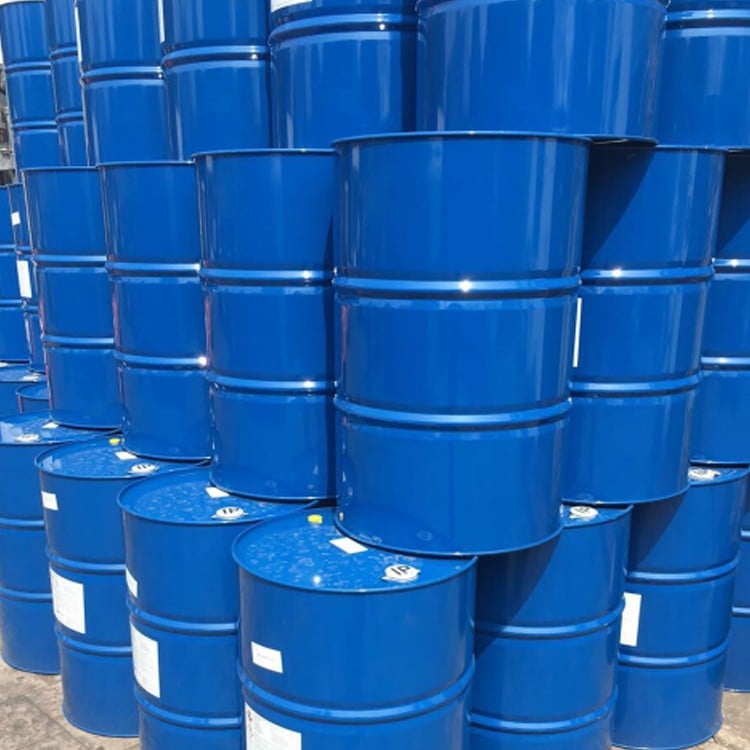
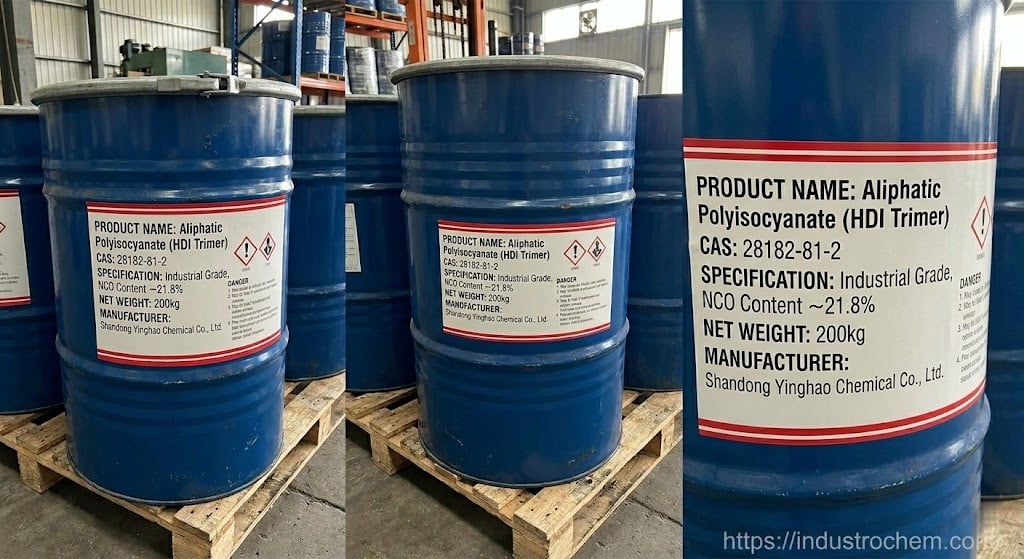
- Package: 250kg/iron drum, 1250kg/IBC tank
- ECHA List number (technical reference): 618-498-9
Product Description
Isocyanate (PMDI) CAS 9016-87-9 is polymeric MDI, also called polymethylene polyphenyl isocyanate, an aromatic polymeric mixture containing multiple NCO groups, with the repeat-unit formula [C₆H₃(NCO)CH₂]ₙ.
Synonyms: Polymeric MDI; PMDI; Polymethylene polyphenyl isocyanate; Polyurethane hardener.
CAS: 9016-87-9.
Molecular formula: [C₆H₃(NCO)CH₂]ₙ.
It is supplied as a dark brown transparent liquid.
The NCO content is the mass percentage of reactive isocyanate groups; a typical PMDI grade has about 30.5-32.0% NCO.
This provides high functionality and dense cross-linking, giving rigid polyurethane systems their compressive strength and dimensional stability.
It is used mainly as the isocyanate component for rigid polyurethane foam insulation, composite panels, cold-chain refrigeration and structural applications.
It also appears in industrial adhesives and binders, including OSB/MDF bonding and recycled rubber flooring, as well as waterproof coatings and polyurea systems.
The typical viscosity is about 150-250 mPa·s at 25 °C, with a density of about 1.22-1.25 g/cm³.
The acidity (as HCl) is not more than 0.05%, and hydrolyzable chlorine not more than 0.2%.
Polymeric MDI is highly moisture sensitive because water reacts with NCO groups, producing carbon dioxide and insoluble polyureas.
Store in tightly sealed, dry containers under nitrogen within a controlled temperature range of 15-35 °C.
Protect from moisture and contamination, and keep containers tightly closed when not in use.
Confirm appearance, NCO content, viscosity, acidity, hydrolyzable chlorine, density and grade as required.
Use suitable eye and skin protection during handling, and wash skin contact with soap and water.
Confirm packaging with the requested quantity and destination requirements.
The page is an RFQ entry point and does not state stock, price, MOQ or fixed lead time.
For an RFQ, state the intended application, required grade, quantity, packaging, destination and document needs.
FAQ - Technical & Supply Chain
-
Q:
What is Isocyanate CAS 9016-87-9?
A: CAS 9016-87-9 identifies polymeric MDI, also called PMDI or polymethylene polyphenyl isocyanate. It is an aromatic polymeric mixture containing multiple NCO groups, commonly represented by the general formula [C6H3(NCO)CH2]n, and is supplied as a dark brown liquid. -
Q:
What does the NCO content of this polymeric MDI indicate?
A: The NCO content is the mass percentage of reactive isocyanate groups in the product. A typical PMDI grade has about 30.5%-32.0% NCO, which provides high functionality and dense cross-linking, giving rigid polyurethane systems their compressive strength and dimensional stability. -
Q:
Which applications use Isocyanate CAS 9016-87-9?
A: It is used mainly as the isocyanate component for rigid polyurethane foam insulation, composite panels, cold-chain refrigeration, and structural applications. It also appears in industrial adhesives and binders, including OSB/MDF bonding and recycled rubber flooring, as well as waterproof coatings and polyurea systems. -
Q:
How should Isocyanate CAS 9016-87-9 be stored and handled?
A: Polymeric MDI is highly moisture sensitive because water reacts with NCO groups, producing carbon dioxide and insoluble polyureas. It should be stored in tightly sealed, dry containers under nitrogen and kept within a controlled temperature range, with adequate ventilation and suitable protective equipment during handling.
Ordering & Documentation
Key information for document requests, quotations, and supply planning.
Documents
Tell us which documents your procurement team needs. Before an order, we will check whether the quoted source can provide them for the offered lot.
Quotation
Send the CAS number, grade, quantity, packing preference and destination.
Sample & Supply
Ask whether samples, trial quantities or repeat orders are possible. We will check each request against the sourced product and current offer.
Storage & Shipping
Product-specific conditions are confirmed before order.