








Ethylene-Vinyl Acetate Copolymer, also called EVA resin, CAS 24937-78-8, is a flexible copolymer supplied for foaming, adhesive, film and photovoltaic applications. Confirm the required VA content, grade and specification, then request a quotation with COA/TDS/SDS for bulk supply.
Ethylene-Vinyl Acetate Copolymer (EVA) CAS 24937-78-8
- CAS: 24937-78-8
- Synonyms: EVA Resin, Poly(ethylene-co-vinyl acetate), Ethylene/vinyl acetate copolymer, EVA copolymer, Hot melt adhesive resin
- Einecs: 429-840-1
- Molecular Formula: (C₂H₄)x(C₄H₆O₂)y
- Grade: Foaming Grade, Hot Melt Adhesive Grade, Wire & Cable Grade, Photovoltaic (PV) Grade.
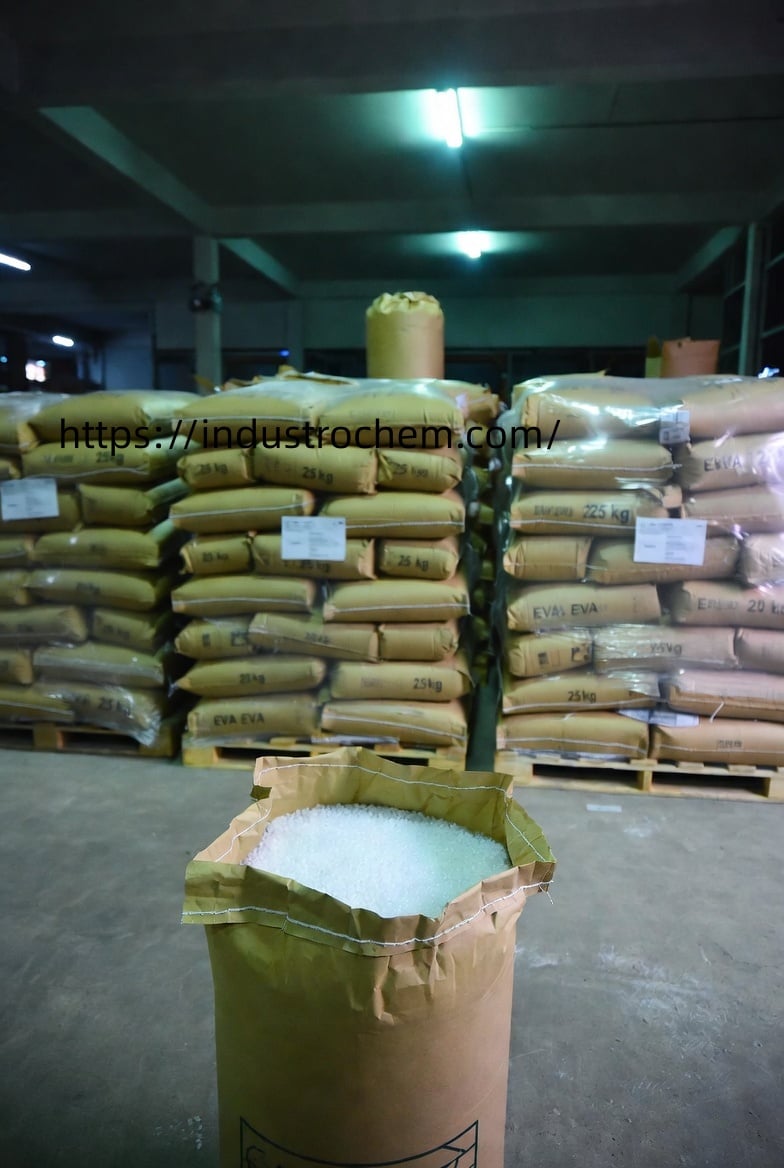
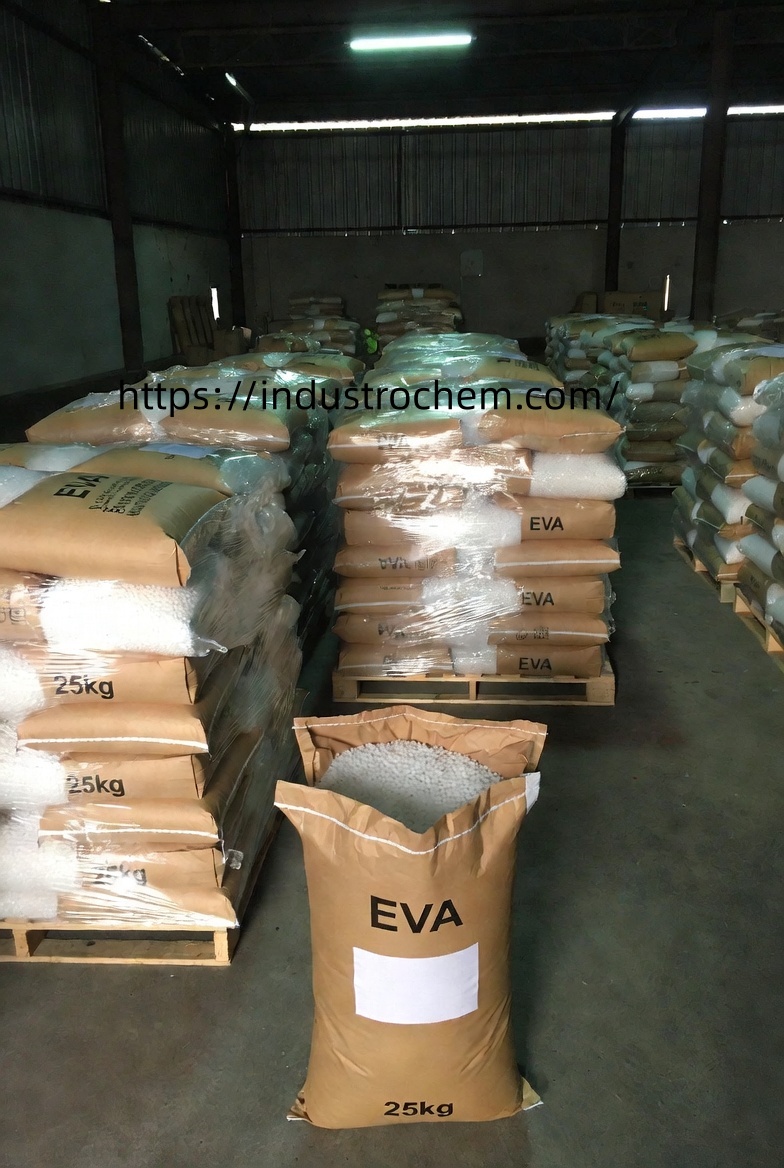
- Package: 25kg PP/PE woven bag or 750kg Jumbo Bag.
Product Description
Ethylene-Vinyl Acetate Copolymer CAS 24937-78-8 is a copolymer of ethylene and vinyl acetate, also known as EVA resin, with repeat-unit formula (C2H4)x(C4H6O2)y and EINECS 429-840-1.
Synonyms: EVA Resin; Poly(ethylene-co-vinyl acetate); Ethylene/vinyl acetate copolymer; EVA copolymer; Hot melt adhesive resin.
CAS: 24937-78-8.
As a copolymer, it is described by its repeat-unit formula and vinyl acetate (VA) content rather than a fixed molecular weight.
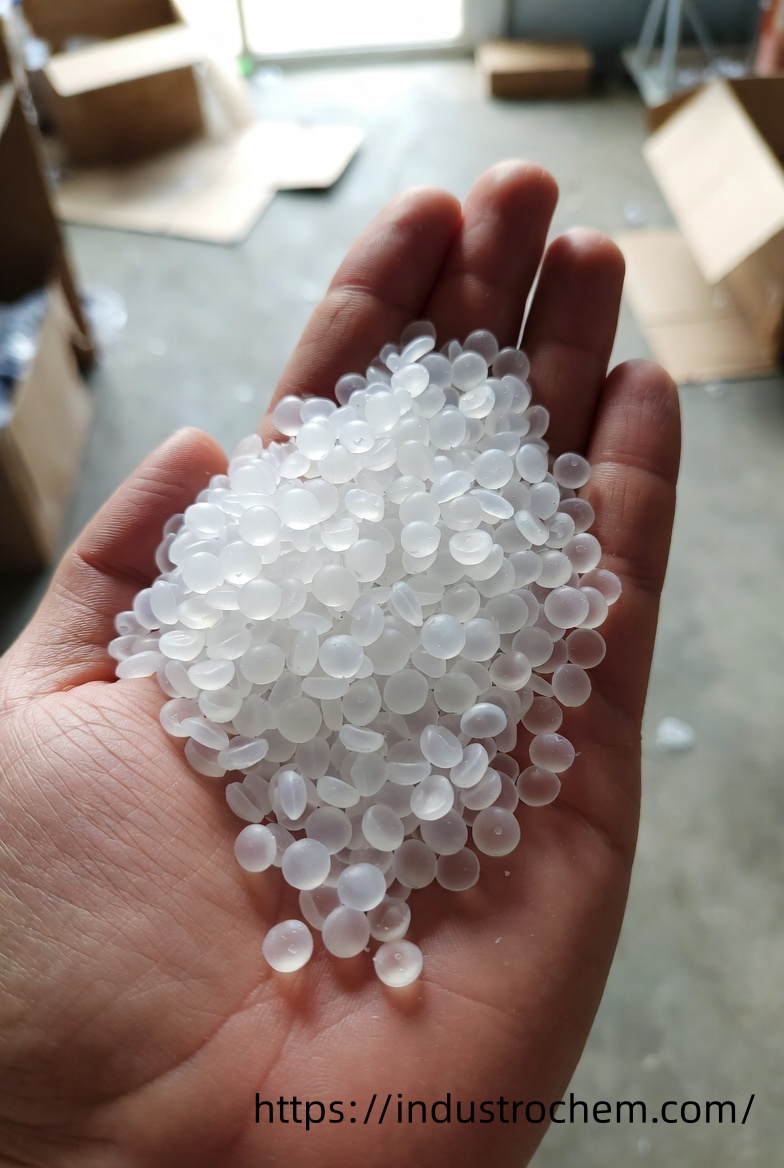
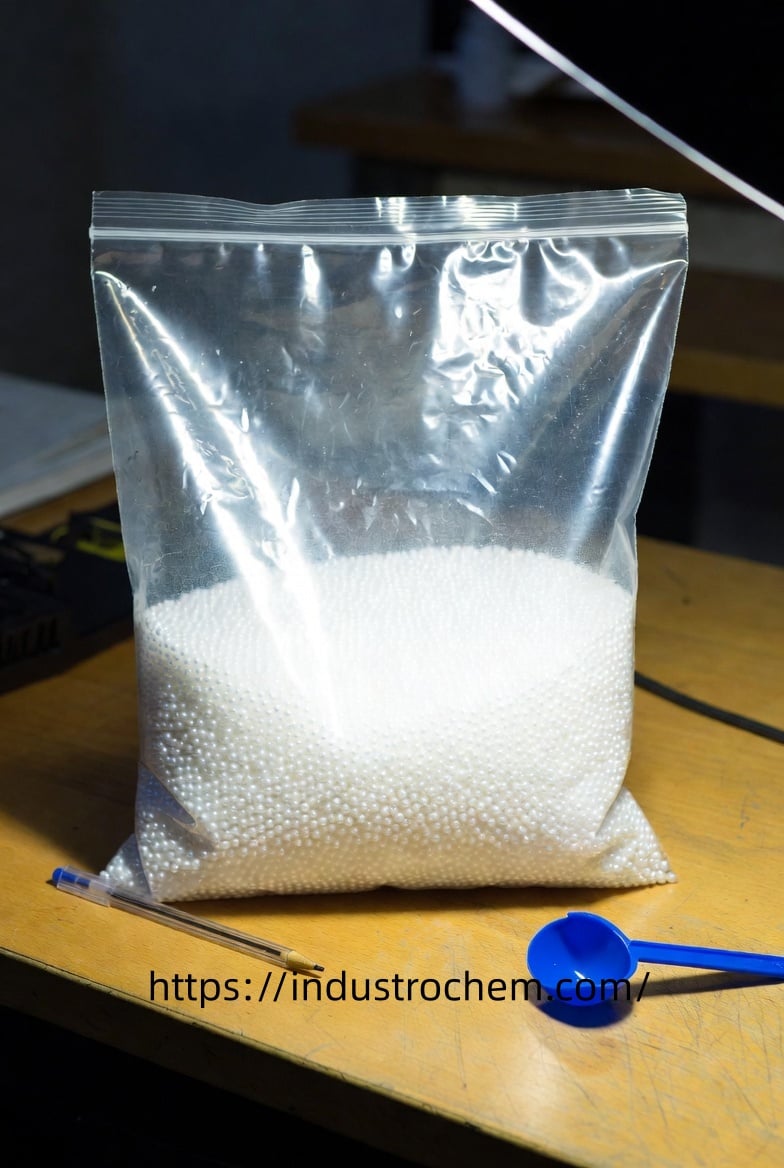
It appears as translucent to opaque pellets or granules.
Low VA grades, often around 5–10%, are tougher and more polyethylene-like, while 18–28% VA grades are softer and more flexible.
VA 18% grades are widely used for foam products, films and general molding.
VA 28% grades are softer and more adhesive, used in hot melt adhesives and selected applications.
It is compatible with PVC, polyethylene and polypropylene, improving impact resistance and flexibility as a modifier.
Typical applications include foaming, hot melt adhesives, agricultural and packaging films, wire and cable compounds, shoe materials and photovoltaic encapsulation.
Its flexibility and adhesion make it suitable for photovoltaic encapsulant films.
It is processed by common melt techniques such as extrusion, injection molding and foaming.
Store in a cool, dry, well-ventilated area in tightly closed containers away from heat and sunlight.
Protect from moisture and direct sunlight.
Confirm appearance, VA content, melt index, density and tensile properties as required.
Use suitable eye and skin protection during handling, and wash skin contact with soap and water.
Confirm packaging with the requested quantity and destination requirements.
The page is an RFQ entry point and does not state stock, price, MOQ or fixed lead time.
For an RFQ, state the intended use, required VA content, grade and specification, quantity, packaging, destination and document needs.
FAQ - Technical & Supply Chain
-
Q:
What is Ethylene-vinyl acetate copolymer EVA CAS 24937-78-8?
A: EVA is a copolymer of ethylene and vinyl acetate produced by high-pressure polymerization. Its properties range from flexible polyethylene-like resins at low VA content to softer, clearer, more polar grades at higher VA content. -
Q:
How does vinyl acetate content affect EVA resin performance?
A: Low VA grades, often around 5-10%, are tougher and more polyethylene-like, while 18-28% VA grades are softer, more flexible, and more compatible with adhesives. Higher VA content generally improves clarity, polarity, solubility, and low-temperature flexibility. -
Q:
What is the difference between EVA VA 18% and VA 28% grades?
A: VA 18% grades are widely used for foam products, films, and general molding, balancing softness and processability. VA 28% grades are softer and more adhesive-compatible, commonly selected for hot melt adhesives, masterbatches, wire and cable, and photovoltaic encapsulant films. -
Q:
Is EVA CAS 24937-78-8 compatible with PVC, polyethylene, and polypropylene?
A: Yes. EVA is frequently used as a polymer modifier or blending resin because it can improve impact resistance and flexibility in PVC, PE, and PP compounds. The best grade depends on VA content and melt index. -
Q:
What are the main applications of Ethylene-vinyl acetate copolymer?
A: Typical applications include foaming, hot melt adhesives, agricultural and packaging films, wire and cable compounds, shoe materials, masterbatches, and photovoltaic module encapsulation. Grade selection is based mainly on VA content and melt index.
Ordering & Documentation
Key information for document requests, quotations, and supply planning.
Documents
Tell us which documents your procurement team needs. Before an order, we will check whether the quoted source can provide them for the offered lot.
Quotation
Send the CAS number, grade, quantity, packing preference and destination.
Sample & Supply
Ask whether samples, trial quantities or repeat orders are possible. We will check each request against the sourced product and current offer.
Storage & Shipping
Product-specific conditions are confirmed before order.