








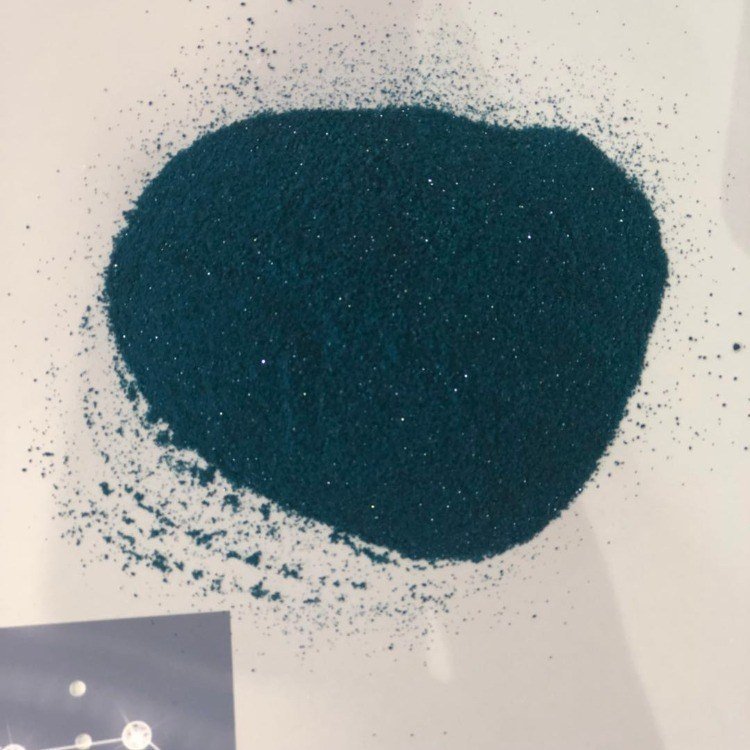
Copper(II) Acetate Monohydrate (CAS 6046-93-1), also called cupric acetate monohydrate, is a blue-green crystalline solid used as a copper source in synthesis, catalysis and copper-complex preparation. The monohydrate formula is Cu(CH₃COO)₂·H₂O. Assay basis, trace-metal limits and insoluble matter help distinguish grades for different processes.
Copper(II) Acetate Monohydrate CAS 6046-93-1
- CAS: 6046-93-1
- Synonyms: Copper(II) acetate monohydrate; Cupric acetate monohydrate; Copper(2+) diacetate hydrate
- Einecs: 205-553-3
- Molecular Formula: C₄H₈CuO₅
- Grade: Defined by assay, insoluble matter and application-specific trace-metal limits.
- Package: Sealed polyethylene or polypropylene inner packaging with protective outer packaging; pack size agreed in the quotation.
Product Description
Cupric acetate monohydrate supplies copper(II) for selected catalytic and coordination-chemistry processes. Glacial acetic acid is an upstream feedstock in copper acetate preparation; acid concentration and water balance depend on the process. Acetylacetone is a complementary ligand for preparing copper complexes, rather than a substitute for the copper source.
For catalyst selection, copper(I) chloride and copper(I) iodide are useful comparisons where the reaction calls for a different copper salt. Their copper oxidation state and counterion differ from those of copper(II) acetate monohydrate. Use the salt specified by the validated process; these materials are not direct, equal-mass replacements.
Assay and impurity specifications
Iodometric titration can determine assay reported as copper(II) acetate monohydrate. A copper-content result uses a different numerical basis and should identify the method and calculation. Relevant grade specifications can also include insoluble matter, chloride, sulfate, iron, nickel and other process-sensitive metals. ICP analysis supports trace-metal testing; a metals-basis purity figure does not establish the compound assay, water content or nonmetal impurity limits.
Product documents and quotation
We can provide a Certificate of Analysis (COA), Technical Data Sheet (TDS), Safety Data Sheet (SDS), and applicable assay and impurity-test information for the offered grade. For a quotation, send the required specification or application, quantity and destination. Include a target copper content or trace-metal limits when these are important to your process.
FAQ - Technical & Supply Chain
-
Q:
How does Copper(II) Acetate Monohydrate differ from the anhydrous salt?
A: CAS 6046-93-1 identifies Cu(CH₃COO)₂·H₂O, with a molecular weight of 199.65 g/mol. Anhydrous copper(II) acetate is CAS 142-71-2, Cu(CH₃COO)₂, 181.63 g/mol. The different water content and formula weight affect dosing. Copper(I) acetate is a separate compound with a different copper oxidation state. -
Q:
Is copper content the same as the assay of Copper(II) Acetate Monohydrate?
A: No. Pure Cu(CH₃COO)₂·H₂O contains approximately 31.83% copper by formula; this is a theoretical value, not a batch result. Compound assay and elemental copper content must be reported on their stated calculation and hydration bases. A percentage without that basis is not enough to compare grades. -
Q:
What does metals-basis purity mean for Copper(II) Acetate Monohydrate?
A: Metals-basis purity describes a metal-impurity basis. It is not the same as a titrimetric compound assay and does not specify water or nonmetal impurities. Compare the relevant trace-metal limits and test methods alongside the assay; the figure alone does not establish an ACS or other reagent grade. -
Q:
How should water and drying results be specified for Copper(II) Acetate Monohydrate?
A: The monohydrate contains water of crystallization. Distinguish total water from excess moisture, and state the method and reporting basis. If loss on drying is specified, include the drying temperature and time; do not treat an unspecified mass loss as free moisture or assume the hydrate remains unchanged. -
Q:
How is Copper(II) Acetate Monohydrate packed for shipment?
A: The product is a blue-green to dark blue-green crystalline solid or crystalline powder. Sealed polyethylene or polypropylene inner packaging with suitable outer protection helps limit exposure during storage and transport. Pack size is agreed in the quotation. Keep containers tightly closed in a cool, ventilated place away from direct sunlight.
Ordering & Documentation
Key information for document requests, quotations, and supply planning.
Documents
Tell us which documents your procurement team needs. Before an order, we will check whether the quoted source can provide them for the offered lot.
Quotation
Send the CAS number, grade, quantity, packing preference and destination.
Sample & Supply
Ask whether samples, trial quantities or repeat orders are possible. We will check each request against the sourced product and current offer.
Storage & Shipping
Product-specific conditions are confirmed before order.