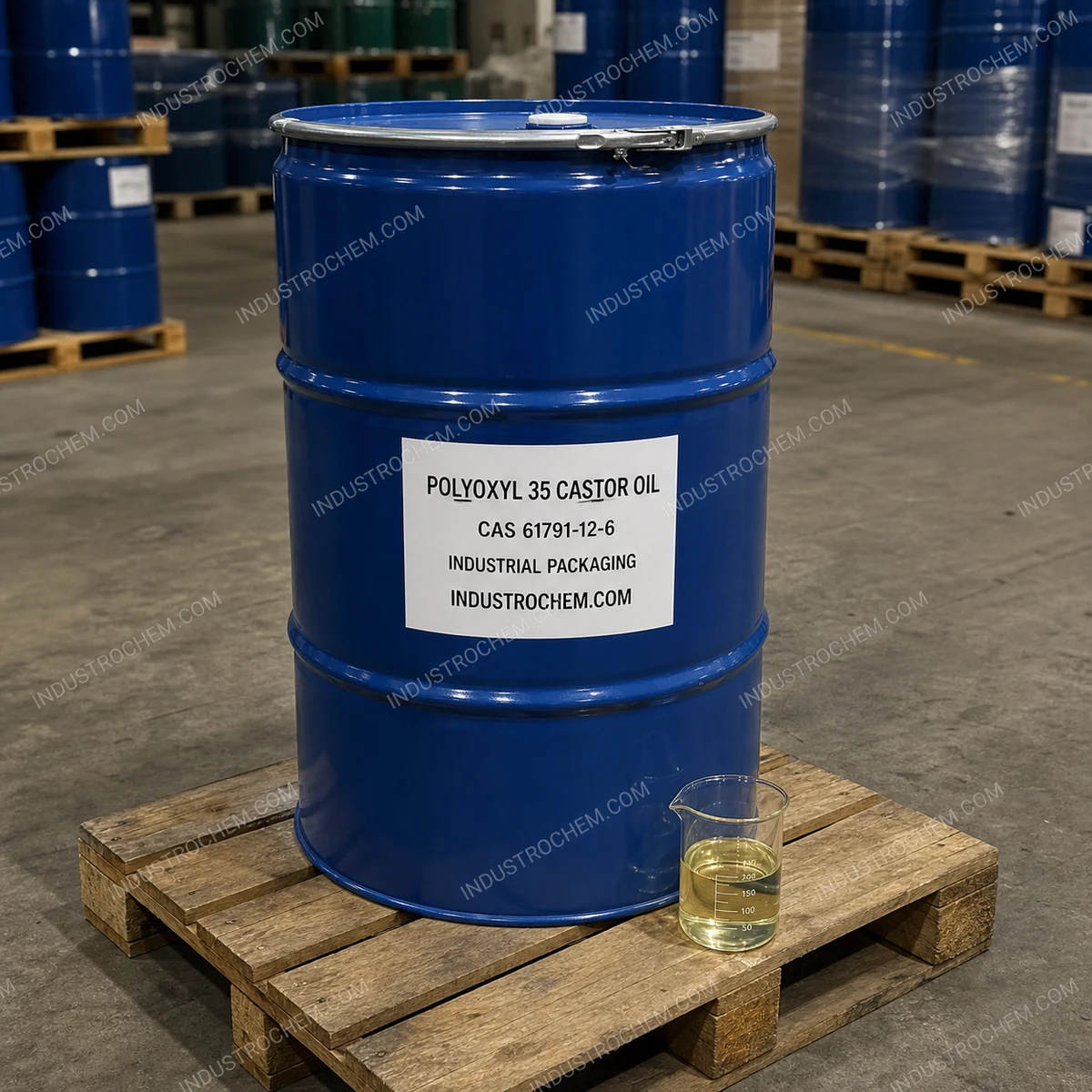










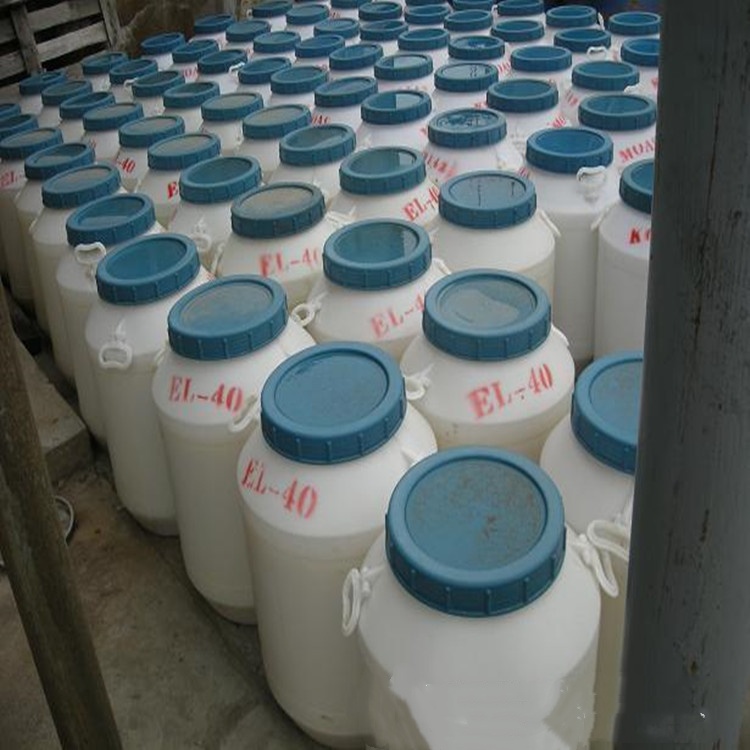
Castor Oil Polyoxyethylene Ether EL‑40 is a nonionic surfactant produced by ethoxylation of castor oil, providing effective emulsification and solubilization in aqueous systems. Identified by CAS No. 61791‑12‑6, it exhibits good compatibility and stability across a wide pH range. EL‑40 is commonly used as an emulsifier and solubilizer in industrial and technical formulations where mildness and formulation flexibility are required. The product is supplied for industrial use with standard documentation including MSDS, TDS, and COA.
Castor Oil Polyoxyethylene Ether EL‑40 CAS 61791‑12‑6
- CAS: 61791-12-6
- Synonyms: Castor Oil Polyoxyethylene Ether, EL-40, Castor Oil Ethoxylate, Nonionic Emulsifier
- Einecs: 500-147-5
- Grade: Industrial grade 99%
- Package: 200kg iron drum or 50kg plastic drum packaging
Product Description
Physicochemical properties
| Property | Description |
|---|---|
| Appearance | Light yellow to brownish viscous liquid or paste (solidifies at low temperatures) |
| Solubility | Soluble in water, ethanol, mineral oils, fatty acids, and most organic solvents |
| HLB Value | 13–14 (strong hydrophilicity, suitable for O/W emulsions) |
| Saponification Value | 57–67 mg KOH/g |
| Cloud Point (1% aq.) | 70–84°C |
| pH (1% aq. solution) | 5.0–7.0 |
| Water Content | ≤1.0% |
| Molecular Structure | Castor oil (or hydrogenated castor oil) + 40 EO units via ethoxylation |
| Stability | Stable to acids, hard water, and inorganic salts; hydrolyzes under strong alkali |
| Viscosity | High (increases with EO chain length) |
| Flash Point | Non-flammable under normal conditions (thermal decomposition may release irritants) |
Application Areas
Cosmetics and personal care: Used as emulsifier, emollient, and solubilizer, commonly found in lotions, face creams, shampoos, and other products.
Pharmaceutical industry: As a solubilizer or emulsifier for poorly soluble drugs, it enhances bioavailability.
Textile industry: used as a component of chemical fiber oil agents, wool spinning, and wool oil, with emulsifying and antistatic effects.
Pesticides and Chemicals: As a pesticide emulsifier, it aids in dispersing oily active ingredients; it can also be used for emulsification in inks and printing pastes.
Metal processing: Prepare water-soluble cutting fluid to provide lubrication and cooling performance.
Oilfield chemistry: used for crude oil dehydration and demulsification to enhance oil recovery.
Storage conditions
Temperature: It is recommended to store in the dark at 4°C, or in a cool and ventilated environment (the temperature of the storage should not be too high)
Environment: Keep away from fire and heat sources. Keep dry
Packaging and transportation: Plastic-lined iron drums are commonly used
Safety precautions
Toxicity and protection
The acute toxicity data indicates that the intravenous injection of the substance has an LD50 of 6500 mg/kg for mice, indicating that it is toxic. During handling, direct contact with the skin or inhalation should be avoided.
It is recommended to wear personal protective equipment such as protective gloves and goggles, and maintain good ventilation in the work environment.
Waste disposal: According to its classification as a toxic substance, waste disposal must comply with local environmental regulations and cannot be discharged arbitrarily.
FAQ - Technical & Supply Chain
-
Q:
Is EL‑40 a single defined compound?
A: No. EL‑40 is a UVCB substance with an average EO degree and does not have a single fixed molecular structure. -
Q:
Is EL‑40 the same as PEG‑40 Hydrogenated Castor Oil?
A: They are often used interchangeably in the market, but hydrogenation status and specifications may vary by supplier and should be confirmed by SDS.
Documents and Product Support
For product review and sourcing evaluation, supporting documents can be coordinated according to the product type, inquiry stage, and order requirements.
- COA for batch-based quality reference
- TDS for key physical and chemical information
- SDS / MSDS for handling, storage, and safety reference
- Packing information for sample, trial, and bulk orders
- Technical communication based on application and specification requirements
Information to Confirm Before Quotation
Clear sourcing information helps reduce specification mismatch and allows a more accurate quotation before sample or bulk order discussion.
- Product name and CAS number
- Application or intended end use
- Required purity, grade, or specification
- Sample quantity, trial order, or bulk demand
- Preferred packing form or net weight
- Destination country or port
- Required documents or compliance expectations
Packaging, Storage, and Handling Notes
Packaging form, storage conditions, shelf life, and shipment arrangements should be confirmed according to the product characteristics, package size, and destination requirements.
Before order confirmation, buyers are advised to review the corresponding product documents and confirm whether any special storage, labeling, or handling requirements apply.
Sample, Bulk Order and Repeat Supply Support
Support can be arranged for sample discussion, bulk supply planning, packaging confirmation, and routine sourcing communication based on the actual product and order requirements.
For repeat-use formulations or long-term procurement plans, buyers may discuss specification consistency, packaging preferences, delivery expectations, and document coordination in advance.