








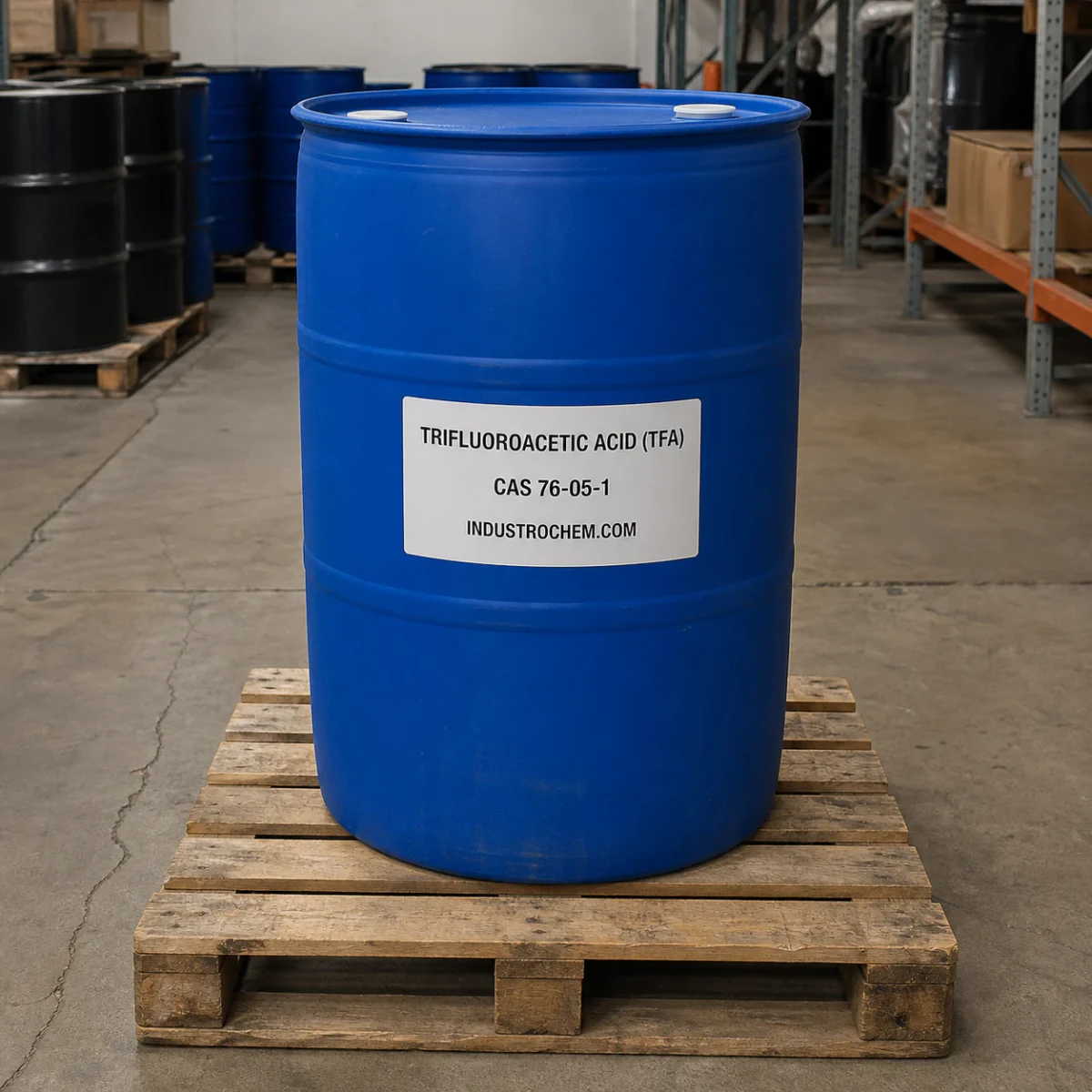
Trifluoroacetic Acid (TFA), CAS 76-05-1, is also known as trifluoroethanoic acid or perfluoroacetic acid. It is a strong fluorinated carboxylic acid used as a reagent, acid medium, or volatile acid in selected process chemistry and synthesis. This page does not establish a fixed 99%/99.9% assay or package. Confirm assay, water, colour, nonvolatile residue and other application-relevant impurity limits, packaging compatibility, intended process, and current TDS, COA, and SDS.
Trifluoroacetic Acid (TFA) CAS 76-05-1
- CAS: 76-05-1
- Synonyms: TFA, Trifluoroethanoic Acid, Perfluoroacetic Acid, Trifluoro Acetic Acid
- Einecs: 200-929-3
- Molecular Formula: CF₃COOH
- Grade: Confirm assay, water, colour, nonvolatile residue, and application-relevant metal, halide, or other impurity limits
- Package: Confirm packaging compatible with the offered liquid, transport classification, and destination requirements
Product Description
Product name: Trifluoroacetic Acid (TFA)
Recognized names: Trifluoroacetic acid; 2,2,2-Trifluoroacetic acid; TFA
Molecular formula: CF₃COOH (C₂HF₃O₂)
Molar mass: 114.02 g/mol
CAS number: 76-05-1
EC number: 200-929-3
Melting point: -15.2 °C
Boiling point: 72.4 °C
Water solubility: soluble in water, aqueous solution is highly acidic
Density: 1.5351 g/cm³
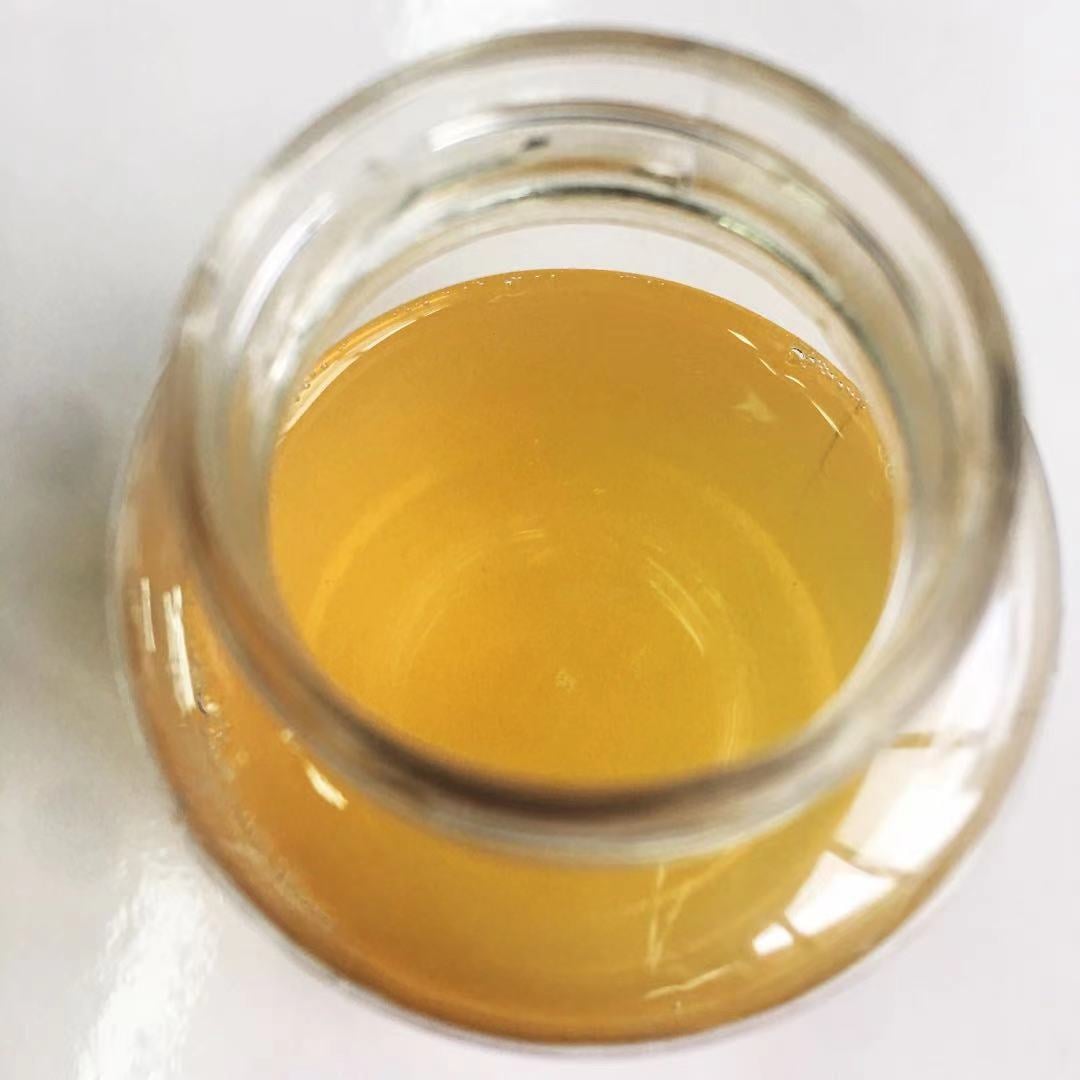
Appearance: colorless liquid
Technical use: TFA is used as a strong acid reagent, reaction medium component, or volatile acid in selected process chemistry and synthesis, including peptide and fluorinated-compound workflows where the process specification supports it. Buyers should define the intended reaction, required assay, water and residue limits, materials compatibility, recovery or removal needs, and applicable safety controls.
FAQ - Technical & Supply Chain
-
Q:
Are Trifluoroacetic Acid and Trifluoroacetate the same material?
A: No. Trifluoroacetic acid, CAS 76-05-1, is the free acid CF3COOH. Trifluoroacetate salts and esters have different identities, water balance and reactivity. Specify anhydrous acid or solution concentration and do not approve a salt or ester as a direct replacement. -
Q:
Which specifications should be agreed for Trifluoroacetic Acid?
A: State acid assay or concentration, water, chloride, sulfate, fluoride where relevant, metals, nonvolatile residue and color, together with density and test methods. Anhydrous and aqueous grades should not be compared on the same nominal percentage basis. Review the batch COA before process qualification. -
Q:
What should be confirmed before receiving bulk TFA?
A: Agree fluoropolymer-compatible or otherwise approved container materials, closure, gasket, venting, seals, previous cargo and unloading connection. Confirm the current SDS, corrosive-liquid transport classification, quantity and emergency procedure. Keep water contamination within the agreed limit and use closed transfer where required by the site.
Ordering & Documentation
Key information for document requests, quotations, and supply planning.
Documents
Tell us which documents your procurement team needs. Before an order, we will check whether the quoted source can provide them for the offered lot.
Quotation
Send the CAS number, grade, quantity, packing preference and destination.
Sample & Supply
Ask whether samples, trial quantities or repeat orders are possible. We will check each request against the sourced product and current offer.
Storage & Shipping
Product-specific conditions are confirmed before order.