









Chemical products
  • Sodium Dodecyl Benzene Sulfonate CAS 25155-30-0

Sodium Dodecyl Benzene Sulfonate CAS 25155-30-0

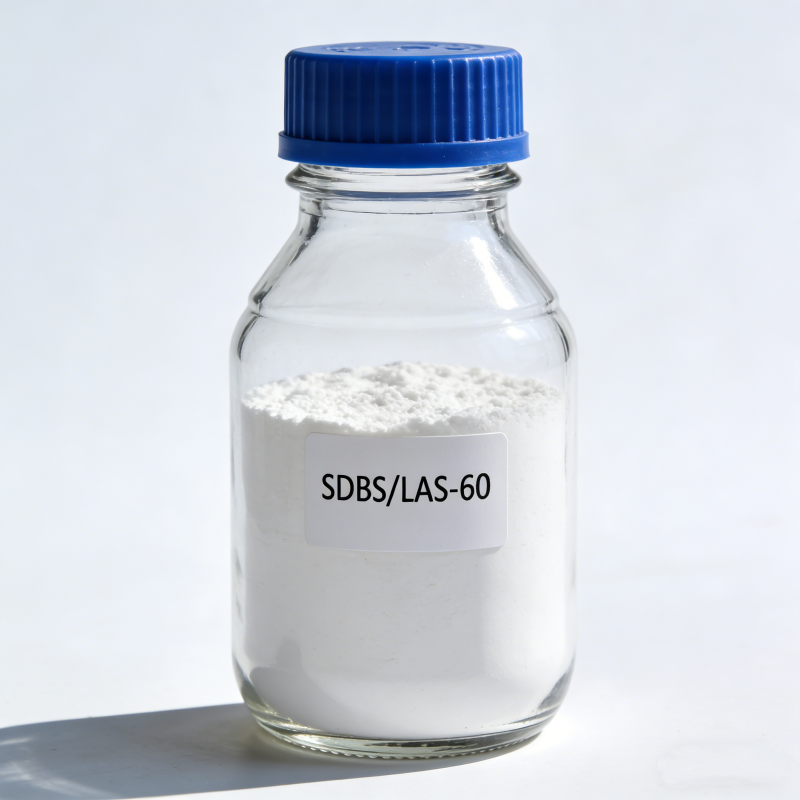
Sodium Dodecyl Benzene Sulfonate (CAS 25155-30-0) is a high-performance anionic surfactant functioning as the primary cleaning agent in laundry powders and liquid detergents. Chemically identified as SDBS or Sodium lauryl benzene sulfonate, this white to light yellow powder or flake acts to lower surface tension, emulsify oils, and create rich stable foam. As a biodegradable Linear alkylbenzene sulfonate salt, it is extensively utilized in household cleaning products, textile scouring auxiliaries, and industrial degreasers due to its exceptional decontamination and wetting properties. We ensure bulk supply capabilities for this material, providing access to competitive factory pricing and customized specifications to meet specific active matter content (e.g., 60%, 80%, 90%). Full technical documentation, including MSDS, TDS, COA, is available to support compliance and safety protocols.

  • CAS: 25155-30-0
  • Synonyms: SDBS, Sodium dodecylbenzenesulfonate, Dodecylbenzene sulfonic acid sodium salt, Sodium lauryl benzene sulfonate, Benzenesulfonic acid dodecyl- sodium salt
  • Einecs: 246-680-4
  • Molecular Formula: C18H29NaO3S
  • Grade: Industrial grade / detergent grade
  • Package: Commonly 25 kg/bag (kraft bag / PP woven bag with inner liner; OEM packing available)
Request a quote
Share:

Product Description

SDBS is chemically stable and serves as the core “workhorse” surfactant in the detergent industry. It reduces surface tension significantly, allowing water to penetrate stains and emulsify oils.

Main Characteristics:

  1. Detergency: Excellent ability to remove oil, grease, and particulate soil from fabrics and hard surfaces.
  2. Foaming: Generates rich, stable foam, which is desirable in hand-washing laundry powders and dishwashing liquids.
  3. Compatibility: Compatible with other anionic and non-ionic surfactants, as well as common builders (like STPP, Zeolite, Sodium Carbonate).
  4. Anti-redeposition: Helps prevent dirt from settling back onto the fabric during the wash cycle.

Physicochemical Properties

The following specifications cover the most common high-purity powder grades exported from China (LAS-60 to LAS-90).

Test ItemSpecification (LAS-60)Specification (LAS-70)Specification (LAS-80)Specification (LAS-90)
AppearanceWhite to light yellow powderWhite to light yellow powderWhite to light yellow powderWhite to light yellow powder
Active Matter (SDBS)≥ 60.0%≥ 70.0%≥ 80.0%≥ 90.0%
Moisture / Water≤ 5.0%≤ 5.0%≤ 3.0%≤ 3.0%
pH Value (1% Solution)7.0 – 10.07.0 – 10.07.5 – 10.57.5 – 10.5
Inorganic Salts (Na2SO4)≤ 40.0%≤ 30.0%≤ 20.0%≤ 10.0%
Whiteness (WG)≥ 80≥ 80≥ 85≥ 85
SolubilitySoluble in water (forms milky solution)Soluble in waterSoluble in waterSoluble in water
Biodegradability> 90%> 90%> 90%> 90%

Applications

  1. Household Detergents: The primary raw material for laundry washing powders (hand and machine wash) and dishwashing liquids.
  2. Industrial Cleaning: Used in heavy-duty cleaners for metal degreasing, machinery cleaning, and hard surface cleaning.
  3. Textile Industry: Acts as a leveling agent, scouring agent, and dyeing auxiliary to ensure uniform color and remove impurities from fibers.
  4. Construction Materials: Used as an Air Entraining Agent in concrete and mortar to improve freeze-thaw resistance and workability.
  5. Mining: Used as a flotation agent for ore separation.
  6. Agriculture: Acts as an emulsifier for pesticides and herbicides.

For related anionic surfactant raw materials used in detergent systems, see LABSA 96% and Sodium Alpha-Olefin Sulfonate.

Storage Conditions

  • Environment: Store in a cool, dry, and well-ventilated warehouse.
  • Moisture Control: Critical. SDBS powder is hygroscopic (absorbs moisture from air). Keep bags tightly sealed to prevent caking or clumping.
  • Stacking: Do not stack too high to avoid pressure caking of the bottom bags.
  • Incompatibility: Store separately from strong oxidizers and cationic surfactants.
  • Shelf Life: 24 months under proper storage conditions.

Safety Precautions

  • Health Hazard: SDBS is an irritant.
    • Eyes: Causes serious eye irritation. Risk of damage if not rinsed immediately.
    • Skin: Causes skin irritation upon prolonged contact.
  • Inhalation: Dust may irritate the respiratory tract. Wear a dust mask (N95) when handling powder to avoid inhaling fine particles.
  • PPE: Wear safety goggles and rubber gloves.
  • First Aid:
    • Eye Contact: Rinse cautiously with water for at least 15 minutes. Remove contact lenses if present. Seek medical attention.
    • Skin Contact: Wash with plenty of soap and water.
  • Environment: Harmful to aquatic life in high concentrations; do not discharge directly into surface waters.

FAQ - Technical & Supply Chain

  • Q:

    What is Sodium Dodecyl Benzene Sulfonate CAS 25155-30-0?

    A: Sodium Dodecyl Benzene Sulfonate CAS 25155-30-0 is a widely used anionic surfactant with the molecular formula C18H29NaO3S and molecular weight 348.48. It is commonly known as SDBS or sodium dodecylbenzenesulfonate and is supplied as a white to light yellow powder, flake or small-granule detergent raw material.
  • Q:

    Is CAS 25155-30-0 the same as LAS, SDBS or DDBSA sodium salt?

    A: In detergent trade these names are often used around the same product, but they are not automatically interchangeable for every grade. CAS 25155-30-0 is sodium dodecylbenzenesulfonate, frequently described as SDBS or a hard-type/branched alkylbenzene sulfonate, while DDBSA is the corresponding acid intermediate. Confirm the CAS, alkyl-chain profile, active matter and intended detergent grade before treating two trade names as identical.
  • Q:

    What do LAS-60, LAS-70, LAS-80 and LAS-90 mean?

    A: Those names refer to common detergent-grade concentrations of sodium dodecylbenzene sulfonate, with the number indicating nominal active matter. Typical values are 60, 70, 80 or 90 +/- 2%, with the balance mainly water and inorganic salts. Higher active-matter grades are often used where stronger detergency, less diluent or more efficient freight is required.
  • Q:

    What are the main applications of Sodium Dodecyl Benzene Sulfonate?

    A: It is used mainly in household laundry powders, dishwashing liquids, hard-surface cleaners and industrial detergents. It also works as an emulsifier, wetting agent, degreaser, textile-processing aid and antistatic component in selected emulsion or polymer applications.
  • Q:

    How does SDBS perform in hard water and high-foam detergent formulations?

    A: SDBS gives strong detergency and rich, stable foam, but its cleaning performance can be reduced in hard water because calcium and magnesium ions interact with the anionic surfactant. Many formulations combine it with builders or chelating agents such as sodium carbonate, zeolite or STPP to maintain performance. It is also compatible with nonionic surfactants for balanced detergent systems.
  • Q:

    What safety and handling points should be confirmed for detergent-grade SDBS?

    A: SDBS is classified as harmful if swallowed and can irritate the skin and eyes, so workers should avoid direct dust contact and use suitable protective equipment. Store it in a dry, well-ventilated area away from strong oxidizers, and keep bags closed to prevent moisture pickup and caking. Finished-product suitability should be reviewed for the intended household or industrial formulation.

Ordering & Documentation

Key information for document requests, quotations, and supply planning.

Documents

COA, TDS, SDS/MSDS and packing details are available on request.

Quotation

Send the CAS number, grade, quantity, packing preference and destination.

Sample & Supply

Support is available for samples, trial orders, bulk and repeat supply.

Storage & Shipping

Product-specific conditions are confirmed before order.

Contact Form

Use our contact form to send us your questions, suggestions or comments. We will respond as soon as possible.