








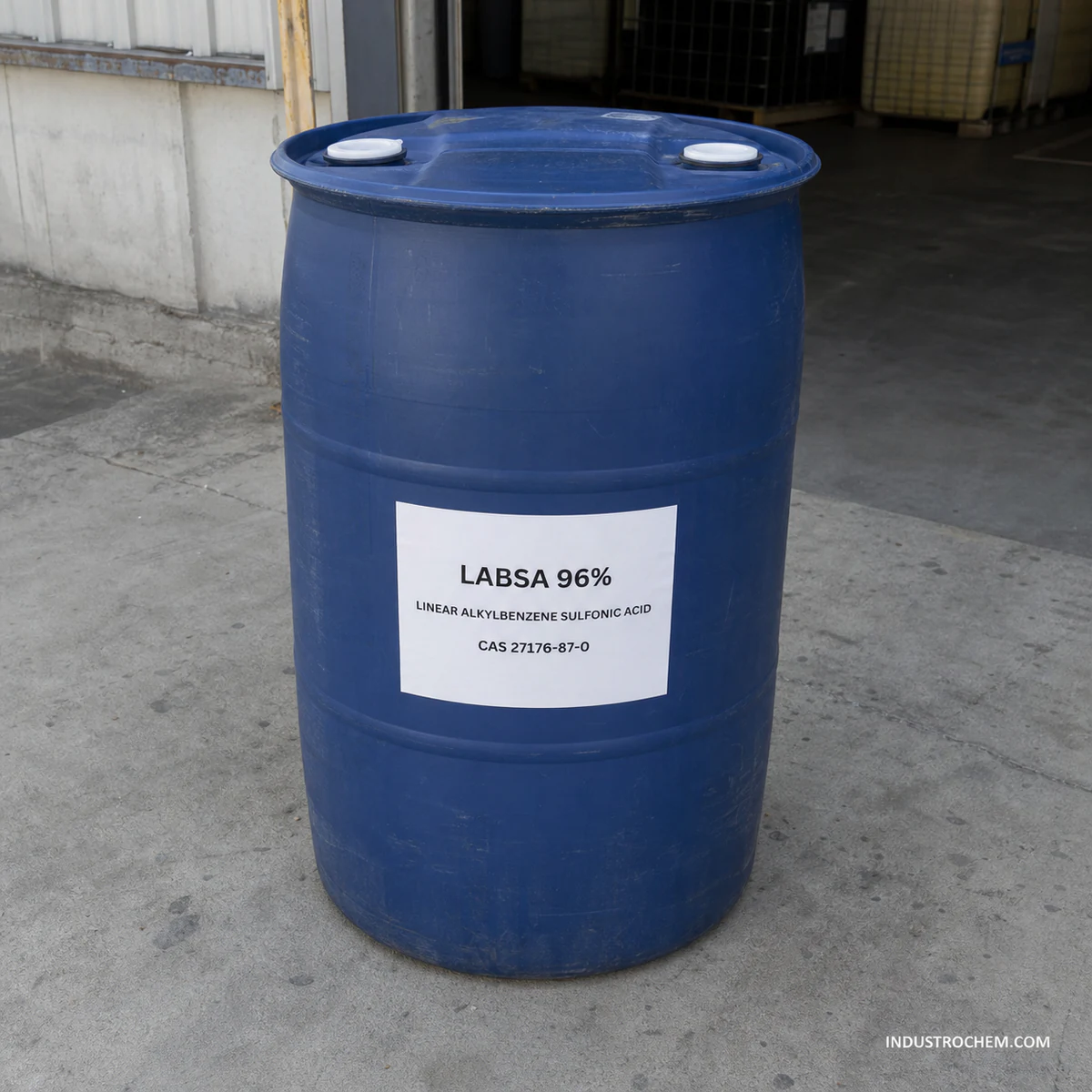
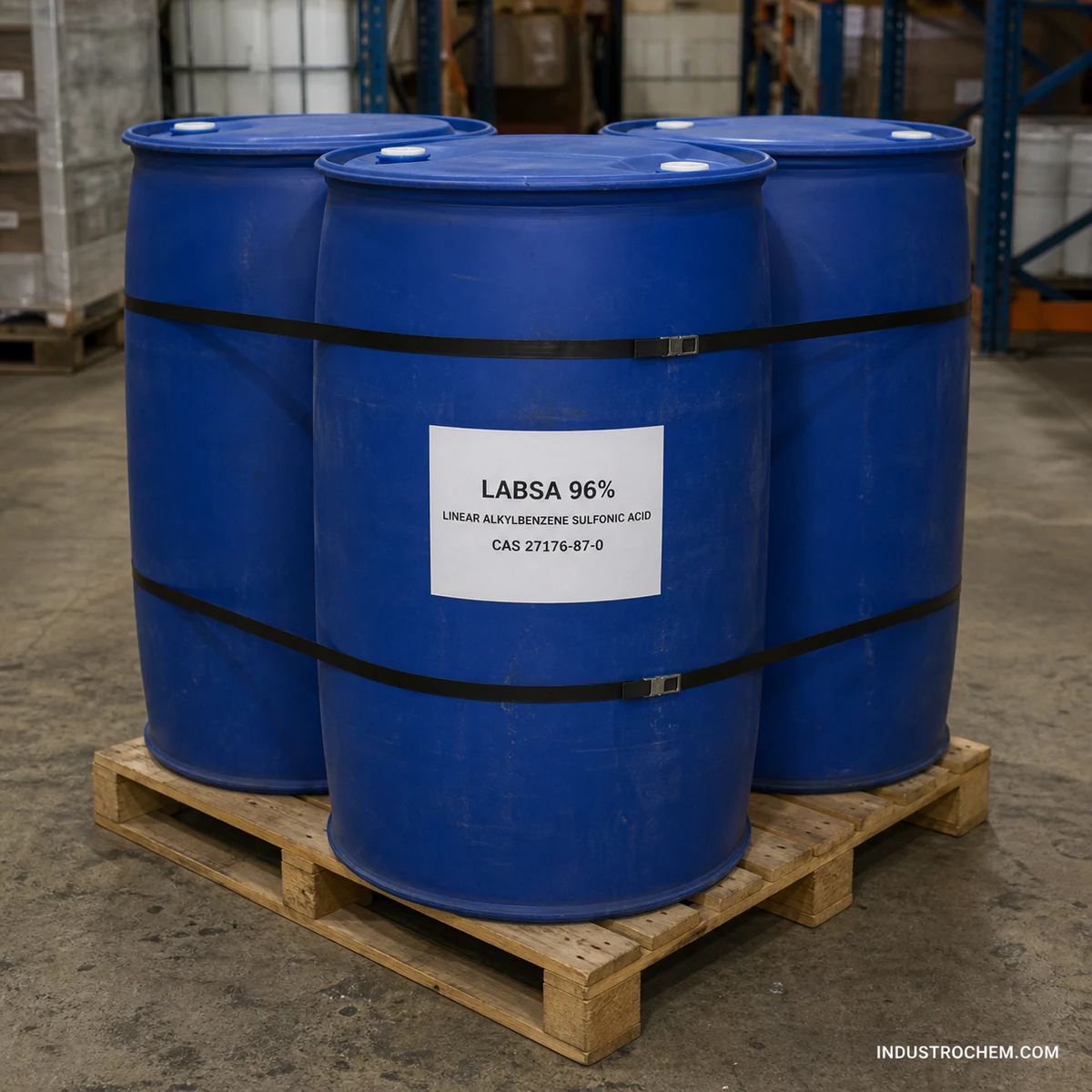
Linear Alkylbenzene Sulfonic Acid (LABSA 96%, CAS 27176-87-0, EC 248-289-4) is a high-active anionic surfactant raw material used in laundry detergents, dishwashing liquids, hard-surface cleaners, industrial cleaners and related formulations. Buyers should confirm active matter, color, acid value, free oil, packaging and compatibility with the intended neutralization or blending process. COA, TDS and SDS may be provided for the confirmed grade. Send the required specification, quantity, packaging and destination for review and quotation.
LABSA 96% (Linear Alkylbenzene Sulfonic Acid) CAS 27176-87-0
- CAS: 27176-87-0
- Synonyms: Linear alkylbenzene sulfonic acid; LABSA; LAB sulfonic acid
- Einecs: 248-289-4
- Molecular Formula: Commercial alkyl-chain distribution; no single universal molecular formula
- Grade: LABSA 96%; confirm active matter and batch specification
- Package: Confirm current packaging for the selected grade and destination
Product Description
Product Overview
Linear Alkylbenzene Sulfonic Acid (LABSA) 96% is a high-active anionic surfactant raw material widely used in detergent and cleaning product formulations. Identified by CAS 27176-87-0, this material serves as the primary anionic component in laundry powders, liquid detergents, dishwashing liquids, industrial cleaners, and various household chemical formulations.
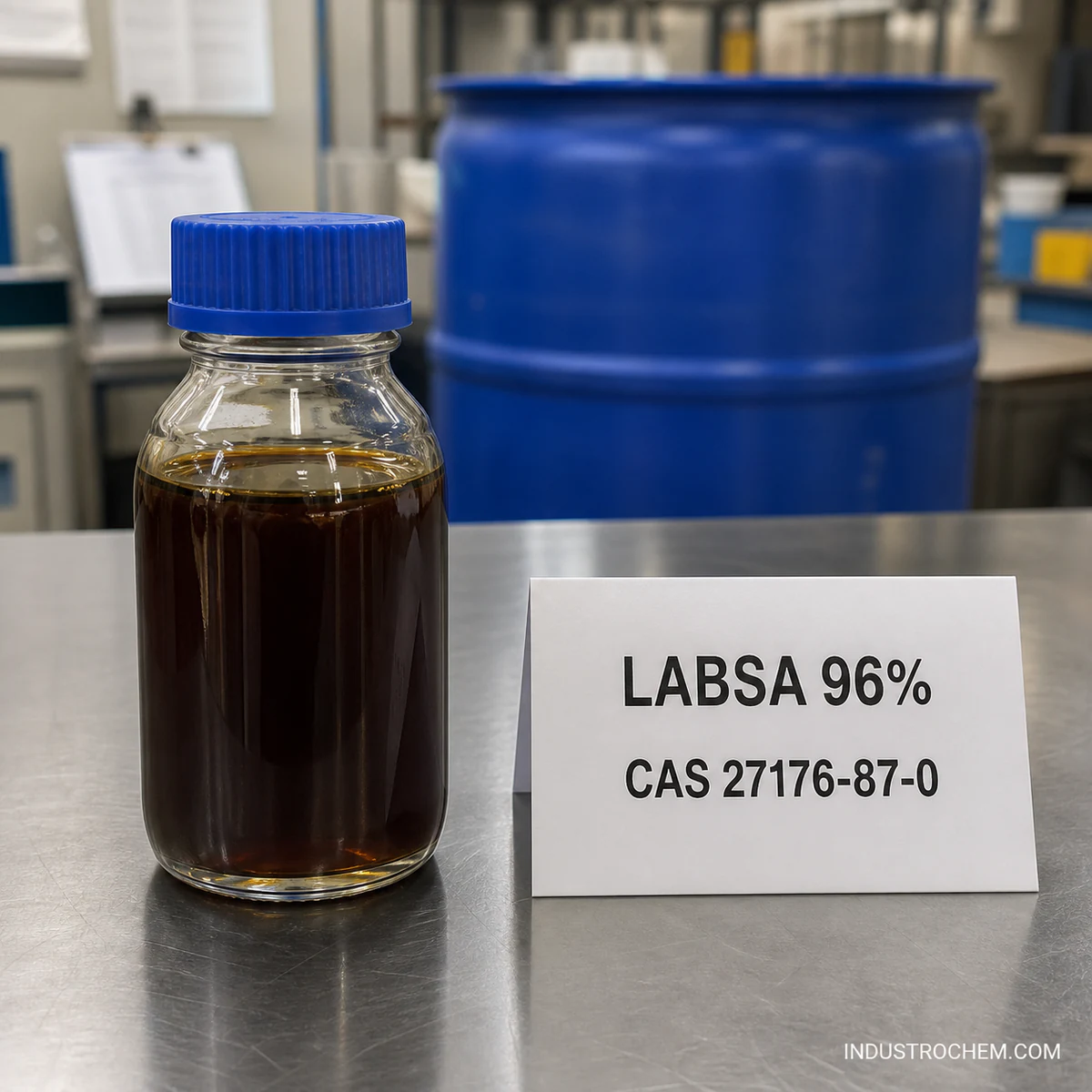
LABSA 96% is produced via sulfonation of linear alkylbenzene and is supplied as a viscous brown liquid with a characteristic odor. Due to its excellent detergency, wetting, and emulsifying properties, it is a preferred choice for formulators seeking cost-effective surfactant performance in bulk production environments. Technical documentation including COA, TDS, and SDS is available upon request.
Product Information / Specifications
| Product Name | Linear Alkylbenzene Sulfonic Acid (LABSA) 96% |
| CAS No. | 27176-87-0 |
| EINECS | 248-289-4 |
| Molecular Formula | C₁₈H₃₀O₃S |
| Grade | Industrial Grade |
| Active Matter | 96% min |
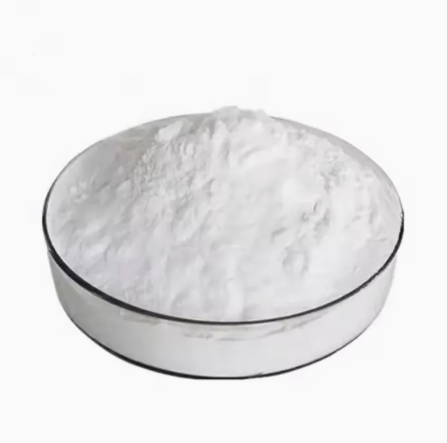
| Appearance | Brown viscous liquid |
| Synonyms | LABSA, Linear alkylbenzene sulfonic acid, Alkylbenzene sulfonic acid, n-Dodecylbenzenesulfonic acid |
| Packaging | 210 kg plastic drum |
Applications
LABSA 96% is widely applied in the following areas:
- Laundry Detergent: Key anionic surfactant in powder and liquid laundry formulations.
- Dishwashing Liquid: Primary surfactant for hand dishwashing and machine dishwasher formulations.
- Industrial Cleaners: Degreasers, hard surface cleaners, and institutional cleaning products.
- Textile Auxiliaries: Scouring, wetting, and dyeing assistants in textile processing.
- Emulsion Polymerization: Emulsifier and stabilizer in polymer production.
Packaging & Storage
Packaged in 210 kg plastic drums. Store in a cool, dry, well-ventilated area away from heat sources and strong oxidizing agents. Keep containers tightly sealed when not in use. Protect from freezing.
FAQ - Technical & Supply Chain
-
Q:
Why is LABSA 96% normally neutralized before use in detergent formulations?
A: LABSA is the acidic precursor of LAS surfactants. Most detergents require controlled neutralization before or during formulation. Uncontrolled addition can create local heat, damage pH-sensitive ingredients and give inconsistent active content. -
Q:
How does the choice of neutralizing agent change the resulting LAS surfactant?
A: Sodium salts made with caustic soda, as well as potassium and alkanolamine salts, differ in solubility, viscosity and electrolyte response. The right base depends on the finished product. Control base purity, addition rate, temperature and final pH rather than substituting neutralizers by equal weight. -
Q:
Which LABSA 96% specifications most affect detergent processing?
A: Active matter, free sulfuric acid, unsulfonated matter, water, color and neutralization demand affect base use, final activity, odor, viscosity and stability. Compare batches with consistent test methods and a controlled neutralization check. -
Q:
What is the difference between LABSA, LAS and SLES?
A: LABSA is the acid precursor used to make LAS salts. SLES is a different ether sulfate surfactant. Their neutralization needs, solubility, foam, electrolyte response and mildness differ, so they are not direct substitutes. -
Q:
What should be tested before changing LABSA suppliers?
A: Compare active matter, free sulfuric acid, unsulfonated matter, water, color and neutralization demand. Neutralize both samples under the same conditions, then check pH, viscosity, foam, detergency, color and storage stability before plant approval.
Documents and Product Support
For product review and sourcing evaluation, supporting documents can be coordinated according to the product type, inquiry stage, and order requirements.
- COA for batch-based quality reference
- TDS for key physical and chemical information
- SDS / MSDS for handling, storage, and safety reference
- Packing information for sample, trial, and bulk orders
- Technical communication based on application and specification requirements
Information to Confirm Before Quotation
Clear sourcing information helps reduce specification mismatch and allows a more accurate quotation before sample or bulk order discussion.
- Product name and CAS number
- Application or intended end use
- Required purity, grade, or specification
- Sample quantity, trial order, or bulk demand
- Preferred packing form or net weight
- Destination country or port
- Required documents or compliance expectations
Packaging, Storage, and Handling Notes
Packaging form, storage conditions, shelf life, and shipment arrangements should be confirmed according to the product characteristics, package size, and destination requirements.
Before order confirmation, buyers are advised to review the corresponding product documents and confirm whether any special storage, labeling, or handling requirements apply.
Sample, Bulk Order and Repeat Supply Support
Support can be arranged for sample discussion, bulk supply planning, packaging confirmation, and routine sourcing communication based on the actual product and order requirements.
For repeat-use formulations or long-term procurement plans, buyers may discuss specification consistency, packaging preferences, delivery expectations, and document coordination in advance.
Contact Form
Use our contact form to send us your questions, suggestions or comments. We will respond as soon as possible.
Product Categories
Related Products
-
Behentrimonium Chloride (BTAC) CAS 17301-53-0 -
Octylphenol Ethoxylate (Triton X-114 Type) CAS 9036-19-5 -
Sorbitan Monooleate (Span 80) CAS 1338-43-8 -
Pentaerythritol Tetrastearate (PETS) CAS 115-83-3 -
Nonylphenol Ethoxylate (TX-10 / NPE-10) CAS 9016-45-9 -
Polysorbate 80 (Tween 80) CAS 9005-65-6 -
Glyceryl Monooleate (GMO) CAS 111-03-5 -
Glycerol Ethoxylate G-18 / Glycereth-18 CAS 31694-55-0