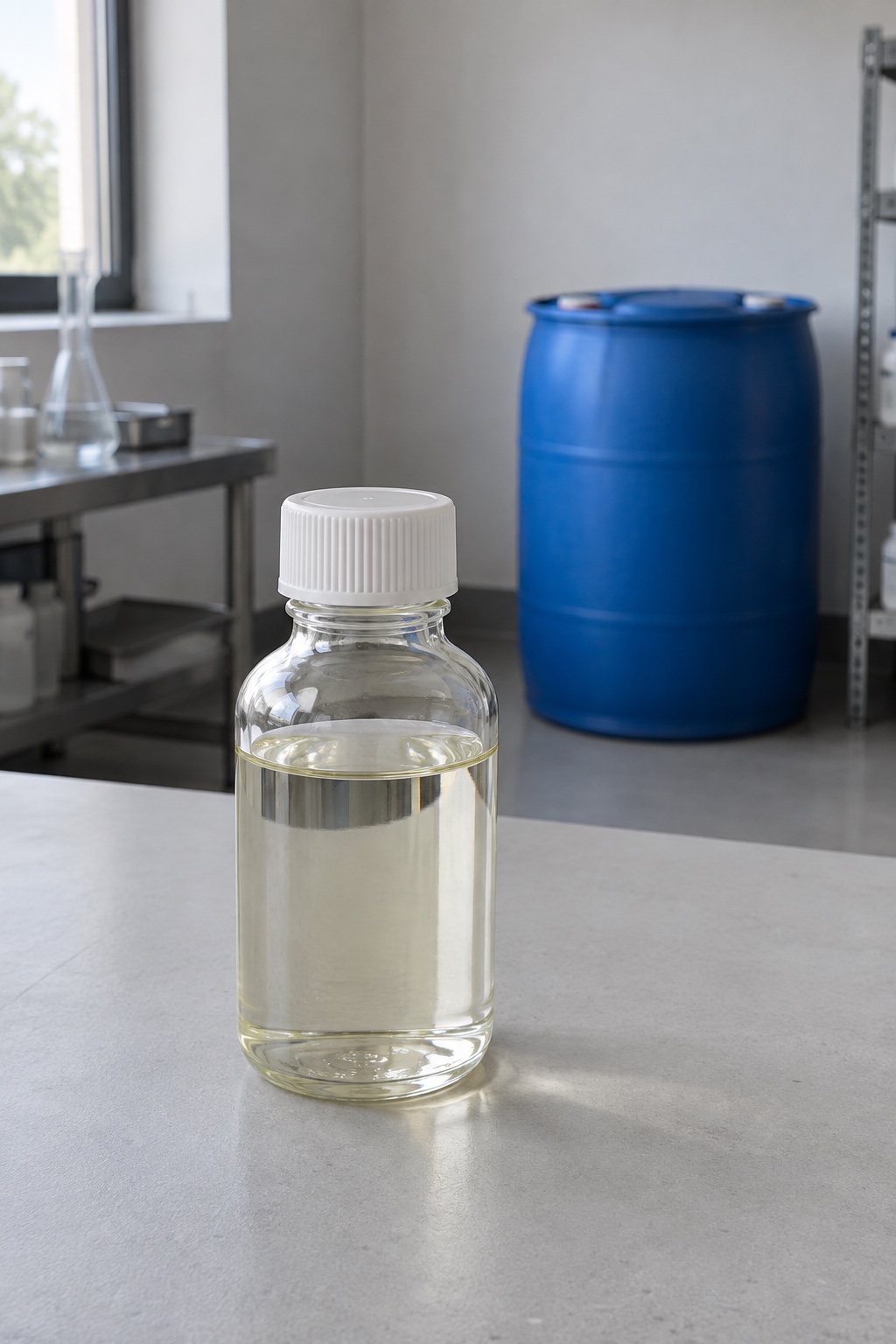










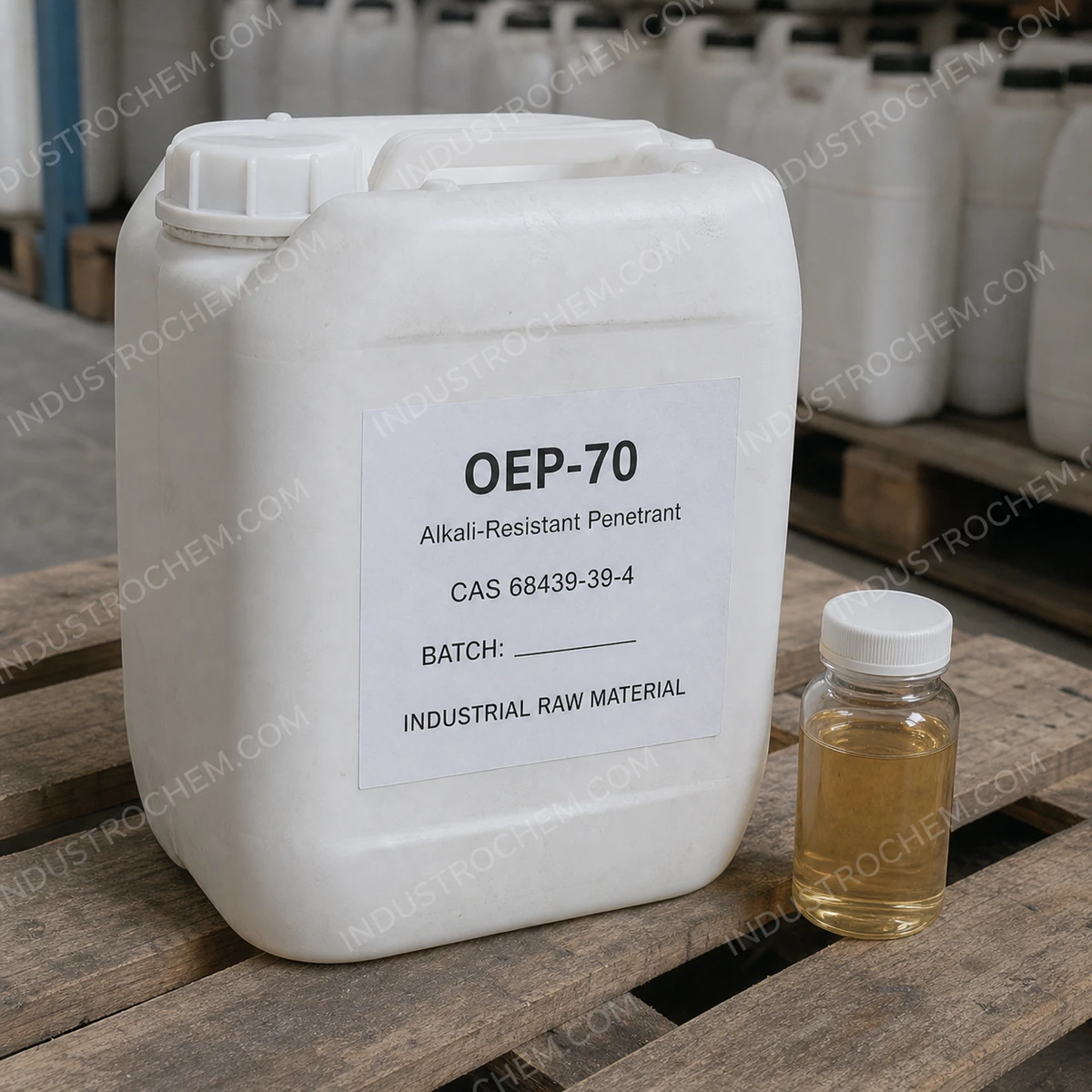
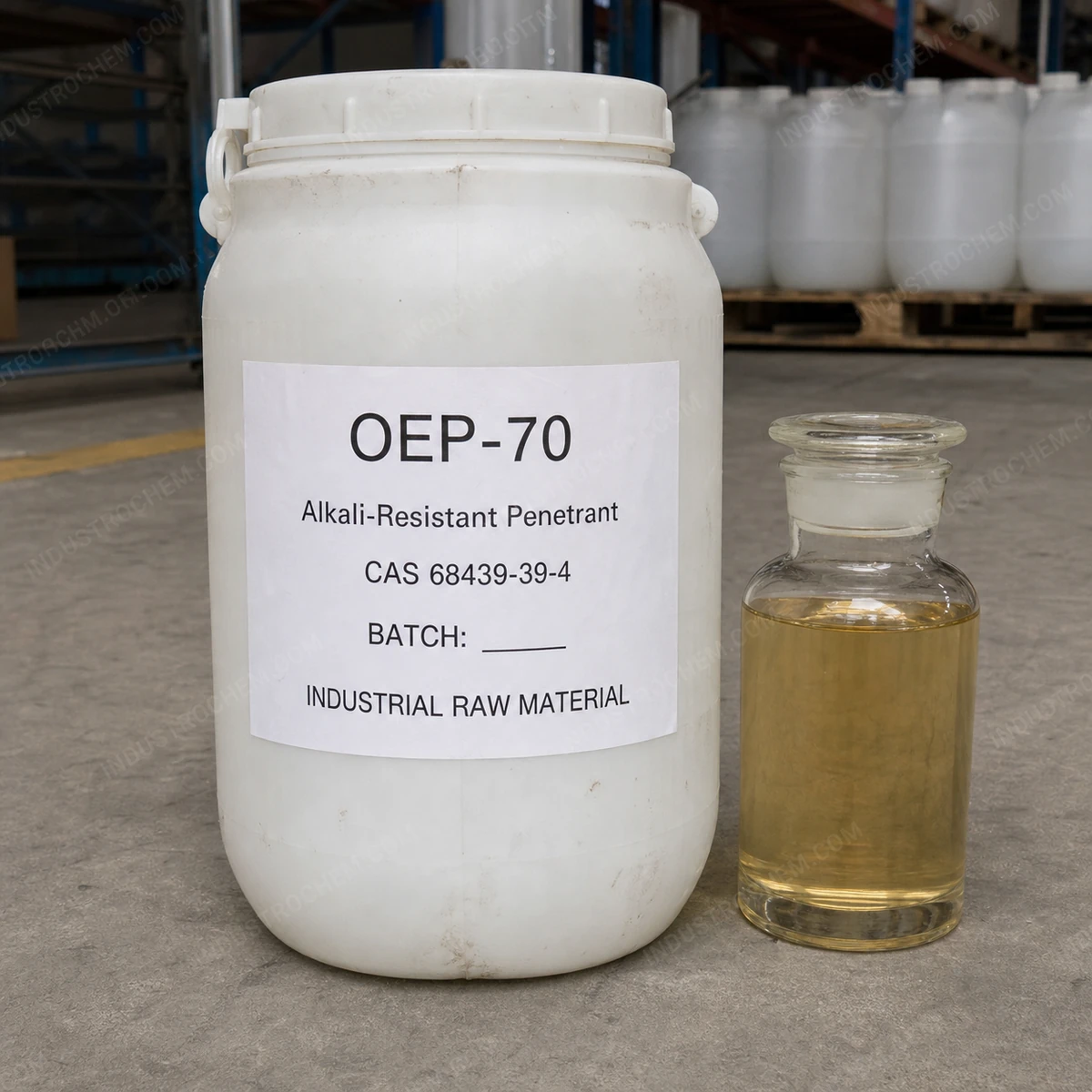
OEP-70 Alkali-Resistant Penetrant (CAS 68439-39-4) is an anionic phosphate-ester surfactant based on ethoxylated 2-ethylhexanol. It is used for wetting and penetration in alkaline textile pretreatment and cleaning formulations. Commercial grade selection covers active matter, neutralization state, water and the required wetting performance under the process conditions. The phosphate-ester composition and ethoxylate distribution are variable; one fixed molecular formula does not describe the commercial material.
OEP-70 Alkali-Resistant Penetrant CAS 68439-39-4
- CAS: 68439-39-4
- Synonyms: 2-Ethylhexanol ethoxylate phosphate; Ethoxylated 2-ethylhexyl phosphate ester; Poly(oxy-1,2-ethanediyl), alpha-(2-ethylhexyl)-omega-hydroxy-, phosphate; OEP-70
- Molecular Formula: Variable ethoxylated 2-ethylhexyl phosphate-ester composition; no single molecular formula
- Grade: Active matter, neutralization state, pH and wetting requirements specified for the quoted grade
- Package: Compatible container and net weight quoted for the selected grade and order quantity
- List number: 614-479-4
Product Description
Product overview
OEP-70 is a commercial phosphate-ester penetrant for alkaline wetting applications. Its ethoxylated 2-ethylhexyl phosphate chemistry differs from the non-phosphated 2-Ethylhexanol Ethoxylate. Phosphate-ester products can contain monoesters, diesters and residual ethoxylated alcohol. The selected grade specification identifies active matter, acid or neutralized form and, for a salt grade, the counterion. These composition details affect grade selection and cannot be inferred from the OEP-70 name alone.
Technical information
| Product | OEP-70 Alkali-Resistant Penetrant CAS 68439-39-4 |
|---|---|
| CAS number | 68439-39-4 |
| List number | 614-479-4 |
| Molecular formula / identity | Variable ethoxylated 2-ethylhexyl phosphate-ester composition; no single molecular formula |
| Synonyms | 2-Ethylhexanol ethoxylate phosphate; Ethoxylated 2-ethylhexyl phosphate ester; Poly(oxy-1,2-ethanediyl), alpha-(2-ethylhexyl)-omega-hydroxy-, phosphate; OEP-70 |
| Grade | Active matter, neutralization state, pH and wetting requirements specified for the quoted grade |
| Packaging | Compatible container and net weight quoted for the selected grade and order quantity |
Wetting and formulation selection
OEP-70 is used in textile pretreatment auxiliaries and alkaline cleaning formulations where the required penetration depends on the bath conditions. Sodium Di(2-ethylhexyl) Sulfosuccinate (DOSS/AOT) is another anionic wetting agent for comparison. Its sulfosuccinate ester chemistry differs from a phosphate ester: strongly acidic or alkaline conditions can promote DOSS hydrolysis, with elevated temperature accelerating the reaction. A DOSS wetting grade is therefore a separate formulation choice, with its own active matter, carrier and stability requirements.
For nonionic cleaning and wetting options, Isotridecyl Alcohol Ethoxylate and AEO-9 / MOA-9 Alcohol Ethoxylate are related formulation candidates. Their alcohol chain and ethoxylation grade, cloud point and behavior in the intended electrolyte-containing bath are part of the comparison. Shared wetting or cleaning uses do not establish equal performance in a hot, concentrated alkali bath; selection is made for the intended formulation and operating conditions.
Quality data and test methods
The grade specification states active matter as a mass percentage with its test method and result basis, alongside the neutralization state and water content. Acid value, where applicable, is reported in mg KOH/g with the titration endpoint; values based on different endpoints are not directly comparable. A pH result includes the aqueous-solution concentration and measurement temperature. Karl Fischer water determination is a suitable method option when adapted to the sample matrix; residual alkaline salts can interfere and require appropriate method handling.
Wetting and penetration data are meaningful with the test substrate, surfactant concentration, alkali concentration, temperature and contact time stated. For textile applications, a cloth-immersion or penetration-time result relates to the specified fabric and bath. High-caustic mercerizing conditions require an agreed caustic-bath test rather than a result from neutral or mildly alkaline wetting conditions. The selected grade is compared at the process conditions, including compatibility and wetting performance in the complete formulation.
Documents and quotation
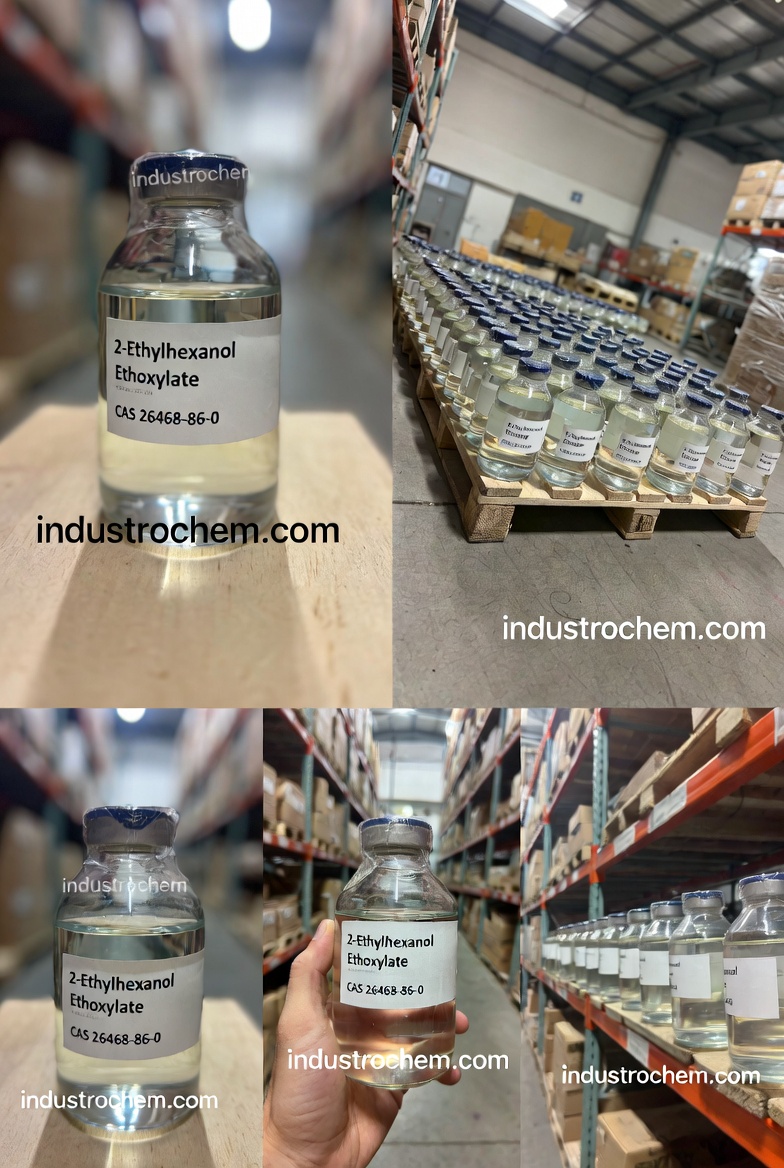
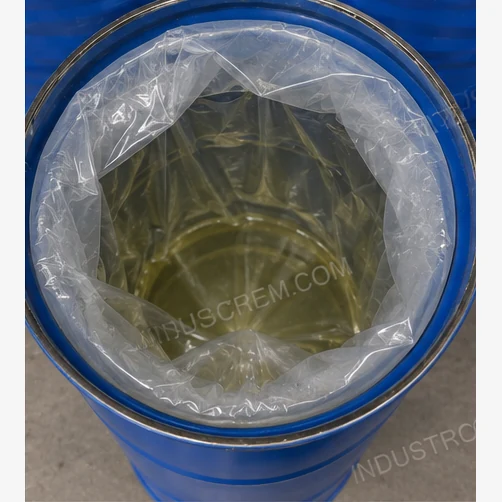
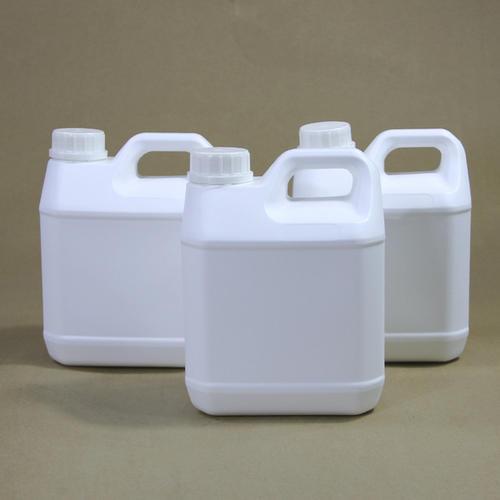
We can provide COA (Certificate of Analysis), TDS (Technical Data Sheet) and SDS (Safety Data Sheet), together with applicable quality and wetting-test information for the selected grade. For a quotation, send the intended application and quantity; the alkali concentration, temperature or an existing product specification is useful for grade selection. Packaging and net weight are stated in the quotation. Storage, handling and any conditioning instructions follow the supplied grade’s SDS and TDS. The photos show sample and packaging formats for reference.
FAQ - Technical & Supply Chain
-
Q:
What type of surfactant is OEP-70?
A: OEP-70 with CAS 68439-39-4 is an ethoxylated 2-ethylhexyl phosphate-ester surfactant in the anionic class. Its phosphate-ester composition differs from nonionic 2-ethylhexanol ethoxylate and octylphenol ethoxylates. The quoted grade is identified by its composition and neutralization state as well as its trade designation. -
Q:
Does OEP-70 specify 70% active matter?
A: The “70” designation alone does not establish a guaranteed active-matter value. The quoted specification states active matter with its test method and mass-percentage basis, together with water content and neutralization state. Active matter and the purity of a single chemical compound are different measures for this variable commercial phosphate-ester material. -
Q:
What information accompanies an OEP-70 alkali-resistance or penetration result?
A: The result states the substrate, surfactant and alkali concentrations, temperature, contact time and test method. Textile wetting comparisons use the stated fabric and process bath. For highly alkaline mercerizing conditions, an agreed caustic-bath method is needed; a neutral or mildly alkaline wetting result does not establish performance under those high-caustic conditions.
Ordering & Documentation
Key information for document requests, quotations, and supply planning.
Documents
Tell us which documents your procurement team needs. Before an order, we will check whether the quoted source can provide them for the offered lot.
Quotation
Send the CAS number, grade, quantity, packing preference and destination.
Sample & Supply
Ask whether samples, trial quantities or repeat orders are possible. We will check each request against the sourced product and current offer.
Storage & Shipping
Product-specific conditions are confirmed before order.