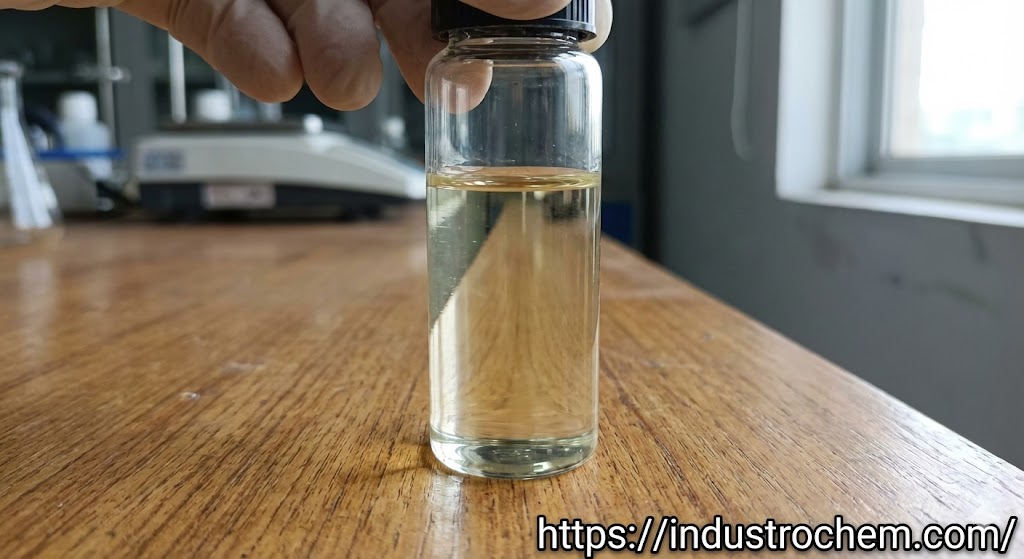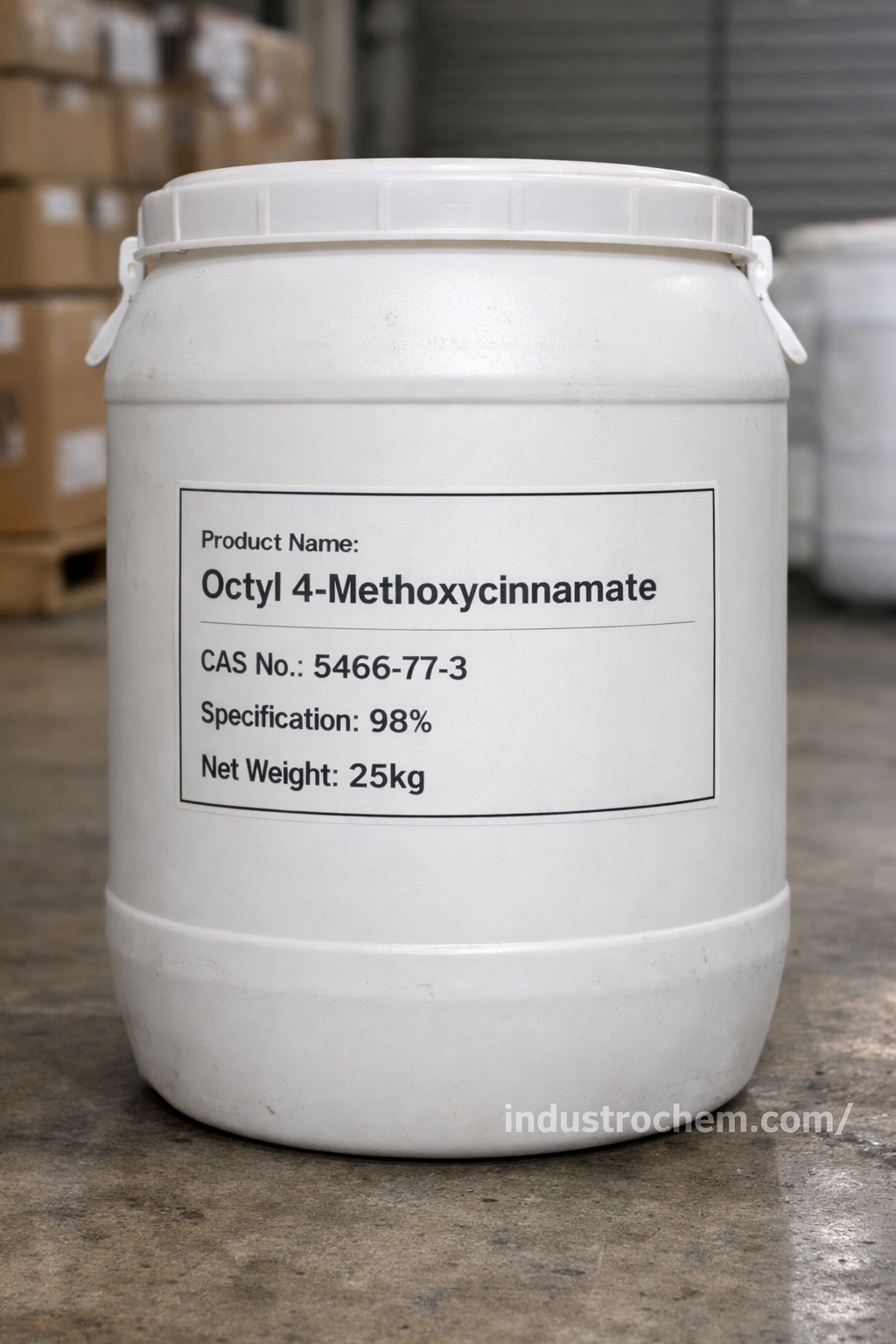
Octyl 4-Methoxycinnamate is a formulation ingredient used as a UVB filter in sunscreen, sun care, and related personal care formulations. In B2B supply, it is typically handled as a liquid raw material for formulation systems where UV protection performance and compatibility with the overall formula need to be evaluated by the buyer. In practical supply terms, it is commonly offered in standard export packaging, with packaging arrangements based on order volume and supply format, and supporting documents such as COA, TDS, and SDS can be provided with shipment support. Its use in finished products should be reviewed against the regulatory requirements of the destination market.
Octyl 4-Methoxycinnamate CAS 5466-77-3
- CAS: 5466-77-3
- Synonyms: Octinoxate; 2-Ethylhexyl 4-methoxycinnamate; Ethylhexyl Methoxycinnamate
- Einecs: 226-775-7
- Molecular Formula: C18H26O3
- Grade: Formulation use / cosmetic raw material supply grade can be offered according to agreed specification and application requirements.
- Package: Available in standard export packaging. Packaging can be arranged according to supply form and order volume.
Product Description
Physicochemical Properties
| Item | Typical Information |
|---|---|
| Appearance | Colorless to pale yellow liquid |
| Odor | Very weak to nearly odorless |
| Molecular Formula | C18H26O3 |
| Molecular Weight | 290.40 |
| Melting Point | About -25°C or below |
| Boiling Point | About 198-200°C (reported under standard reference conditions); reduced-pressure boiling data are also reported |
| Density | About 1.00-1.01 g/cm³ |
| Refractive Index | About 1.543-1.547 |
| Water Solubility | Very low / practically insoluble in water |
| Solubility | Compatible with many organic media and oil phases used in formulation systems |
| Flash Point | Reported values are available in the literature; specification should be confirmed against the supplied grade and test method |
Typical Applications
- Used as a UVB filter in sunscreen and sun care formulations.
- Applied in personal care and cosmetic formulations where UV protection support is required.
- Used in compound formulation systems together with other compatible UV filters or formulation ingredients, subject to product design and regulatory review.
- Suitable for formulation development, pilot production, and routine raw material procurement for approved personal care manufacturing uses.
For related UV filter pages, compare Homosalate, Drometrizole Trisiloxane, and Benzophenone-3.
Packaging
Octyl 4-Methoxycinnamate is generally supplied as a liquid raw material in sealed containers suitable for routine chemical and formulation-ingredient handling. Export packaging can be arranged according to order quantity, logistics requirements, and customer handling preference. Clean container condition, sealed packing, and protection against leakage and contamination should be maintained throughout storage and transport. For regular procurement, packaging can be coordinated to match batch size and bulk supply requirements.
Storage
Store in a cool, dry, and well-ventilated place in tightly closed original containers. Keep away from direct sunlight, excessive heat, and sources of ignition. Avoid contamination and maintain package integrity during warehousing and transport. Long storage periods should be managed under suitable stock rotation and specification control.
FAQ - Technical & Supply Chain
-
Q:
What is Octyl 4-Methoxycinnamate CAS 5466-77-3?
A: Octyl 4-Methoxycinnamate is the INCI-adjacent name for octinoxate, also called ethylhexyl methoxycinnamate, OMC, or 2-ethylhexyl 4-methoxycinnamate. It has CAS 5466-77-3, EC 226-775-7, molecular formula C18H26O3, and molecular weight 290.40. -
Q:
Why is Octyl 4-Methoxycinnamate used in sunscreen formulations?
A: It is an oil-soluble organic UVB absorber that helps protect the skin from UVB radiation. It is commonly used in sunscreens, sun care, lip care, and other personal care products, often together with UVA filters to build broader spectrum protection. -
Q:
Is Octyl 4-Methoxycinnamate water soluble?
A: No. It is practically insoluble in water and is used as an oil-soluble liquid UVB filter. This makes it suitable for oil-phase incorporation and water-resistant sunscreen systems, but it should be evaluated for compatibility in the target emulsion. -
Q:
How is Octinoxate different from UVA filters such as avobenzone?
A: Octinoxate is primarily a UVB filter, while avobenzone is primarily a UVA filter. In many sunscreen systems they are combined with other filters and stabilizers to achieve broad-spectrum UV coverage, rather than being treated as equivalent replacements. -
Q:
What concentration limits should be confirmed for sunscreen use?
A: Limits depend on the region and product category: US OTC sunscreen use is commonly limited to 7.5%, while EU cosmetic regulation generally permits up to 10% under Annex VI. Confirm the current local regulation, product type, dosage, and combined-filter exposure limits before formulation.
Ordering & Documentation
Key information for document requests, quotations, and supply planning.
Documents
COA, TDS, SDS/MSDS and packing details are available on request.
Quotation
Send the CAS number, grade, quantity, packing preference and destination.
Sample & Supply
Support is available for samples, trial orders, bulk and repeat supply.
Storage & Shipping
Product-specific conditions are confirmed before order.