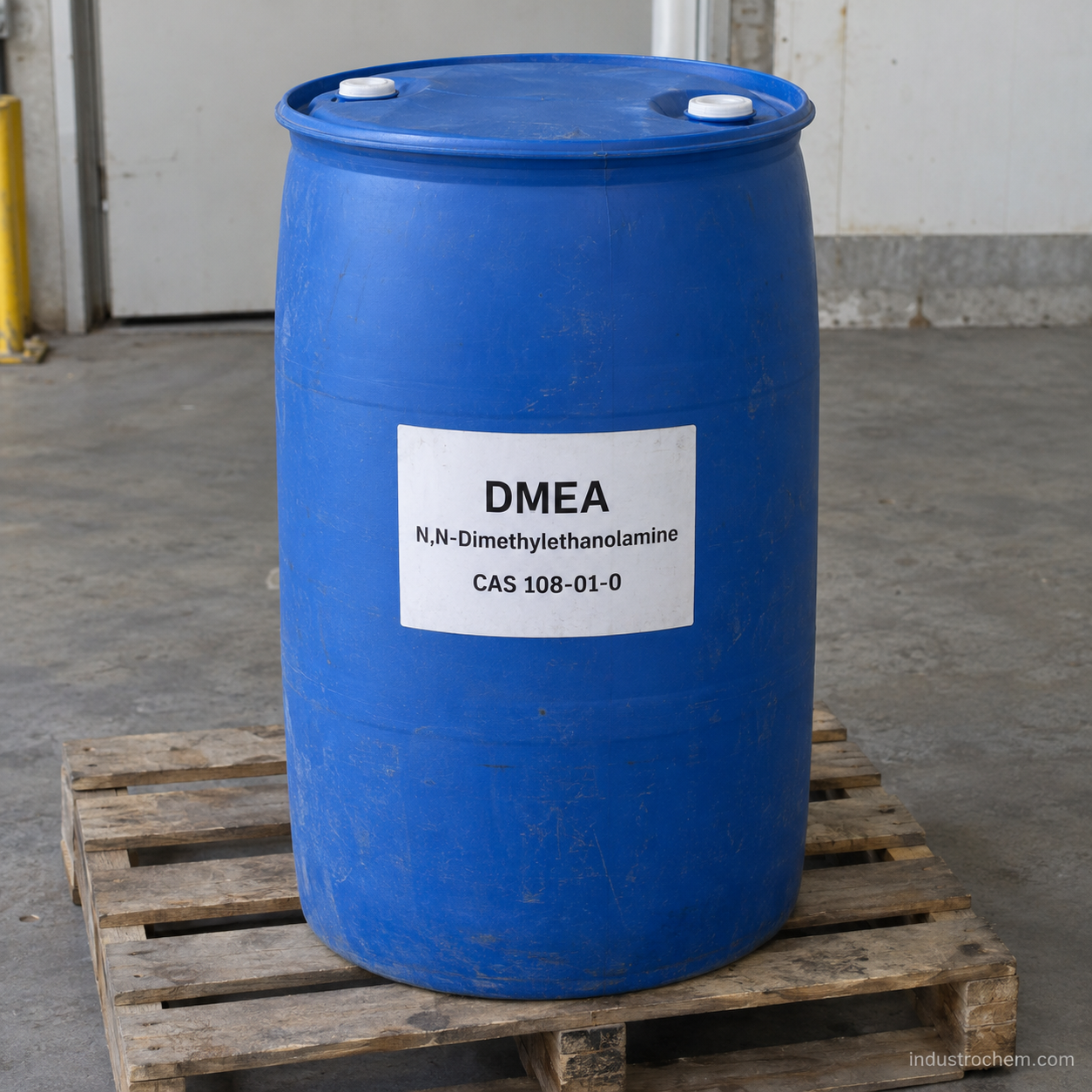
N,N-Dimethylethanolamine (DMEA), CAS 108-01-0, is a tertiary amino alcohol used to neutralize acidic resins in waterborne coatings and as a polyurethane catalyst. Industrial grade supply is matched to the purity and water requirements agreed for your formulation.
N,N-Dimethylethanolamine CAS 108-01-0
- CAS: 108-01-0
- Synonyms: 2-(Dimethylamino)ethanol, Dimethylethanolamine, DMEA, Dimethylaminoethanol, N,N-Dimethyl-2-hydroxyethylamine
- Einecs: 203-542-8
- Molecular Formula: C₄H₁₁NO
- Grade: Industrial grade 99%; assay basis and water limit per quotation
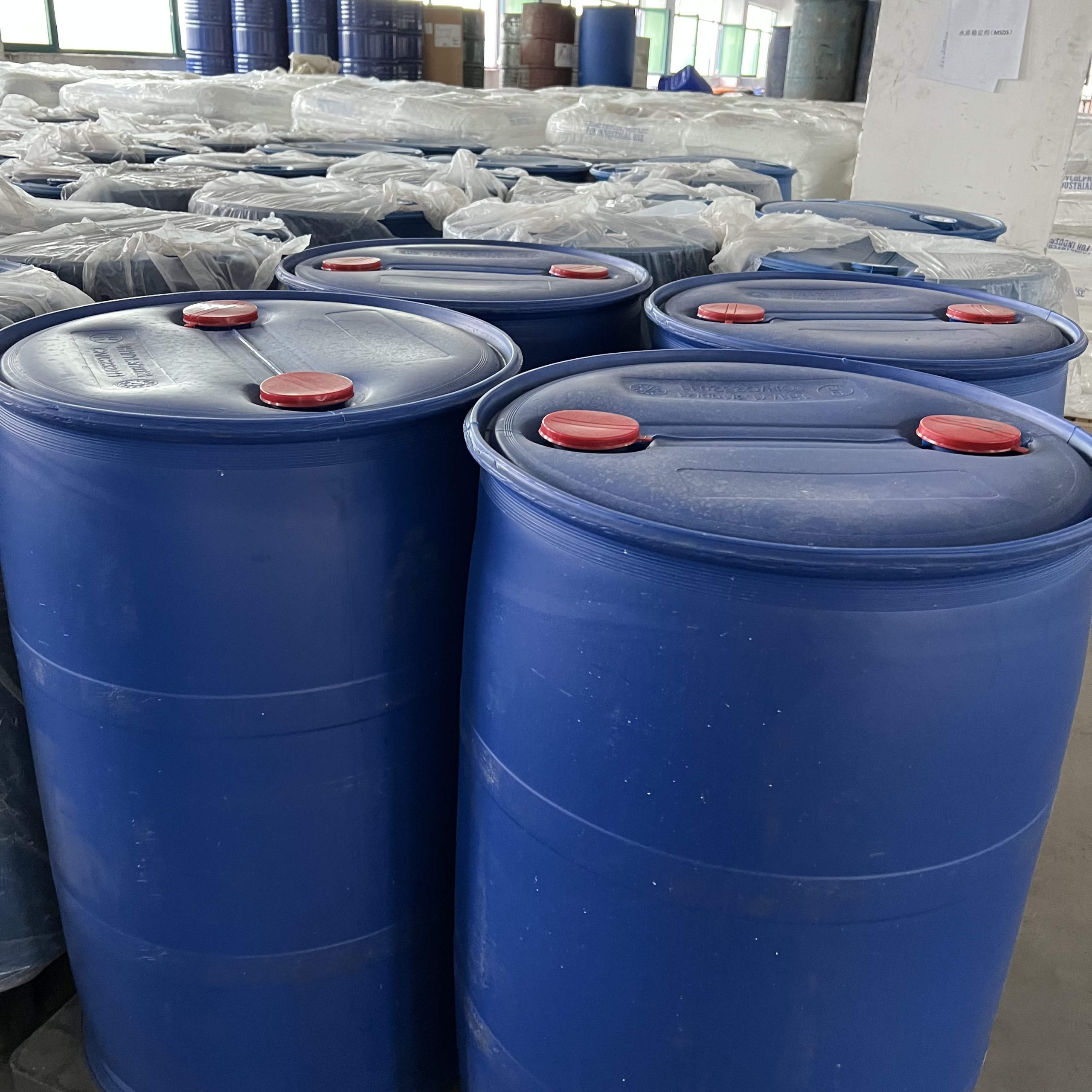
- Package: Industrial drums or IBCs; net weight and packaging agreed per order
Product Description
DMEA, also called 2-(dimethylamino)ethanol or DMAE, combines a tertiary amine group with a hydroxyl group. It is a clear, colorless to pale-yellow liquid with an amine-like odor, is miscible with water and absorbs moisture from the air.
Industrial applications
In waterborne coatings and inks, DMEA neutralizes acidic resin groups. It also serves as a tertiary-amine catalyst in polyurethane formulations, including foams, and can be used as a curing catalyst or accelerator in suitable epoxy systems. The selected resin chemistry and process determine the appropriate dosage.
DMEA is an intermediate for ion-exchange resins and amine-functional monomers such as dimethylaminoethyl methacrylate (DMAEMA). Polymers made from these monomers are used in cationic flocculants. For synthesis orders, distinguish the DMEA amino alcohol from the downstream polymerizable monomer.
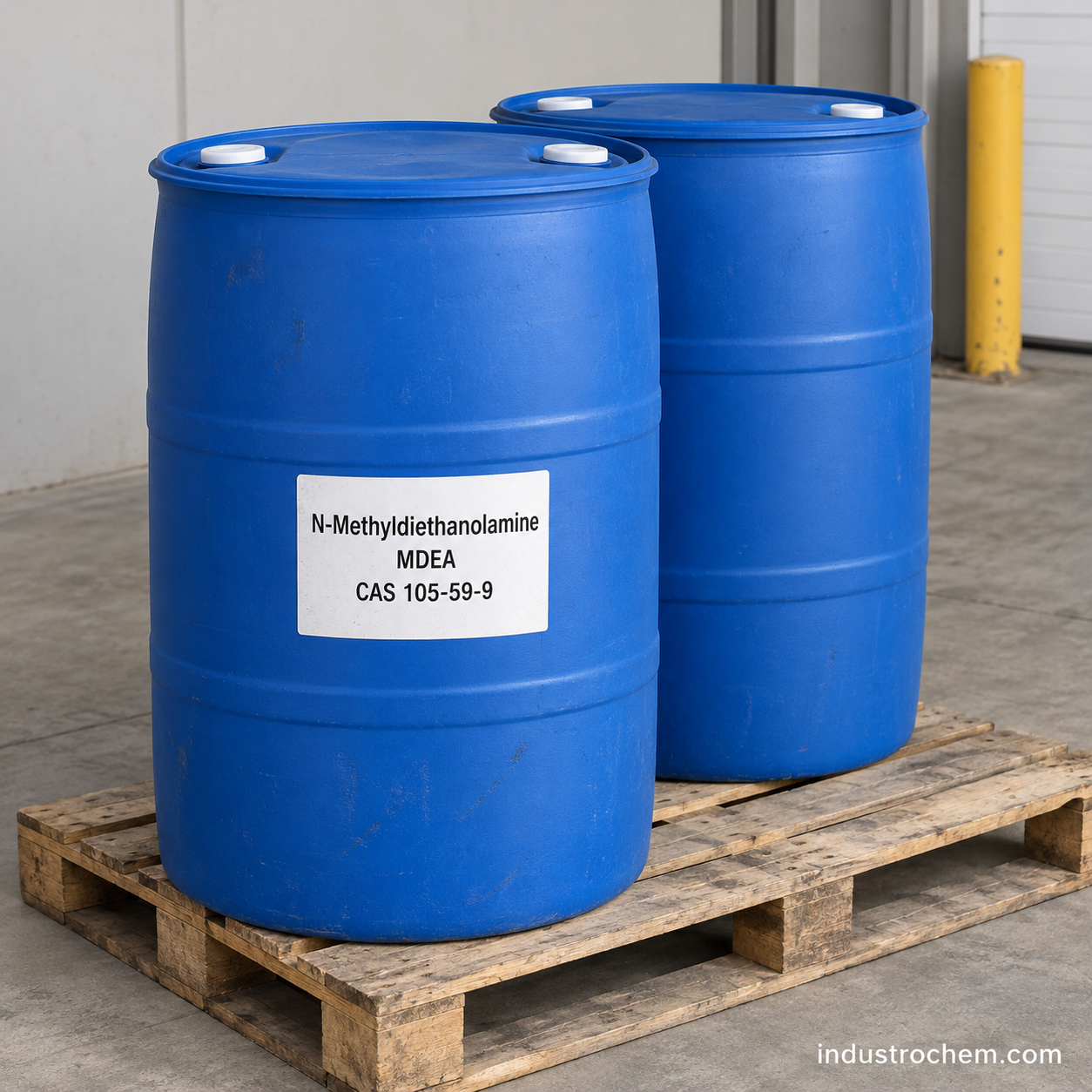
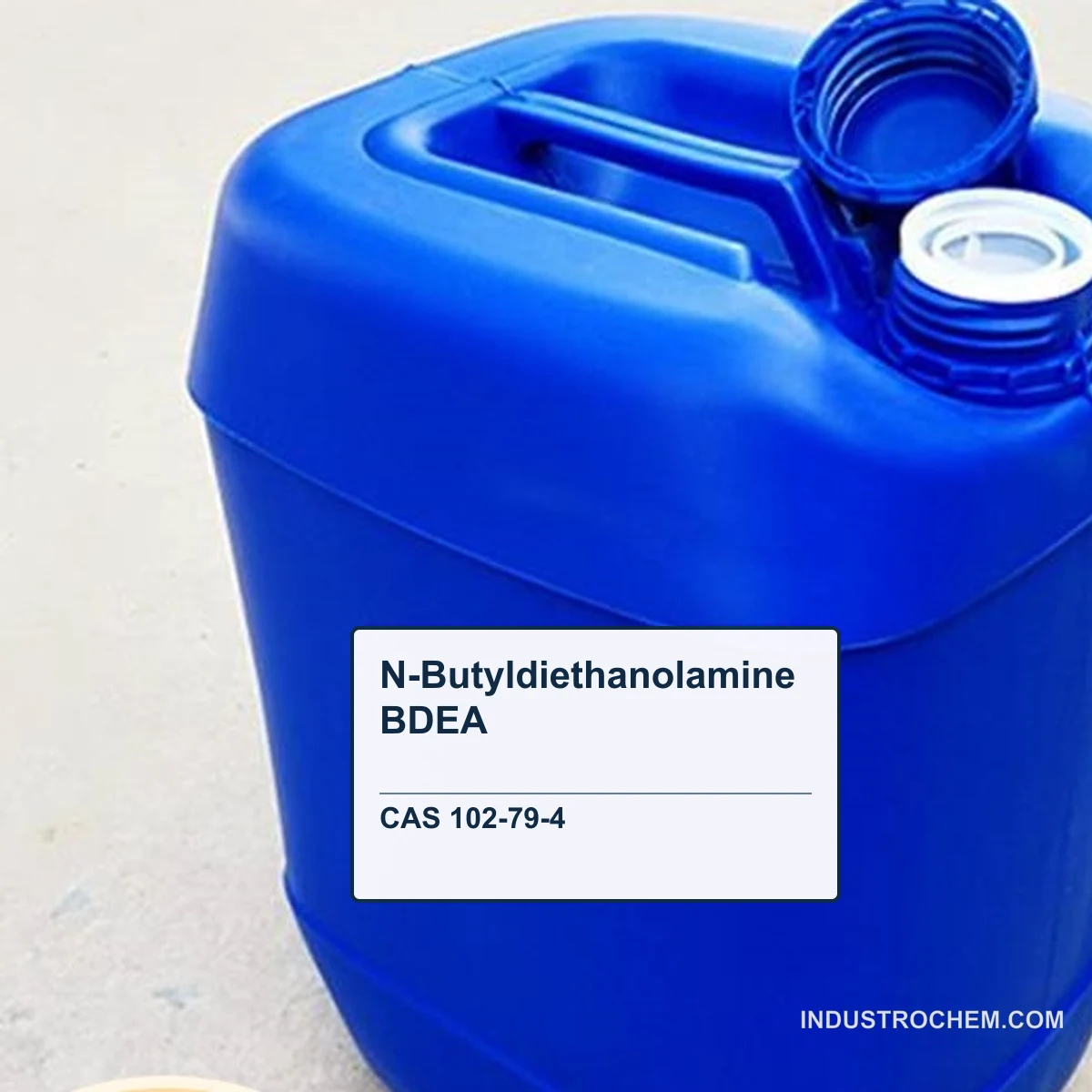
For metalworking-fluid pH control, triethanolamine, N-methyldiethanolamine (MDEA) and N-butyldiethanolamine (BDEA) provide useful comparisons when selecting a neutralizing amine. Alkalinity, volatility and metal compatibility differ, so an amine change requires formulation and dosage checks.
Quality and typical properties
For 99% industrial grade DMEA, we state the assay method and reporting basis in the quotation. Gas chromatography (GC) can assess purity and organic impurities; water is checked separately, typically by Karl Fischer (KF) titration. Purity, water, color and relevant impurity limits are agreed for the intended process.
Typical reference properties are a boiling point of about 134 °C at 1013 hPa, a freezing point of about −59 °C, a density of about 0.887 g/cm³ at 20 °C and a flash point of about 40 °C by the closed-cup method. These values describe the material and are separate from the agreed order specification.
Storage and supply
DMEA is flammable, corrosive and hygroscopic. Keep containers tightly closed in a cool, well-ventilated place, away from heat, ignition sources, acids and oxidizers. Avoid copper and copper alloys. Use compatible transfer equipment, suitable protective equipment and vapor controls according to the current safety data sheet.
We supply DMEA in industrial drums or IBCs, with the net weight and packaging agreed for the quantity and destination. We guarantee supply to the product specification agreed for your order and can provide a Certificate of Analysis (COA), Technical Data Sheet (TDS), Safety Data Sheet (SDS), and applicable GC and water-test information. Tell us your application, quantity and destination, plus any critical specification or packaging requirement, for a quotation.
FAQ - Technical & Supply Chain
-
Q:
Is DMEA the same as DMAE or 2-(dimethylamino)ethanol?
A: Yes. DMEA, DMAE and 2-(dimethylamino)ethanol are names for the same free-base amino alcohol, CAS 108-01-0 and EC 203-542-8. Specify the required grade and concentration when ordering. -
Q:
What does DMEA do in coatings and polyurethane?
A: In waterborne coatings and inks, DMEA neutralizes acidic resin groups. In polyurethane formulations, including foams, it acts as a tertiary-amine catalyst. The formulation determines the dosage and suitability. -
Q:
Which specifications apply to 99% industrial grade DMEA?
A: The quotation defines the assay method, reporting basis and agreed limits for purity, water, color and relevant organic impurities. We supply to the specification agreed for your order. -
Q:
Does GC purity replace a water-content result for DMEA?
A: No. GC purity and water content are separate quality results. Water is commonly measured by Karl Fischer titration, and the required limit depends on the quoted grade and formulation. DMEA absorbs moisture, so containers should remain tightly closed. -
Q:
How should DMEA be stored and handled?
A: Store DMEA tightly closed in a cool, well-ventilated place away from heat, ignition sources, acids and oxidizers. Avoid copper and copper alloys. Because the liquid is flammable and corrosive, use suitable protective equipment and vapor controls as specified in the current SDS.
Ordering & Documentation
Key information for document requests, quotations, and supply planning.
Documents
Tell us which documents your procurement team needs. Before an order, we will check whether the quoted source can provide them for the offered lot.
Quotation
Send the CAS number, grade, quantity, packing preference and destination.
Sample & Supply
Ask whether samples, trial quantities or repeat orders are possible. We will check each request against the sourced product and current offer.
Storage & Shipping
Product-specific conditions are confirmed before order.