










Resorcinol, CAS 108-46-3, is also known as 1,3-benzenediol or resorcin. It is a dihydroxybenzene intermediate used in rubber-to-fabric and wood adhesives, resorcinol-formaldehyde resins, UV stabilizers, flame retardants, dyes and pharmaceutical synthesis. State the required purity, physical form and intended application when requesting a quotation.
Resorcinol (1,3-Benzenediol) CAS 108-46-3
- CAS: 108-46-3
- Synonyms: Resorcinol; Resorcin; 1,3-Benzenediol; Benzene-1,3-diol
- Einecs: 203-585-2
- Molecular Formula: C₆H₆O₂
- Grade: Confirm the current product-specific specification.
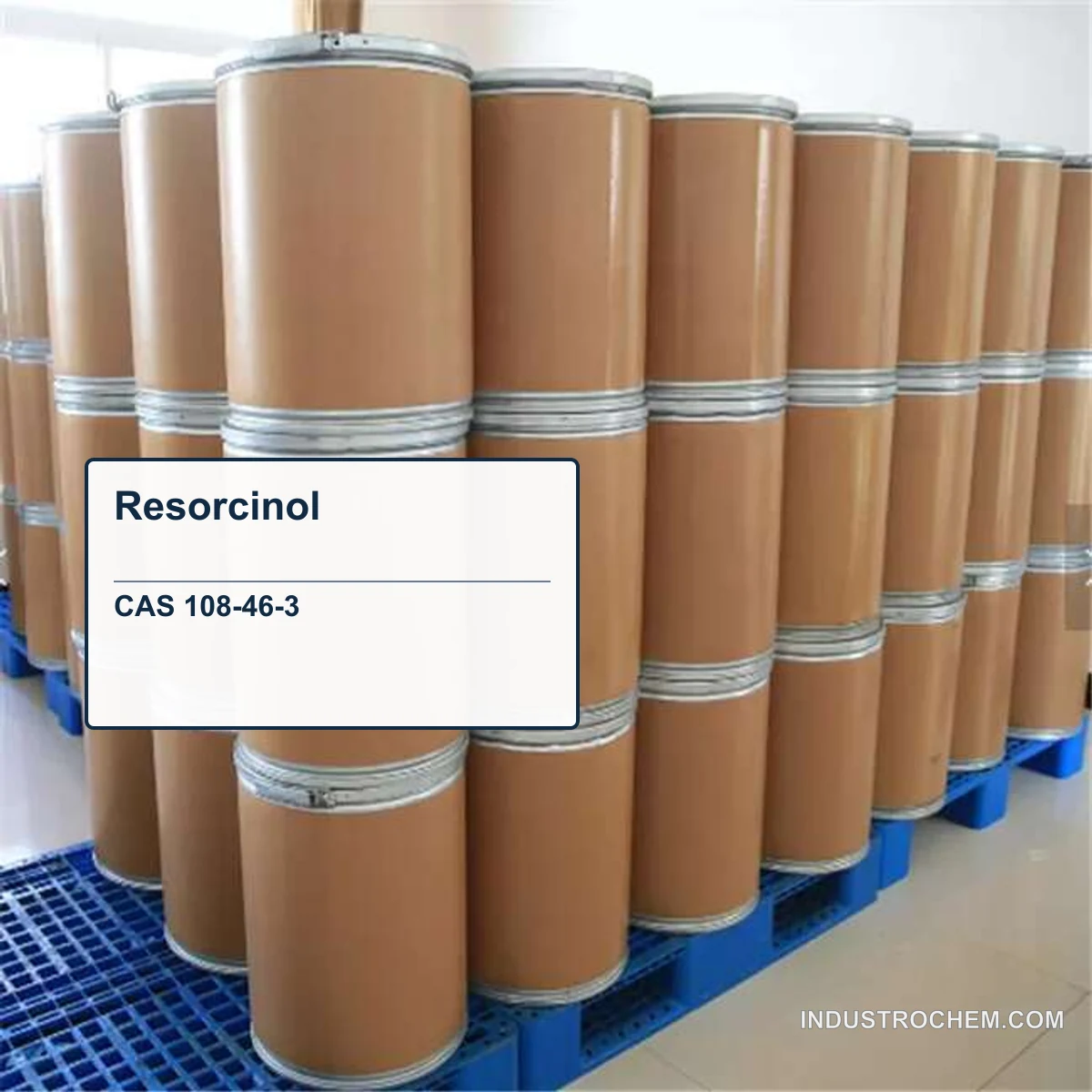
- Package: Confirm packaging for the offered form and destination requirements.
Product Description
CAS Number: 108-46-3
Molecular formula: C₆H₆O₂
Molecular weight: 110.11 g/mol
Review product-specific safety information in the current SDS before handling.
Physical property data
1. Appearance: white needle-like crystals with an unpleasant odor, gradually turning red on exposure to air.
2. pH value: 5.2
3. Melting point: 110.7 °C
4. Boiling point: 276.5 °C
5. Relative density (water = 1): 1.27
6. Relative vapor density (air = 1): 3.79
7. Saturated vapor pressure: 0.13 kPa (108.4 °C)
8. Heat of combustion (kJ/mol): -2847.8
9. Critical pressure (MPa): 7.49
10. Octanol/water partition coefficient: 0.8
11. Flash point: 127 °C (closed cup)
12. Ignition temperature: 608 °C
13. Upper explosion limit: 9.8%
14. Lower explosion limit: 1.4%
15. Solubility: readily soluble in water, ethanol and ether; slightly soluble in chloroform.
16. Relative density (20 °C/4 °C): 1.1651
For related substituted-resorcinol raw materials, see 4-Butylresorcinol and Phenylethyl Resorcinol.
Confirm handling and storage conditions in the current product-specific SDS and specification.
FAQ - Technical & Supply Chain
-
Q:
What is Resorcinol used for?
A: Resorcinol is a versatile 1,3-dihydroxybenzene intermediate. Industrial applications include rubber-to-fabric and wood adhesives, resorcinol-formaldehyde resins, UV stabilizers, flame retardants, dyes, specialty chemicals, pharmaceutical synthesis, cosmetics and agricultural chemical intermediates. -
Q:
Is Resorcinol interchangeable with Catechol or Hydroquinone?
A: No. Resorcinol is the 1,3-dihydroxybenzene isomer, while Catechol and Hydroquinone are the 1,2- and 1,4-isomers. They have different CAS numbers, melting behavior and reaction profiles, so both the isomer name and CAS must be stated. -
Q:
Which values distinguish industrial Resorcinol grades, and what are its typical physical properties?
A: Compare assay and test method, crystallization or melting point, water or loss on drying, color, hydroquinone, catechol and phenol, plus insoluble matter or ash when required. Resorcinol is usually supplied as white to off-white crystals or flakes, with a melting point around 110 to 111 degrees C, boiling point about 276 degrees C, and ready solubility in water, ethanol and ether. Use the current product-specific specification and batch analysis for lot acceptance rather than relying only on general literature data. -
Q:
How should Resorcinol be stored, handled, and transported?
A: Resorcinol can yellow or darken during storage through exposure to air, light or heat, so assess received material against the agreed color and assay limits. It is commonly assigned UN 2876, Hazard Class 6.1, Packing Group III for transport. Store it in a cool, dry, well-ventilated area away from heat, light, oxidizers, strong acids or bases, and food or feed; keep containers tightly closed and avoid generating or inhaling dust.
Ordering & Documentation
Key information for document requests, quotations, and supply planning.
Documents
Tell us which documents your procurement team needs. Before an order, we will check whether the quoted source can provide them for the offered lot.
Quotation
Send the CAS number, grade, quantity, packing preference and destination.
Sample & Supply
Ask whether samples, trial quantities or repeat orders are possible. We will check each request against the sourced product and current offer.
Storage & Shipping
Product-specific conditions are confirmed before order.