







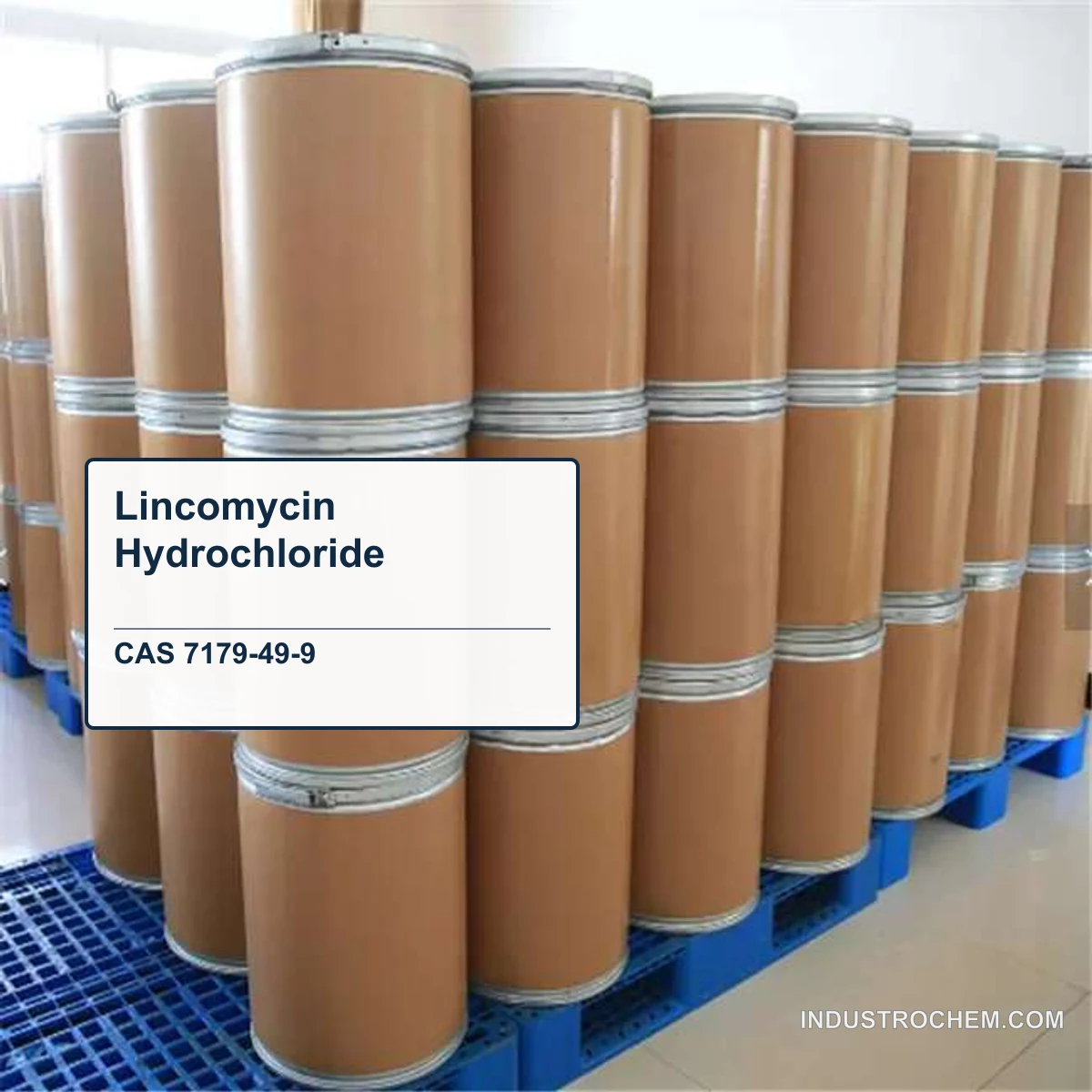
Lincomycin Hydrochloride Monohydrate, CAS 7179-49-9, is a lincomycin hydrochloride salt with molecular formula C₁₈H₃₄N₂O₆S·HCl·H₂O. It is not the free-base lincomycin identity. For an inquiry, identify the monohydrate form, intended use and any regulated-use documentation requirement.
Lincomycin Hydrochloride Monohydrate CAS 7179-49-9
- CAS: 7179-49-9
- Synonyms: Lincomycin Hydrochloride Monohydrate; Lincomycin Hydrochloride
- Einecs: 212-726-7
- Molecular Formula: C₁₈H₃₄N₂O₆S·HCl·H₂O
- Grade: Confirm the current product-specific specification.
- Package: Confirm packaging requirements for the proposed material and destination.
Product Description
Lincomycin Hydrochloride Monohydrate
Molecular formula: C₁₈H₃₄N₂O₆S·HCl·H₂O.
CAS Number: 7179-49-9.
Synonyms: Lincomycin Hydrochloride Monohydrate; Lincomycin Hydrochloride.
Molar mass: 461.01 g/mol.
Not specified; confirm the current product-specific documentation.
Not specified; confirm the current product-specific documentation.
Physical form: confirm the current product-specific specification.
Confirm packaging requirements for the proposed material and destination.
This page identifies the substance only. Intended regulated or pharmaceutical use, quality attributes, and documentation must be confirmed separately before quotation.
FAQ - Technical & Supply Chain
-
Q:
Why are different CAS numbers used for Lincomycin Hydrochloride?
A: CAS 7179-49-9 identifies Lincomycin Hydrochloride Monohydrate, while CAS 859-18-7 is commonly used for the anhydrous hydrochloride identity. Purchase documents should state the hydrate form, formula, water basis and compendial reference instead of relying on the CAS number alone. -
Q:
What type of antibiotic is Lincomycin Hydrochloride Monohydrate?
A: Lincomycin is a lincosamide antibiotic produced by Streptomyces lincolnensis, with activity mainly against Gram-positive bacteria and certain anaerobes. The hydrochloride monohydrate is used in pharmaceutical and veterinary antibiotic applications and as an analytical or reference standard. -
Q:
How should potency be compared between Lincomycin Hydrochloride Monohydrate lots?
A: Compare potency only after confirming the pharmacopoeial method and whether the result is expressed on the as-is, dried or anhydrous basis. Water, related substances, identification and specific optical rotation can accompany potency, so the quotation and batch certificate must define the basis. -
Q:
Which quality attributes matter for pharmaceutical or veterinary use?
A: Confirm the applicable pharmacopoeia or manufacturer specification, assay or potency, water content, related substances, residual solvents, pH, clarity or color of solution where specified, optical rotation and packaging requirements. The complete impurity profile should match the intended regulated process. -
Q:
What are typical solubility and storage conditions for Lincomycin Hydrochloride Monohydrate?
A: It is normally a white or off-white crystalline powder soluble in water, methanol and ethanol, with reported melting point commonly around 151-157 C. Regulated grades may require storage near 2-8 C, protected from light and moisture, with sealed moisture-barrier packaging and any temperature-controlled transport agreed.
Ordering & Documentation
Key information for document requests, quotations, and supply planning.
Documents
Tell us which documents your procurement team needs. Before an order, we will check whether the quoted source can provide them for the offered lot.
Quotation
Send the CAS number, grade, quantity, packing preference and destination.
Sample & Supply
Ask whether samples, trial quantities or repeat orders are possible. We will check each request against the sourced product and current offer.
Storage & Shipping
Product-specific conditions are confirmed before order.