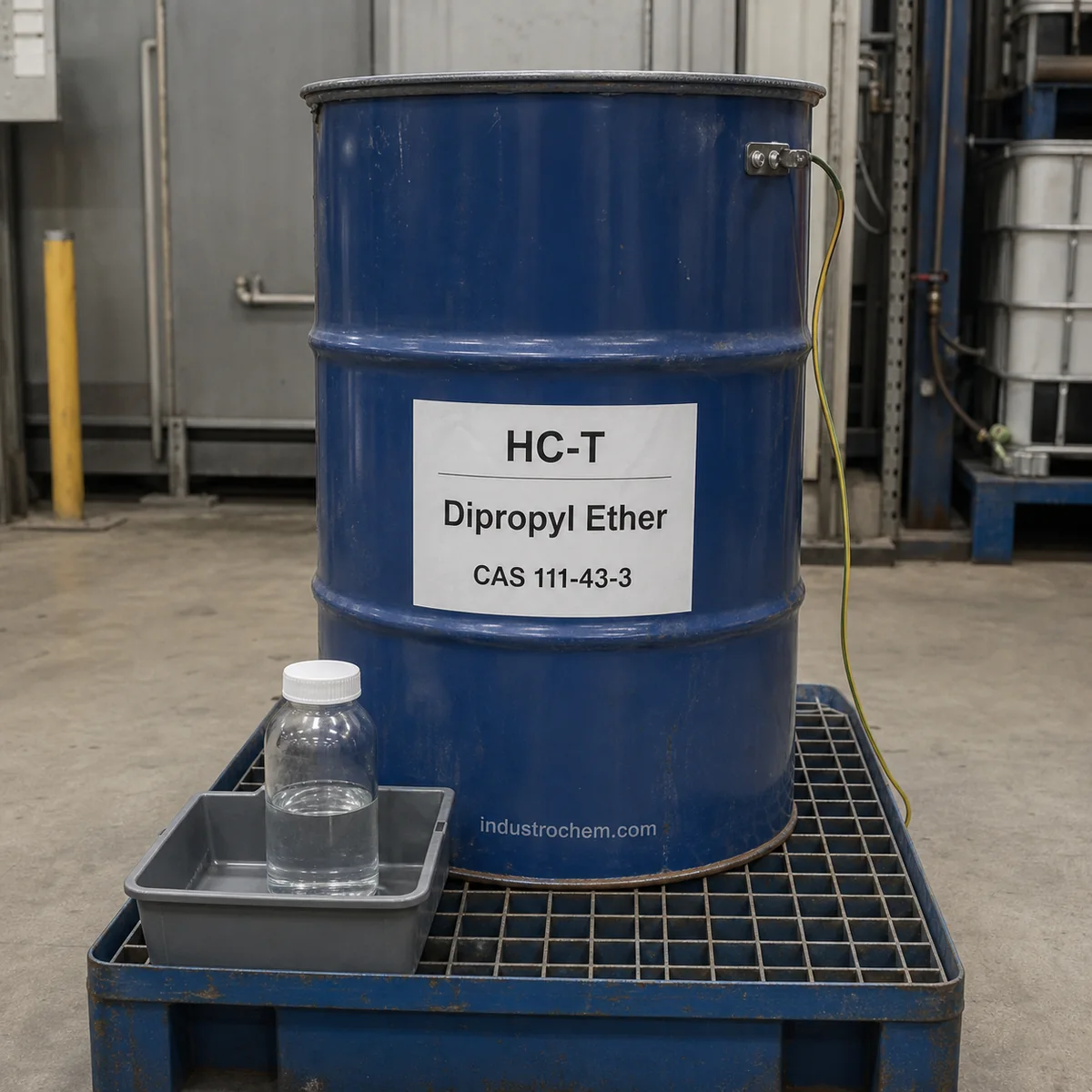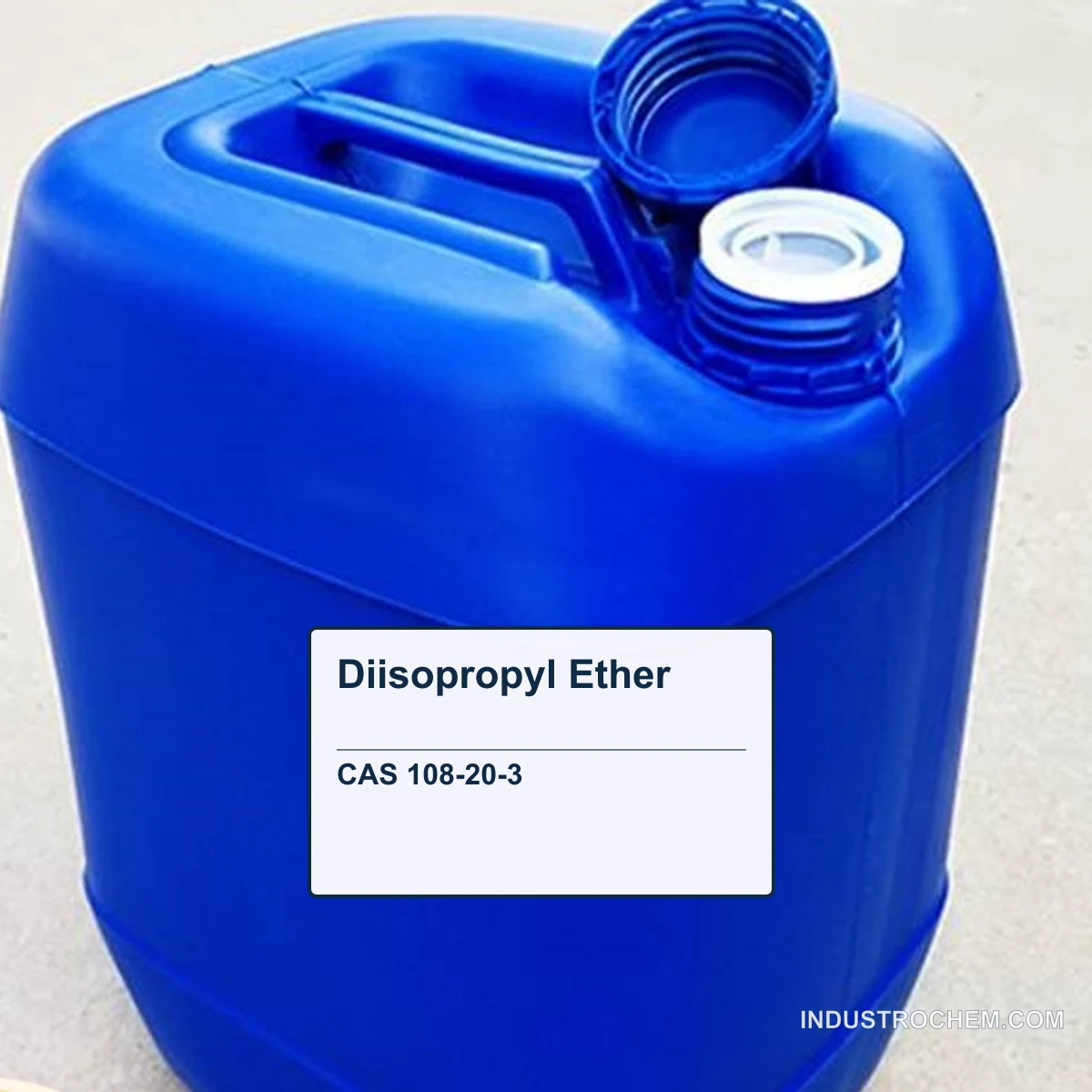
Diisopropyl ether, also recognized as 2-isopropoxypropane, is a secondary ether utilized as a specialized organic solvent in various industrial sectors. It functions primarily as an extraction agent due to its low water solubility and favorable boiling point, making it essential for solvent extraction processes involving pharmaceuticals and organic acids. This chemical intermediate plays a critical role in separating polar compounds from aqueous solutions in large-scale manufacturing. We provide competitive factory pricing and ensure customized specifications to meet diverse technical requirements. Each batch is supported by full documentation including MSDS, TDS, COA, and is available for bulk supply to global industrial partners.
Diisopropyl Ether CAS 108-20-3
- CAS: 108-20-3
- Synonyms: Isopropyl ether, 2-Isopropoxypropane, Diisopropyl oxide, Bis(isopropyl) ether, 2,2'-Oxybispropane
- Einecs: 203-560-6
- Molecular Formula: C6H14O
- Grade: Industrial grade 98%
- Package: 200kg iron drum or 50kg plastic drum packaging
Product Description
isopropyl ether
aliases: diisopropyl ether
CAS:108-20-3
Content≥99.0%, moisture ≤0.05%
Molecular formula: C6H14O
Molecular Weight: 102.18
Appearance and properties: colorless liquid.
Melting point: -85.9°C
Boiling point: 68.5°C
Solubility: insoluble in water, miscible in alcohol, ether, benzene, chloroform and most other organic solvents.
Density: Relative density 0.73
Main uses: isopropyl ether is a good solvent for animal, plant and mineral oils; a good solvent for paraffin and resin, and is often mixed with other solvents in the dewaxing process of paraffin-based oils; as a solvent, it is also used in pharmaceuticals, coatings and paint cleaning; diisopropyl ether has high octane number and frost resistance, and can be used as a gasoline admixture; used as a solvent for the concentration and recovery of dilute solutions of acetic acid or butyric acid; used as an extraction solvent for sodium thiocyanate in the wet acrylic process; used as a reference material, solvent and extractant for chromatographic analysis.
Packing: 145kg/drum (galvanized steel drum)
FAQ - Technical & Supply Chain
-
Q:
Is Isopropyl ether the same substance as Diisopropyl ether?
A: Yes. Both names refer to the chemical compound identified by CAS 108-20-3. These terms are used interchangeably in industrial procurement and technical specifications. -
Q:
Is this product intended for laboratory research or industrial formulation?
A: This material is supplied as an industrial-grade chemical intended for use in large-scale solvent extraction processes and industrial manufacturing. It is not packaged or certified for analytical laboratory reagent use unless specified. -
Q:
Can Diisopropyl ether be used as an alternative to diethyl ether in industrial extractions?
A: In many solvent extraction processes, it is commonly used as a higher-boiling alternative to diethyl ether to reduce volatility losses and improve safety margins in industrial thermal environments.
Documents and Product Support
For product review and sourcing evaluation, supporting documents can be coordinated according to the product type, inquiry stage, and order requirements.
- COA for batch-based quality reference
- TDS for key physical and chemical information
- SDS / MSDS for handling, storage, and safety reference
- Packing information for sample, trial, and bulk orders
- Technical communication based on application and specification requirements
Information to Confirm Before Quotation
Clear sourcing information helps reduce specification mismatch and allows a more accurate quotation before sample or bulk order discussion.
- Product name and CAS number
- Application or intended end use
- Required purity, grade, or specification
- Sample quantity, trial order, or bulk demand
- Preferred packing form or net weight
- Destination country or port
- Required documents or compliance expectations
Packaging, Storage, and Handling Notes
Packaging form, storage conditions, shelf life, and shipment arrangements should be confirmed according to the product characteristics, package size, and destination requirements.
Before order confirmation, buyers are advised to review the corresponding product documents and confirm whether any special storage, labeling, or handling requirements apply.
Sample, Bulk Order and Repeat Supply Support
Support can be arranged for sample discussion, bulk supply planning, packaging confirmation, and routine sourcing communication based on the actual product and order requirements.
For repeat-use formulations or long-term procurement plans, buyers may discuss specification consistency, packaging preferences, delivery expectations, and document coordination in advance.