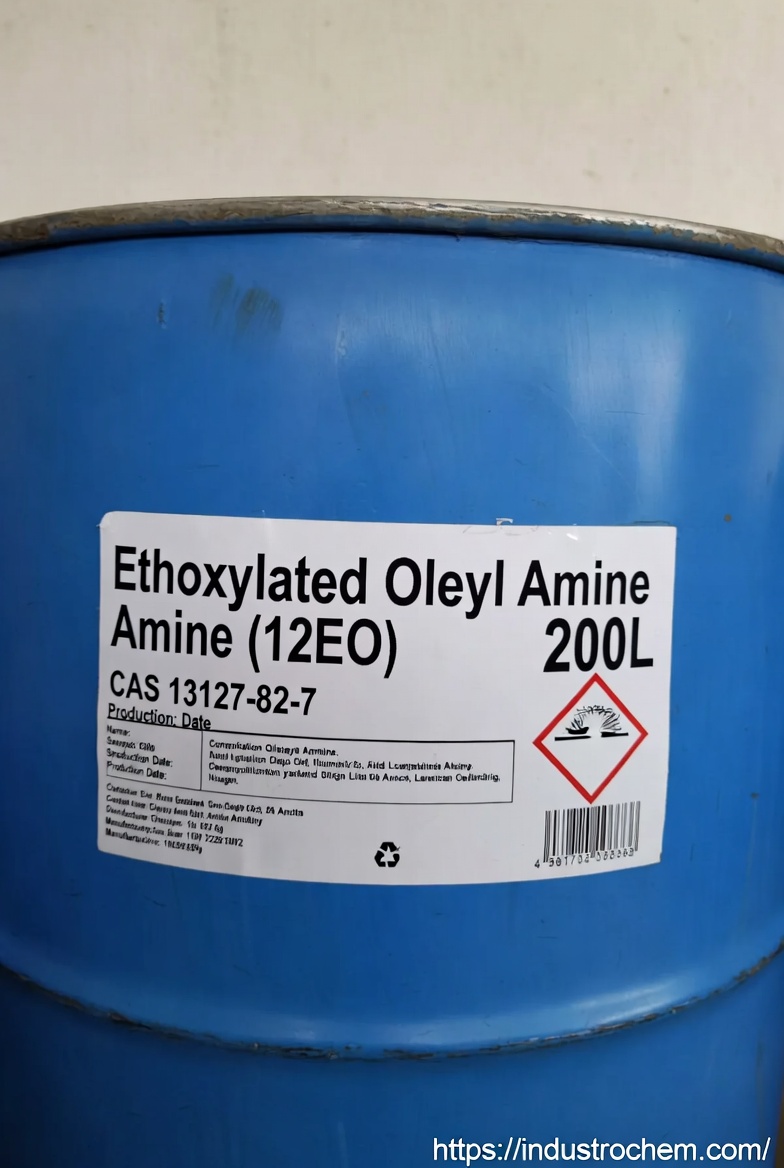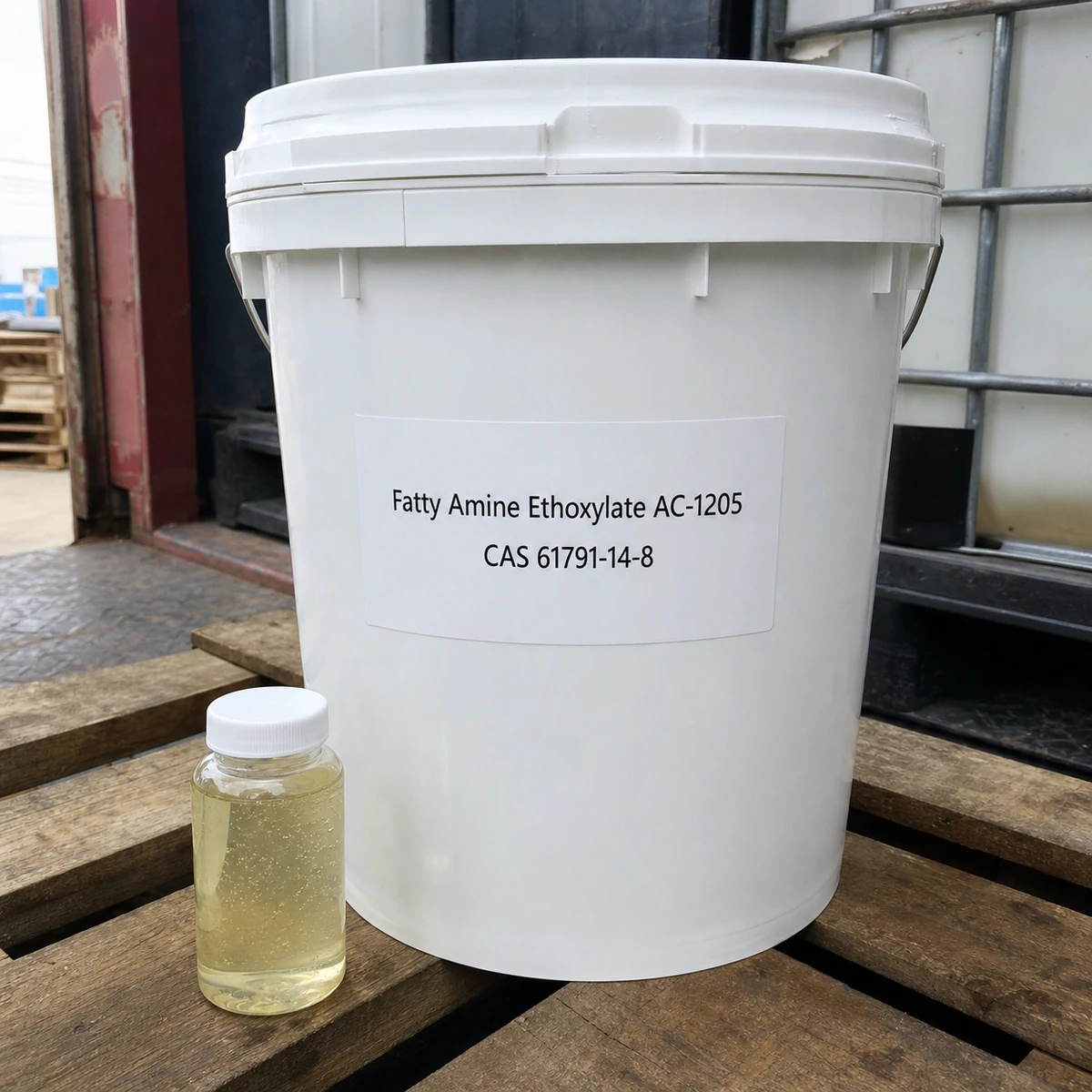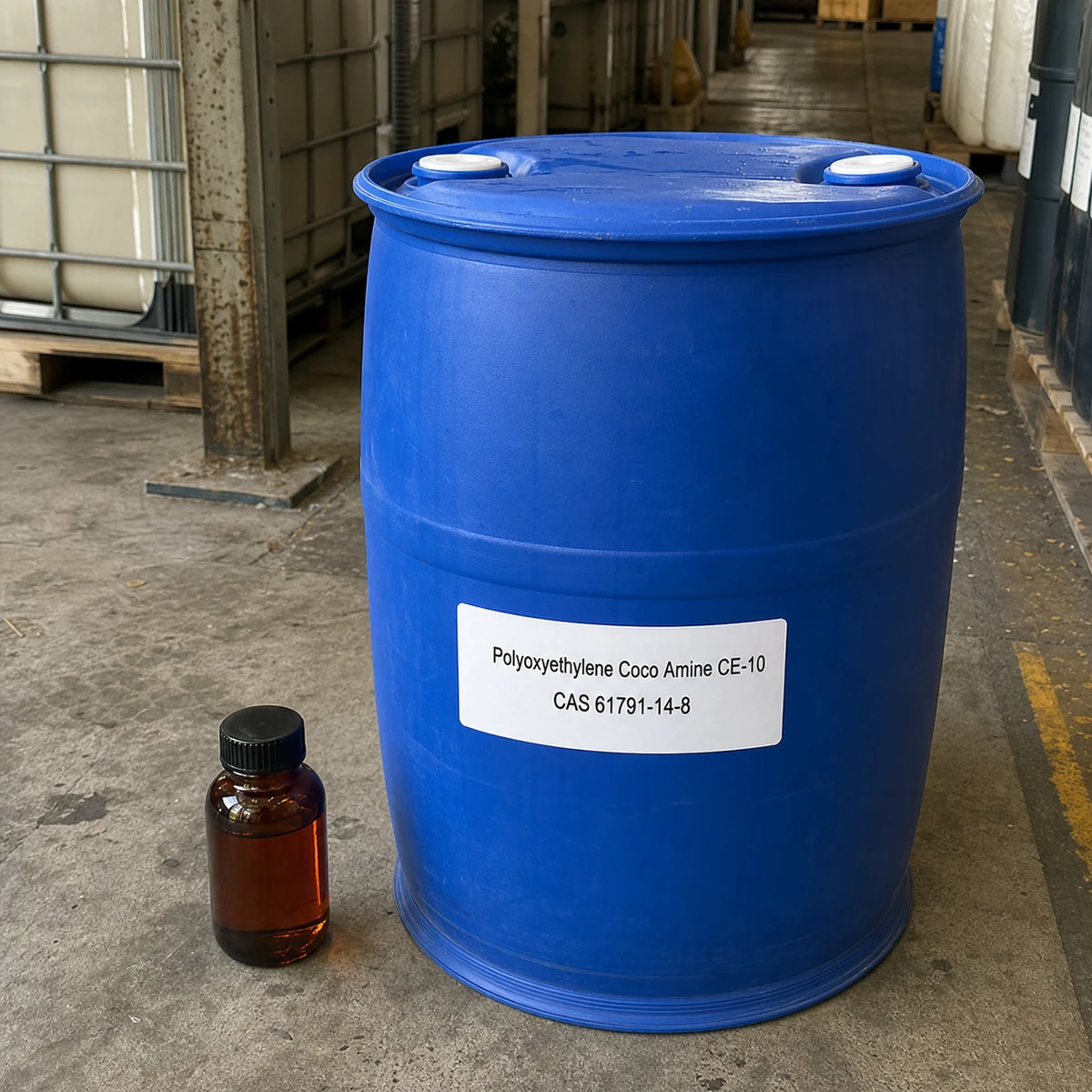










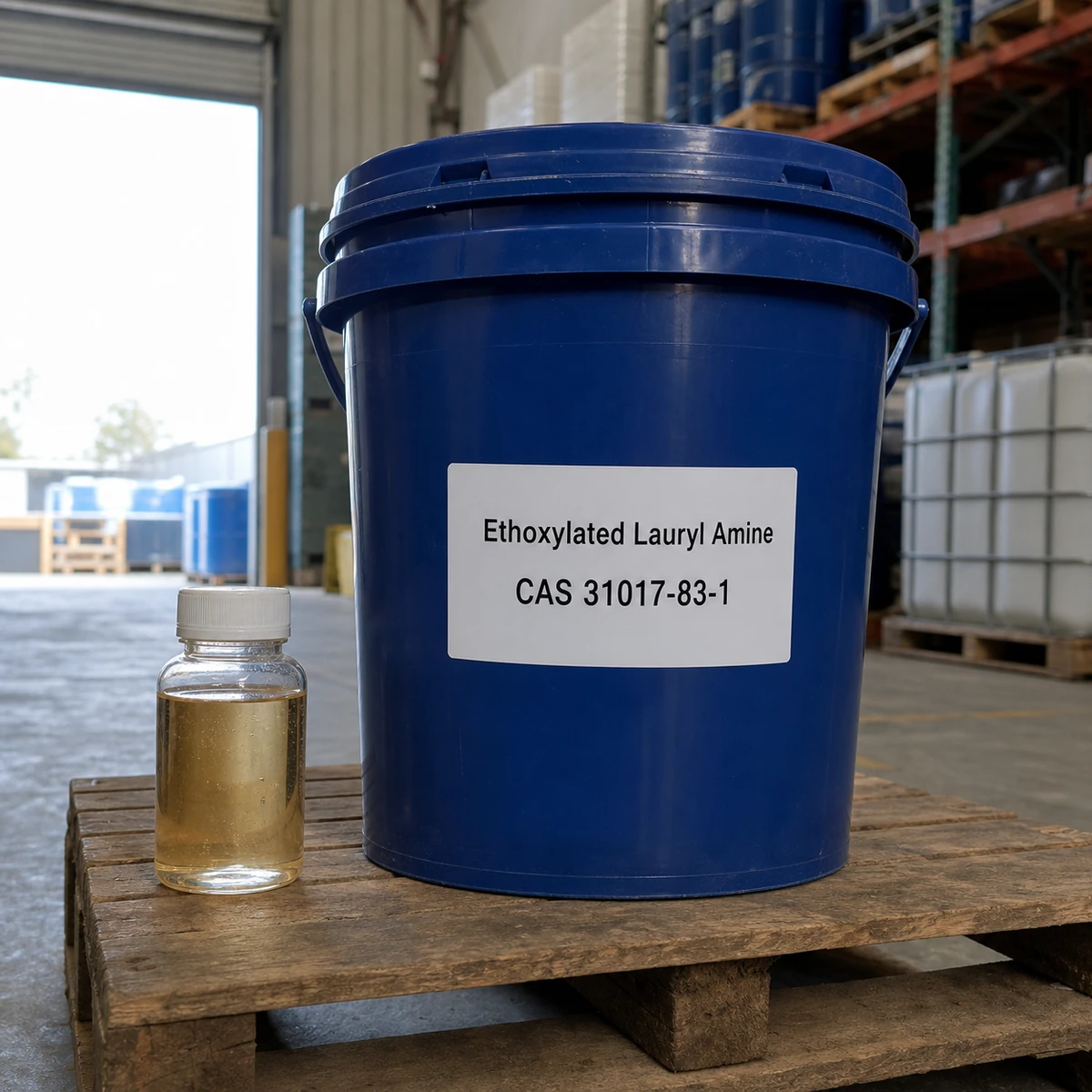
Ethoxylated Lauryl Amine , also called Laurylamine Ethoxylate or Polyoxyethylene Lauryl Amine , is identified by CAS No. 31017-83-1 . It is an ethoxylated amine distribution whose protonation and ionic character change with pH. Commercial grades differ in nominal EO level, amine value, water and physical form. The material is commonly evaluated as an antistatic, emulsifying, dispersing or corrosion-inhibiting component in textile, agrochemical and industrial formulations. Compatibility and regulated-use suitability must be confirmed from the exact grade specification, SDS, COA and application testing.
Ethoxylated Lauryl Amine CAS 31017-83-1
- CAS: 31017-83-1
- Synonyms: Ethoxylated Lauryl Amine, Laurylamine Ethoxylate, Polyoxyethylene Lauryl Amine, Ethoxylated Dodecylamine
- Einecs: Not confirmed; verify supplier SDS
- Grade: Confirm the nominal EO or PO level, feedstock range, active matter, water, physical form and relevant analytical values against the current TDS and COA.
- Package: State required quantity, physical form and destination; confirm the current bag or container, liner, net weight, temperature handling and transport requirements before quotation.
Product Description
Physicochemical profile
| Item | Technical guidance |
|---|---|
| Product identity | Ethoxylated Lauryl Amine, also called Laurylamine Ethoxylate or Polyoxyethylene Lauryl Amine |
| CAS | 31017-83-1 |
| EC status | Confirm the applicable EC or inventory identifier on the SDS for the exact supplied grade |
| Composition | Ethoxylated amine distribution; nominal EO level and amine feedstock are grade-dependent |
| Behavior in formulation | The amine can protonate in acidic systems, changing ionic character, adsorption and compatibility |
| Key quality controls | Nominal EO, total or tertiary amine value as applicable, water, color, physical form and supplier-defined analytical limits |
Application and grade selection
Ethoxylated Lauryl Amine is evaluated as an antistatic, emulsifying, dispersing or corrosion-inhibiting component in textile, agrochemical and industrial formulations. The same product name can cover grades with different EO levels and materially different water affinity.
- Test performance and stability across the actual pH range because protonation changes interaction with anionic and other ionic ingredients.
- Textile trials should check adsorption, lubrication, antistatic effect and downstream dyeing or finishing compatibility.
- Agrochemical and industrial applications require formulation-specific emulsion, dispersion, corrosion and storage-stability testing.
Storage and handling
Store sealed in a dry, ventilated area away from excessive heat and incompatible materials identified by the SDS. Physical form can change with temperature and EO level; follow supplier instructions for conditioning, mixing and sampling.
Safety and supply documentation
Use personal protective equipment, ventilation and spill procedures specified in the exact-grade SDS. Do not assign a universal boiling point, flash point, density or waste classification to the whole ethoxylated-amine family.
For sourcing, provide the reference grade or nominal EO, amine-value requirement, application pH, compatibility criteria, quantity, destination and package, and request the current COA, TDS and SDS.
FAQ - Technical & Supply Chain
-
Q:
Why can Ethoxylated Lauryl Amine change ionic behavior with pH?
A: The amine can protonate in acidic systems, giving more cationic character than in neutral or alkaline conditions. This affects compatibility, adsorption and performance, so the product must be tested across the formulation’s actual pH range. -
Q:
Does CAS 31017-83-1 define one exact EO level?
A: No. Ethoxylated lauryl amines are commercial distributions, and performance depends on amine feedstock and ethoxylation degree. Confirm nominal EO, amine value, water, appearance and physical form through the exact grade specification. -
Q:
Which applications require special validation for PEG Laurylamine?
A: Textile antistatic or lubricant systems, agrochemical formulations and acid corrosion inhibitors each involve different pH, ionic and regulatory conditions. Validate adsorption, compatibility, emulsion or dispersion stability and finished-process performance separately. -
Q:
How should surfactant compatibility be checked for Ethoxylated Lauryl Amine?
A: Test it with the actual anionic, nonionic, amphoteric or cationic blend at use and concentrate levels. Observe clarity, precipitation, viscosity, foam, phase stability and performance across expected pH, temperature and electrolyte conditions. -
Q:
What should a PEG Laurylamine inquiry include?
A: Provide nominal EO or reference grade, amine value, physical-form requirement, application pH, compatibility criteria, quantity, destination and package. Include the current COA or formulation conditions so a technically appropriate sample can be selected.
Ordering & Documentation
Key information for document requests, quotations, and supply planning.
Documents
COA, TDS, SDS/MSDS and packing details are available on request.
Quotation
Send the CAS number, grade, quantity, packing preference and destination.
Sample & Supply
Support is available for samples, trial orders, bulk and repeat supply.
Storage & Shipping
Product-specific conditions are confirmed before order.