






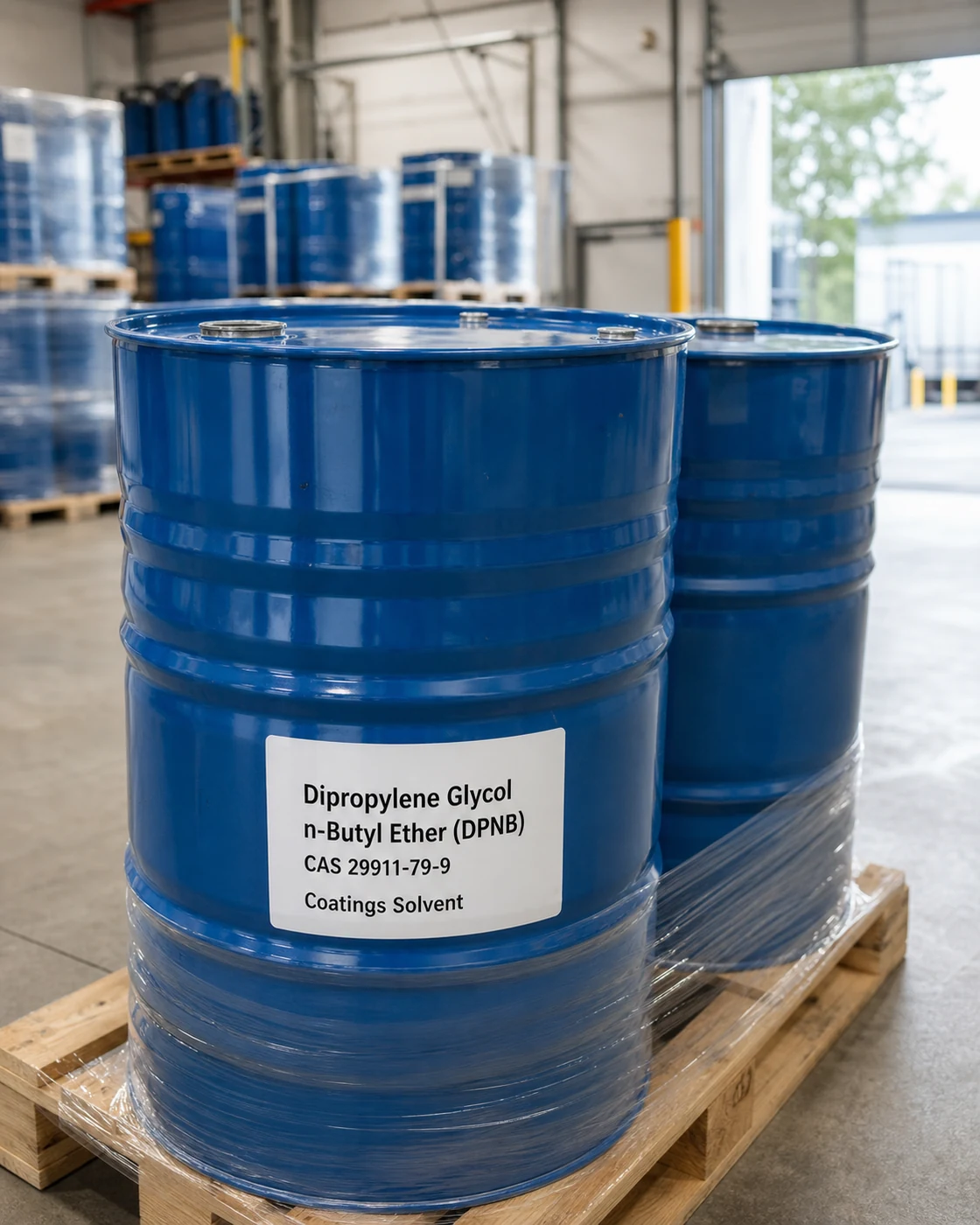
Dipropylene glycol n-butyl ether (DPNB), also known as dipropylene glycol butyl ether, CAS 29911-79-9, is a high-boiling glycol-ether solvent for coatings, inks and industrial cleaners. Industrial grades are controlled by GC purity, water, colour and distillation profile, with COA, TDS and SDS for the agreed solvent grade.
Dipropylene Glycol n-Butyl Ether (DPNB) CAS 29911-79-9
- CAS: 29911-79-9
- Synonyms: Dipropylene glycol n-butyl ether; DPNB; Dipropylene glycol butyl ether
- Einecs: Not specified
- Molecular Formula: C10H22O3
- Grade: Industrial solvent grade; quality controlled by purity, water, colour and distillation profile
- Package: Steel drums, HDPE drums or IBCs; packaging and dangerous-goods classification confirmed from the current SDS
- Appearance: Clear colourless liquid
- Molecular formula: C10H22O3
- Primary role: High-boiling glycol-ether solvent
- Quality controls: GC purity, water, APHA colour, acidity and distillation profile
- Selection basis: Resin compatibility, evaporation balance and application process
Product Description
Dipropylene glycol n-butyl ether (DPNB, CAS 29911-79-9) is a glycol-ether solvent used where a relatively slow-evaporating coalescent or coupling-solvent contribution is required. It is considered in coating, ink and industrial-cleaner formulations for its solvent balance and evaporation behaviour, but suitability must be established with the actual resin, pigment package and drying conditions.
Applications
- Industrial and architectural coatings where evaporation balance, flow or film appearance must be adjusted.
- Printing inks and coating thinners where resin solvency and drying profile are evaluated together.
- Water-based and solvent-based industrial cleaners requiring a glycol-ether coupling solvent.
- Adhesive and process formulations where water, alcohol and resin compatibility are checked in the finished blend.
Specification points
For purchasing, define GC purity, water content, APHA colour, acidity, density and distillation range. DPM and dipropylene glycol n-propyl ether are related glycol ethers, but their alkyl groups change evaporation and solvency behaviour.
Handling
Keep containers closed and use the current SDS for ventilation, ignition-source control, storage and transport requirements. Formulation trials should confirm the desired open time and final coating appearance.
FAQ - Technical & Supply Chain
-
Q:
Is DPNB the same solvent as DPM?
A: No. Both are dipropylene glycol ethers, but DPNB has a butyl group and DPM has a methyl group. Their evaporation, hydrophobicity and solvency balance differ, so they should be selected against the actual coating, ink or cleaner formulation. -
Q:
Which tests are most useful on a DPNB COA?
A: GC purity, water by Karl Fischer or an agreed method, APHA colour, acidity, density and distillation range are typical commercial controls. The buyer should also state any residue or odour requirement relevant to the finished formulation. -
Q:
Can DPNB be selected only by boiling point?
A: No. Boiling behaviour is useful but does not define resin compatibility, water tolerance or final film performance. A practical formulation comparison should include evaporation balance, gloss or appearance, viscosity and storage stability.
Ordering & Documentation
Key information for document requests, quotations, and supply planning.
Documents
COA, TDS, SDS/MSDS and packing details are available on request.
Quotation
Send the CAS number, grade, quantity, packing preference and destination.
Sample & Supply
Support is available for samples, trial orders, bulk and repeat supply.
Storage & Shipping
Product-specific conditions are confirmed before order.
