










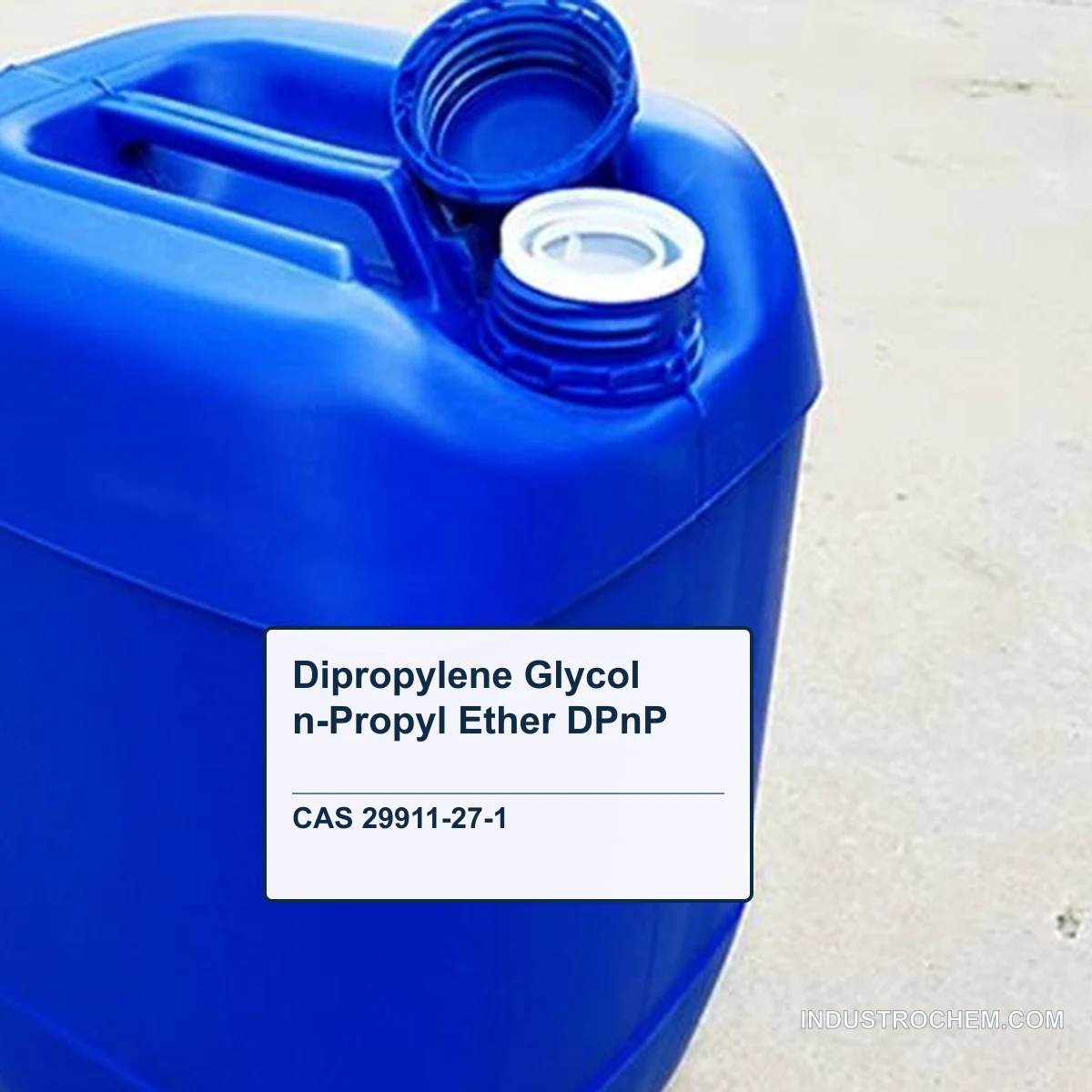
Dipropylene Glycol n-Propyl Ether (CAS 29911-27-1) is a colorless, slow-evaporating glycol ether liquid with a mild odor, primarily utilized as a highly efficient coupling agent and solvent in heavy-duty degreasers, paint strippers, and hard-surface cleaners. This 1-(1-methyl-2-propoxyethoxy)propan-2-ol compound functions as a superior coalescent and viscosity reducer in Dipropylene glycol propyl ether systems, offering an optimal balance of hydrophilic and hydrophobic properties that facilitates the solubilization of organic soils and resins in water-reducible formulations. To support industrial-scale requirements, we provide bulk supply with competitive factory pricing and ensure rigorous quality control through customized specifications alongside standard technical documentation, including MSDS, TDS, COA.
Dipropylene Glycol n-Propyl Ether CAS 29911-27-1
- CAS: 29911-27-1
- Synonyms: Dipropylene glycol monopropyl ether, DPnP, 1-(1-methyl-2-propoxyethoxy)propan-2-ol, Propanol, 1(or 2)-(2-propoxymethylethoxy)-, Glycol ether DPnP
- Einecs: 249-949-4
- Molecular Formula: C9H20O3
- Grade: Industrial grade 99%
- Package: 185kg/barrel
Product Description
| CAS number | 29911-27-1 |
| product name | Dipropylene glycol n-propyl ether |
| Synonyms | Di propylene glycol monomethyl ether |
| Physical and chemical properties | |
| Density | 0.937g/cm3 |
| Boiling point | ≥213℃(760mmHg) |
| Molecular formula | C9H20O3 |
| Molecular weight | 176.25300 |
| Flash point | 88℃(closed cup) |
| Precise mass | 176.14100 |
| PSA | 38.69000 |
| LogP | 1.19890 |
| Refractive index | 1.424(25°C) |
| Vapor pressure | 0.08(25℃,mmHg) |
| Appearance characteristics | Colorless, low-odor liquid |
| Storage conditions | Transport and storage: Store in a cool, ventilated, dry warehouse, away from heat, moisture, water, and sun, and handle with care during transportation,to prevent damage to the packaging,and keep sealed. |
| Packaging Specifications: | 185kg/barrel |
| The above chemicals are non-toxic and non-polluting, non-corrosive, and belong to general chemicals. | |
FAQ - Technical & Supply Chain
-
Q:
Is Dipropylene Glycol n-Propyl Ether (CAS 29911-27-1) considered a volatile organic compound (VOC)?
A: It is generally classified as a solvent with low volatility, but regulatory VOC status varies by jurisdiction; its slow evaporation rate (C9H20O3) makes it suitable for formulations requiring extended open times. -
Q:
What is the primary advantage of DPnP over DPM (Dipropylene Glycol Methyl Ether)?
A: DPnP possesses a longer hydrophobic propyl chain compared to the methyl group in DPM, providing significantly stronger solvency for oils, greases, and hydrophobic resins while maintaining water solubility.
Documents and Product Support
For product review and sourcing evaluation, supporting documents can be coordinated according to the product type, inquiry stage, and order requirements.
- COA for batch-based quality reference
- TDS for key physical and chemical information
- SDS / MSDS for handling, storage, and safety reference
- Packing information for sample, trial, and bulk orders
- Technical communication based on application and specification requirements
Information to Confirm Before Quotation
Clear sourcing information helps reduce specification mismatch and allows a more accurate quotation before sample or bulk order discussion.
- Product name and CAS number
- Application or intended end use
- Required purity, grade, or specification
- Sample quantity, trial order, or bulk demand
- Preferred packing form or net weight
- Destination country or port
- Required documents or compliance expectations
Packaging, Storage, and Handling Notes
Packaging form, storage conditions, shelf life, and shipment arrangements should be confirmed according to the product characteristics, package size, and destination requirements.
Before order confirmation, buyers are advised to review the corresponding product documents and confirm whether any special storage, labeling, or handling requirements apply.
Sample, Bulk Order and Repeat Supply Support
Support can be arranged for sample discussion, bulk supply planning, packaging confirmation, and routine sourcing communication based on the actual product and order requirements.
For repeat-use formulations or long-term procurement plans, buyers may discuss specification consistency, packaging preferences, delivery expectations, and document coordination in advance.


