








Chemical products
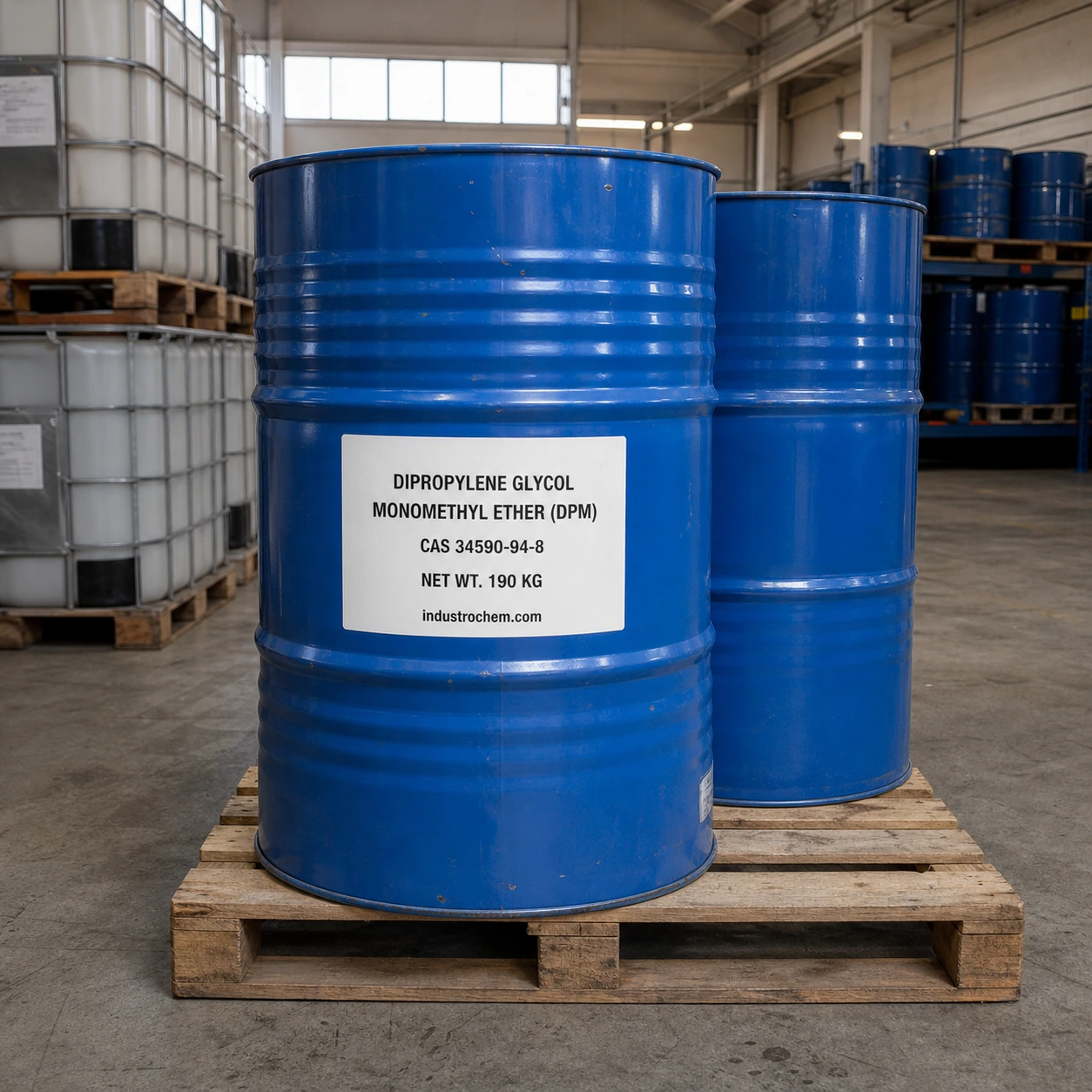
  • Dipropylene Glycol Monomethyl Ether (DPM) CAS 34590-94-8

Dipropylene Glycol Monomethyl Ether (DPM) CAS 34590-94-8

Dipropylene Glycol Monomethyl Ether, commonly called DPM, CAS 34590-94-8, is a slow-evaporating glycol-ether solvent supplied for coating, ink, cleaning and process formulations. Confirm the required grade, then request a quotation with COA/TDS/SDS for bulk supply.

  • CAS: 34590-94-8
  • Synonyms: Dipropylene Glycol Methyl Ether; DPM; 1-(2-Methoxypropoxy)-2-propanol
  • Einecs: 252-104-2
  • Molecular Formula: C7H16O3
  • Grade: Industrial Grade
  • Package: 190 kg steel drums; 950 kg IBCs
Request a quote
Share:

Product Description

Dipropylene Glycol Monomethyl Ether (DPM) CAS 34590-94-8 is dipropylene glycol methyl ether, with EC 252-104-2 and molecular formula C7H16O3.

Synonyms: Dipropylene Glycol Methyl Ether; DPM; 1-(2-Methoxypropoxy)-2-propanol.

CAS: 34590-94-8.

Molecular formula: C7H16O3.

It is supplied as a clear liquid.

It is positioned as a slow-evaporating glycol-ether solvent for coating, ink, cleaning and process formulations.

It is quoted by its CAS and grade, and is distinct from PM or 1-methoxy-2-propanol, CAS 107-98-2.

It is used in industrial coatings, including waterborne, solvent-borne and selected electrodeposition systems.

It is used in printing inks and graphic-arts formulations requiring a slow glycol-ether solvent.

It is used as a coupling solvent in industrial cleaners and in specified extraction or process applications.

It is used in resin and coating manufacture as a defined solvent component.

Commercial grades commonly specify a boiling point of about 184-190 C, a density near 0.95 g/cm3 and a melting point around -80 C.

It is miscible with water, has low vapour pressure and evaporates more slowly than PM or many common ester solvents.

Confirm purity, water content, acidity, colour and distillation range against the intended formulation.

Store in tightly closed containers in a cool, dry, well-ventilated area, away from ignition sources.

Use suitable PPE and vapour control when handling the material to prevent inhalation and skin or eye contact.

Confirm packaging suitable for the liquid form and order quantity, and follow the current SDS.

The page is an RFQ entry point and does not state stock, price, MOQ, or fixed lead time.

For an RFQ, state the intended application, required grade, quantity, packaging, destination, and document needs.

FAQ - Technical & Supply Chain

  • Q:

    What is Dipropylene Glycol Monomethyl Ether DPM CAS 34590-94-8?

    A: Dipropylene Glycol Monomethyl Ether, commonly called DPM, is a slow-evaporating glycol ether with formula C7H16O3. It is supplied for coating, printing-ink, cleaning, coupling-solvent and selected process formulations.
  • Q:

    Is DPM the same as propylene glycol monomethyl ether (PGME)?

    A: No. DPM contains an additional propylene-oxide unit and is normally selected where a slower-evaporating glycol ether is needed. PGME, also called PM or 1-methoxy-2-propanol, has CAS 107-98-2 and should not be substituted for DPM without checking the resin system and evaporation profile.
  • Q:

    What are the key physical properties of DPM?

    A: DPM has a boiling point around 184-190 deg C, a density near 0.95 g/cm3 and a melting point around -80 deg C. It is miscible with water, has a low vapour pressure and evaporates more slowly than PM or many common ester solvents.
  • Q:

    Where is Dipropylene Glycol Monomethyl Ether used?

    A: DPM is used in industrial coatings, including waterborne and selected electrodeposition systems, as well as printing inks and graphic-arts formulations. It also serves as a coupling solvent in industrial cleaners and in specified extraction or process applications.
  • Q:

    Which DPM specifications should be checked before use?

    A: Confirm purity, water content, acidity, colour and distillation range against the intended formulation. Industrial grades commonly specify purity of at least 99.0%, water of 0.10% or less, low acidity and a distillation range near 180-195 deg C.

Ordering & Documentation

Key information for document requests, quotations, and supply planning.

Documents

COA, TDS, SDS/MSDS and packing details are available on request.

Quotation

Send the CAS number, grade, quantity, packing preference and destination.

Sample & Supply

Support is available for samples, trial orders, bulk and repeat supply.

Storage & Shipping

Product-specific conditions are confirmed before order.

Contact Form

Use our contact form to send us your questions, suggestions or comments. We will respond as soon as possible.
For a quotation, please include the product name or CAS number, quantity, grade or application, and destination country or port. Tell us if you need a sample, COA, TDS or SDS.